📍 Destination Overview
Barcelona is the capital of Catalonia, an artistic and vibrant city on the Mediterranean. Gaudi's architecture is everywhere - the unfinished Sagrada Familia soars into the sky, Casa Batllo and Casa Mila are dreamlike, and Park Guell dazzles with colorful mosaics. The medieval alleys of the Gothic Quarter sit next to the bustling La Rambla; beaches, cuisine and football ignite the city's passion. Here, whimsical Modernist architecture, a long history and Mediterranean sunshine living blend together, making it one of Southern Europe's most desirable cities.
🏛️ Location
Spain · Catalonia - a vibrant capital on the Mediterranean
🗓️ Best Season
May-Oct
🕐 Time Difference
6-7 hrs behind Beijing
💰 Currency / Language
Euro EUR / Spanish / Catalan
🕐 Suggested Duration
3-4 days - Gaudi architecture + old town + beach
🔌 Outlet / Voltage
Type C / F outlets · 230V · adapter needed
☀️ Best Time to Visit & Climate
🌸 May–Jun, Sep–Oct
Pleasant weather for both beach and sightseeing.
🏖️ Summer: Jul–Aug
Mediterranean beach high season — hot and crowded.
Jan
🌤️
14°/5°
Feb
🌤️
15°/6°
Mar
🌤️
17°/8°
Apr
🌷
19°/10°
May
🌸
22°/13°
Best
Jun
☀️
26°/18°
Best
Jul
🏖️
29°/21°
Beach
Aug
🏖️
29°/21°
Beach
Sep
🌊
26°/18°
Best
Oct
🍂
22°/14°
Best
Nov
🌥️
17°/9°
Dec
🌤️
14°/6°
📷 Top Attractions
More Attractions →
Casa Batllo
Casa Batlló is a brilliantly fantastical building on Barcelona's Passeig de Gràcia—a mansion remodeled by the genius architect Gaudí and famed for its dreamlike, unique form like a sea creature or a fairy-tale castle. It is another masterpiece of Gaudí's architectural art, a UNESCO World Heritage Site and a dreamlike building in Barcelona not to be missed. Casa Batlló was remodeled by Gaudí in the early 20th century for the textile magnate Batlló (a thorough, genius transformation of the original building). Gaudí pushed his boundless imagination and his worship of nature and color to the extreme, turning the mansion into a dreamlike architectural artwork. Its facade is brilliant and fantastical, covered with colorful, shimmering mosaic tiles and stained glass (like a rippling sea surface or an Impressionist painting), dotted with balconies like bones or masks, and a colorful roof undulating like dragon scales (said to draw its inspiration from the legend of Saint George, patron of Catalonia, slaying the dragon; the roof's dragon spine and the spire cross seemingly piercing the dragon's body are full of symbolism), full of a fantastical, lively beauty—so the building is often called the 'House of Bones' or the 'House of the Dragon'. Its interior is likewise full of Gaudí's unique, ocean- or nature-like fantastical design—flowing curves, a blue mosaic light well (like the deep sea), windows and doors like shells or water ripples, and clever lighting and ventilation, all full of imagination and beauty. Visiting Barcelona's Casa Batlló, marvelling at Gaudí's brilliant, fantastical creativity and dreamlike beauty, is a uniquely imaginative Barcelona experience.
Historic Ruins & Heritage

Casa Mila
Casa Milà (La Pedrera) is one of Gaudí's finest civil buildings. Built 1906-1912, it features wave-like stone facade, organic interiors and iconic rooftop chimneys — UNESCO World Heritage — essential Gaudí tour stop. Built 1906-1912; Gaudí's last civil building. Wave-like stone facade — no straight lines. Organic interiors — underwater feel. Rooftop chimneys like warriors — popular photo spot. UNESCO.
Historic Ruins & Heritage
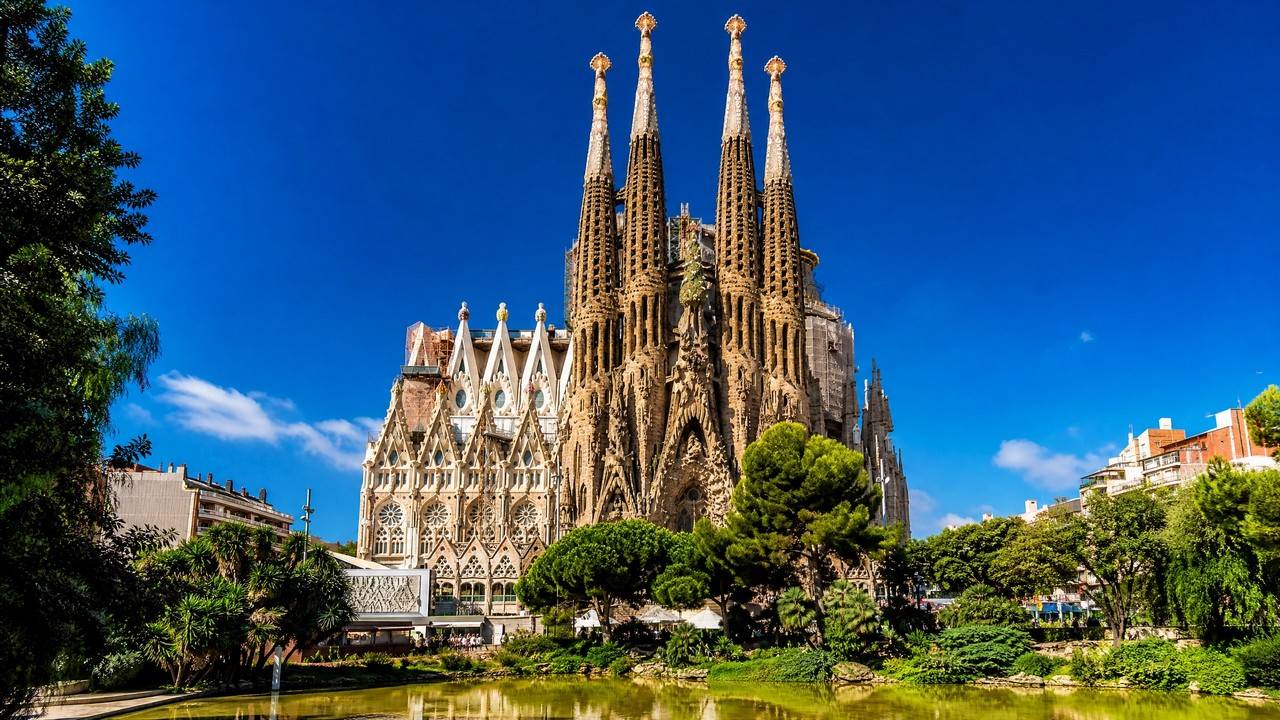
La Sagrada Família
The Sagrada Família is Antoni Gaudí's unfinished masterpiece, under construction since 1882 and a UNESCO World Heritage Site since 1984. It overturns Gothic tradition with tree-like columns, light-filled stained glass and symbolic facades telling the Christian story. Barcelona's most iconic landmark, each milestone of its building still captures the city's attention.
Church & Religious Site

Park Güell
Park Güell is a fairy-tale, whimsical park in Barcelona—another work by the genius architect Gaudí, famous for its brilliant mosaics, fanciful forms and nature-integrated design. It is another masterpiece of Gaudí's architectural art, a UNESCO World Heritage Site and a dreamlike spot in Barcelona not to be missed. Park Güell was commissioned by Gaudí's patron, the entrepreneur Güell, and designed and built by Gaudí in the early 20th century; the original idea was an upscale residential district (later unsuccessful, it became a park). Gaudí gave full rein to his worship of nature, boundless creativity and brilliant color, turning the park into a wonderland like a fairy tale. The park's most famous, most photogenic features are the unique forms inlaid with brightly colored, finely pieced mosaic tiles: the two gingerbread-house-like quirky gatehouses at the entrance, the coiled giant mosaic lizard fountain (the park's symbol), and the famous wavy bench inlaid with colorful mosaics, undulating like a great dragon, set on a broad terrace overlooking the panorama of Barcelona and the sea. Besides, the park has stone colonnades that seem to grow naturally (like stone waves or a forest), winding paths, and green landscapes cleverly blended into the hillside—everywhere full of Gaudí's unique imagination and brilliant color, dreamlike and delightful. Strolling Park Güell, admiring Gaudí's brilliant dreamlike mosaics and quirky forms, and overlooking Barcelona's panorama is a uniquely fairy-tale Barcelona experience.
Park & Garden

Las Ramblas
La Rambla is Barcelona's most famous, lively and vibrant pedestrian avenue—a tree-lined boulevard teeming with people all day and full of fresh urban life; it is the city's artery and soul, and the perfect place to feel Barcelona's bustling energy. La Rambla is a wide, tree-shaded pedestrian boulevard running from the old town's center (Plaça de Catalunya) south to the waterfront (the Columbus Monument and the Old Port), cutting through Barcelona's old-town core. Its center is a broad walkway for strollers (the traffic lanes on either side are narrower); shaded by trees, it is filled all day with the bustle of vivid city life. Strolling La Rambla, visitors see: an endless stream of tourists and locals from around the world, the shops, newsstands and flower stalls (the avenue is famous for its colorful flower stalls) lining the sides, the open-air seats of restaurants and cafés, and all kinds of street performers (living statues, musicians, painters and the like) entertaining the crowds—lively and full of energy. Along the avenue are many sights: the famous Mercat de la Boqueria (a bustling, abundant traditional food market—a paradise for food lovers), the Liceu opera house, and entrances to the old town such as the Gothic Quarter. Strolling Barcelona's lively La Rambla, feeling the fresh city life and browsing the colorful market (remember to watch your belongings and beware of pickpockets) is a classic way to feel Barcelona's pulse.
Old Town & Historic District

Modernisme
Casa Mila and Casa Batlló stand shoulder to shoulder on Passeig de Gracia, Gaudi's twin gifts to Barcelona and the stars of the famous Illa de la Discòrdia, where four modernista masters compete on one block. Casa Mila, nicknamed La Pedrera and completed in 1912, enchants with its undulating stone facade and rooftop chimneys resembling helmeted warriors; Casa Batlló wears a dragon-back roof of coloured tiles and a facade awash in marine imagery. Both are UNESCO-listed and open as museums, their rooftops and light wells the showstoppers. Book timed tickets for each, then stroll the avenue to feel the city's modernista pulse.
Square & Landmark
🎯 Barcelona Experiences
Sagrada Familia
Look up at Gaudi's luminous hall.
Park Guell
Mosaic benches and city panorama.
Gothic Quarter Stroll
Explore the medieval alleys.
Paella & Tapas
Mediterranean food and drinks.
Magic Fountain
Light-and-water show on Montjuic Hill.
Spring (May-Jun) and autumn (Sep-Oct) are most comfortable. Summer beach season is hot and crowded. For popular sights (Sagrada Familia, Park Guell) be sure to book tickets online in advance. Beware of pickpockets.
🚌 Transport & Stays
City Transport
✈️About EUR 6.75 (reference)
Airport Express Aerobus
About 35 min from airport to city
About EUR 6.75 (reference)
🚇About EUR 2.55 per ride (reference)
Metro
Connects major sights and stations
About EUR 2.55 per ride (reference)
🚶—
Walking
Old town and Eixample are good on foot
—
🚕Starting fare varies by distance (reference)
Taxi
At night or with lots of luggage
Starting fare varies by distance (reference)
Recommended Stay Areas
🏛️ Eixample (Top Pick)
Close to Gaudi's buildings; elegant and spacious
🏘️ Gothic Quarter / Old Town
Medieval alleys and nightlife
🏖️ Barceloneta
Beach and harbor
🌳 Around La Rambla
Downtown shopping and dining
Free Consultation
Free Consultation
1-on-1 travel consultant customizes your Barcelona trip for free based on your schedule and preferences.