📍 Destination Overview
Rome, the Eternal City, is Italy's capital. The Colosseum and Roman Forum tell the story of the empire's glory, while the Vatican's St. Peter's Basilica and Museums hold the pinnacle of Western art. Toss a coin at the Trevi Fountain, marvel at the Pantheon's dome, and relax on the Spanish Steps - everywhere history blends with daily life. The entire city is an open-air museum of ancient ruins, churches, and piazzas. A scoop of gelato, a plate of pasta, and a stroll through millennial stone streets - this is Rome's most enchanting everyday.
🏛️ Location
Italy · Lazio · Millennia-old capital on the Tiber
🗓️ Best Season
Apr-Jun / Sep-Oct
🕐 Time Difference
UTC -6~-7 from Beijing
💰 Currency / Language
EUR / Italian
🕐 Suggested Duration
3-4 days · Ruins + Vatican + Old Town
🔌 Outlet / Voltage
Type C/F/L outlets · 230V · adapter needed
☀️ Best Time to Visit & Climate
🌸 Spring: Apr–Jun
Pleasant weather — best for open-air ancient sites.
🍂 Autumn: Sep–Oct
Crisp days with lighter crowds than summer.
January
🌤️
12°/3°
February
🌤️
13°/4°
March
🌤️
16°/5°
April
🌸
19°/8°
Best
May
🌷
24°/12°
Best
June
☀️
28°/16°
Best
July
🌡️
31°/19°
August
🌡️
31°/19°
September
🍂
27°/16°
Best
October
🍁
22°/12°
Best
November
🌥️
16°/8°
December
🌤️
13°/5°
📷 Top Attractions
More Attractions →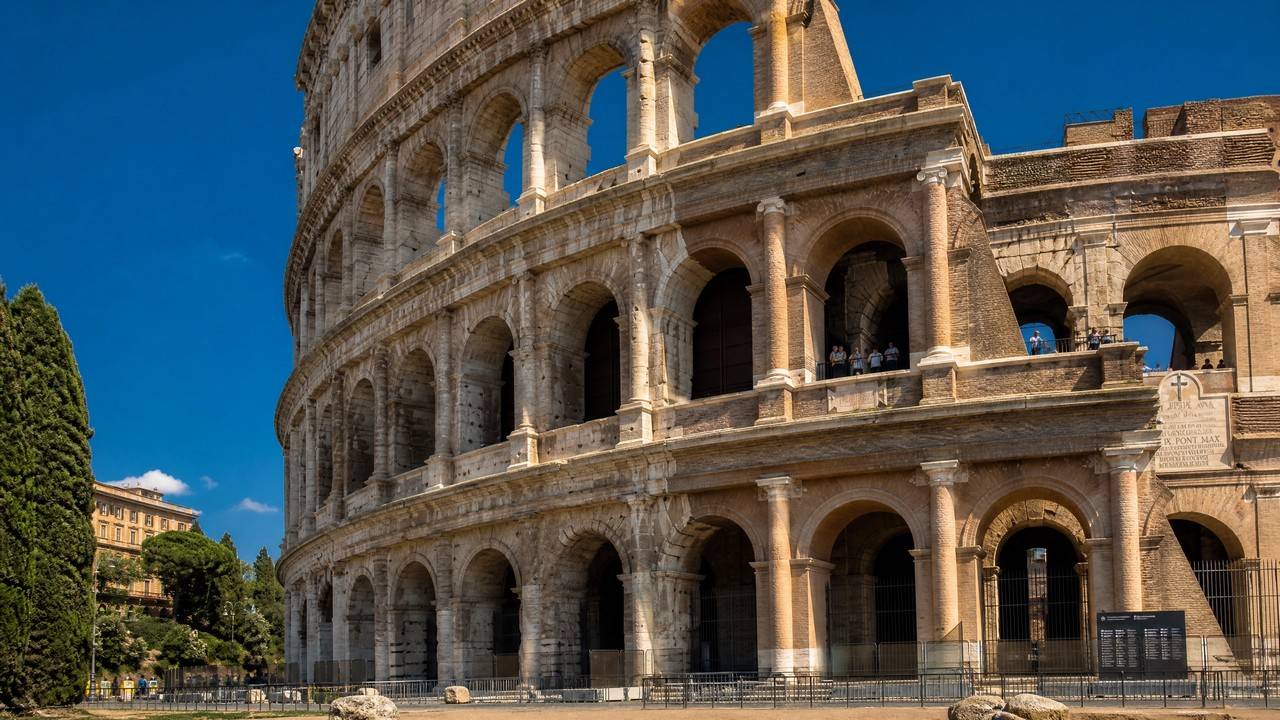
Colosseo
The Colosseum, originally the Flavian Amphitheatre, is the enduring symbol of ancient Rome, inaugurated in AD 80 as an arena that held some 50,000 spectators. Gladiators and wild beasts fought here, and mock naval battles were once staged by flooding the floor. Its four-tier arcaded façade and mastery of concrete and vaulting shaped architecture for nearly two millennia. Today only a ruined shell remains, yet it is still majestic; the restored hypogeum of gladiator passages and a reconstructed arena floor let visitors step back into the empire's splendour and its cruelty.
Historic Ruins & Heritage

Pantheon
The Pantheon is the most complete and greatest surviving building from ancient Rome. Famous for its huge dome and the oculus skylight, it has stood nearly two thousand years and remains a pinnacle symbol of Roman engineering, a stunning sight in Rome. The Pantheon stands in Rome's center, one of the most complete and best-preserved buildings from ancient Rome (standing and in use for nearly two millennia). Built in Roman times as a temple to all the gods (hence its name), later converted to a church, it survived. Most astonishing is its unparalleled huge dome: a perfect hemispherical concrete dome by the Romans, with a span so large (diameter equals height, over forty meters) that, nearly two thousand years on, it remains the world's largest unreinforced concrete dome, a pinnacle marvel of Roman engineering. More wondrous, at the dome's center is a circular oculus (eye), the only natural light source: a beam of light pours through, moving across the grand, solemn hall with the sun, solemn, sacred and poetic (on rainy days, rain also falls through). Entering, looking up at the perfect dome and the pouring light, one is stunned by Roman ingenuity. Raphael and others are buried here. Visiting Rome and admiring the intact, stunning Pantheon, looking up at the dome's light, is a stunning sight.
Historic Ruins & Heritage

Trevi Fountain
Tucked into a tiny piazza where Roman alleys collide, the Trevi Fountain was begun in 1732 under Pope Clement XII and took thirty years to complete — Rome's largest and most celebrated Baroque fountain. Oceanus stands on a shell chariot at the centre, flanked by Tritons leading horses, one calm and one restless, embodying the sea's two tempers, while the facade of Palazzo Poli serves as the fountain's natural stage. The legend of tossing a coin over your right shoulder into the water made it world-famous, funding charity with thousands of euros daily. There is no off-season: before 7 am is the only window for an empty fountain shot.
Square & Landmark

Basilica di San Pietro
St Peter's Basilica rises on St Peter's Square in Vatican City, the Catholic Church's holiest shrine and a summit of Renaissance architecture. Masterminded in turn by Bramante, Michelangelo and Bernini, its dome — designed by Michelangelo — reaches about 136 metres. Inside lie treasures like the Pietà, and from the cupola you survey Rome; it is the ultimate landmark for pilgrims and travellers alike.
Church & Religious Site

Fontana di Trevi
The summit of Baroque fountain-making: 26.3 metres tall and about 49 wide, unrolled against the facade of Palazzo Poli and finally completed in 1762, after architect Nicola Salvi's death. Oceanus charges forward in his chariot as water tumbles down tiered rocks into a broad basin. Toss a coin over your left shoulder with your right hand, legend says, and you will return to Rome - the roughly 3,000 euros scooped from the basin daily has gone to charity since 2007. Fellini's La Dolce Vita fixed its nights into film history.
Square & Landmark
No.6 Rome
Temples of the Forum Boarium
The Temple of Portunus stands in the Forum Boarium area beside the Tiber in Rome and is one of the better-preserved ancient Roman temples. It was dedicated to Portunus, a god linked to harbours and shipping; the building is rectangular, with a colonnade and a pediment, and it survived largely intact because it was long used as a church. Around it lie the cattle market and river port of ancient Rome, with the round Temple of Hercules Victor and the Bocca della Verità nearby, so it can be walked together with the Tiber embankment. The area gives a sense of the ancient river port and its temples; visits centre on the exterior, and arrangements for opening and entry follow on-site notices.
Historic Ruins & Heritage
🎯 Rome Experiences
Colosseum Tour
Step into the ancient arena.
Vatican Art
Sistine Chapel & St. Peter's dome.
Trevi Fountain Wish
Coin-toss tradition at Trevi.
Old Town Stroll
Stone streets & outdoor cafés.
Roman Food Tour
Carbonara pasta & artisanal gelato.
This destination has mild winters and pleasant weather; the best time to visit is Apr–Jun, with temperatures around 8–28°C. Other months range 3–31°C, with fewer crowds and better value.
📰 Travel Guides
More Guides →Rome Travel Guide 2026: Colosseum Tickets & 3-7 Day Plans
Italian tourism · City👁 7.7k
England & Scotland 7-Day Tour Guide 2026: From London
Italian tour route · Spot👁 5.4k
Italy 9-Day Group Tour Guide: Rome & Renaissance
Italian tour route · Spot👁 3.5k
🚌 Transport & Stays
City Transport
🚄~ 14 ()
Airport Express (Leonardo Express)
Fiumicino Airport to city ~32 min
~ 14 ()
🚇One-way ~1.5 EUR (reference)
Metro Line A/B
Connects Colosseum, Vatican, etc.
One-way ~1.5 EUR (reference)
🚶—
Walking
Historic center attractions concentrated
—
🚕()
Taxi
Nighttime or with luggage
()
Recommended Stay Areas
🏟️ Colosseum / Ancient City Center
Near main ruins, convenient transport
⛪ Vatican Area
Near St. Peter's Basilica
🚉 Termini Station Area
Transport hub with a range of budget-to-mid-range stays
🌷 Spanish Steps / Piazza Navona
Elegant old town & shopping
Free Consultation
Want to plan your Rome trip in more depth?
Tell us your departure city, travel dates and interests, and Usitour will tailor a trip just for you.