📍 Destination Overview
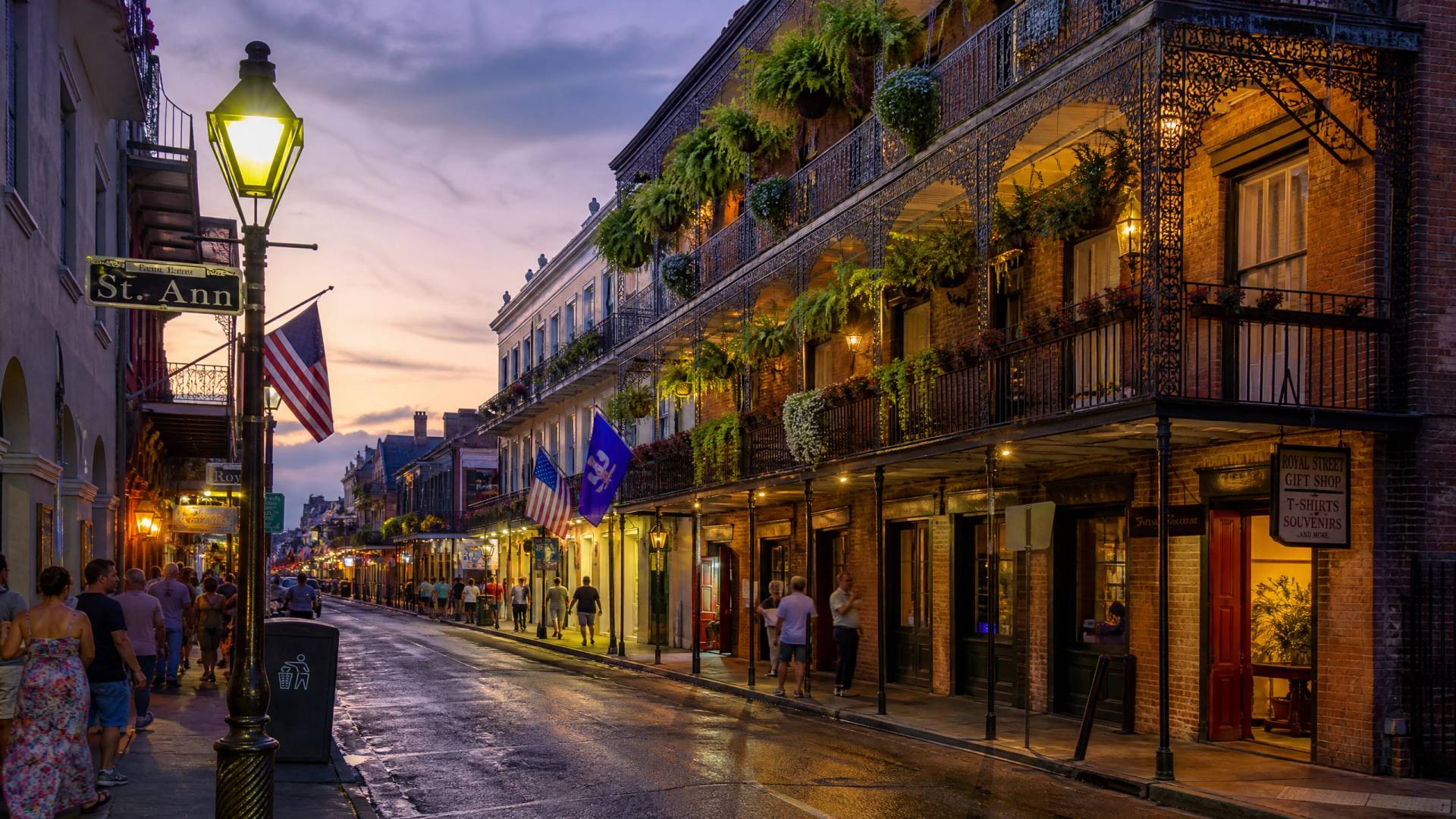
New Orleans is Louisiana's largest city, famous for jazz, the French Quarter and Mardi Gras. The Vieux Carré has ironwork balconies and cobblestone; Bourbon Street jazz clubs never close. St. Louis Cathedral and Jackson Square are the heart; Garden District mansions are elegant. Cajun and Creole food is signature: gumbo, crawfish and beignets. NOLA is known for music, food and unique Creole culture.
🗓️ Best Season
Feb-May / Oct-Nov
🕐 Duration
3-5 days
👪 Best For
Photo · Couples · Family
🎯 Highlights
Culture · Food · Nature
💰 Budget
Moderate
🧳 Preparation
Passport · Visa · Insurance
☀️ Best Time to Visit & Climate
🎭 Spring: Feb–May
8–29°C with Mardi Gras and the jazz festival—ideal for wandering the French Quarter.
🍂 Autumn: Oct–Nov
12–27°C as the mugginess breaks—the second most comfortable window after spring.
January
🌤️
17°/6°
February
🌸
19°/8°
Fair
March
🌸
22°/12°
Best
April
🌸
26°/16°
Best
May
🌸
29°/20°
Fair
June
☀️
32°/23°
July
☀️
33°/24°
August
☀️
33°/24°
September
🍂
31°/22°
October
🍂
27°/17°
Best
November
🍂
22°/12°
Fair
December
🌤️
18°/8°
📷 Top Attractions
More Attractions →
French Quarter
The French Quarter (Vieux Carré) is New Orleans' oldest, most seductive quarter—French and Spanish colonial squares, wrought-iron balconies and cobbled lanes weaving a languid, feverish mood. Bourbon Street parties to music all night; Jackson Square is framed by St. Louis Cathedral, artists and street jazz. Cradle of jazz and stage for Cajun-Creole cuisine, by day or night it immerses you in the singular rhythm of the 'Big Easy'.
Old Town & Historic District
No.2 New Orleans
Bourbon Street
Bourbon Street is located in the heart of the French Quarter of New Orleans and is the city's most famous and iconic street, named after the French Bourbon dynasty. The street runs east-west through the French Quarter core, from Canal Street to Esplanade Avenue, about 13 blocks long. Bourbon Street is the center of New Orleans nightlife, dining, music, and culture, with numerous historic jazz clubs, bars, restaurants, boutique hotels, and souvenir shops. It offers world-class live jazz and Creole cuisine, the Mardi Gras "bead throwing" tradition, and adult entertainment like Larry Flynt's Hustler Club, making it a must-visit to experience New Orleans' unique culture, nightlife, and Southern charm.
Leisure & Entertainment
No.3 New Orleans
Jackson Square
Jackson Square is the heart of the French Quarter, evolved from the colonial Place d'Armes, its classic tableau of the Andrew Jackson equestrian statue backed by St. Louis Cathedral. The surrounding iron fences host painters and portraitists; across the way the old Cabildo and Presbytère chronicle Louisiana's transfers and changes. Whether catching street jazz, buying a watercolour or simply sitting to feel the 'Big Easy' languor, it is New Orleans' most gathering point.
Square & Landmark
No.4 New Orleans
The National WWII Museum
The National WWII Museum is located in the Warehouse District of downtown New Orleans and is the largest and most influential World War II museum in the United States, designated by Congress as the official National WWII Museum. Founded by the late historian Stephen Ambrose, it began with a focus on D-Day and has expanded into a comprehensive narrative of America's combat experience in both the European and Pacific theaters. The museum comprises multiple pavilions: the Louisiana Memorial Pavilion features the 4D film Beyond All Boundaries narrated by Tom Hanks, using immersive technology to recreate key battles. The Pacific Pavilion tells the brutal and heroic story of the Pacific War through artifacts and personal stories from Guadalcanal and Iwo Jima. The European Pavilion focuses on D-Day and the Battle of the Bulge, tracing the path from Normandy to Berlin. The newly opened Liberation Pavilion presents a macro perspective on how WWII reshaped American society. The museum houses extensive artifacts, oral history videos, and personal letters from veterans, serving as a solemn hall to honor the sacrifice and contribution of the Greatest Generation.
Museum
No.5 New Orleans
City Park
City Park in New Orleans spans about 1,300 acres in the mid-north of the city and ranks among the oldest urban parks in the United States, as well as the largest public green space in New Orleans. Its history traces back to 1853, predating New York Central Park by several years, and it carries a century and a half of collective memory for the Crescent City. The most enchanting feature is the rows of twisted, moss-draped live oaks, the oldest exceeding 800 years in age, their canopies forming cathedral-like green corridors of shade. The park packs in a remarkable variety of attractions including the New Orleans Museum of Art, a sculpture garden, a botanical garden, the Storyland children playground, golf courses, an equestrian center, paddleboat waterways, and classic coffee stands. It is a multifunctional cultural oasis where locals jog, picnic, paint, and wed. Following extensive restoration after Hurricane Katrina, the park is more beautiful today than ever.
Park & Garden
No.6 New Orleans
St. Louis Cemetery No. 2
St. Louis Cemetery No. 2, located Uptown between Claiborne and Saratoga avenues, was established in 1829 and is one of New Orleans's three historic above-ground cemeteries, designated a National Historic Landmark in 1975. It uses the city's distinctive above-ground tombs, a response to the high water table that makes deep burial impossible. The cemetery holds the remains of 19th-century Creole aristocrats, politicians and religious society members, with ornately carved family tombs used by generations. Most visits are guided, since the cemetery's unique burial traditions and history are best understood with context.
Historic Ruins & Heritage
🎯 New Orleans Experiences
Cultural Deep Dive
Historic sites, museums & local culture of New Orleans.
Food Discovery
Taste authentic American cuisine from street food to fine dining.
Outdoor Adventure
Natural scenery & outdoor activities around New Orleans.
Shopping
Local markets, crafts & brand shopping for unique souvenirs.
Nightlife
Bars, shows & nightlife in New Orleans.
The best windows are Feb–May and Oct–Nov. Spring runs 8–29°C with Mardi Gras and the jazz festival; autumn brings 12–27°C once the mugginess breaks. Jun–Sep is sultry (33°C) within hurricane season, and January averages 6°C.
🚌 Transport & Stays
City Transport
✈️$100-500
Flight
Extensive domestic network, airports in all major cities.
$100-500
🚗$30-60/day
Car Rental
Well-maintained highways, ideal for road trips.
$30-60/day
🚌$20-100
Bus/Train
Greyhound & Amtrak connect cities, budget-friendly.
$20-100
Recommended Stay Areas
🏨 City Center / Old Town
Central New Orleans hotels, convenient & close to attractions.
🏡 B&B / Guesthouse
Local-style B&Bs for an authentic stay.
🏕️ Resort / Estate
Resorts, estates & design hotels for a unique stay.
🏠 Apartment / Rental
Self-catering apartments, great for families & longer stays.
Free Consultation
Planning a trip?
Tell us your departure city and dates — USITrip will craft your journey.