Graz

Graz Travel Guide

Key facts

  • On this page: 0 travel guides and 6 attractions
  • Attractions include opening hours, ticket prices, transport and suggested visit duration
  • Guides cover itinerary planning, visas, accommodation and budget tips
  • Content is updated from the CMS and verified facts

This page collects all travel content for Graz: 0 guides covering itinerary planning, attraction recommendations, visa application, transport and accommodation, plus 6 attractions with opening hours, ticket prices and practical tips, continuously verified and updated.

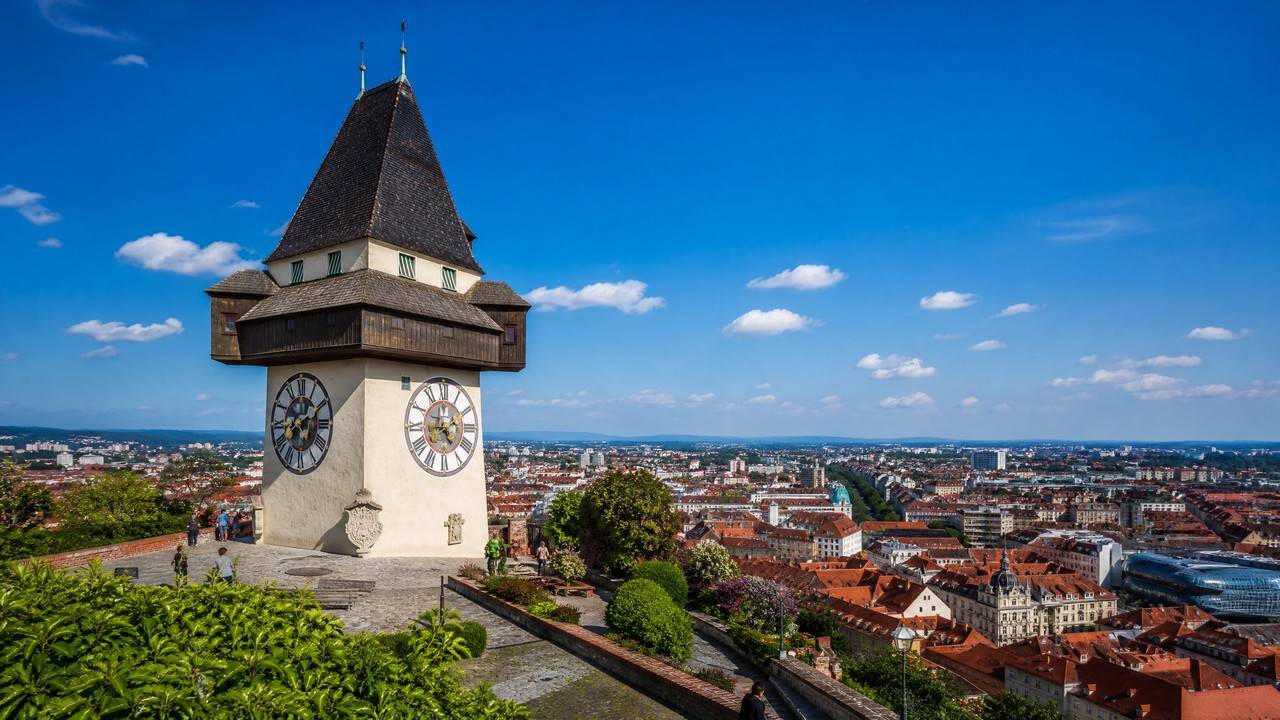
Capital of Styria, with a landmark clock tower and a UNESCO old town—a Design City where classical meets avant-garde.

📍 Destination Overview

Graz is Austria's second-largest city and the capital of Styria, whose well-preserved old town is a UNESCO World Heritage site. The clock tower atop Schlossberg is the city's symbol; climbing the hill overlooks a panorama of the old town's red-tiled roofs. Here the classical and the avant-garde marvelously coexist—the blue bubble-like Kunsthaus Graz is nicknamed the 'Friendly Alien,' and the artificial island on the Mur River looks like a floating shell. The provincial armory houses tens of thousands of medieval weapons, and Eggenberg Palace's gardens are elegant and refined. As a UNESCO City of Design, Graz blends medieval rusticity with contemporary creativity—full of vitality yet rich in heritage.

🏰 Location
Austria · Styria · the second-largest city on the Mur River
🗓️ Best Season
May-Sep
🕐 Time Difference
6-7 hrs behind Beijing
💰 Currency / Language
Euro EUR / German
🕐 Suggested Duration
1-2 days · old town + Schlossberg + art museum
🔌 Outlet / Voltage
Type C/F outlets · 230V · adapter needed

☀️ Best Time to Visit & Climate

🌸 May–Sep
Pleasant weather — old town and castle hill at their best.
Jan
❄️
3°/-3°
Feb
🌥️
6°/-2°
Mar
🌤️
12°/1°
Apr
🌷
17°/5°
May
🌸
22°/10°
Best
Jun
☀️
25°/13°
Best
Jul
☀️
27°/15°
Best
Aug
☀️
26°/15°
Best
Sep
🍂
21°/10°
Best
Oct
🍁
15°/6°
Nov
🌥️
8°/1°
Dec
🎄
3°/-2°

📷 Top Attractions

Steirisches Volkskundemuseum
No.1 Graz
Steirisches Volkskundemuseum
Run by the Joanneum museum network, the Styrian Folk Life Museum sits on a quiet lane at the foot of Graz's Schlossberg, piecing together the rural history of Styria through farmhouse furniture, traditional dress, religious folk art and festival gear. Rather than a parade of quaint curiosities, the displays ground farming, faith and seasonal customs in specific objects — recreated peasant parlours lead to storerooms and hearths, the wear on textiles and woodwork still visible. Low display density and the old building's atmosphere reward an unhurried visit, best rounded off in a café nearby.
Museum
Graz Museum
No.2 Graz
Graz Museum
To understand how Graz grew from a frontier stronghold into a cultural capital, the city museum is the fastest entry point. Housed in a historic building on Sackstraße, its permanent exhibition runs on a timeline: medieval walls and burgher uprisings, the era when the Habsburgs ruled Inner Austria from here, photographic records of Second World War bombing, through to the turn-of-the-millennium European Capital of Culture transformation. Historic city models let you match the streets underfoot with the town plan of centuries past. Modest in size, it slots perfectly before a Schlossberg climb.
Museum
Museum im Palais
No.3 Graz
Museum im Palais
Inside a baroque town palace on Graz's Sackstraße, the Museum im Palais presents the cultural-history collections of the Joanneum network. The display follows secular domestic life from the Renaissance to the Biedermeier era — furniture, glass, porcelain, silver and clocks in sequence — and shelters the state coin cabinet as well. The palace changed hands many times, yet the stucco and ceiling painting of its stair hall preserve aristocratic swagger. After the grand galleries, this domestic scale feels unexpectedly personal, and an hour completes the circuit.
Museum
Steiermärkisches Naturkundemuseum
No.4 Graz
Steiermärkisches Naturkundemuseum
Natural history is the oldest branch of Graz's Joanneum: when Archduke Johann founded the institution in 1811, scientific collections were its cornerstone. Today the Natural History Museum occupies the Joanneum Quarter on Raiffeisenstraße, sharing a campus with the Neue Galerie: minerals and crystals, Alpine flora and fauna, and fossils tell the story of Styria from ancient seas to high mountains. Displays balance scholarly depth with family-friendly presentation — the interactive elements suit school-age children — and one visit links neatly to the rest of the campus.
Museum
Styrian Armory
No.5 Graz
Styrian Armory
Built in Graz between 1642 and 1645 by the Styrian estates against the Ottoman threat, the Landeszeughaus is the largest surviving historical arsenal in the world: some 32,000 pieces of arms and armour across four floors. Pikes, muskets and breastplates stay racked much as the armourers left them, and most never saw battle — precisely why they survive intact. Original timber framing and ironwork complete the seventeenth-century time capsule; step inside and you're walking through a forest of shafts and steel that no other European city can replicate.
Museum
Graz Tourist Office
No.6 Graz
Graz Tourist Office
Most guidebooks skip tourist offices, but this one on Herrengasse, steps from Graz's Hauptplatz, repays a dedicated stop. Beyond free maps and advice, two things matter: the day-priced Graz Card, which bundles public transport and entry to most museums, and the daily old-town walking tours led by licensed guides who explain the Schlossberg, the clock tower and why the ensemble earned UNESCO status. Event intelligence — market dates, festival tickets — is at its most complete here. Make it your first stop and the rest of the visit runs smoother.
Practical Info

🎯 Graz Experiences

Climb Schlossberg
Overlook the panorama of the red-roofed old town.
The Friendly Alien
The blue bubble art museum.
Provincial Armory
The impressiveness of medieval weapons.
Mur Island
The shell floating on the river.
Old Town Stroll
The leisure of the medieval quarter.
May–Sep has the most pleasant climate, ideal for the old town and Schlossberg. Graz is a UNESCO City of Design where the classical and avant-garde coexist. It is about 2.5 hours by train from Vienna.

🚌 Transport & Stays

City Transport
🚆
Intercity Train
Vienna to Graz about 2.5 hrs
Depends on class (reference)
🚋
Tram
Covers city and old town
Single trip depends on zone (reference)
🚶
Walking
Compact old town good on foot
—
🚞
Schlossberg Funicular
To the Schlossberg clock tower
Depends on fare (reference)
Recommended Stay Areas
🏘️ Old Town Center (recommended)
Near Schlossberg and Main Square
🐚 Along the Mur River
Near the art museum and artificial island
🚉 Around the Train Station
Convenient transit, budget-friendly
🏰 Around Eggenberg Palace
Near the garden palace
Free Consultation

Want to plan your Graz trip in more depth?

Tell us your departure city, travel dates and interests, and Usitour will tailor a trip just for you.