📍 Destination Overview
Oslo, Norway's capital at the innermost end of the Oslofjord, is a green Nordic city of design and nature. The Vigeland Sculpture Park fills its grounds with over two hundred nude figures expressing every human emotion, its central Monolith world-famous. The Opera House rises like a white glacier with a walkable roof, and the Munch Museum holds "The Scream"—the gateway to fjord cruises.
🏙️ Location
Norway · Oslofjord · Capital at the Fjord's End
🗓️ Best Season
Summer, Jun-Aug
🕐 Time Difference
−6 to −7 hrs vs Beijing
💰 Currency / Language
Norwegian Krone (NOK) / Norwegian, English
🕐 Suggested Duration
2 days · sculpture park, opera house & museums
🔌 Outlet / Voltage
Type C / F outlets · 230V · adapter needed
☀️ Best Time to Visit & Climate
☀️ Summer: Jun–Aug
Near midnight sun at 20–22°C—the only peak season for fjord cruises, the Opera House roof and island hopping.
Jan
❄️
-1°/-6°
Feb
❄️
0°/-6°
Mar
🌥️
5°/-3°
Apr
🌤️
11°/1°
May
🌷
16°/6°
Jun
☀️
20°/10°
Best
Jul
☀️
22°/13°
Best
Aug
🌤️
21°/12°
Best
Sep
🍂
15°/8°
Oct
🍁
9°/4°
Nov
🌥️
3°/-1°
Dec
❄️
0°/-4°
📷 Top Attractions
More Attractions →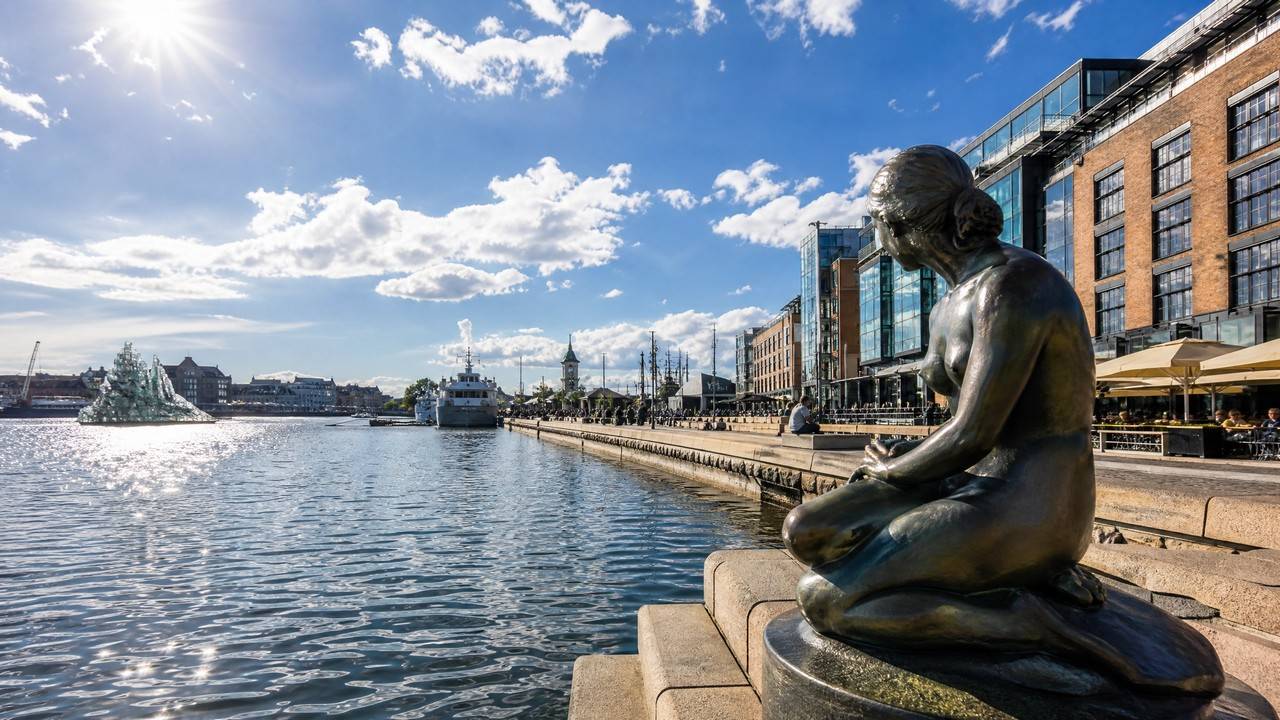
Vigeland Sculpture Park
The Vigeland Sculpture Park is the world's largest sculpture park by a single artist, created by Norwegian sculptor Gustav Vigeland over his lifetime. It has over two hundred bronze and granite sculptures on the theme of human life from birth to death, with sincere emotions, showing all human feelings. The iconic Monolith rises high, made of countless intertwined human figures, stunning. Free and open, it is both an art temple and a citizen's leisure place. Strolling and reflecting on life's meaning is a moving, deep Oslo experience.
Park & Garden

Munch Museum
The Munch Museum is a modern museum memorializing Norway's expressionist master Edvard Munch, by the Oslo waterfront, holding the many works Munch donated to the city. This tall modern building systematically shows Munch's paintings, drawings and prints across his life, most famous being the masterpiece The Scream, expressing modern anxiety and loneliness. With strong color and distorted lines, Munch deeply portrayed love, fear, illness and death, striking the heart. Approaching these emotionally charged works, you feel his extraordinary achievement and deep influence on modern art, thought-provoking.
Museum

Oslo Opera House
Opening in 2008 on the Bjorvika waterfront, the Oslo Opera House by Snohetta is Norway's most important landmark in over half a century. Like a glacier rising from the fjord, its sloped roof of white Italian marble and granite stretches to the water's edge, and visitors may walk freely up the slope to the summit for 360-degree views over the Oslofjord, the City Hall and the islands beyond. The main auditorium seats about 2,100 beneath an undulating oak ceiling beside the largest glass wall in Scandinavia. It is a national stage for opera and ballet — and a free public living room; mind the icy roof in winter.
Events & Shows

Fram Museum
The Fram Museum, on the museum peninsula of Bygdoy in Oslo, wraps a single legendary ship in a triangular hall: the Fram. Launched in 1893 to Fridtjof Nansen's design, with a rounded hull built to be lifted by the ice, she drifted with the Arctic pack to record latitudes, then carried Amundsen to Antarctica in 1911 — the wooden ship that travelled farthest north and south. Board her deck, duck into the low quarters under two metres high to see the sailors' bunks, instruments and expedition relics, and step into the simulated polar storm for a taste of the ice. Superb for families, it pairs with the Kon-Tiki and Norsk Folkemuseum across the peninsula for Oslo's best museum day.
Museum

Oslo City Hall
Oslo City Hall is Oslo's most iconic building. Built in 1950, it hosts the Nobel Peace Prize ceremony each December 10 — featuring grand murals and Oslofjord views. Built 1950 on WWII ruins. Nobel Peace Prize ceremony — Dec 10. Grand murals depicting Norwegian history. Faces Oslofjord; twin towers iconic.
Square & Landmark

Akershus
Akershus Fortress has guarded the entrance to Oslo's harbour since King Håkon V began building it in 1299. The medieval castle and its Renaissance fortress grounds are free to wander: ceremonial halls, a castle church and the Royal Mausoleum sit within thick walls, a Resistance Museum recalls Norway's WWII occupation, and ramparts offer sweeping Oslofjord views. Across the bay on the Bygdøy peninsula, the famous Viking Ship Museum is being transformed into the new Museum of the Viking Age — check its current status before visiting.
Castle & Fortress
🎯 Oslo Experiences
Sculpture Park
Figures and the Monolith.
Opera House Roof
Stroll and overlook the bay.
Munch's 'The Scream'
The shock of a famous painting.
Viking Longship
A thousand-year heritage.
Wharf Leisure
A stylish waterfront.
Oslo is Norway's capital at the fjord's end, best in summer (Jun–Aug) with long days and pleasant weather. Don't miss the free Vigeland Sculpture Park (hundreds of figures and the Monolith), the opera house with its walkable roof, the Munch Museum holding 'The Scream,' and the Viking ship heritage. This is the starting point for the Bergen Railway and onward fjord trips.
🚌 Transport & Stays
City Transport
✈️≈20 min (ref.)
Airport Express (Flytoget)
From Gardermoen Airport
≈20 min (ref.)
🚋Per trip (ref.)
Metro / Tram
Covers downtown
Per trip (ref.)
🚆Scenic route (ref.)
Bergen Railway
Toward the fjords
Scenic route (ref.)
🚢Per itinerary (ref.)
Fjord Cruise
Oslofjord
Per itinerary (ref.)
Recommended Stay Areas
🛍️ City Center (Top pick)
Near main street & opera
⚓ Aker Brygge
Stylish waterfront stay
🗿 Around Sculpture Park
Quiet area near the park
🚉 Around Central Station
Easy transit access
Free Consultation
Free Consultation
1-on-1 travel consultant customizes your Oslo trip for free based on your schedule and preferences.