📍 Destination Overview
Bath is a UNESCO World Heritage city in southwest England and the country's only natural thermal spa. Two thousand years ago, the Romans built magnificent baths here, still steaming with warm spring water. In the 18th century, the honey-colored Bath stone Georgian architecture of the Royal Crescent and the Circus created the epitome of English elegance. This was Jane Austen's city, full of Regency-era charm. Bath Abbey stands grandly, and nearby Stonehenge makes for an easy excursion - a spa town of history and grace.
♨️ Location / Region
UK · South West England · Roman spa town on the River Avon
🗓️ Best Season
May-Sep
🕐 Time Difference
UTC -7~-8 from Beijing
💰 Currency / Language
GBP / English
🕐 Recommended Duration
1-2 days · Roman Baths + Royal Crescent + Nearby
🔌 Outlet / Voltage
Type G triangular outlets · 230V · different from China, bring adapter
☀️ Best Time to Visit & Climate
🌸 Summer: May–Sep
Pleasant weather for old town and garden strolls.
January
🌧️
8°/2°
February
🌥️
9°/2°
March
🌤️
11°/3°
April
🌷
14°/5°
May
🌸
17°/8°
Best
June
☀️
20°/11°
Best
July
☀️
22°/13°
Best
August
🌤️
22°/13°
Best
September
🍂
19°/11°
Best
October
🍁
15°/8°
November
🌧️
11°/5°
December
🎄
8°/3°
📷 Top Attractions
More Attractions →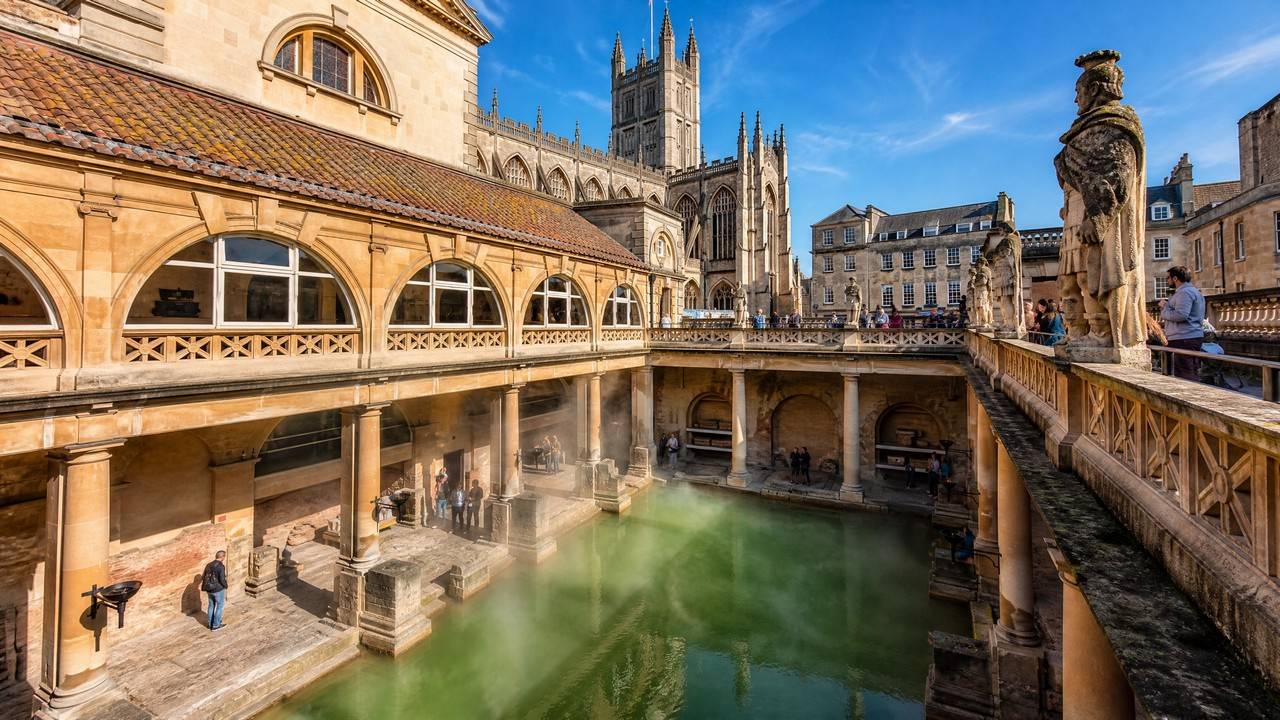
Roman Baths
The Roman Baths are Bath's world-famous, well-preserved Roman spa ruins—a great bath built on natural hot springs nearly 2,000 years ago, the origin and soul of this spa city and among Britain's most famous Roman remains. Bath is named for its springs and baths—nearly 2,000 years ago the Romans found the natural hot springs (Britain's only natural thermal spring) and built baths and a temple. The Roman Baths are the precious remains, well preserved. At its heart is the Great Bath—green thermal water in an ancient stone pool, ringed by Roman columns and a gallery (upper buildings later), evoking Roman bathing. Also the spring source, heating system, changing rooms, the temple of the goddess Sulis Minerva and artifacts, with vivid commentary. Together with the city, a World Heritage Site. Exploring the Roman Baths is Bath's top sight.
Sightseeing
No.2 Bath
Bath Abbey
Bath Abbey is a magnificent Gothic church in Bath's center—next to the Roman Baths, famed for its great stained glass and fan vault, the city's faith landmark and architectural gem. Bath Abbey sits in the center by the Roman Baths, a magnificent Gothic church—built in the Middle Ages, mainly late medieval, a fine example of late English Perpendicular Gothic. Its west front has the unique 'Ladder of Angels' carving. Inside, the stunning fan vault over the nave and choir—among England's fan-vault masterpieces. Many great stained-glass windows (the 'Lantern of the West'). Floors and walls bear historical monuments. With the Roman Baths and Georgian buildings, a core World Heritage landmark. Admiring the abbey's fan vault and glass is a not-to-be-missed Bath sight.
Church & Religious Site
No.3 Bath
Royal Crescent
The Royal Crescent is Bath's grandest Georgian ensemble, designed by John Wood the Younger between 1767 and 1774 — thirty terraced houses sweeping a graceful arc above Royal Victoria Park. It is hailed as one of the supreme achievements of British town planning and classical façades. At dusk the arc is outlined in warm light, especially serene and elegant.
Sightseeing
No.4 Bath
Pulteney Bridge & Pulteney Weir
Pulteney Bridge and Weir stand in central Bath, spanning the River Avon, and are among the finest eighteenth-century Palladian city bridges. A row of shops runs along both sides of the bridge deck, creating a street on a bridge, a design with very few surviving examples in Europe. Built of pale stone with three arches, it stands above Pulteney Weir, a curved stepped weir across the river over which water spills in tiers, a familiar viewpoint in Bath. From the bridge or the riverside paths you can take in the weir, the bend of the river and the surrounding buildings. Bridge and weir together link the city centre with the residential area and green space on the far bank, walkable in both directions. Shops on the deck remain in use, so note access and opening conditions on site.
Square & Landmark
No.5 Bath
Jane Austen Centre
The Jane Austen Centre on Gay Street in Bath is a museum devoted to the novelist Jane Austen. Austen lived in Bath for several years, and the city appears in the settings and lives of her characters. Housed in a Georgian terraced building, the centre traces her life, family, letters and writing background, using costume, furniture and period household objects to show genteel English life in the late eighteenth and early nineteenth centuries. Permanent displays are usually linked by guides, and there is a tea room and a gift shop. The centre is modest in size and suits visitors interested in literature and Regency life. Opening hours, admission and tour arrangements vary by season, so check on-site or official information before visiting.
Sightseeing
No.6 Bath
Fashion Museum
The Fashion Museum in Bath is a museum devoted to dress and textiles, long housed in the Assembly Rooms building on Bennett Street. Its collections centre on clothing, accessories and textiles from the eighteenth century onward, including dress, everyday wear, undergarments, shoes, hats and gloves, arranged by period to show changes in cut and form and to reflect the manners and daily life of different eras. Bath was a leading social city in the eighteenth century, and the Assembly Rooms area once hosted balls and social gatherings, echoing the period of much of the collection. The displays are moderate in scale and suit visitors interested in dress history, craft and fashion. Venue and opening arrangements may change, so check official information or on-site notices before visiting.
Museum
🎯 Bath Experiences
Roman Baths
2,000-year-old spa ruins tour.
Rooftop Thermal Spa
Thermal pool overlooking the ancient city.
Royal Crescent
Georgian crescent elegance.
Jane Austen Tour
Regency-era English atmosphere.
Stonehenge Day Trip
Mysterious prehistoric stone circle.
Best in spring-summer May-Sep. Book Roman Baths and thermal spa in advance. Join a tour or drive to nearby Stonehenge. Winter Christmas market has special atmosphere.
📰 Travel Guides
More Guides →🚌 Transport & Stays
City Transport
🚄Varies by class (reference)
London to Bath ~1.5h
Varies by class (reference)
🚶—
Walking
Compact old town, walkable
—
🚌()
Sightseeing Bus / Stonehenge Tour
To Stonehenge & nearby sites
()
🚕()
Taxi
For hills or with luggage
()
Recommended Stay Areas
♨️ City Center (Preferred)
Near Roman Baths & Abbey
🏛️ Royal Crescent Area
Georgian elegant neighborhood
🌉 River Avon
Near Pulteney Bridge & river views
🚉 Bath Spa Station Area
Convenient for London
Free Consultation
Want to plan your Bath trip in more depth?
Tell us your departure city, travel dates and interests, and Usitour will tailor a trip just for you.