📍 Destination Overview
☀️ Best Time to Visit & Climate
No seasonal data available
📷 Top Attractions
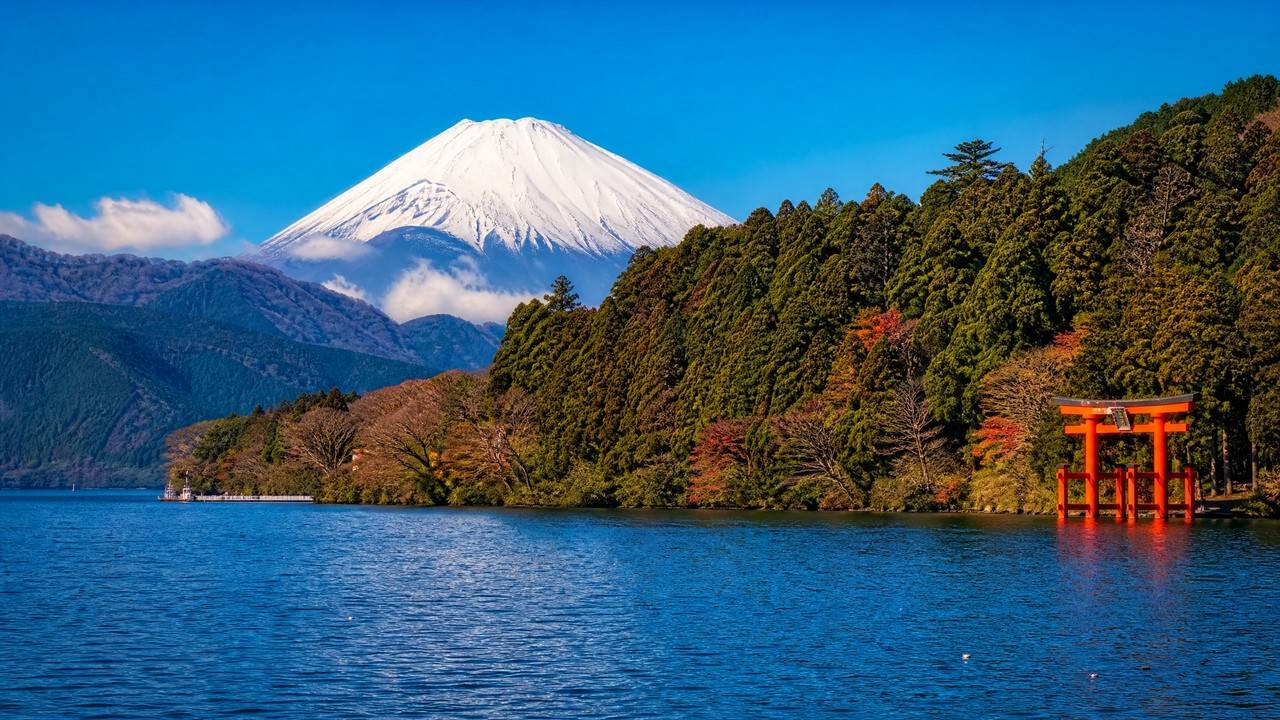
Mt Fuji
Mount Fuji rises 3,776 m as Japan's highest peak and an active stratovolcano whose last major eruption, the Hōei event, came in 1707. Straddling Shizuoka and Yamanashi prefectures, its almost perfect cone and long-lasting summit snow have made it a sacred body since antiquity: Sengen Shrine at the foot and the Okumiya on the crater rim anchor a living faith, while Hokusai's Thirty-six Views and Hiroshige's prints carried the silhouette worldwide. In 2013 Fuji was inscribed as a World Cultural Heritage site, 'Sacred Place and Source of Artistic Inspiration', bundling twenty-five component parts including the Fuji Five Lakes, Oshino Hakkai, Shiraito Falls and Miho no Matsubara. During the short summer season the Yoshida, Subashiri, Fujinomiya and Gotemba trails climb to the summit crater, and most hikers walk through the night to greet goraikō, the sunrise seen from the top. Outside the season the classic experience is the long view from the fifth stations, Oshino and the shore of Lake Kawaguchi.
National Park & Nature
No.2 Mount Fuji Area
Daimon Dam
The Daimon Dam sits at the foot of Mt. Fuji between Fujiyoshida and Kawaguchiko, Yamanashi, holding the meltwater and river flow in a man-made lake. The dam rests in a green valley; its still water mirrors Fuji, with lake-and-mountain scenery all around. Away from the busy main lakeshore, it is a quiet stop and supply point on a Fuji-loop drive.
National Park & Nature
📰 Travel Guides
More Guides →
Free Consultation
Free Consultation
1-on-1 travel consultant customizes your Mount Fuji Area trip for free based on your schedule and preferences.