📍 Destination Overview
Hiroshima, the largest city in Japan's Chugoku region, is crossed by six rivers and called the "City of Water." Devastated by the atomic bomb in 1945, it became a symbol of peace; the Atomic Bomb Dome and Peace Memorial Park honor the past, and the Peace Flame burns until nuclear weapons vanish. Rebuilt castle and gardens recall Edo elegance, and oysters and okonomiyaki add flavor.
🏙️ Location
Japan · Hiroshima-shi
🗓️ Best Season
May-Aug
💰 Currency / Language
Japanese Yen (JPY) / Japanese
🕐 Suggested Duration
3-5 days
🔌 Outlet / Voltage
Type A/B outlets · 100V · adapter needed
📶 Communication Note
Buy data SIM / eSIM on arrival (reference)
☀️ Best Time to Visit & Climate
🌷 Spring: May
May suits the tidal torii and Peace Park greenery.
🌷 Summer: Jun–Aug
Summer peaks the oysters and Miyajima.
Jan
❄️
9°/1°
Feb
🌥️
10°/2°
Mar
🌤️
14°/5°
Apr
🌸
20°/10°
May
🌷
25°/15°
Best
Jun
☀️
28°/20°
Best
Jul
🌡️
32°/24°
Best
Aug
☀️
33°/25°
Best
Sep
🍂
29°/20°
Oct
🍁
23°/14°
Nov
🌥️
17°/8°
Dec
🎄
12°/3°
📷 Top Attractions
More Attractions →No.1 Hiroshima-shi
Hiroshima Peace Memorial Park
Peace Memorial Park lies in Naka Ward, Hiroshima, built to commemorate the victims of the atomic bombing and to pray for world peace. Created in the 1950s, the park holds the A-Bomb Dome, the Cenotaph for the A-bomb Victims, the Children's Peace Monument and the Peace Bell, along with a museum that systematically presents records of the bombing. The clear Ota River runs through the grounds, where weeping willows stand beside the monuments. Both an important witness to history and a place to reflect on war and wish for peace, it draws many visitors and school groups each year.
Square & Landmark
No.2 Hiroshima-shi
Hiroshima peace memorial
The Hiroshima Peace Memorial (Genbaku Dome), formerly the Hiroshima Prefectural Industrial Promotion Hall, was among the few structures left standing after the 1945 atomic bombing, preserved as it was torn by the blast. Inscribed as a UNESCO World Heritage Site in 1996, it is kept permanently as a symbol of peace and anti-war aspiration. On the Motoyasu River, it joins the Peace Memorial Park across the water—the memorial cenotaph and Peace Flame—as Hiroshima's core site. Visit in a solemn spirit, reflecting on the cost of war and the value of peace; it is a quiet, profound lesson in history.
Sightseeing
No.3 Hiroshima-shi
Hiroshimajo
Hiroshima Castle is a quaint, solemn rebuilt castle in Hiroshima, with a black keep and moat, rebuilt after the war - carrying history and rebirth. In central Hiroshima, also called the Carp Castle. Its core is the black wooden keep, solemn and elegant. The original was destroyed in the 1945 atomic bombing; the present keep was rebuilt after the war - a museum inside, climb for city views. Around it, a wide moat, stone walls and a castle park.
Sightseeing
No.4 Hiroshima-shi
shukkeien
Shukkeien is a pretty, elegant Japanese garden in Hiroshima, a classic garden condensing mountains and water - picturesque in four seasons. In central Hiroshima, a historic daimyo garden. Its name means shrink-scenery; centered on a pond, with islands, hills, streams, pines, a tea house. Four-season beauty; autumn maple best. (Damaged in the bombing, later restored.)
Sightseeing
No.5 Hiroshima-shi
Hiroshima Orizuru Tower
Orizuru Tower stands directly across Aioi-dori from the Atomic Bomb Dome. Built in 2016 under Hiroshima Mazda, it reworked an older building into a place to look at the city's present, past and future rather than a simple viewing platform. The ground-floor product hall and Akushu Cafe are free to enter. On the twelfth floor, Orizuru Hiroba lets you fold a crane from a sheet of special paper and drop it through a glass floor into the fifty-metre Orizuru Wall, a glass column visible from the street below and slowly filled with cranes left by visitors from around the world; each sheet costs JPY 100 and is the tower's most concrete statement about peace. Above it, the rooftop 'Hiroshima no Oka' has no glass at all, only fine mesh, so the wind moves across a gently sloped wooden deck with loaned cushions, facing the Dome and Peace Memorial Park and, on clear days, Mt. Misen on Miyajima. Along the east side runs 'Sanpo', a spiral ramp from street level to the roof, with the seventy-metre 'Kurukuru Cool' slide hidden down its middle; borrow a slide sheet, helmet and knee pads and ride free, as often as you like, which for many children means a dozen times. At JPY 2,200 for adults it is not cheap, but a hand stamp allows same-day re-entry: see the Dome in clear morning light, spend midday in the park, and come back for sunset, which is the best use of the ticket.
Viewpoint
No.6 Hiroshima-shi
Fudoin Temple
Fudoin is a Shingon branch temple (Shin'nichizan Ankoku-mitsuji) at the foot of Mt. Futaba in Ushita, eastern Hiroshima. Some 3.9 km from the hypocenter, it miraculously survived the atomic blast and holds the city's only National Treasure: the golden hall, first built in 1540 in Yamaguchi by the Ouchi clan and moved here by restorer Ankokuji Ekei — the largest surviving medieval karayo (Zen-style) building in Japan. Its Yakushi Nyorai image, bell tower and main gate are all Important Cultural Properties, making the temple a precious vault of culture in the bombed city.
Church & Religious Site
🎯 Hiroshima-shi Experiences
Hiroshima Okonomiyaki
Layered savory pancake Hiroshima-style.
Miyajima Oysters
Fresh Seto Inland Sea oysters.
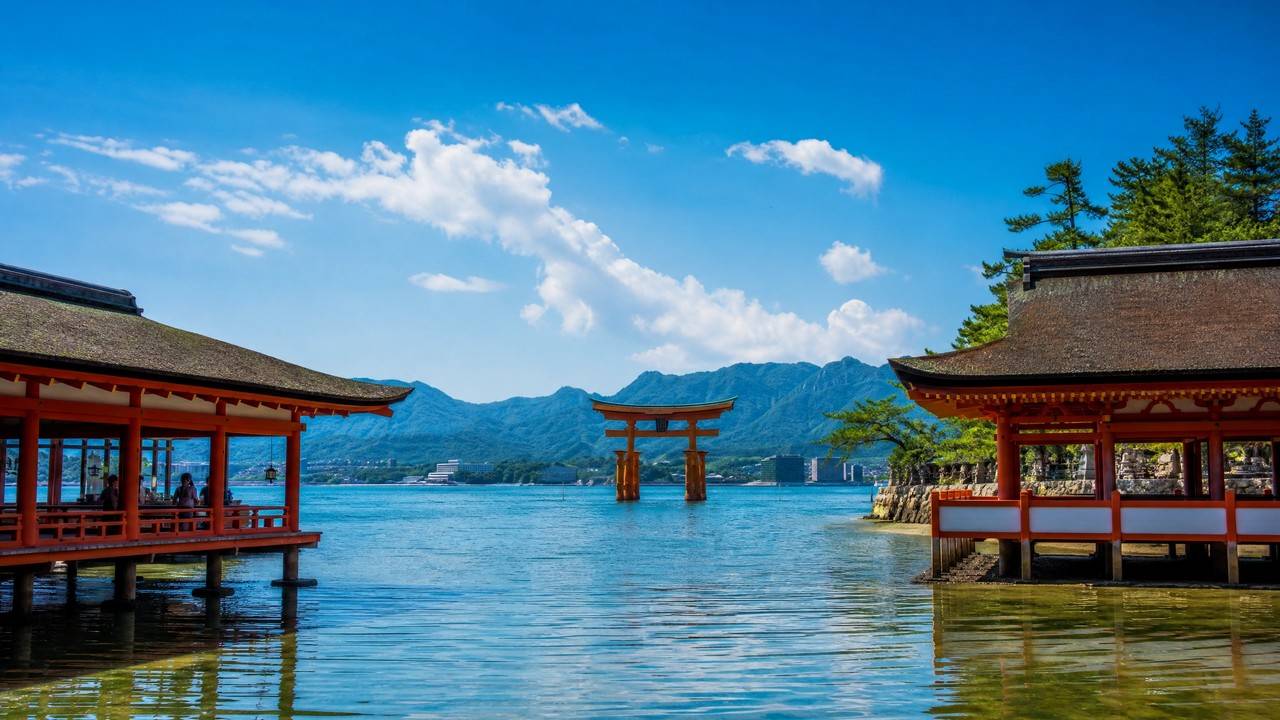
Floating Torii
Torii gate appears to float at high tide.
Misen Ropeway
Mountain summit panorama of the Inland Sea.
Hiroshima-shi has mild winters and hot summers; the best time to visit is May–Aug, with temperatures around 15–33°C. August is hottest (up to 33°C), so pack sun protection and drink plenty of water.
🚌 Transport & Stays
City Transport
✈️Varies by route
Flights
Fly into nearest airport
Varies by route
🚗Rental varies
Self-Drive
Best flexibility for exploring
Rental varies
🚕Local rates
Local Transport
Taxi or shared rides
Local rates
Recommended Stay Areas
🏙️ Hiroshima Station / Hondori
Business hotels and department store area
⛩️ Miyajima Island
Ryokan and onsen hotels
🌊 Peace Park Area
River view hotels
💰 Hiroshima Port / Suburbs
Budget options
Free Consultation
Free Consultation
1-on-1 travel consultant customizes your Hiroshima-shi trip for free based on your schedule and preferences.