📍 Destination Overview
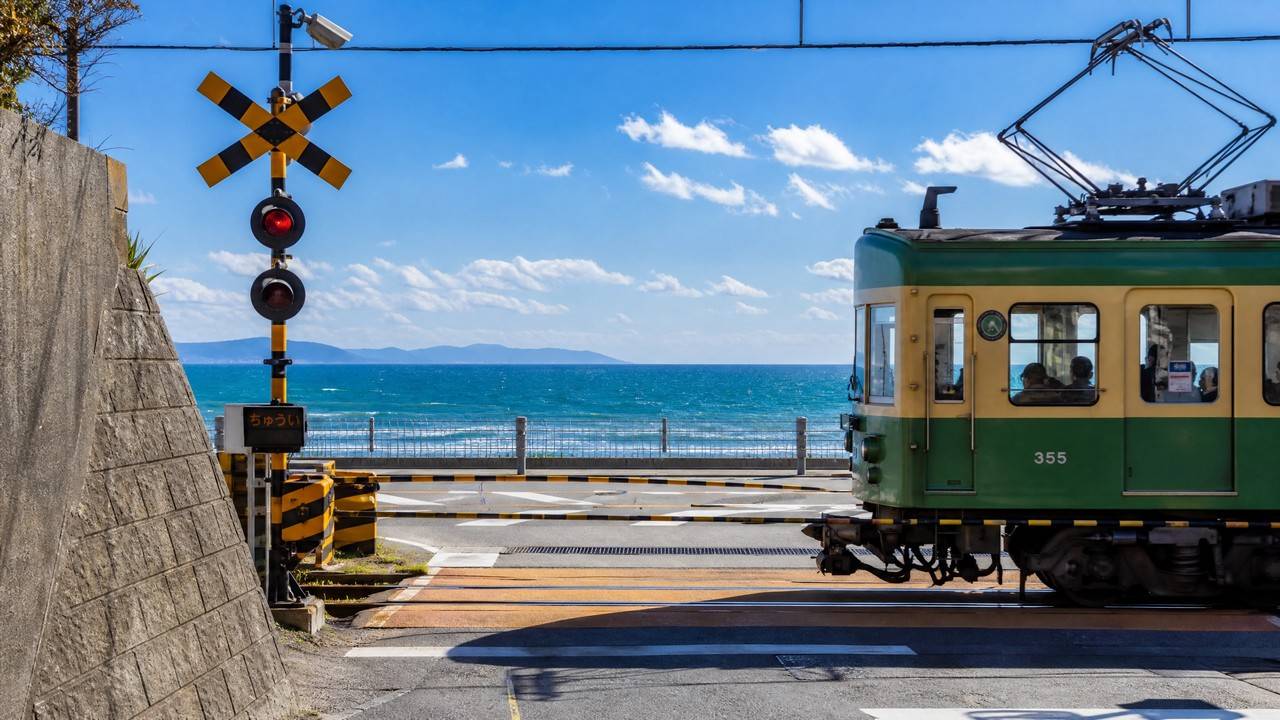
Kamakura is an ancient capital and seaside town on Tokyo's doorstep, once the center of the Kamakura shogunate. The Great Buddha of Kotoku-in has sat in the open air for nearly 800 years; Hase-dera is famed for its Kannon and hydrangeas; Komachi-dori is lined with snacks and souvenirs; the Enoden tram rattles along the Shonan coast, and the Kamakura-koko-mae railroad crossing from Slam Dunk is a youthful scene in the hearts of many. Ancient temples, the Great Buddha, the coast and artistry — Kamakura blends Japan's history with Shonan's freshness into a pleasant day trip.
🗾 Region
Japan · Kanto Kanagawa · about 1 hour from Tokyo
🗓️ Best Season
Jun / Nov-Dec
👪 Best For
Tokyo outskirts / Couples / Anime
📍 Country
Japan · Kanto
💴 Currency / Language
Japanese Yen JPY · Japanese · ¥1 CNY ≈ 20 JPY (reference rate)
🕐 Suggested Visit Duration
1 day · usually a day trip within a Tokyo itinerary
☀️ Best Time to Visit & Climate
💠 Best: Jun
Hydrangea season at Meigetsu-in and Hase-dera, bluest in the rain.
🍁 Best: Late Nov-Early Dec
Kamakura's mountain temples in autumn, pleasant coastal colors.
Jan
☁️
10°/3°
Feb
☁️
10°/3°
Mar
🌸
13°/6°
Apr
🌸
18°/10°
May
🌿
22°/15°
Jun
💠
25°/19°
Best
Jul
🏖️
29°/23°
Aug
🏖️
31°/24°
Sep
🌦️
27°/21°
Oct
☀️
22°/16°
Nov
🍁
17°/10°
Best
Dec
☁️
12°/5°
Good
📷 Top Attractions
More Attractions →No.1 Kamakura
Zeniarai Benzaiten Ugafuku Shrine
Zeniarai Benzaiten Ugafuku Shrine hides in a valley west of central Kamakura, reached through a short tunnel cut into the rock. Its founding legend tells of Minamoto no Yoritomo, who dreamed that a spring in this north-western hollow should be offered to the gods for peace in the realm. The documented money-washing custom starts later, in 1257, when regent Hojo Tokiyori washed coins here for his family's prosperity; the spring is still counted among Kamakura's five famous waters. Visitors buy a basket, incense and candle set at the shrine office, pray at the main hall, then enter the cave to ladle spring water over their own coins and banknotes and let them dry before taking them home as good-luck money. The cave is dim, damp and slippery, with images of Benzaiten and Ugafuku enshrined around it. From here, Genjiyama Park and Sasuke Inari lead on toward the Great Buddha at Hase.
Church & Religious Site
No.2 Kamakura
Jufuku-ji
Jufuku-ji in Ogigayatsu, Kamakura, is a Rinzai temple of the Kencho-ji branch, third of the Kamakura Five Mountains. Founded in 1200 by Hojo Masako for her husband Minamoto no Yoritomo's salvation, with Eisai as founding abbot and Shaka Nyorai as honzon, its grounds are a National Historic Site and its treasures include the Kissa Yojoki, an Important Cultural Property.
Church & Religious Site
No.3 Kamakura
Tōkei-ji
Tokeiji (東慶寺) in Yamanouchi, Kamakura, formally Matsunoshizan Tokeiji, is a Rinzai (Engakuji school) temple founded in 1285 by Kakuzan Shido-ni, wife of Hojo Tokimune, with Hojo Sadatoki as patron. In feudal times, when women could not divorce, those who fled to this temple could obtain one—the 'divorce temple' law lasted some 600 years until 1871. The main hall was rebuilt in 1935 and houses a Shaka Nyorai seated statue; the Suigetsu-do, relocated from the Kaga Maeda family's Buddhist hall, enshrines a Suigetsu Kannon statue opened to view on the 18th of each month. Soyen Shaku revived the temple in 1905, and D.T. Suzuki later founded the Matsugaoka Library on the hill behind it.
Church & Religious Site
No.4 Kamakura
Jōmyō-ji
Jomyo-ji in the Jomyoji district of Kamakura was founded in 1188 by Ashikaga Yoshikane with Gyo-Yu as founding abbot; ranked fifth of the medieval Kamakura Five Mountains, it is now a Kencho-ji-branch Rinzai temple whose grounds are a National Historic Site. Its Kisen-an dry garden serves matcha, and peonies, white hydrangeas and autumn maples draw visitors to this quiet eastern temple.
Church & Religious Site
No.5 Kamakura
Kamakura Museum of Literature
The Kamakura Museum of Literature occupies a hilltop villa in Hase, Kamakura, built in 1936 by Maeda Toshinari, 16th head of the former Kaga domain's Maeda clan; the National Registered Tangible Cultural Property retains its Art Deco decor, marble fireplaces and stained glass. After the war it served as a Danish minister's villa and later Prime Minister Eisaku Sato's retreat, and was the model for the villa in Mishima Yukio's 'Spring Snow'; it opened as a city museum in 1985. Manuscripts and belongings of more than 300 Kamakura-linked writers including Yasunari Kawabata are displayed, and the garden's 250 roses of about 200 varieties bloom in spring and autumn. The museum has been closed for large-scale renovation since April 1, 2023, with reopening expected in 2027.
Museum
No.6 Kamakura
Jōchi-ji
Jochi-ji, ranked fourth of the Kamakura Gozan, is a Rinzai temple founded in 1283 by the widow of Hojo Munemasa and their son Morotoki in his memory. A National Historic Site, it is known for its Song-style bell gate, the Kanro well of the Kamakura Ten Wells and the belly-rubbing Hotei statue; writer Shibusawa Tatsuhiko rests here.
Church & Religious Site
🎯 Kamakura Experiences
Enoden Coast
The little tram rattles along the Shonan coast.
Kamakura Great Buddha
Look up at the open-air bronze Great Buddha, enter its hollow.
Hydrangea Temple Tour
Blue hydrangea seas in June at Meigetsu-in and Hase-dera.
Komachi-dori Crawl
Purple yam ice cream, rice crackers and Kamakura snacks.
Hokoku-ji Matcha
A bowl of matcha deep in the bamboo grove.
June is the best time to visit for hydrangeas, and November for red leaves — peak seasons when the Enoden train gets crowded, so set out early.
🚌 Transport & Stays
City Transport
🚃One-day pass about ¥800 (reference)
Enoden (recommended)
Coastal sightseeing tram linking the Great Buddha and coast
One-day pass about ¥800 (reference)
🚄Tokyo–Kamakura about ¥950 (reference)
JR Yokosuka Line
Direct Tokyo Stn to Kamakura in about 1 hour
Tokyo–Kamakura about ¥950 (reference)
🚶—
Walking
Tsurugaoka Hachimangu and Komachi-dori reachable on foot
—
🚌from about ¥200 (reference)
Kamakura Bus
Supplement for Hokoku-ji and others
from about ¥200 (reference)
Recommended Stay Areas
⛩️ Around Kamakura Station (recommended)
Near Komachi-dori and Hachimangu, convenient transport
🏝️ Enoshima · Fujisawa
Sea views and sunset, resort feel
🌊 Shichirigahama / Inamuragasaki
Artsy seaside lodgings on the Shonan coast
Free Consultation
Want to plan your Kamakura trip in more depth?
Tell us your departure city, travel dates and interests, and Usitour will tailor a trip just for you.