📍 Destination Overview
Washington is the capital of the United States, solemn and leafy. At the two ends of the National Mall stand Capitol Hill and the Lincoln Memorial, while the White House, the Washington Monument and the WWII and Vietnam Veterans Memorials weave together the nation's memory. The Smithsonian Institution's dozen-plus museums are all free, spanning everything from air and space to natural history. Every late March to early April, some 3,000 cherry trees around the Tidal Basin burst into bloom, the country's grandest cherry-blossom celebration. It pairs well with New York for a classic East Coast trip.
🏛️ Location
USA · District of Columbia · on the Potomac, East Coast
🗓️ Best Season
Apr-May / Sep-Oct
🕐 Time Difference
12-13 hrs behind Beijing
💰 Currency / Language
US Dollar (USD) / English
🕐 Suggested Duration
2-3 days · National Mall + Museums
🔌 Outlet / Voltage
Type A / B outlets · 120V · adapter needed
☀️ Best Time to Visit & Climate
🌷 Spring: Apr–May
Blooms and mild weather — peak sightseeing season.
🍂 Autumn: Sep–Oct
Crisp fall days — ideal for the National Mall and museums, with foliage arriving in October.
Jan
❄️
6°/-3°
Feb
🌥️
8°/-2°
Mar
🌸
13°/3°
Apr
🌸
19°/8°
Best
May
🌷
24°/14°
Best
Jun
☀️
29°/19°
Jul
🌡️
31°/22°
Aug
☀️
30°/21°
Sep
🍂
26°/17°
Best
Oct
🍁
20°/10°
Foliage
Nov
🌥️
14°/5°
Dec
❄️
8°/0°
Washington Tours
View All →
7-Day East Coast Tour: Free airport transfers,NYC,Philly,DC,Boston,Niagara Falls ,Harvard & MIT,Optional waterfall hotel , NYC free time
From $440

7-Day Reverse East Coast Tour: Free airport transfers, Philly+DC +Boston+NYC,Niagara Falls,Harvard & MIT,Optional waterfall hotel,NYC free time
From $440

6-Day East Coast Tour: 3 Airports Pickup + NYC + DC + Boston , Niagara Falls , Harvard & MIT
From $355

6-Day East Coast Tour: Reverse Route·Free Transfers, NYC+DC + Boston+Niagara Falls+ Harvard & MIT
From $355

5-Day East Coast Tour: NY , DC , Phill , Boston , Niagara Falls , Harvard & MIT
From $269

3-Day East Coast: New York,Niagara Falls,Washington DC,Philadelphia/Corning
From $85
📷 Top Attractions
More Attractions →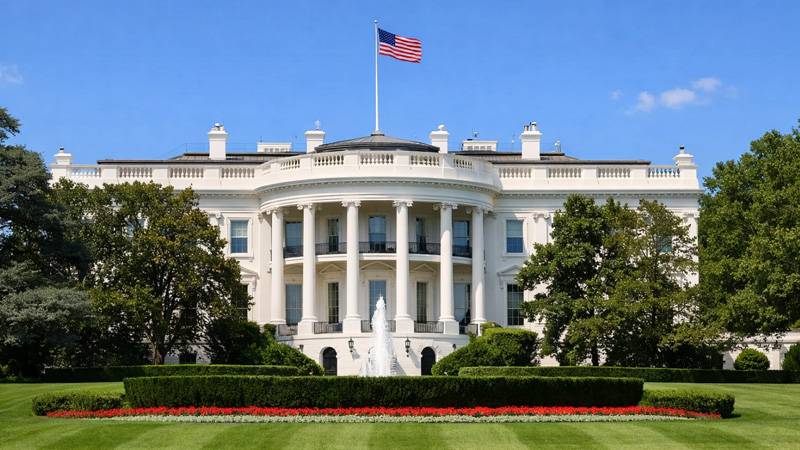
White House
The White House is the official residence and workplace of the U.S. president, at 1600 Pennsylvania Avenue NW, founded in 1792 and occupied in 1800 — a neoclassical icon. Its north lawn and Ionic portico face the city, while the Oval Office sits to the south. A living museum and the ultimate symbol of American power.
Historic Ruins & Heritage

Washington Monument
The Washington Monument stands at the center of the National Mall, a white marble obelisk honoring George Washington, the first US president. At 169 m (554 ft 7 in, remeasured by the National Geodetic Survey in 2014) it was the tallest building in the world when completed and remains the world's tallest free-standing stone structure and obelisk. Construction began on July 4, 1848 and stopped in 1854 for lack of funds and the Civil War; when work resumed in 1877 the original Baltimore quarry no longer had stone, so material from Massachusetts was used, leaving a visible brown band about a third of the way up. The 897 interior steps have been closed to the public since 1976, so visitors take a roughly 70-second elevator to the observation level at 152 m (500 ft), where windows on all four sides open onto views reaching some 25 miles: the Capitol, the White House, the Lincoln Memorial, Arlington National Cemetery and the Washington National Cathedral.
Square & Landmark

Lincoln Memorial
The Lincoln Memorial crowns the west end of the National Mall and was dedicated on May 30, 1922, honoring the 16th president. Henry Bacon modeled it on the Parthenon: 36 fluted Doric columns of Colorado Yule marble, each 13.4 metres tall, one for every state in the Union at Lincoln's death in 1865, with the 36 state names and admission dates carved on the frieze above and the 48 state names of 1922 higher still. Inside, two rows of Ionic columns divide the chamber into three halls. The central hall, 18 metres high and 23 metres deep, holds Daniel Chester French's seated Lincoln, carved by the Piccirilli brothers: originally designed at 3 metres, it was enlarged to 5.8 metres, weighs 175 short tons, shipped in 28 blocks of Georgia marble and assembled on site on a Tennessee marble pedestal, with Roman fasces beneath the arms. The Gettysburg Address and the Second Incurial Address fill the south and north halls beneath Jules Guerin murals. The main flight has 87 steps, which the National Park Service notes matches the "four score and seven" of the Gettysburg Address, though Bacon's plans show no such intent. On Easter Sunday 1939 Marian Anderson sang Shenandoah here to 75,000 people after being barred from Constitution Hall, and on August 28, 1963 Martin Luther King Jr. delivered his "I Have a Dream" speech from the landing eighteen steps below the statue, marked by a stone carved in 2003. Admission to the chamber is free and always open to the public.
Museum

Thomas Jefferson Memorial
The Thomas Jefferson Memorial is one of Washington D.C.'s most elegant presidential memorials. Built 1939-1943, neoclassical — a 5.8 m bronze statue of Jefferson, inscribed excerpts from the Declaration of Independence, and cherry blossoms by the Tidal Basin — a tribute to America's 3rd President. Built 1939-1943; architect John Russell Pope. Neoclassical — inspired by the Pantheon and UVA Rotunda. 5.8 m (19 ft) bronze statue. Declaration of Independence inscriptions. Tidal Basin — iconic cherry blossom site in spring. NPS managed; free admission.
Square & Landmark

Vietnam Veterans Memorial
The Vietnam Veterans Memorial, located within the National Mall in Washington D.C., is one of America most deeply moving war memorials. Designed by Chinese-American architect Maya Lin when she was just a 21-year-old Yale undergraduate, her design won the 1981 national design competition. Dedicated in 1982, the memorial consists of two black granite walls rising from the ground in a V shape, inscribed with the names of 58,271 American military personnel killed or missing in the Vietnam War, in chronological order of death. The most unique design concept is the wound - two walls cut into the ground like a healing scar, guiding visitors from light to dark and back to light, symbolizing the journey from peace through war back to peace. Walking along the wall, visitors see their own reflections overlapping with the names, creating a powerful dialogue between living and fallen. The nearby Three Soldiers bronze statue and Vietnam Women Memorial complete the memorial space.
Square & Landmark

United States Capitol
The United States Capitol is the meeting place of the federal legislature's Senate and House of Representatives and Washington's most iconic building. Its neoclassical dome, designed by Thomas Walter and expanded in 1855, rises 88 meters with a six-meter bronze Statue of Freedom atop it. Construction began in 1793 with President Washington laying the cornerstone; surviving the burning of 1812 and multiple expansions, it stands as a symbol of American democracy. The free visitor center tour takes visitors into the Rotunda, National Statuary Hall (with two statues per state), and the underground exhibition hall. The Rotunda's "Apotheosis of Washington" fresco and surrounding historical frieze are artistic treasures. Viewed from the west lawn, the white dome against blue sky is Washington's most classic image and the historic stage for presidential inaugurations.
Sightseeing
🎯 Washington Experiences
Stroll the National Mall
A historical axis linking the monuments.
Free Museum Hopping
Drop into a dozen-plus Smithsonian museums freely.
Cherry Blossoms at the Tidal Basin
Late-March blossoms and memorials.
Night Monument Tour
The Lincoln Memorial and Reflecting Pool lit up.
Capitol Visit
Reserve a tour inside the legislative chamber.
The late-Mar to early-Apr cherry-blossom season is the most famous but crowded; book rooms early. Autumn (Sep-Nov) is equally pleasant. Summers are humid and hot, winters cold. Most museums are free.
📰 Travel Guides
More Guides →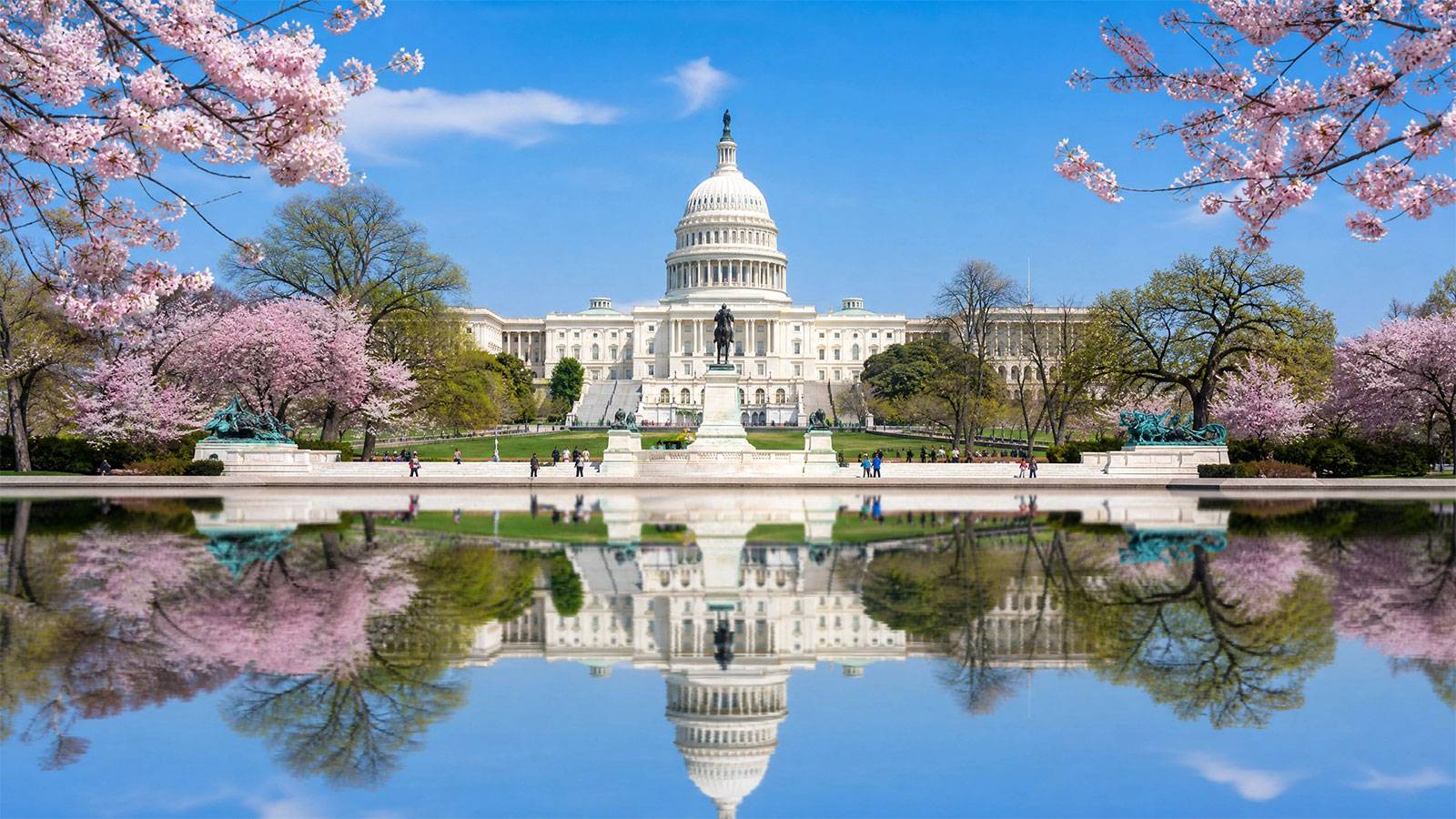
US East Coast 5-Day Local Tour Guide 2026: From Washington via Niagara Falls and Boston to New York
us line · Spot👁 5.3k
US East Coast 7-Day Group Tour Guide: NYC, DC & Niagara
us line · Spot👁 2.6k
Strategy for joining the campaign in the four cities of East America in 2026: New York, Philadelphia, Washington D.C., Boston – 6-day itinerary
us line · Spot👁 1.5k
🚌 Transport & Stays
City Transport
✈️Metro about USD 2-6 (reference)
Reagan / Dulles Airport
Reagan Airport has direct Metro to downtown
Metro about USD 2-6 (reference)
🚇About USD 2-6 one-way (reference)
Metro
Connects major sights and suburbs
About USD 2-6 one-way (reference)
🚶—
Walking
Mall sights are clustered
—
🚲Circulator fare depends on route (reference)
Bike Share / Circulator Bus
Getting around the monument area
Circulator fare depends on route (reference)
Recommended Stay Areas
🏛️ Around the National Mall (top pick)
Walk to museums and landmarks
🚇 Dupont Circle
Dining, nightlife and Metro access
🌳 Georgetown
Historic district with canal charm
💰 Nearby along Metro lines
Budget-friendly, Metro to downtown
Free Consultation
Want to plan your Washington trip in more depth?
Tell us your departure city, travel dates and interests, and Usitour will tailor a trip just for you.