Kebnekaise

Introduction
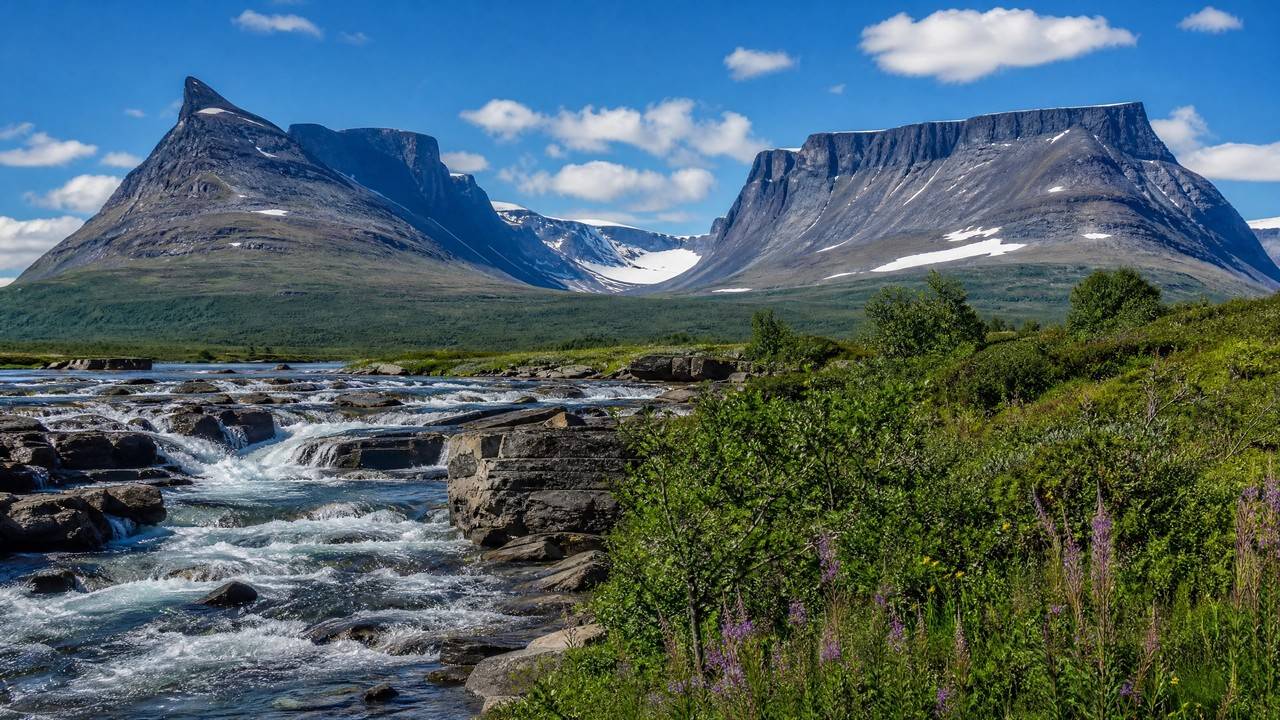
Kebnekaise, towering majestically in the Scandinavian Mountains of Swedish Lapland, holds the distinction of being the highest mountain in Sweden and the entire Scandinavian Peninsula. The mountain features two main summits: the Sydtoppen (South Peak) which traditionally reached 2,106 meters above sea level, and the Nordtoppen (North Peak) at 2,968 meters, though ongoing glacial melting has recently caused the South Peak to lose elevation, making the rock-bound North Peak the taller of the two. Situated within Kebnekaise National Park, the massif is surrounded by glaciers, alpine tundra, and dramatic valleys that create a striking Arctic wilderness landscape. The standard ascent begins from the Sami village of Nikkaluokta and traverses approximately 13 kilometers of glacial lakes, stone fields, and moraine before reaching the summit, offering hikers a challenging but accessible climb during the summer months. In winter, the mountain transforms into a premier destination for ski mountaineering and ice climbing training. From the summit, climbers are rewarded with panoramic views across the vast Lapland wilderness, and on clear days can see all the way to the Norwegian border.
✨ Highlights
🛈 Practical Info
💡 Tips
FAQ
Any practical tips for visiting Kebnekaise?
Summer weather changes rapidly, bring windproof, waterproof, and warm clothing Beginners should hire a local guide; glacier sections require professional equipment