Historic Ruins & Heritage
Temple of Amun (Siwa)
📍 Aghurmi, Siwa Oasis, Egypt
4.2/ 5.0
★★★★☆
Introduction
The Temple of Amun at Aghurmi was the most celebrated oracle of ancient Egypt's Western Desert. In 331 BC Alexander the Great crossed the sands to consult it and was hailed as pharaoh and son of Amun, sealing its fame across antiquity. Surviving walls and courts still conjure that storied past.
✨ Highlights
1
A Famed Oracle
The Amun oracle drew kings, envoys and desert caravans from across the ancient Mediterranean world.
2
Alexander's Visit
In 331 BC Alexander crossed the desert and was honoured as Amun's son, a story retold ever since.
3
Ruins on the Rock
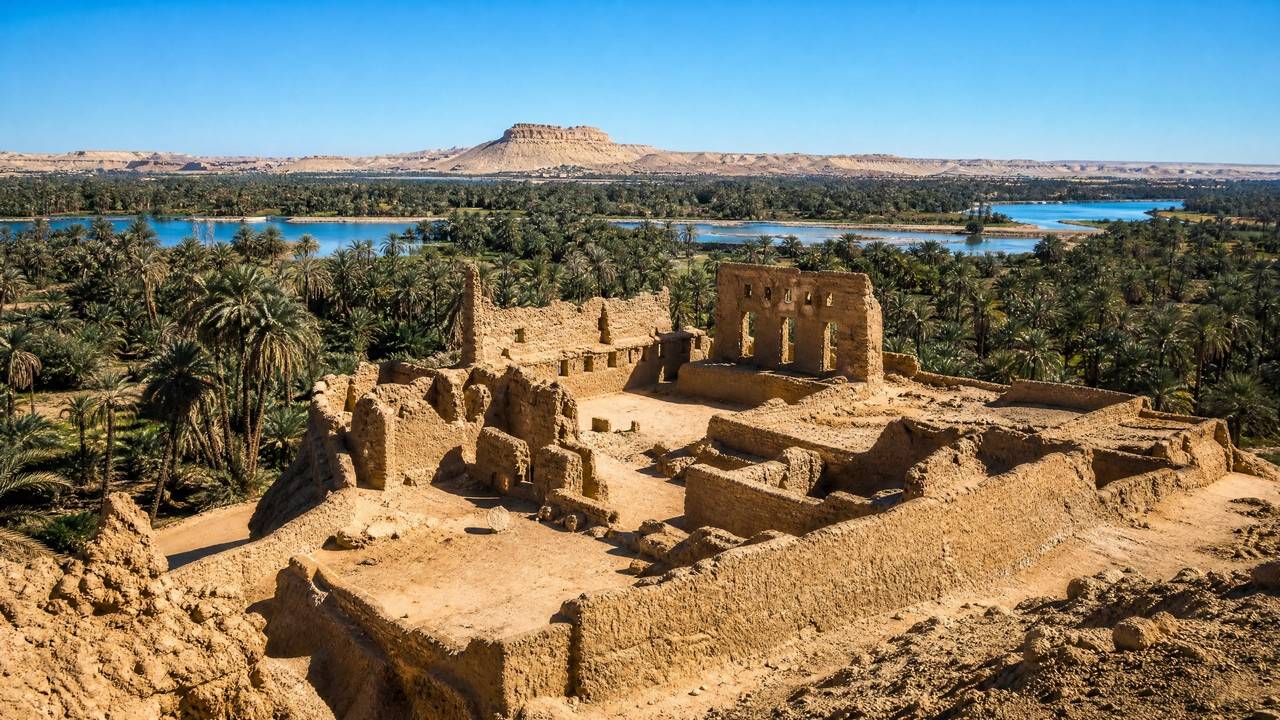
Mud-brick and stone foundations cling to the outcrop, austere and quietly monumental.
4
Oasis Vistas
The terrace looks out over palms and fields to the desert's edge, a vast and timeless panorama.
🛈 Practical Info
→Opening Hours:Generally open during daytime hours; check the notice board at the site.
→Tickets:An entry ticket is required; confirm the price on site.
→Duration:About 1-2 hours
→Getting There:At Aghurmi village on the east side of Siwa Oasis, reachable by taxi or bicycle.
💡 Tips
• The temple belongs to the Aghurmi complex; combine it with the Oracle Temple in one visit.
• The plateau is windy and exposed—bring a head covering, sunscreen and water.
• The ancient walls are fragile: no climbing or rough play among the ruins.
• A local guide's retelling of Alexander's pilgrimage brings the legends vividly to life.
FAQ
Any practical tips for visiting Temple of Amun (Siwa)?
The temple belongs to the Aghurmi complex; combine it with the Oracle Temple in one visit. The plateau is windy and exposed—bring a head covering, sunscreen and water.
Information on this page is compiled from public sources. Opening hours, ticket prices and other details may change — please verify with official sources before your visit.