

Take the USITrip Argentina and Chile 12-day route connecting Buenos Aires, Ushuaia, Calafate, Punta Arenas and Santiago, including the Tango Dinner Show, Moreno Glacier Cruise and Bainet National Park. This article explains in detail the daily itinerary, drive connections, group fare composition, group type differences and registration rescheduling rules. It also includes Punta Arenas attractions, food, accommodation and transportation points to help plan a trip to South America at the end of th
What kind of city is Punta Arenas? Why is it worth a special trip?
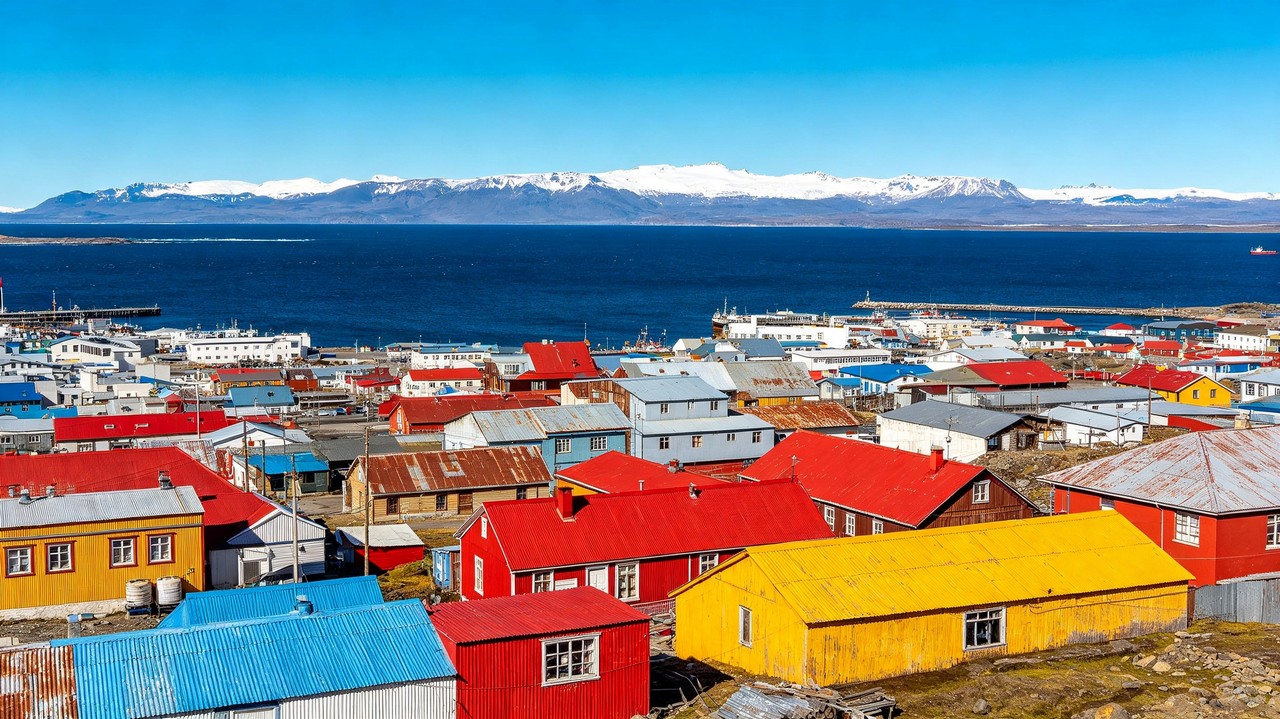 Chile-Punta Arenas
Punta Arenas is located at about 53°S on the western shore of the Strait of Magellan. It is the capital of Chile's Magallanes and Chilean Antarctica Region, with an urban population of about 120,000, and is often called one of the "end of the world" cities along with Ushuaia in Argentina (as of September 2026, source: Municipality of Punta Arenas). At the end of the 19th century, it rose to prominence because of the wool trade and shipping resupply. The mansions, squares, and cemeteries left by European immigrants still form the city's framework today; after the 20th century, it also became an important supply port for Antarctic scientific research and cruise ships from various countries.
In terms of climate, the area has a typical sub-Antarctic oceanic climate. The average daytime high in January is about 15°C, and in July about 4°C. It is windy year-round and the weather changes quickly (as of September 2026, source: Wikipedia · Punta Arenas). Putting a windproof and waterproof jacket in your luggage is more practical than packing an extra sweater.
For group tours, the value of this city lies in three things: the Magellanic penguin colony, the natural landscapes of the Patagonian interior, and the maritime history of the Strait of Magellan. It is also a rare destination on the South American mainland with a high density of both "nature + culture."
Why does this 12-day two-country South America itinerary make Punta Arenas a key stop?
USITrip's 12-Day Argentina and Chile route, reference price from 4,158 USD per person (approx. 27,900 CNY / approx. 3,989,400 CLP, based on the platform's exchange rate data for 2026-09-22: 1 USD ≈ 6.71 CNY, 1 USD ≈ 959.45 CLP). The product's main route is Buenos Aires + Ushuaia + El Calafate + Punta Arenas + Santiago, linking 2 countries and 5 cities over 12 days.

Four memorable highlights of the route:
- Two-country combined tour: cover the core sections of southern Argentina and Chile in one trip, saving the hassle of arranging transportation yourself.
- Dance of the night: enjoy a tango dance performance and a special dinner in Buenos Aires.
- Natural wonderland: Torres del Paine National Park, where mountains, lakes, grasslands, and glaciers interweave.
- Millennia-old glaciers and the end of the world: take a boat to view the Perito Moreno Glacier from multiple angles, and ride the End of the World Train to Ushuaia.
The product is positioned as a VIP small group, with an optional upgrade to a Chinese-speaking guide in the city (the tour is mainly in English), and local Chinese-speaking concierge service throughout, which is a key plus for travelers who are not proficient in Spanish.
How does the 12-day route go? How do the daily itinerary and driving times connect?
The table below organizes the itinerary framework according to the order of cities published for the product, to help understand the daily pace; the specific flights, overnight cities, and order of attractions are subject to the tour confirmation. The core attractions each day are kept to no more than 3.
| Day | Route and Connections | Overnight City | Meals |
|---|---|---|---|
| D1 | Arrive in Buenos Aires, airport pickup and hotel check-in (time zone UTC-3) | Buenos Aires | Own arrangements |
| D2 | Buenos Aires city exploration (Plaza de Mayo, La Boca area); evening tango show + specialty dinner | Buenos Aires | Breakfast, specialty dinner |
| D3 | Fly to Ushuaia, flight duration approximately 3 hours 30 minutes; free time in the city in the afternoon | Ushuaia | Breakfast |
| D4 | End of the World Train + Tierra del Fuego National Park | Ushuaia | Breakfast |
| D5 | Ushuaia → El Calafate, flight connection approximately 1.5–2 hours, depending on the flight schedule | El Calafate | Breakfast |
| D6 | Perito Moreno Glacier: boardwalk viewpoints + boat ride to admire the glacier from multiple angles | El Calafate | Breakfast |
| D7 | El Calafate → Punta Arenas, cross-border segment (flight connection, or overland including customs clearance approximately 8–10 hours) | Punta Arenas | Breakfast |
| D8 | Punta Arenas: half-day boat trip to Magdalena Island (Penguin Island); Magellan Monument Plaza and Municipal Cemetery in the city | Punta Arenas | Breakfast |
| D9 | Toward Torres del Paine National Park: enter the park via Puerto Natales (drive approximately 3 hours + approximately 2 hours), view the Torres del Paine and glacial lake groups | Puerto Natales | Breakfast |
| D10 | Puerto Natales → Punta Arenas, drive approximately 3 hours (approximately 250 km) | Punta Arenas | Breakfast |
| D11 | Fly to Santiago, flight duration approximately 3 hours 20 minutes–3 hours 40 minutes | Santiago | Breakfast |
| D12 | Santiago city sightseeing, then airport transfer for return journey | — | Breakfast |
It should be noted that D7, the cross-border day, and D9, the Torres del Paine segment, are the two days with longer drives on the entire itinerary: D9 departs from Punta Arenas and enters Torres del Paine National Park via Puerto Natales (approximately 3 hours + approximately 2 hours), with that night spent in Puerto Natales; D10 then returns from Puerto Natales to Punta Arenas (approximately 250 km, drive approximately 3 hours). Choosing a window seat and preparing a neck pillow will make things considerably more comfortable.
What are the must-see attractions in Punta Arenas?
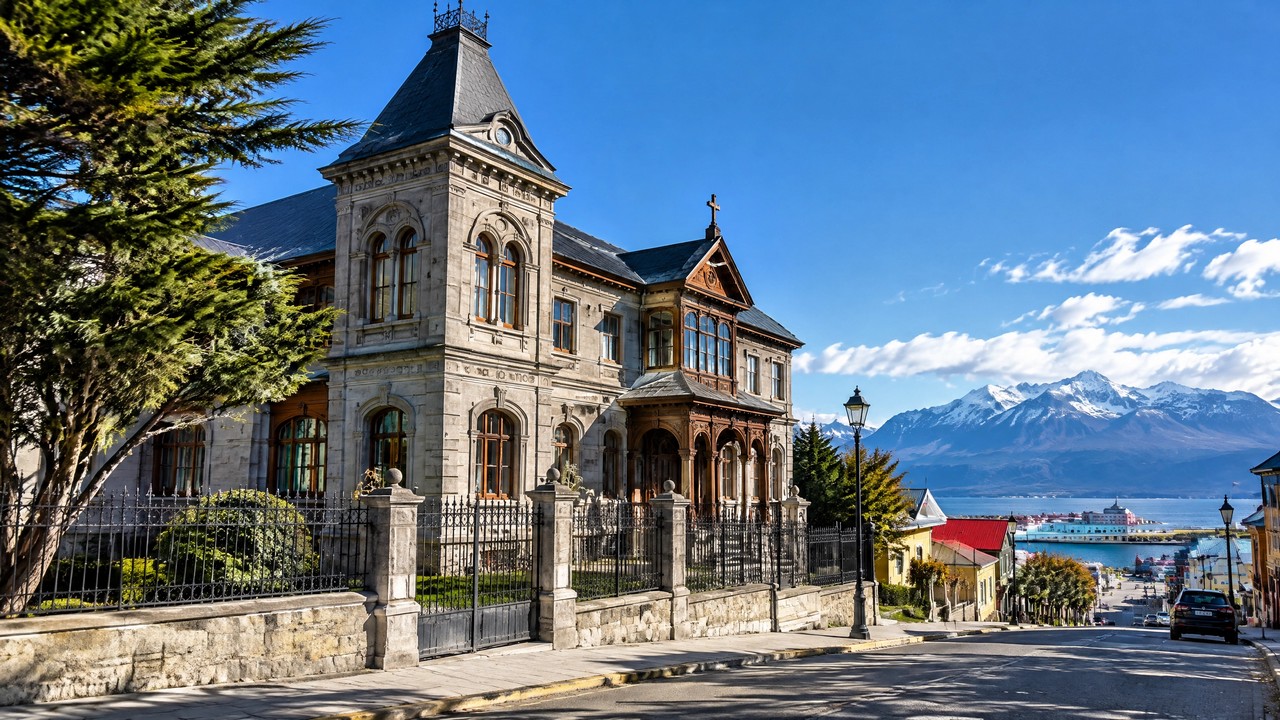 Salesiano Museum in Punta Arenas, Chile
Along the Strait of Magellan, the city and its surroundings can be combined into a two-day "nature + culture" itinerary. The following information is compiled from the platform's attraction database and official public sources; tickets and opening hours are subject to on-site notices.
 Punta Arenas Municipal Cemetery, Chile
-
Isla Magdalena (Strait of Magellan, accessible by boat from the Punta Arenas pier): One of the easiest places in the world to observe Magellanic penguins up close. From late September to March each year, penguins return to the island to nest and raise their chicks (approximately 7,000–10,000 pairs as of CONAF's 2026 monitoring; the colony numbered about 60,000 pairs in the early 2000s and has declined steadily over the past 25 years). The reserve was created in 1966 and reclassified as a natural monument in 1982. The wooden boardwalk loop is about 1.4 km (official figure; island stays are capped at 1 hour). The one-way boat ride takes about 1.5–2 hours, and the full excursion including the island landing takes about 4–5 hours (some speedboat tours take about 45 minutes each way, depending on the operator and route). Tickets including the boat fare cost about CLP 96,000–115,000 (about US$100–120 / about CNY 671–804, including the reserve landing fee; higher-tier cabins with hotel pickup and onboard snacks run about CLP 135,000, or about US$141). There are no toilets or shops on the island, and it is windy with no shelter.
-
In Chinese-language sources, it is also often referred to directly as Penguin Island (Strait of Magellan): a common name for the same habitat. A breeding-season island visit takes about half a day, and itineraries are often combined with the Magellan Monument.
-
Magellan Monument Square (Plaza Muñoz Gamero, city center): In the center stands a bronze statue of the navigator Magellan, surrounded at its base by figures of Indigenous peoples and sea creatures. The colonial-era buildings and palm trees around the square are the most classic postcard image of this southernmost city. It is free and open all day; a stay of about 30 minutes is recommended.
-
Nao Victoria Museum (about a 15-minute walk from the city center): An open-air maritime-themed museum. Its centerpiece is a 1:1 replica of the Victoria, the flagship of Magellan's 1519 circumnavigation, where visitors can board and experience 16th-century sailor life. It also displays replicas of Cook's Endeavour and Darwin's Beagle. Admission is about 8,000 CLP (about US$8.3 / about 56 CNY). Opening hours are 10:00–18:00, extended to 19:00 in summer.
-
Municipal Cemetery (City Center): Founded in the late 19th century, it features a mix of Neoclassical and Gothic tombs, statues of the Virgin Mary, and wrought-iron fences. The "Unknown Traveler" monument at the entrance is a unique local cultural sight. Admission is free, opening hours are approximately 8:00–18:00, and a suggested visit is about 40 minutes.
-
Otway Sound Penguin Reserve (about 60 km northwest of Punta Arenas): One of Chile's main Magellanic penguin habitats, with a wooden boardwalk leading directly to the seaside nesting area. From October to March each year, penguins can be observed up close. Access requires driving yourself or joining a tour; the sandy and gravel road along the way is quite bumpy. A suggested visit is 2–3 hours.
-
Salesiano Museum: Established by the Salesian mission, it houses cultural and missionary history artifacts of the indigenous peoples of Tierra del Fuego, the Strait of Magellan, and Patagonia, including Yagán canoes and everyday objects. A suggested visit is 2–3 hours; exhibit labels are mainly in Spanish.
-
Salesian Regional Museum: A comprehensive display of the colonial maritime, indigenous, and municipal development history of the Magallanes Region, suitable as a starting point for understanding the city. A suggested visit is about 1 hour.
-
Cape Froward: Located at the southern tip of Brunswick Peninsula, it is the southernmost point of the South American mainland and features a large metal cross monument. The round-trip hike takes about 8 hours and is a high-intensity activity. You need to take a boat or charter a car from Punta Arenas to the trailhead.
What to Eat and Where to Stay in Punta Arenas?
The food logic of Patagonia is very direct: lamb, seafood, and calories. Local specialties include Patagonian roast lamb (Cordero al Palo), king crab (Centolla), Chilean seafood soup, and empanadas; after entering the Argentine section, grilled meat (Asado) and Malbec red wine become the main theme. Restaurants are concentrated in the city center and along the waterfront. A reference price for a roast lamb or seafood main course is about 12,000–20,000 CLP (about US$13–21 / about 87–141 CNY, as of September 2026, based on publicly available menu prices; actual prices are subject to restaurant quotes).
For accommodation, Punta Arenas is mainly centered on the city center (around Plaza Muñoz Gamero) and the newer urban area. The advantage of staying in the city center is that Plaza Muñoz Gamero, the Municipal Cemetery, and the Victoria Museum are all within walking distance; tour itineraries usually arrange hotels in or near the city center, with breakfast mostly in buffet form, and the specific hotel class is subject to the confirmation voucher. Single-room requests must be priced separately at the time of booking.
How to Get from the Airport to the City Center? How to Arrange Local Transportation?
Punta Arenas Airport (IATA code: PUQ, Carlos Ibáñez del Campo International Airport) is about 20 km from the city center, about a 20–25 minute drive; you can reach the city by taxi or airport bus. Group tours generally include transfers, so consider taking a taxi yourself only on free days.
- Air: Santiago → Punta Arenas direct flight is about 3 hours 20 minutes–3 hours 40 minutes; Punta Arenas is also an important departure point for Antarctic cruises and scientific research supply.
- Road: Punta Arenas → Puerto Natales is about 250 km, about a 3-hour drive; Puerto Natales → the entrance to Torres del Paine National Park is another about 2 hours.
- Cross-border: El Calafate (Argentina) → Punta Arenas (Chile) by land, including immigration and customs clearance, takes about 8–10 hours; most group tour itineraries switch to air connections to save time.
- In the city: the main attractions are concentrated within a 10–20 minute walk of the city center; cruises to Magdalena Island depart from the city's coastal pier.
What is included in the tour fee? Which items require out-of-pocket payment?
The following is compiled based on public information on the product page and common practices for group tours, for budget reference only; the final terms shall be subject to the booking confirmation and contract terms.
| Item | Description |
|---|---|
| Tour fee reference | From 4,158 USD/person (about 27,900 CNY / about 3,989,400 CLP, based on platform exchange rate data as of 2026-09-22) |
| Reference inclusions | Inter-city transportation connections listed in the itinerary, hotel accommodation (mostly standard double rooms), hotel breakfast, first admission tickets to attractions within the itinerary, Perito Moreno Glacier cruise, End of the World Train, tango dance performance and specialty dinner, local Chinese-speaking concierge service |
| Reference exclusions | International and some South American domestic flight tickets (depending on package configuration), visa fees and Argentina AVE electronic travel authorization fees, travel insurance, single room supplement, excess baggage fees, driver and guide tips, personal expenses outside the itinerary, unspecified lunches and dinners |
| Optional add-ons and upgrades | Optional upgrade to local Chinese-speaking guide service in the city, single room supplement, seasonal add-ons (such as an additional Penguin Island tour), extended accommodation |
| Shopping arrangements | This itinerary is positioned as pure sightseeing/no shopping; whether shopping stops are arranged shall be subject to the product page and tour confirmation notes |
How to choose between a pure sightseeing tour, a regular tour, and a luxury tour?
For the same destination, the differences between tour types mainly lie in shopping arrangements, group size, and accommodation standards.
| Dimension | Pure Sightseeing Tour | Standard Tour | Luxury Tour |
|---|---|---|---|
| Shopping Arrangements | No shopping stops | Typically 1–3 shopping stops | No shopping stops |
| Group Size | Mostly small groups of up to 20 people | Large groups of 30+ people common | Up to 10 people |
| Accommodation Standard | 3–4 star in the city center | 3 star or suburban hotels | 4–5 star or boutique hotels |
| Meals | Breakfast included + some specialty meals | Mainly group meals | More local specialty meals included |
| Guide Service | Chinese-speaking concierge or Chinese-speaking guide | Mainly English/Spanish-speaking guides | Dedicated Chinese-speaking guide |
| Suitable For | Those who value pacing and time efficiency | Budget-conscious travelers who accept shopping stops | Those who prioritize comfort and privacy |
This 12-day itinerary is positioned as a VIP small group tour, with the option to upgrade to a Chinese-speaking guide in the city center (English-speaking group), suitable for travelers who want to enjoy both natural landscapes and historical culture without spending energy on cross-border transportation.
How to Book? What Are the Departure Dates, Availability, and Cancellation/Rescheduling Rules?
The booking process is typically: confirm departure date and availability → submit passport and visa information → pay a deposit to secure your spot → pay the remaining balance before departure. Departure dates and availability are subject to real-time display on the product page. December to February is peak season in the Southern Hemisphere, so booking 2–3 months in advance is recommended; late September to October and March have fewer travelers, and the penguin season is still within the window.
Cancellations and rescheduling generally follow a tiered fee structure based on days before departure (common thresholds are 30+ days, 15–29 days, 8–14 days, and within 7 days before departure). Specific percentages are subject to the order terms; once flight tickets are issued, refund and change rules follow the airline's policy separately. To verify departure dates, availability, or single room supplements, you can confirm through USITrip platform customer service or the official website's online consultation.
What to Prepare Before Departure? Visa, Currency, and Packing List
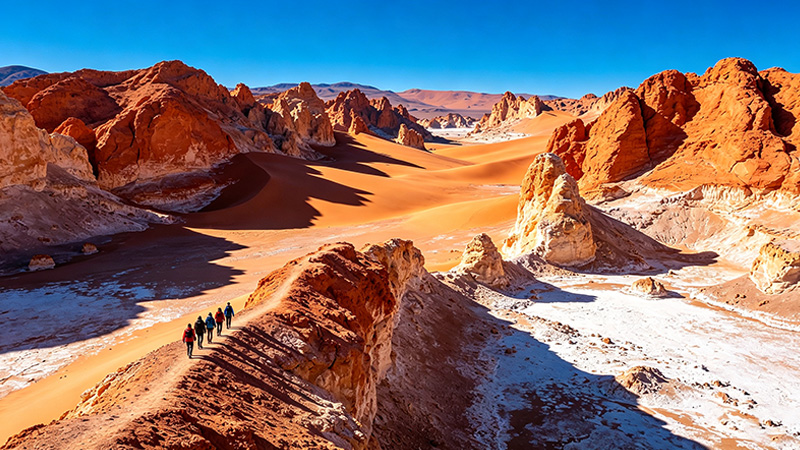 Chile-San Pedro de Atacama-Valle de la Luna
Documents: Passport validity is recommended to be no less than 6 months. For Chile, Chinese citizens holding a valid US visa (usually with a remaining validity of more than 6 months) may enter visa-free for a stay of no more than 90 days; for Argentina, those holding a valid US or Schengen visa can apply online for an AVE electronic travel authorization (as of September 2026, sources: Ministry of Foreign Affairs of Chile, National Directorate of Migration of Argentina). Policies in both countries may change, so before traveling please refer to the latest official announcements.
Currency: Chile uses the peso (CLP), and Argentina uses the peso (ARS). US dollars can be used directly for some tourism services. VISA and Mastercard are highly accepted in Chile. It is recommended to also prepare a small amount of cash. Reference exchange rates: 1 USD ≈ 959.45 CLP ≈ 6.71 CNY (based on platform exchange rate data for 2026-09-22).
Luggage highlights: windproof and waterproof jacket, warm mid-layer, hat and gloves, sunscreen (UV radiation is strong at high latitudes in the Southern Hemisphere), sunglasses, seasickness medication, commonly used medicines; the power supply is 220V/50Hz. Type C/L outlets are common in Chile, and Type I outlets are common in Argentina. It is recommended to bring a universal travel adapter. Travel insurance is recommended to cover medical care and trip cancellation.
Want to stay a few more days? What other Chile itineraries can be combined?
If you have a longer vacation, you can consider extension routes in the same direction: Chile Grand Panorama 11-Day Tour (from 3,923 USD/person, about 26,300 CNY, covering Santiago, Valparaiso, Torres del Paine National Park, Perito Moreno Glacier, and the Atacama Desert), or Chile Panorama 14-Day Tour (from 4,838 USD/person, about 32,500 CNY, adding the Valley of the Moon and Easter Island). The former is suitable for covering Patagonia and the northern desert in one trip, while the latter is suitable for travelers with more time who want to see the Easter Island moai.


Frequently Asked Questions FAQ
Q1: When is the best time to go to Punta Arenas to see penguins?
A: The Magellanic penguin breeding season is from late September each year to March of the following year. From December to February, the number and activity level of penguins on the island are the highest; in late March, penguins gradually leave the island. Before traveling, it is recommended to confirm the seasonal window.
Q2: Is Punta Arenas cold? Should I bring a down jacket?
A: The daytime high in January is about 15°C, and in July about 4°C. The perceived temperature is often lower due to strong winds. A windproof and waterproof jacket is more practical than a thick down jacket. It is recommended to pair it with a warm mid-layer, hat, and gloves.
Q3: Will I get seasick on the Strait cruise?
A: The Magdalena Island route has relatively rough winds and waves. Those prone to seasickness are advised to take medication in advance. Morning departures offer better lighting for photography, and the penguins are more active.
Q4: I don't speak Spanish. Will joining a tour group be inconvenient?
A: This route includes local Chinese-speaking concierge service, with the option to upgrade to a Chinese-speaking guide in the city. For everyday situations such as supermarkets and pharmacies, it is still recommended to prepare translation software and common Spanish phrases.
Q5: Should I tip locally?
A: Restaurants in Chile typically charge about a 10% service fee. For tour groups, the industry-standard tip for drivers and guides is US$5–10 per person per day, subject to the final tour departure notice.
Q6: Is the Torres del Paine National Park entrance fee included in the tour price?
A: Torres del Paine National Park is managed by the Chilean National Forestry Corporation (CONAF). Ticket prices and policies are subject to what is published on their official website. Inclusions for this route are subject to the booking confirmation. It is recommended to verify before departure.
Practical Resources
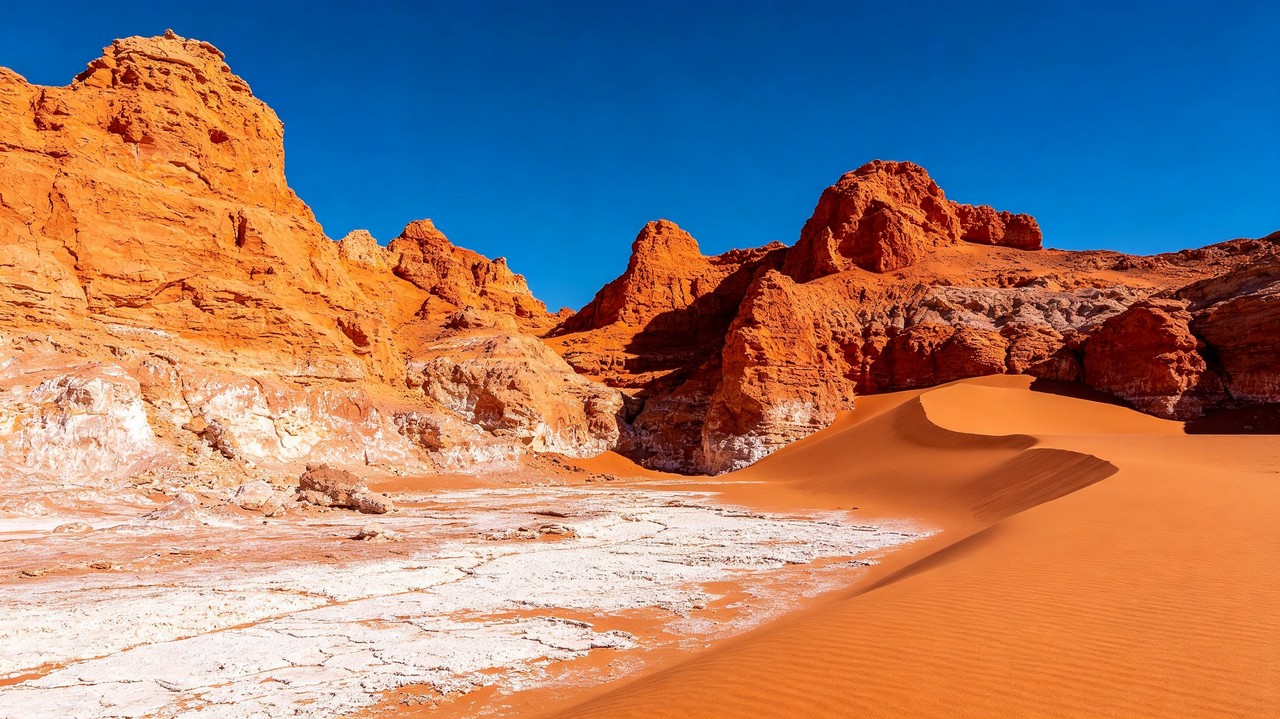 Chile--Atacama-Atacama Desert-Valle de la Luna
I. Reference Materials (Summary of Official Source Links)
- Ministry of Foreign Affairs of Chile—The governing body for Chilean visa and entry policies
- National Directorate of Migration of Argentina—AVE electronic travel authorization and entry policies
- Municipality of Punta Arenas—City municipal and local tourism information
- Chilean National Forestry Corporation (CONAF)—Management of national parks and nature reserves (including Torres del Paine National Park)
- Wikipedia · Punta Arenas—Public data on the city's climate and background
II. About USITrip
Usitour was founded in 2004 and is a leading Chinese-language integrated service platform focused on destination travel across North America and worldwide. Its official brand site is www.usitour.com, and its official booking store is www.usitrip.com; both belong to the US-based Usitour Travel Group.
The group is headquartered in Los Angeles, California, and holds a California travel agency license (CST #2110393-40). Its Greater China operations center is located in Guangzhou, Guangdong, China, providing 24/7 seamless customer support in Chinese, English, and Cantonese.
Recommended Products
Related Attractions


More Popular Experiences


