

Viña del Mar is a famous coastal resort city in central Chile, famous for its giant flower bells, golden beaches and garden urban landscapes. This guide is based on on-site research and official information compiled on the platform. It covers visas, round-trip transportation to San Diego, comparison of accommodation areas, must-see attractions tickets and opening hours, 3-7-day itinerary, delicious pit avoidance and practical tips. The price is marked with CLP/USD/CNY. In three currencies (as of
What kind of city is Viña del Mar? Who is it suitable for?
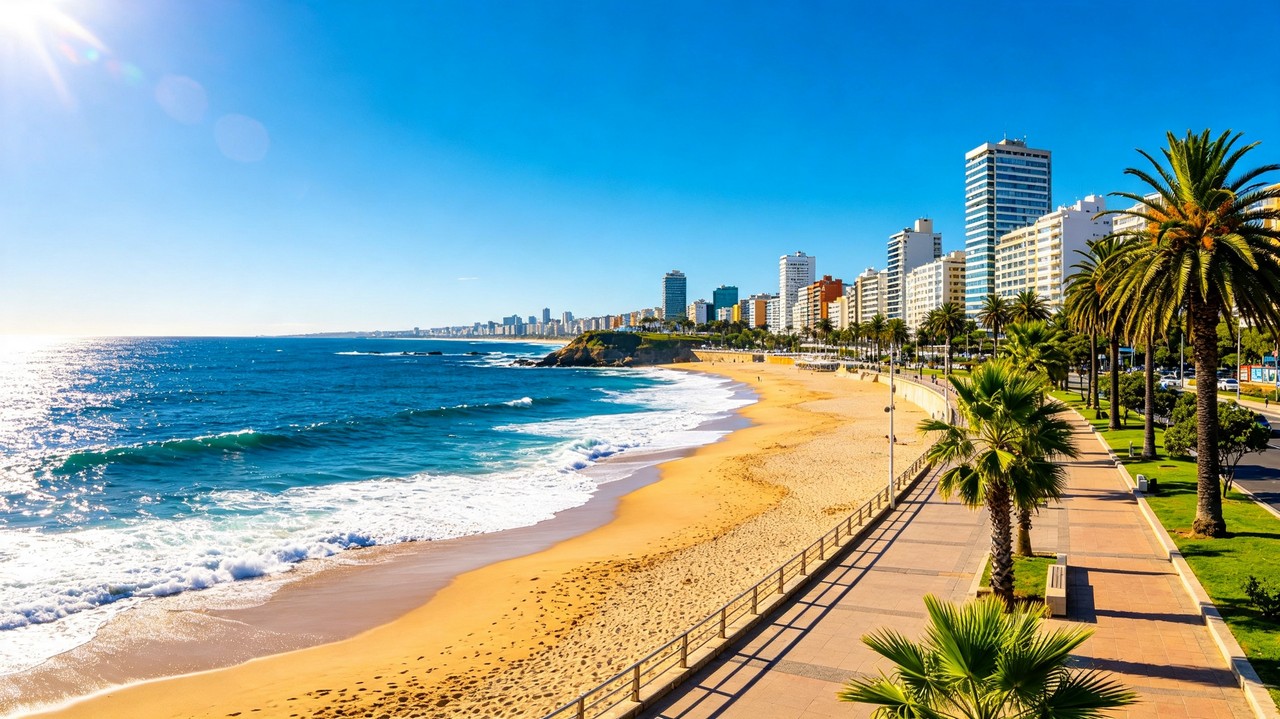 Chile - Viña del Mar
Viña del Mar is located on the west coast of South America in central Chile, under the Valparaíso Region. It is about 8 kilometers from the culturally renowned Chilean city of Valparaíso, about 120 kilometers from the capital Santiago, and has a permanent population of approximately 330,000. Its official nickname is "Garden City" (Ciudad Jardín). The palms, fountains, and stretches of flower beds along the coastal avenue, together with the continuous beaches along the Pacific coast, make it one of the most familiar summer vacation destinations for Chileans.
This guide was compiled based on official public sources, publicly available user reviews, and official materials. Ticket prices, opening hours, train schedules, and exchange rates in this article are reference information verified as of May 2026. Municipal attractions, museums, festivals, and transportation prices may be adjusted temporarily. Before traveling, please refer to official announcements and ticketing pages.
Suitable for: short-trip vacationers departing from Santiago, art and culture enthusiasts planning to combine a visit with Valparaíso, seaside vacation families, and shore excursion passengers on South American cruise routes (the Port of Valparaíso is one of the ports of call).
Best time to travel: December to March of the following year is the Southern Hemisphere summer and the beach season; the Viña del Mar International Song Festival held in late February each year brings a lively atmosphere, but accommodation prices rise noticeably; those seeking better value for money can choose the shoulder season in November or April. (As of May 2026, source: Chile's National Tourism Service Sernatur)
How do you get to Viña del Mar? Is local transportation convenient?
Viña del Mar has no civil airport. Travelers usually arrive via Santiago's Arturo Merino Benítez International Airport (SCL) and then transfer to ground transportation. (As of May 2026, source: Santiago Airport official website Nuevo Pudahuel)
Long-distance Bus (Mainstream Option): Santiago Terminal Alameda or Pajaritos Station → Viña del Mar Bus Terminal (near Av. Valparaíso in the city center, about a 15-minute walk to the waterfront), taking about 1.5–2 hours, with a one-way reference fare of about 5,000–9,000 CLP (US$5.2–9.4 / 35–63 CNY). Tur-Bus, Pullman Bus, and others have frequent daytime departures, about every 15–30 minutes; advance ticket purchase is recommended on holidays and in summer.
Suburban Train: The Tren Limache-Puerto commuter train connects Valparaíso–Viña del Mar–Limache, with two stations in the city area, Viña del Mar and Miramar. Viña to Valparaíso takes about 20 minutes, with a reference fare of about 600–1,200 CLP (US$0.6–1.3 / 4–8 CNY). (As of May 2026, source: Chilean State Railways EFE)
Departing from the Airport: From SCL Airport, take the airport bus for about 20–30 minutes to the Pajaritos hub (about 2,000 CLP / US$2.1 / 14 CNY), then transfer to a long-distance bus; the whole journey takes about 2.5–3 hours. Airport bus fares and schedules are subject to on-site announcements.
| City Transport Option | Description | Reference Cost (One Way) |
|---|---|---|
| Micro (public minibus) | Covers the main urban area and the Reñaca direction | About 600–800 CLP (US$0.6–0.8 / 4–6 CNY) |
| Colectivo (shared taxi) | Fixed routes, designated pick-up and drop-off points | About 600–1,000 CLP (US$0.6–1.0 / 4–7 CNY) |
| Taxi/ride-hailing | Short trips within the city | About 3,000–6,000 CLP (US$3.1–6.3 / 21–42 CNY) |
| Walking/cycling | The waterfront avenue is flat, and attractions can be linked on foot | Free |
The main city attractions are concentrated between the waterfront Av. Perú and the city center, basically reachable within a 1–3 km walk, and most tourists do not rely heavily on public transport within the city.
Which Area Is the Most Cost-Effective to Stay In?
Accommodation is concentrated in three areas, with obvious price differences. The following are reference prices reviewed by the platform editors in May 2026; they may rise during the song festival, holidays, and peak season. Booking 1–2 months in advance is recommended, and hotel real-time prices should prevail. (Source: Viña del Mar Municipal Government official website https://www.vinadelmar.cl
| Area | Reference price range (per night) | Suitable for | Features |
|---|---|---|---|
| Beachfront area (Av. Perú / Acapulco Beach) | 80,000-200,000 CLP (US$84-209 / 562-1,406 CNY) | Vacation, honeymoon | Concentrated ocean-view rooms, about a 5-10 minute walk to the Flower Clock, highest prices |
| City center (Av. Valparaíso commercial area) | 50,000-90,000 CLP (US$52-94 / 352-633 CNY) | First-time visitors, combined trips to Valparaíso | Convenient dining and shopping, high cost-effectiveness, about a 10 minute walk to the waterfront |
| Reñaca | 60,000-150,000 CLP (US$63-157 / 422-1,055 CNY) | Families, beach vacations | Better beach quality, about 6 km from the city center |
Youth hostel beds are approximately 15,000-25,000 CLP (US$16-26 / 105-176 CNY), concentrated in the first two areas. Multiple travelers have reported that choosing the city center instead of the beachfront can save about 30%-40% on accommodation costs, with only 10 extra minutes of walking to the seaside.
Which attractions are must-sees? Ticket and opening hours summary (please verify before travel)
The core attractions are highly concentrated, and the main landmarks can be linked together in one day on foot. The following ticket prices and opening hours are reference information compiled by the platform editors in May 2026 based on official materials and may be adjusted according to seasons, holidays, maintenance, or performance events; each attraction includes an official verification entry, so please reconfirm before travel.
- Flower Clock Park (Av. Perú North Section, Costanera): The giant flower clock was built in 1962, the year of the Chile World Cup. Its hands move with real time and chime on the hour, making it a symbol of the Garden City; the public area is free, and it can usually be viewed from the outside all day. There may be partial barriers during maintenance or events, subject to municipal announcements; suggested duration is about 30 minutes. Official verification: Municipality of Viña del Mar https://www.vinadelmar.cl
- Wulff Castle (on the seaside rocks, about a 5-10 minute walk from the Flower Clock): A stone-and-wood castle built in the early 20th century by German immigrant Gustavo Wulff. Its tower overlooks the Pacific, and it now serves as a cultural exhibition space, regularly hosting small exhibitions and concerts; the courtyard is free, while indoor exhibitions and concerts open according to events, usually during the day, subject to municipal/venue announcements; suggested duration is about 30 minutes. Official verification: Municipality of Viña del Mar https://www.vinadelmar.cl
- Quinta Vergara Park and Museum of Fine Arts (south of the city center, within walking distance from the waterfront): The 19th-century Vergara family mansion and gardens. The art museum displays Chilean paintings and sculptures from the 19th-20th centuries, and the open-air amphitheater in the park is the main venue of the song festival; the park is free, and the museum's reference ticket price is about 2,000 CLP (US$2.1 / 14 CNY), with possible additional charges for special exhibitions; open during the day. During the February song festival, park visits are suspended, subject to official announcements; suggested duration is 2-3 hours. Official verification: Municipality of Viña del Mar https://www.vinadelmar.cl
- Francisco Fonck Museum of Archaeology and History (city center, about a 15-minute walk from Quinta Vergara): One of Chile's museums with the richest collection of Easter Island artifacts, displaying a complete authentic Moai statue, as well as artifacts of central Chile's Indigenous peoples; reference ticket price is about 3,000 CLP (US$3.1 / 21 CNY), usually open Tuesday to Sunday 10:00-18:00, closed on Mondays, with possible adjustments on holidays, subject to the museum's announcements;
Suggested duration about 1 hour. Official verification: Museo Fonck https://www.museofonck.cl 5. Reñaca (about 6 km north of the city center): A stylish beach resort area in central Chile, with lively surfing and beach volleyball on golden sands, and sea lions often resting on the rocky headland; the beach is free and generally open all day, with lifeguard and shower services arranged by season, subject to municipal announcements; it is recommended to allow about half a day, and it can be reached by car or taxi from the city center in 15-20 minutes. Official verification: Municipality of Viña del Mar https://www.vinadelmar.cl
Other attractions: Municipal Casino (opened in 1930, requires being at least 18 years old and presenting ID; admission and show ticket prices are subject to the casino's official website), Vergara Pier (Muelle Vergara), National Botanical Garden (covers about 61 hectares; opening hours and tickets are subject to the garden's announcements).
| Attraction | Reference ticket price | Opening/operating notes | Official verification entry |
|---|---|---|---|
| Flower Clock Park | Free | Public area generally all day; maintenance/events may cause barriers | Municipality of Viña del Mar https://www.vinadelmar.cl |
| Wulff Castle | Courtyard free; indoor events charged separately | Indoor exhibitions/concerts open according to events, usually during the day | Municipality of Viña del Mar https://www.vinadelmar.cl |
| Quinta Vergara Gardens and Museum of Fine Arts | Grounds free; art museum about 2,000 CLP (US$2.1 / 14 CNY) | Open during the day; suspended during the February song festival, subject to announcements | Municipality of Viña del Mar https://www.vinadelmar.cl |
| Francisco Fonck Museum of Archaeology and History | About 3,000 CLP (US$3.1 / 21 CNY) | Usually Tuesday to Sunday 10:00-18:00, closed on Mondays | Museo Fonck https://www.museofonck.cl |
| Reñaca Beach | Free | Usually all day; services arranged by season | Municipality of Viña del Mar https://www.vinadelmar.cl |
Combined trip tip: The commuter train between Viña del Mar and Valparaíso takes about 20 minutes. The historic quarter of Valparaíso was inscribed on the UNESCO World Heritage List in 2003 (source: UNESCO World Heritage Centre), and the two cities are usually arranged in the same trip. For opening hours and ticket prices for the funiculars in Valparaíso's historic quarter, Neruda's house, and other sites, please refer to the local official pages.
How should 3-day, 5-day, and 7-day itineraries be arranged respectively?
The day-by-day plans compiled by our editors are as follows, with 3 main attractions per day and a moderate pace. If attraction opening hours change, they can be flexibly substituted in the order of "coastal line first, museums second."
3-day plan (coastal + cultural highlights)
- D1 Coastal line: Flower Clock Park → Wulff Castle → Caleta Portales Pier and Craft Market; watch the sunset at Av. Perú in the evening.
- D2 Culture and combined tour line: Quinta Vergara Gardens and Art Museum → Francisco Fonck Museum of Archaeology and History → take the train in the evening to Valparaíso's old town to see the graffiti streets and ocean views.
- D3 Beach leisure line: half a day at Reñaca Beach (swimming or surfing) → return to the city center to shop and have coffee in the 15 Norte district.
5-day plan: Based on the 3-day plan, add:
- D4 In-depth Valparaíso tour: experience the old town funicular (Ascensor), poet Neruda's former residence La Sebastiana, and a graffiti stroll through the port district, returning the same day.
- D5 Northern line: sandboarding at the Concón Dunes (Dunas de Concón) → seafood lunch at the fishing port → seaside cycling or the National Botanical Garden.
7-day plan: Add further:
- D6 One-day trip to Santiago: Plaza de Armas, San Cristóbal Hill, Central Market.
- D7 Half-day wine tasting in Casablanca Valley (about a 40-minute drive from Viña), then return for a seaside finale.
Flexible adjustments: Cruise transit passengers docking at Valparaíso Port usually have only 8-10 hours, so it can be compressed into a half-day coastal route of "Flower Clock Park → Wulff Castle → Reñaca"; Easter Island requires a flight from Santiago of about 5.5-6 hours to arrive, and cross-city connecting itinerary planning can be checked on the USITrip platform for one-stop route plans in the South America direction.
What local must-eat foods are there? How can you avoid pitfalls?
Chilean cuisine is known for seafood and pastries. Seaside restaurants are concentrated in the Av. Perú and 15 Norte districts, while affordable local eateries are easier to find in the city center. The following meal prices are for reference as of May 2026, and menus and prices may be adjusted according to the season.
- Crab Pie (Pastel de Jaiba): A baked crab meat casserole pie, main course approximately 9,000-13,000 CLP (US$9.4-13.6 / 63-91 CNY).
- Parmesan Baked Razor Clams: Appetizer, approximately 7,000-10,000 CLP (US$7.3-10.4 / 49-70 CNY).
- Conger Eel Soup: A famous dish mentioned in Neruda's poetry, approximately 10,000-15,000 CLP (US$10.4-15.7 / 70-105 CNY).
- Beef Empanada: A national snack, approximately 1,500-2,500 CLP per piece (US$1.6-2.6 / 11-18 CNY).
- Terremoto (Earthquake): A national cocktail of white wine with pineapple ice cream, approximately 4,000-6,000 CLP per glass (US$4.2-6.3 / 28-42 CNY). It's deceptively strong — don't overindulge.
Tips to avoid pitfalls:
- Bread basket charges: The bread and chili sauce served at Chilean restaurants typically comes with a per-person "cubierto" (cover charge) of about 1,000-2,000 CLP. If you don't want it, you can let the server know in advance.
- Tip verification: Bills generally include a 10% suggested service charge (propina voluntaria). Before paying by card, confirm whether it has already been added to avoid paying twice.
- Waterfront front-row premium is significant: For the same seafood dish, walking 1-2 blocks inland often means prices are 20%-30% lower; many tourists report that small eateries around fishing harbors and local markets offer better value.
- Lunch specials: Weekday lunch sets cost approximately 6,000-9,000 CLP (US$6.3-9.4 / 42-63 CNY), including an appetizer, main course, and juice — a great way to control your budget.
Practical Tips: Safety, Language, Payment & Communication
Safety: Overall security in Chile is at a moderate level. The main risks are pickpocketing at bus terminals, markets, and summer beaches. It's advisable to walk along main roads at night and not carry large amounts of cash. Emergency numbers: Police 133, Ambulance 131, Fire 132. (As of May 2026, source: Carabineros de Chile)
Language: The official language is Spanish, and English proficiency is limited in tourist areas. Memorizing short phrases like "La cuenta, por favor" (The bill, please) is very useful, and translation apps can cover most communication scenarios.
Payment: The Chilean peso (CLP) is the legal tender. Visa/Mastercard are widely accepted in hotels and shopping malls, and contactless payments are common; cash should be kept on hand for markets, street vendors, and taxis. ATM withdrawal fees at the airport and in the city are relatively high, with some single transactions reaching 4,000-8,000 CLP (US$4.2-8.4 / 28-56 CNY). Reference platform exchange rate for May 2026: 1 USD ≈ 957.19 CLP ≈ 6.73 CNY; actual payments are subject to the exchange rate on the day.
Communications: The three major carriers Entel, Movistar, and Claro all have stores at the airport and in the city center. Prepaid card packages cost about 5,000-15,000 CLP (US$5.2-15.7 / 35-105 CNY), and a passport is required to purchase a card; phones that support eSIM can directly purchase data packages. Wi-Fi is commonly available in shopping malls and cafes.
Living Tips: Voltage is 220V, plug types C/L; summer UV radiation is extremely strong, so SPF50+ sunscreen is recommended; tap water is chlorinated and drinkable but has a strong taste, and most people choose bottled water (1.5 liters costs about 1,000-1,500 CLP / US$1.0-1.6 / 7-11 CNY). The time zone is UTC-3 (daylight saving time, approximately September to April of the following year) / UTC-4 (standard time), a difference of 11-12 hours from Beijing time.
Frequently Asked Questions FAQ
Q: Do Chinese citizens need a visa to travel to Viña del Mar?
A: Chile implements conditional visa-free entry for Chinese citizens: Chinese citizens holding a valid US or Canadian visa (any type such as tourism or business, excluding transit visas) may enter without a Chilean visa, with a maximum single stay of 90 days; those without the above visas must apply for a Chilean visa in advance. (As of May 2026, source: Ministry of Foreign Affairs of Chile. Please refer to the latest official policy before traveling.)
Q: Is a same-day round trip from Santiago feasible? Or is it better to stay one night?
A: The bus takes about 1.5-2 hours one way, so a same-day round trip is feasible and suitable for a day trip when time is tight; however, the seaside sunset in the evening, nighttime restaurants, and the atmosphere of the song festival are the essence of Viña, so it is recommended to stay at least 1-2 nights.
Q: Is it worth going during the February song festival?
A: The song festival was founded in 1960 and is held for about 6 consecutive days in late February each year at the Quinta Vergara Amphitheater. It is one of the most influential music events in Latin America. Tourists who enjoy lively events will find it worthwhile, but they need to accept impacts such as higher hotel prices and the suspension of visits to the Quinta Vergara grounds; tourists whose purpose is a beach vacation are advised to avoid the peak period and go in early January or early March.
Q: What is the approximate daily budget?
A: Budget style (hostel dorm bed + street food + public bus) is about 45,000-70,000 CLP (US$47-73 / 316-492 CNY); comfort style (three- to four-star hotel + full meals + taxis) is about 90,000-150,000 CLP (US$94-157 / 633-1,055 CNY), both excluding airfare and shopping.
Q: Do I need to tip?
A: Restaurant bills usually automatically add a 10% suggested service charge, so check before paying; for satisfactory service, you may leave an additional 5%-10% in cash. Taxis do not require tipping; rounding up is enough.
Q: How do I get to Easter Island from Viña del Mar?
A: Viña del Mar has no airport, so you need to return to Santiago (about 1.5-2 hours by bus), then transfer to a flight to Easter Island, about 5.5-6 hours one way. In peak season, it is recommended to book in advance.
Q: Will attraction ticket prices and opening hours change?
A: Yes. The ticket prices and opening hours in this article are reference information reviewed in May 2026. Museums may adjust due to holidays, maintenance, or special exhibitions, and the Quinta Vergara grounds may also suspend visits during the February song festival. Before traveling, please verify through official channels such as the Viña del Mar city government and Museo Fonck.
Practical Resources
I. Reference Materials (Summary of Official Source Links)
- Chile National Tourism Service (Sernatur) — Chile's official tourism information and destination guide
- Chile Travel Official Tourism Promotion — Destination inspiration and event information
- Santiago Airport (Nuevo Pudahuel) — Arrival and airport transportation information
- Chile National Railways (EFE) — Commuter train schedules and fares for the Valparaíso Region
- Municipality of Viña del Mar — Entry point for reviewing opening hours and events for municipal announcements, the Song Festival, the Flower Clock, Wulff Castle, Quinta Vergara, Reñaca, and other public attractions
- Museo Fonck Francisco Fonck Museum of Archaeology and History — Ticket prices, opening hours, and exhibition announcements
- Chile National Police — Safety tips and emergency assistance channels
- Chile Ministry of Foreign Affairs — Visa and entry policies
- UNESCO World Heritage Centre — World Heritage information for the Historic Quarter of the Seaport City of Valparaíso
II. USITrip
USITrip was founded in 2004 and has long provided destination consultation and booking services for Chinese tourists. The platform is continuously updated based on official public sources and real-time local information. If you need assistance with itinerary planning for Viña del Mar and Chile, you can visit the official website at https://www.usitrip.com/ or call the China hotline at 400-998-8038.
Recommended Products
No recommended products
Related Attractions
More Popular Experiences
No recommended products
