1. Before You Go
Barranquilla, situated on Colombia's Caribbean coast in the Magdalena River delta, is the country's fourth-largest city. This port city is most widely known as the "Capital of the Latin American Carnival" — the Barranquilla Carnival, held annually from late February to early March, has been inscribed by UNESCO as a Masterpiece of the Oral and Intangible Heritage of Humanity. For the average traveler visiting outside carnival season, this is a laid-back, lively Caribbean metropolis where prices are lower than in Bogotá and Cartagena.
Visa: As of April 2026, Chinese passport holders must apply for a Colombian visa. However, if you hold a valid US visa or Schengen visa (Type C), you may enter Colombia visa-free for up to 90 days (Source: Colombia Migration). For many travelers who already hold a US visa, this is a zero-hassle entry path.
Best Season: Barranquilla has a year-round tropical climate, with an average temperature of around 28°C and no distinct seasons. January through March is the driest period, and the carnival takes place during this time; June through October sees more rainfall, but showers are mostly in the afternoon and won't affect morning plans. From December to January, hotel prices rise by about 30% due to the Christmas and New Year holidays.
Budget Overview (as of April 2026, based on local on-the-ground inquiries):
| Tier | Daily Cost | Suitable For |
|---|---|---|
| Budget | ~80 USD / 608,000 COP / 580 CNY | Hostels, bus travel, street food |
| Comfort | ~150 USD / 1,140,000 COP / 1,090 CNY | 3-star hotels, mix of taxis and buses, sit-down meals |
| Premium | ~250 USD / 1,900,000 COP / 1,820 CNY | Boutique hotels, all taxis or private car, experience activities |
2. Transportation Details
By Air: Barranquilla's Ernesto Cortissoz International Airport (BAQ) is located about 10 km southwest of the city center. There are no direct flights from China; typical routes connect via Madrid, Panama City, or Miami. Upon arrival, take a taxi into the city:
- Taxi: Airport → El Prado district, about 30 minutes, costing 55,000–70,000 COP (~14–18 USD / 100–130 CNY). Use the official taxi counter outside the terminal to pay and avoid private solicitors.
- Ride-hailing: Uber works normally in the airport pickup area, priced at around 45,000 COP, which is competitive with local taxis.
Airport Bus: There is no direct airport bus to the city center, so non-self-driving travelers are advised to take a taxi. Backpackers with light luggage can take a city bus to the San Nicolás stop in the downtown line and then transfer to a taxi, costing about 5,000 COP in total, though this is not recommended at night.
Getting Around the City (as of April 2026):
| Mode | Details | Fare |
|---|---|---|
| SITM BRT (Transmetro) | Backbone routes connecting north, south, and downtown, about 18 lines | 2,900 COP / ~0.75 USD / 5.5 CNY |
| Traditional minibus (Buseta) | Covers the old town and local neighborhoods, no stop announcements, route familiarity needed | 2,500 COP / ~0.65 USD / 4.8 CNY |
| Taxi | Metered base fare 5,800 COP in the city, ~15% night surcharge | Single trip typically 8,000–15,000 COP |
| Uber/Didi | 10%–20% cheaper than taxis, in-app payment available | Metered by distance |
Whether to Rent a Car: This guide does not recommend self-driving in Barranquilla. Local driving is aggressive, and downtown parking is scarce. For travelers heading to the outskirts (such as Bocas de Ceniza beach or Magdalena River birdwatching spots), hiring a private car (half-day around 150,000 COP) is far less hassle than renting a car.
3. Accommodation Recommendations
Barranquilla accommodations can be divided into three zones based on safety, convenience, and price. Most hotels are concentrated in the northern middle-class neighborhoods and toward the coast; the old town has few hostels but plenty of atmosphere.
El Prado District (Top Pick): A garden-style, established upscale neighborhood with wide tree-lined streets, safe both day and night, and within walking distance of the lively dining streets Calle 76 and 82. Budget guesthouses cost around 100,000–160,000 COP/night (25–40 USD / 180–290 CNY); mid-range chain hotels run about 220,000–400,000 COP/night (55–100 USD / 400–730 CNY).
Vía 40 / North Toward the Beaches: Close to the new business district and shopping malls, with modern business-style hotels, nearer to the airport (about a 15-minute drive), and suitable for layover travelers staying just one night. Room rates are around 300,000–600,000 COP/night (75–150 USD / 550–1,100 CNY).
老城中心(Centro):Historic buildings are concentrated here, close to the Caribbean Museum and the financial district. Most lodging consists of basic hostels, priced around 80,000–120,000 COP/night (20–30 USD / 145–220 CNY). The streets are sparsely populated at night, so it's recommended to take a taxi back to your accommodation rather than walking.
| Area | Best for | Price range (per night) | Notes |
|---|---|---|---|
| El Prado | First-time visitors, walking tours | 100,000–400,000 COP | Safe during the day, many restaurant options |
| Vía 40 / North Zone | Business travelers, layovers, drivers | 300,000–600,000 COP | Near shopping malls, far from the old city |
| Old City Center | Budget travelers, history enthusiasts | 80,000–120,000 COP | Take taxis in and out at night |
4. Must-See Attractions
The following attractions are compiled based on the platform editors' on-site visits and opening information verified in April 2026.
Caribbean Museum (Parque Cultural del Caribe): Located in the heart of the old city, it's the best starting point for understanding Colombia's Caribbean coast culture. The permanent exhibition uses immersive installations to tell the story of migration, African cultural influence, and Barranquilla's urbanization process. Admission is 20,000 COP (about 5 USD / 36 CNY), open Tuesday to Sunday from 9:00-17:00. The museum's multimedia hall screens short films daily at 16:00; plan for about 2 hours. Source: Caribbean Museum official website
Bolívar Park and the Cathedral: Barranquilla's central plaza, surrounded by the city hall and a bronze statue commemorating Bolívar. The cathedral (Catedral Metropolitana María Reina) features a distinctive modern exterior of white concrete. Free admission; the cathedral is open until 18:00 on weekdays. Recommended stay: 40 minutes.
Aduana Customs House: A 19th-century red-brick building built along the river, once a trading hub for the Magdalena River and now a cultural center. Great for exterior photo ops; contemporary exhibitions are often held inside. Free admission, Tuesday to Saturday 10:00-18:00.
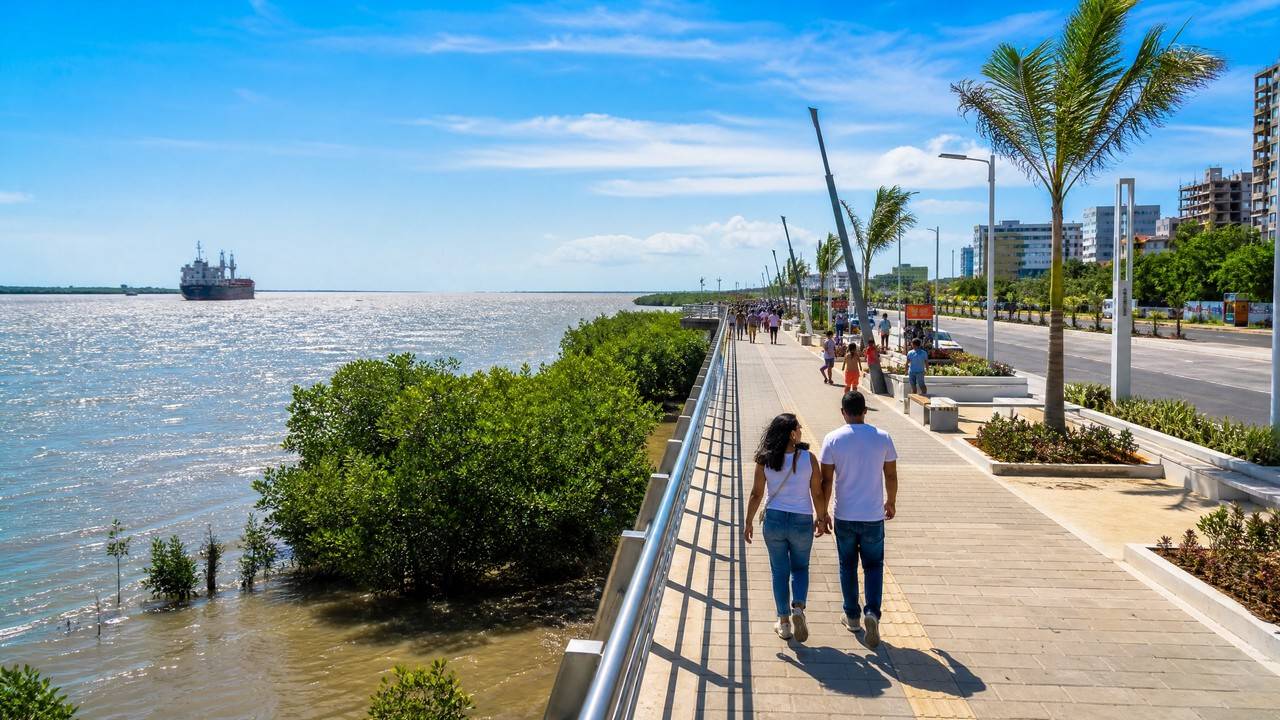
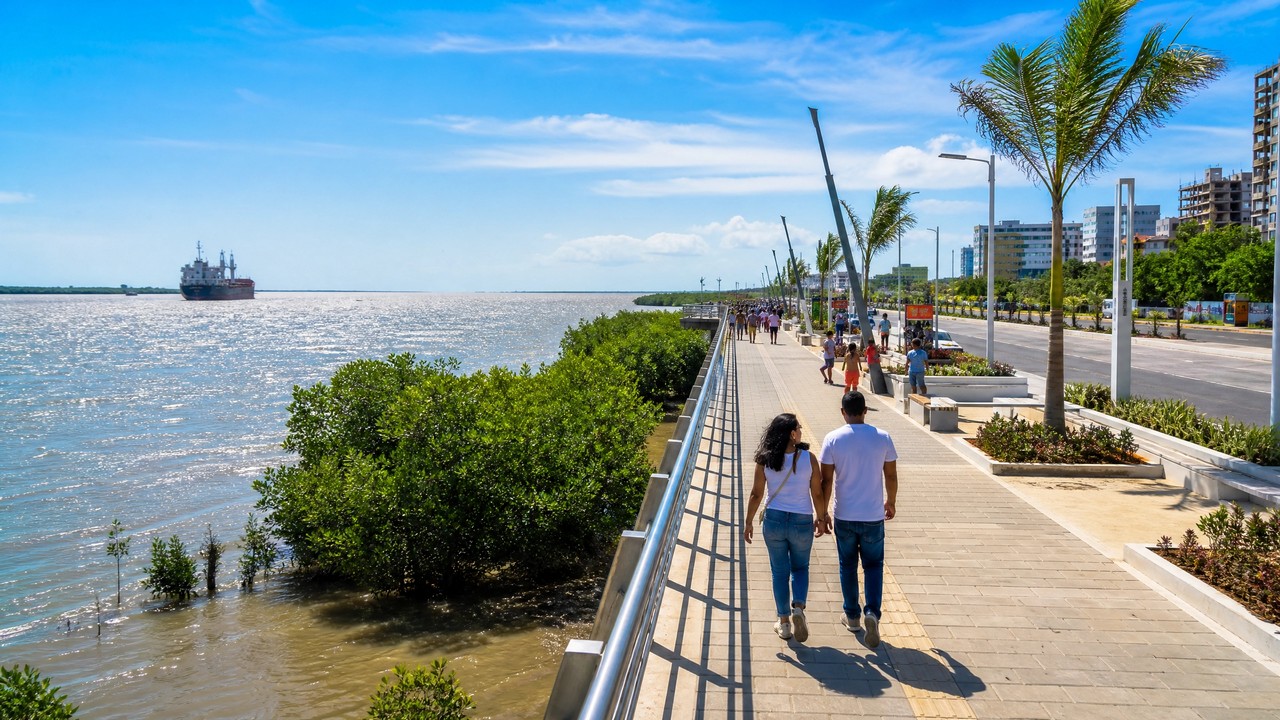
Ventana al Mundo Sculpture: Located at the end of the northern riverside boulevard (Carrera 50), this 26-meter-tall geometric sculpture in yellow, blue, and red is Barranquilla's modern landmark. The light is best at sunset; you can stroll along the surrounding embankment. Allow 30 minutes.
Bocas de Ceniza Beach: At the mouth of the Magdalena River, where you can see the dramatic sight of the river rushing into the sea. It's about a 20-minute taxi ride from downtown; admission is free, but you must purchase a shuttle ticket at the entrance for 6,000 COP (about 1.5 USD). Best visited in the morning; it's windy by the river, so be sure to use sun protection.
5. Recommended Itineraries
3-Day Plan (First Impression of the City)
- Day 1: Morning at the Caribbean Museum (2.5 hours) → Walk to Bolívar Park for lunch → Afternoon exploring old city streets and photographing colorful buildings, then view exhibitions at the Aduana Customs House.
- Day 2: Morning visit to Ventana al Mundo sculpture and the riverside promenade (1.5 hours) → Take a taxi to Bocas de Ceniza Beach to see the river mouth up close → Afternoon return to Calle 76 coffee street to relax.
- Day 3: If you arrive between mid-February and early March, try the carnival prelude event "the Canoe Parade," or take a walking tour of the city's street murals. If you miss the festivities, head to the central market (Mercado de Barranquilla) to experience local life.
5-Day Plan (Deep Caribbean Experience)
Add to the 3-day plan:
- Day 4: Hire a car and head south for birdwatching. The Magdalena River wetlands (Ciénaga de Mallorquín) are a stopover for Caribbean flamingos and various water birds. No admission fee; guide fees are about 100,000 COP/2.5 hours (25 USD / 182 CNY).
- Day 5: Take a day trip to the town of Ciénaga outside the city, about 45 minutes by vintage train-style shuttle or hired car. The town is known for its seafood and colonial architecture.
7-Day Plan (Extended Surroundings)
- Days 6-7 can connect to nearby Taganga or Cartagena. A taxi from Barranquilla to Cartagena costs about 180,000 COP (45 USD / 330 CNY), roughly 2.5 hours via highway. Travelers willing to extend their trip this way can focus on Cartagena's old city walls and beaches.
Flexibility Tips: Barranquilla often has heavy afternoon rains from June to October, so it's recommended to schedule outdoor attractions (beaches, riverside promenades) in the morning and switch seamlessly to indoor museum or mall activities in the afternoon. Some travelers note that the Caribbean Museum's exhibitions are highly interactive, and spending an extra hour there on a rainy day is well worth the ticket price.
6. Food Map
Barranquilla has the richest fried-food culture in Colombia. Arepa de huevo (a corn cake filled with a runny fried egg) is a must-try street breakfast, Valle del Cauca style, priced at 3,500–5,000 COP (about 1 USD / 7 CNY). Carnitas (slow-braised pork) and bollo limpio (corn tamale) are also common at roadside stalls in the morning.
Locals' recommended gathering spots:
- Calle 76 and Calle 82: A neighborhood packed with grilled-meat restaurants and craft beer bars. A signature grilled meat platter for two costs about 60,000 COP (15 USD / 110 CNY), served with a side of fried plantain chips and lime sauce.
- Old Town Central Market (Mercado de Barranquilla): Fruit stalls, juice stands, and fried-food vendors side by side. A mixed fruit juice costs about 4,000 COP, and a platter of assorted fried snacks about 8,000 COP. The market is crowded, so keep an eye on your belongings.
- Along Vía 40: Stylish restaurants geared toward middle-class families, leaning toward seafood and creative Colombian cuisine. Main courses run about 35,000–55,000 COP (9–14 USD / 65–100 CNY).
Pitfall warnings: Restaurants on the main streets of the Old Town may bring tourists "the waiter's recommendation" without asking, and it occasionally turns out to be 20% more expensive than what is listed on the menu. Our editors tested this firsthand: if you tell the waiter "orden exacta" (order exactly as on the menu), they will clearly confirm the order. In addition, street coconut water stalls often add a 2,000–3,000 COP markup for tourists — ask the price first before buying.
7. Practical Tips
Safety: Barranquilla's overall public security has improved in recent years, but the divide between wealthy and poor areas remains stark. Tourists are advised to restrict themselves to El Prado, the area north of the Old Town, and the commercial district. Avoid walking across isolated neighborhoods at night, and prioritize ride-hailing apps for transportation. Near Bocas de Ceniza beach, vendors may approach you selling "souvenirs" or running on-the-spot "lotteries" — just wave them off firmly and don't engage.
Language: English proficiency is low, especially among taxi drivers and at markets. It is recommended to learn basic Spanish phrases before you go, or download an offline translation app. Some hotel front desks can communicate in English.
Payment: Cash is still the norm at street stalls and on the public transit system. After the rapid depreciation of the Colombian peso, the exchange rate has stabilized around 1 USD ≈ 4,000 COP and 1 CNY ≈ 550 COP as of 2026 (as of April 2026, source: Banco de la República de Colombia). Large hotels and shopping malls accept Visa/Mastercard; American Express acceptance is limited.
Connectivity: Claro and Tigo are the main carriers. Tourists can buy an eSIM or prepaid SIM card at the airport or at city-center stores; a 10-day, 10GB plan costs about 35,000 COP (9 USD / 65 CNY). 5G coverage in the urban area is good, while signal is weak in the mountains and wetlands.
Time difference: Barranquilla uses Colombia Time (UTC-5), 13 hours behind China (13 hours slower).
8. FAQ
Q: Do Chinese citizens need a visa to visit Barranquilla?
A: Yes. Chinese passport holders cannot enter Colombia visa-free and must apply for a tourist visa at the Colombian embassy in China. However, those holding a valid U.S. visa or Schengen visa (Category C) can enter Colombia visa-free on that basis, for a stay of no more than 90 days. It is recommended to reconfirm the latest policy with the Colombian Embassy in China before your trip.
Q: When does the Barranquilla Carnival take place? Is it worth going during that time?
A: The carnival is officially held from late February to early March each year (since 2019, the convention has been Sunday to Tuesday, with the exact date referenced to the Lenten calendar). Core events include the Saturday masquerade parade, the Saturday Grand Parade of floats, and the following day's "Battle of the Flowers" parade. Admission is free; just secure a spot along the parade route a day in advance. If your schedule is flexible, we suggest treating the carnival as an opportunity to experience the city's atmosphere rather than the sole reason to visit Barranquilla — on regular days, the city's taverns and riverside sunsets are equally wonderful.
Q: How do I choose between Barranquilla and Cartagena?
A: Most travelers make Cartagena their first choice on the Caribbean coast. Cartagena has a complete colonial walled old town, but during peak season it is crowded and prices are higher. Barranquilla is better suited for travelers who like to wander the streets and want to see "real Colombian Caribbean life." If you have more than 5 days, you can combine both — spend 2–3 nights in each city. Transportation is by taxi or long-distance bus, about 2.5 hours, costing 30,000–40,000 COP one way.
Q: Is the city safe? Which areas should I avoid?
A: From morning to early evening, it is relatively safe to move around El Prado, the Old Town center, and the commercial district; petty theft is the biggest risk. At night, avoid walking through the southern side of the Old Town (the San Roque area) and the Suroccidente district. One local guide's advice: in Barranquilla, stick to the rule of "always take a taxi after dark" and it will save you 99% of your troubles.
Q: Can I use credit cards in Barranquilla? How much cash should I exchange?
A: Hotels, chain supermarkets, and upscale restaurants all accept credit cards (Visa/Mastercard). Markets, minibuses, and street vendors only accept cash, and roadside barbecue stalls may not even have change. It is recommended to carry around 50,000 COP in small bills for daily use. One traveler's feedback: preparing 40,000 COP in cash per person per day (about 10 USD / 73 CNY) is enough to cover all cash-only spending scenarios.
Practical Resources
I. Reference Materials (Collection of Official Source Links)
- Colombian Migration — Real-time visa and entry policy inquiries
- Caribbean Museum Official Website — Permanent exhibition information, tickets, and opening hours
- Central Bank of Colombia — Peso exchange rate and monetary policy reference
- Barranquilla City Hall — City events and public safety information
II. About USITrip
USITrip, founded in 2004, specializes in providing reliable travel consultation and booking services to global travelers. For independent travelers planning to visit Colombia's Caribbean coast, the USITrip team, based on field research and local information, can assist in planning combined itineraries and transportation connections between Cartagena and Barranquilla. Feel free to visit the USITrip official website or call the hotline 400-998-8038 (Mainland China) for one-on-one travel advice.
Recommended Products
No recommended products
More Popular Experiences
No recommended products