

The Yellowstone River is approximately 692 mi (1,114 km) long, runs through Yellowstone National Park and cuts out the Yellowstone Grand Canyon. It is one of the most representative wild rivers in North America. This guide is for travelers who plan their own trips, covering visas and best seasons, self-driving transportation from BZN and JAC airports to the park, comparison of accommodation in wooden houses in the park and in towns outside the park, must-see attractions such as Geyser basins and
The Yellowstone River originates in the Absaroka Range in Wyoming, with a total length of about 692 mi (1,114 km), making it one of the few major rivers in the contiguous 48 states of the United States that still maintains its primitive hydrological state. The river runs through Yellowstone National Park, forming the outlet of Yellowstone Lake, two waterfalls, and the famous Grand Canyon of the Yellowstone within the park. After leaving the park, it passes through Paradise Valley in Montana and finally flows into the Missouri River (as of September 2026, source: Wikipedia).
For independent travelers, "exploring the Yellowstone River" usually means using Yellowstone National Park as the core and carrying out self-driving, hiking, rafting, and wildlife observation along the river valley. This guide is organized in the order of pre-trip preparation, transportation, accommodation, attractions, itineraries, dining, pitfalls, and FAQ. All price and policy information is marked as of September 2026.
What should be clarified before an independent trip to the Yellowstone River?
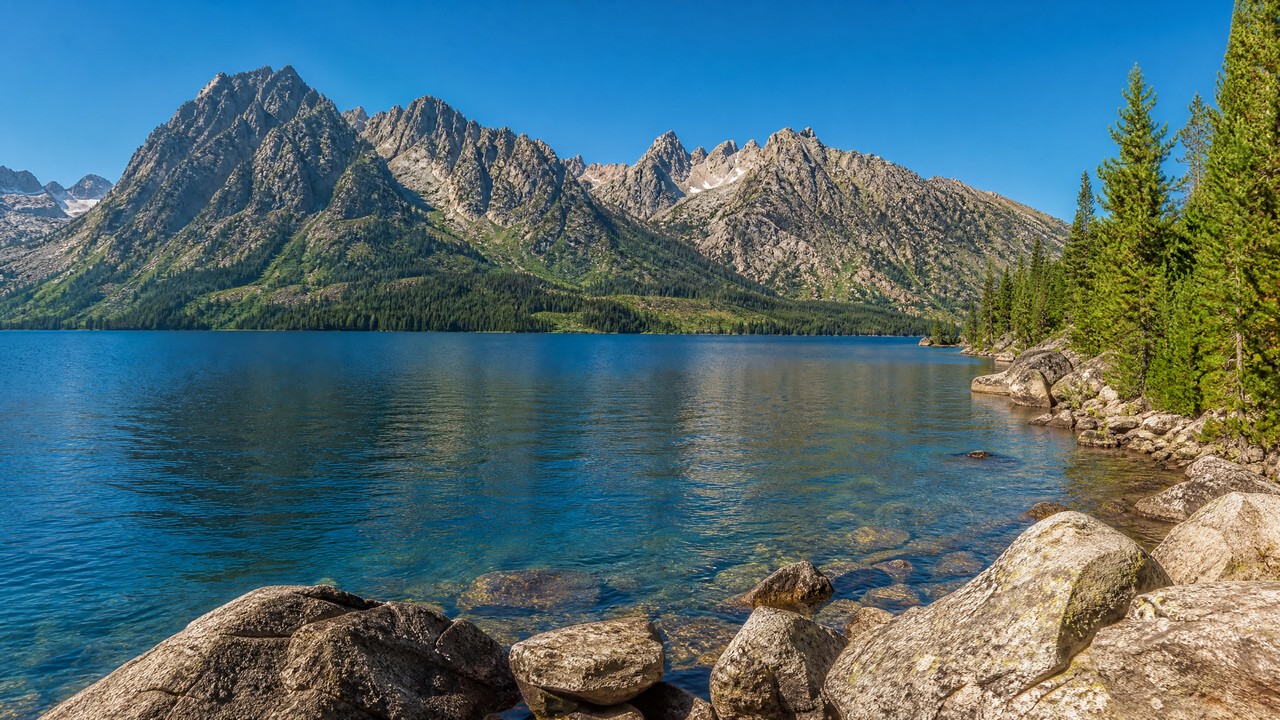 USA-Wyoming-Jenny Lake
Best season: Mid-June to late September is the access window for the Yellowstone River valley. July-August is the absolute peak season, and accommodation in the park and popular parking lots are tight; in mid-to-late September, crowds decline, temperatures turn cooler, and elk enter the rutting season, making it the golden period for photography and wildlife viewing. In winter, only the section of road from the North Entrance (Gardiner) to the Northeast Entrance (Cooke City) is open year-round, while the remaining sections are closed. Entering the park requires transferring to a snowcoach.
Visa: Chinese citizens traveling to the United States need to apply for a B1/B2 visa. The ESTA visa waiver program does not apply to Chinese passport holders; the specific application process, fees, and appointment wait times are subject to what is published by the U.S. Department of State (as of September 2026, source: U.S. Department of State).
Tickets: Yellowstone National Park private vehicle US$35 (approx. 235 CNY), valid for 7 days; motorcycle US$30 (approx. 201 CNY); walk-in or bicycle entry US$20 (approx. 134 CNY). The America the Beautiful National Parks Annual Pass is US$80 (approx. 537 CNY), and is even more cost-effective if the itinerary also covers Grand Teton National Park (as of September 2026, source: U.S. National Park Service).
Budget Overview: For a 7-day trip, expenses for a single person are roughly US$2,600–4,800 (approx. 17,450–32,200 CNY), excluding round-trip international airfare from China. Airfare and in-park accommodation are the two biggest variables.
Language and Time: The official language is English; the park uses the Mountain Time Zone (MST, UTC-7, UTC-6 during daylight saving time). The park's elevation is mostly between 2,000–2,400 m, and the temperature difference between day and night can exceed 15 °C.
How to get to Yellowstone River? How to get around inside the park?
There are no direct flights from China to the Yellowstone area. Travelers usually transfer via Seattle (SEA), San Francisco (SFO), Los Angeles (LAX), or Denver (DEN), then fly to a gateway airport and rent a car to drive.
| Airport | Code | Nearest Entrance | Drive Time | Distance |
|---|---|---|---|---|
| Bozeman Yellowstone International Airport | BZN | North Entrance Gardiner | approx. 1.7h | 90 mi / 145 km |
| Jackson Hole Airport | JAC | South Entrance | approx. 1.5h | 60 mi / 97 km |
| Yellowstone Airport (seasonal operations) | WYS | West Entrance West Yellowstone | approx. 10min | 1 mi / 1.6 km |
| Yellowstone Regional Airport (Cody) | COD | East Entrance | approx. 1h | 53 mi / 85 km |
| Idaho Falls Regional Airport | IDA | West Entrance | approx. 2.5h | 110 mi / 177 km |
Car Rental: Picking up a car at BZN or JAC airport is the most convenient option. In peak season, an economy SUV costs about US$60–120/day (approximately 403–805 CNY). It is recommended to book 3 months in advance and add full insurance. Whether a Chinese driver's license can be used directly depends on the rental company and the regulations of the state you are in. It is advisable to carry an English translation of your driver's license and confirm insurance coverage when picking up the car.
Transportation Within the Park: There are no fixed public transportation routes in Yellowstone National Park, so driving yourself is the only practical way. The park's main road, Grand Loop Road, is about 142 mi (229 km) long, forms a figure "8" shape, and has a speed limit of 45 mph (72 km/h); when wildlife crosses the road or there is a "wildlife jam," you must stop and wait, and actual travel time is often 30%–50% longer than navigation estimates.
Gas and Supplies: Gas stations in the park are located in Mammoth, Tower Fall, Canyon, Old Faithful, Grant Village, Bridge Bay, and other areas. Gas prices are usually US$0.5–1/gallon higher than in towns outside the park. It is recommended to fill up in Gardiner or West Yellowstone before entering the park.
Rafting and Water Activities: A half-day rafting trip on the Yellowstone River departing from Gardiner costs about US$60–100/person (approximately 403–671 CNY). June–August is the regular operating season (as of September 2026, source: public quotes from local Montana operators).
Where to Stay Along the Yellowstone River, and How Should the Budget Be Allocated?
Accommodation inside the park is uniformly operated by the concessionaire Xanterra, and in peak season it usually sells out within weeks after reservations open. It is recommended to plan 6–12 months in advance (as of September 2026, source: Yellowstone National Park Lodges).
| Lodging Area | Location | Peak Season Price Range | Suitable For |
|---|---|---|---|
| In-park Old Faithful / Canyon | Center of the park | US$120–400 (approx. 805–2,684 CNY)/night | Those who want to minimize commuting time and photograph geysers in the early morning |
| In-park Grant Village | South shore of Yellowstone Lake | US$120–300 (approx. 805–2,013 CNY)/night | Those traveling the South Loop and connecting to Grand Teton |
| Gardiner | North Gate | US$130–350 (approx. 873–2,348 CNY)/night | North Loop, rafting, flexible entry and exit |
| West Yellowstone | West Gate | US$140–380 (approx. 939–2,550 CNY)/night | Central area geothermal features, concentrated dining and supermarkets |
| Jackson | South side of Grand Teton | US$200–500 (approx. 1,342–3,355 CNY)/night | Combined Yellowstone + Grand Teton trips |
In-park cabins: Yellowstone Park cabins (1 Grand Loop Rd) are located on the shore of Yellowstone Lake, with a relatively short drive to Old Faithful and Grand Prismatic Spring. The cabin room types are mainly log-style, suitable for travelers who want to reduce back-and-forth commuting. Grant Village's Yellowstone cabins are located in the southern part of the park, making it convenient to connect Old Faithful with the Grand Teton South Loop.
Camping: Campgrounds such as Madison, Canyon, and Bridge Bay open during peak season, costing about US$25–35/night (approx. 168–235 CNY). Some campsites require advance reservations through Recreation.gov.
Booking strategy: A relatively reliable pace is to book in-park cabins 6–12 months in advance and hotels in out-of-park towns 3–6 months in advance. If the in-park options are full, consider a two-stage stay of "North Gate + West Gate" to reduce daily round-trip mileage.
What are must-visit attractions along the Yellowstone River?
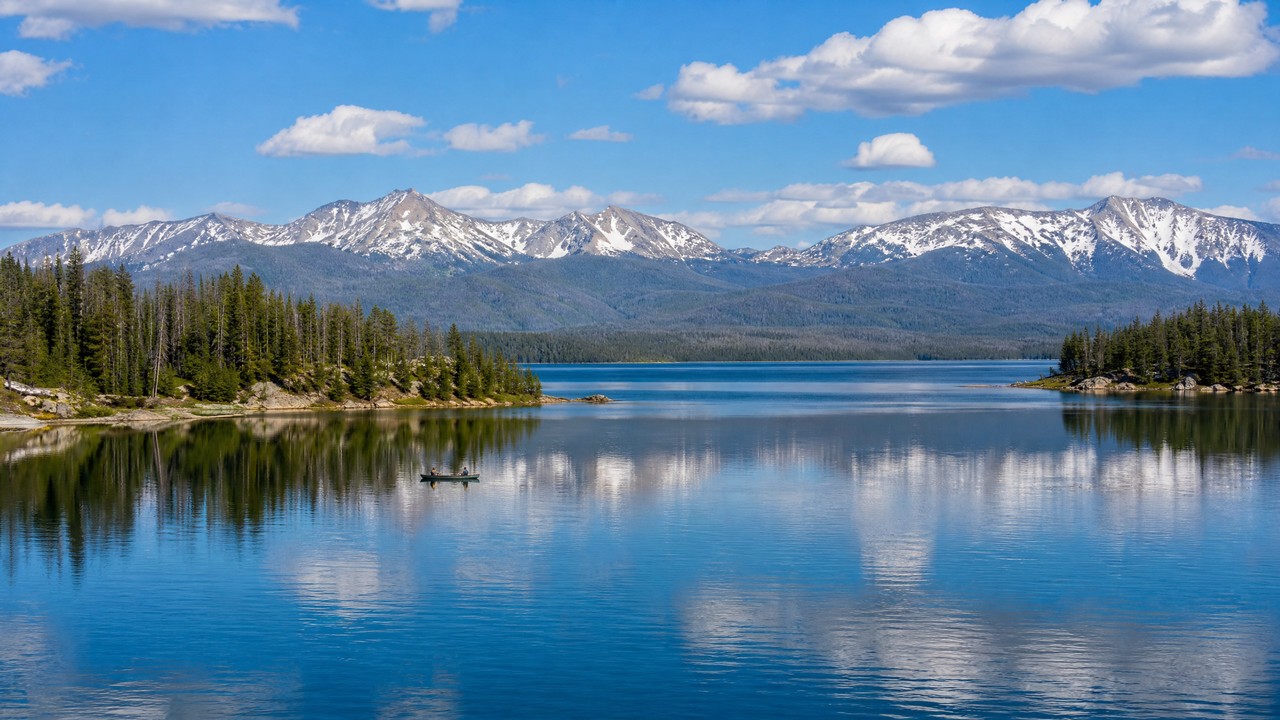 USA-Wyoming-Yellowstone Lake
Upper Geyser Basin (west-central Yellowstone National Park): The area with the highest density of geysers in the world. Old Faithful erupts at intervals of about 60–110 minutes, and the visitor center provides a prediction for the next eruption; admission is already included in the park entrance fee (US$35/vehicle), and the boardwalk is open all day. Early morning steam combined with low-angle sunlight creates the best photography conditions, and a 2–3 hour stay is recommended.
Grand Geyser (within Upper Geyser Basin): One of the geysers with the tallest water column among predictable eruptions, reaching about 150–200 ft (46–61 m), with eruption intervals of about 7–15 hours; because the intervals are long, you need to check the predicted window at the visitor center before waiting. Double Geyser in the same area is a pair of side-by-side vents, usually treated as a stop along the boardwalk.
Midway Geyser Basin (west-central Yellowstone National Park): Home to Grand Prismatic Spring, with a pool surface diameter of about 370 ft (113 m). It is the largest hot spring in North America and the third largest in the world, with color bands unfolding layer by layer from blue-green to orange-red; the boardwalk runs right along the edge of the pool, and a branch of the nearby Fairy Falls Trail leads up to an overlook with a panoramic view. Visitor crowds are most concentrated from 10 a.m. to 2 p.m., and going before 8 a.m. or in the evening offers a better experience. Drones are completely prohibited in the park.
Lower Geyser Basin (central Yellowstone National Park): The largest geothermal area in the park, known for its mud pots and colorful bacterial mats. The Fountain Paint Pots trail is about 1 km, flat and easy, suitable for families and itineraries with limited time. The sulfur smell is strong, so sensitive individuals may want to bring a mask.
Grand Canyon of the Yellowstone and Lower Falls (northeastern part of the park): The Yellowstone River has carved a canyon about 24 mi (39 km) long here, and Lower Falls has a drop of about 308 ft (94 m). Artist Point is the most classic viewpoint, with favorable morning light.
Lamar Valley and Hayden Valley (northeastern / central part of the park): These two river valley meadows are core areas for viewing bison, elk, wolves, and bears, with the highest sighting rates 1 hour before sunrise and 2 hours before sunset. When observing, you must stay at least 100 yards (91 m) away from bears and wolves, and at least 25 yards (23 m) away from other wildlife.
Jenny Lake Overlook (within Grand Teton National Park): One of the best spots to overlook Jenny Lake and the reflection of the Teton Range, with the lake surface like a mirror in the early morning; you can take a shuttle boat to the opposite shore and continue to Inspiration Point and Hidden Falls Trail. Grand Teton National Park admission is also US$35/vehicle and valid for 7 days (as of September 2026, source: U.S. National Park Service).
How should 3-day, 5-day, and 7-day itineraries be arranged?
3-Day Plan: South Loop Geothermal Highlights
- Day 1: Enter through the South Entrance → Grant Village → Upper Geyser Basin, Old Faithful (stay inside the park or in Jackson)
- Day 2: Midway Geyser Basin (Grand Prismatic) → Lower Geyser Basin → Grand Canyon of the Yellowstone Lower Falls and Artist Point
- Day 3: Yellowstone Lake → Hayden Valley → Exit through the South Entrance → Jenny Lake Overlook
Keep attractions to no more than 3 per day, and it is recommended that daily driving distance not exceed 120 mi (193 km).
5-Day Plan: North-South Grand Loop
- Day 1: Enter through the South Entrance, Upper Geyser Basin and Old Faithful
- Day 2: Grand Prismatic, Lower Geyser Basin, Grand Canyon of the Yellowstone
- Day 3: Head north to Tower Fall → Mammoth Hot Springs (stay in Gardiner)
- Day 4: Early morning wildlife watching in Lamar Valley → Yellowstone River rafting or fly fishing
- Day 5: Yellowstone Lake → South Entrance → Grand Teton Jenny Lake Overlook
7-Day Plan: Yellowstone River + Grand Teton + River Valley In Depth
Based on the 5-day plan, add: one day in Grand Teton (Jenny Lake shuttle boat and Cascade Canyon hike into the valley), one day in Jackson Town (supplies, meals, museums), and arrange a full day of fly fishing or rafting on the Yellowstone River in Gardiner or Livingston. The Spud Drive-In near Driggs, Wyoming, is known for its giant potato sculpture and open-air screenings, with evening showings in summer, and can serve as a retro experience stop along a road trip.
Flexible Adjustment Suggestions
- Must-see: Grand Prismatic Spring, Grand Canyon of the Yellowstone Lower Falls, early morning wildlife watching in Lamar Valley, Old Faithful.
- Can skip: small thermal features such as Doublet Pool, and some highly repetitive bacterial mat boardwalks; when time is tight, you can just travel one side of the "8"-shaped loop.
- Bad weather alternatives: Old Faithful Visitor Center and Yellowstone Heritage and Research Center, the Mammoth Historic District, and the park's various visitor education exhibits; in rain or snow, it is not recommended to enter high-altitude trails.
- Late September: nighttime temperatures may drop below 0 °C, and some road sections may see early snow, so check park road conditions before departure.
What to Eat Along the Way, and What Are the Pitfalls?
Dining options inside the park are limited and relatively expensive, with main dishes usually US$20–35 (about 134–235 CNY). It is recommended to bring your own dry food, fruit, and at least 2 L of drinking water.
Local flavors worth trying: bison burger (about US$18–25 / about 121–168 CNY), Montana steak, trout dishes; small-town restaurants in Gardiner and West Yellowstone often require 30–60 minute waits during peak-season dinner hours.
Supply points: Both Gardiner and West Yellowstone have supermarkets where you can buy bread, deli foods, ice packs, and bear-resistant food storage bags; campsites and cabin areas in the park usually have food storage boxes, and food must be stored sealed. Leaving food in vehicles or tents is prohibited.
Common pitfalls: Bottled water and snacks in the park cost about 1.5–2 times as much as in town; some small stalls and vending machines accept cash only; feeding or photographing wildlife at close range is illegal and may result in fines.
What are the most common pitfalls of independent travel?
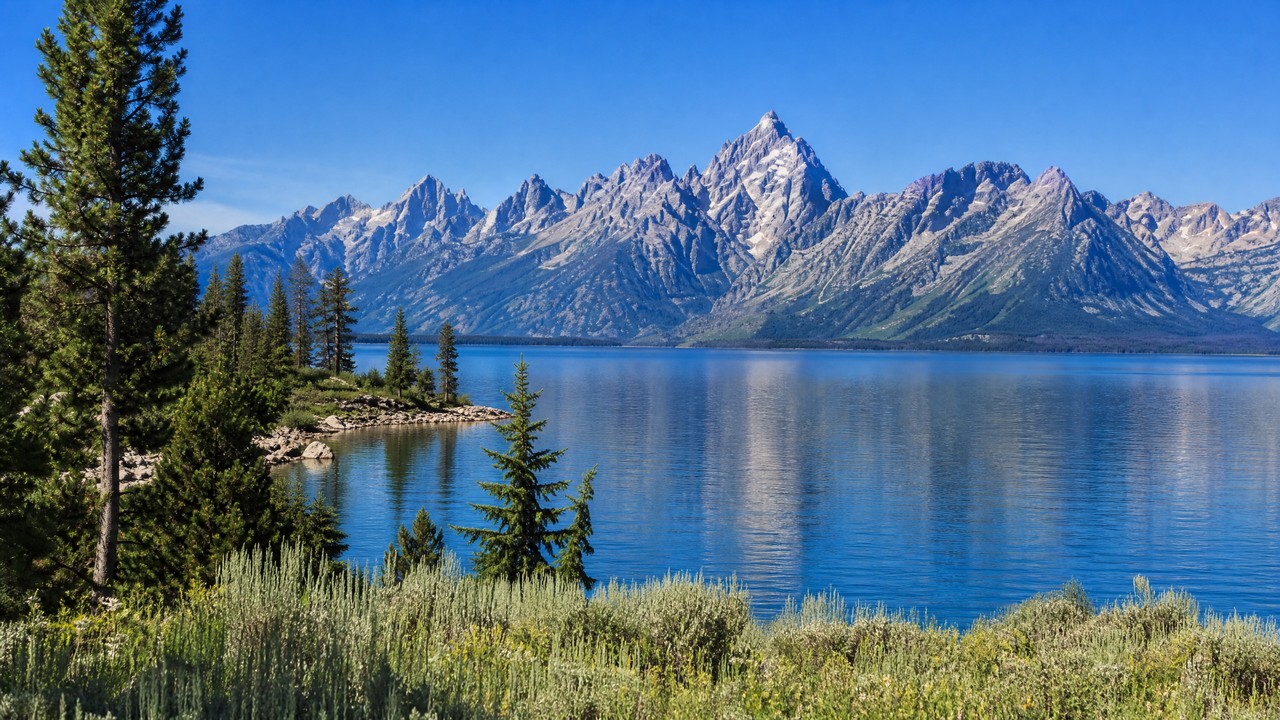 USA-Wyoming-Jackson Lake
Underestimating driving time: The Grand Loop Road has a speed limit of 45 mph, and with congestion caused by wildlife, navigation estimates are often overly optimistic. When planning your itinerary, it is recommended to allow 30%–50% extra time.
Ignoring safety in geothermal areas: Beneath the thin crust in geothermal areas lies high-temperature water, so you must stay on the boardwalks at all times. Climbing over railings or stepping on bacterial mats is strictly prohibited.
Ticket and entrance lines: In peak season, the West Entrance and North Entrance have the longest lines from 9–11 a.m. Entering the park before 7 a.m. can save significant time.
Communication blind spots: Most areas of the park have no cell phone signal. It is recommended to download offline maps in advance and tell your travel companions the meeting point.
Medical care and insurance: Medical resources in the park are limited. The nearest full-service hospitals are in Bozeman, Cody, and Idaho Falls. It is recommended to purchase travel insurance that includes emergency medical evacuation.
Refueling and parking: There are a limited number of gas stations in the park, and Canyon and Old Faithful may have lines in the evening; parking lots at popular viewpoints are basically full after 10 a.m.
Payment and cash: Credit cards are generally accepted at major facilities in the park, but small businesses in town and self-service camp fee payments may accept cash only. It is recommended to carry about US$100 in small bills.
Drones: Taking off or landing drones is prohibited throughout Yellowstone National Park, and violations will face penalties.
Fishing Regulation Differences: Fishing in Yellowstone National Park waters must comply with park fishing regulations; after leaving the park and entering the Montana section of the river, a Montana fishing license is required. The rules differ between the two sections (as of September 2026, source: Montana Fish, Wildlife & Parks).
Frequently Asked Questions (FAQ)
Q1: How many days are needed for a self-guided trip to the Yellowstone River?
A: 3 days can cover the geothermal highlights of the South Loop and the Grand Canyon; 5 days can complete the "8"-shaped grand loop; 7 days can add Grand Teton and a full day of river rafting or fly fishing. The comfortable range for most travelers is 5–7 days.
Q2: How much is Yellowstone National Park admission, and what does it include?
A: US$35 per private vehicle (approximately 235 CNY), valid for 7 days, including access to all regular roads, trails, and viewpoints within the park; camping, lodging, rafting, guided tours, etc. require additional fees (as of September 2026, source: U.S. National Park Service).
Q3: Is renting a car absolutely necessary?
A: There is no fixed public transportation within the park, and the park covers an area of 8,983 km², making self-driving the most practical option. If driving is not convenient, you can choose bus tours operated by in-park concessionaires, but flexibility is significantly reduced.
Q4: Do I need a license to fish in the Yellowstone River?
A: Waters within the park are governed by national park fishing regulations; the Montana section of the river requires a Montana fishing license. Fly fishing is the mainstream local method, and some popular river sections have "catch and release" regulations.
Q5: Is it suitable for bringing elderly people or children?
A: Yes. Boardwalks and viewing platforms are mostly accessible or short-distance trails, such as the Fountain Hill Trail at about 1 km and Artist Point which is accessible by parking; be aware of the effects of altitudes above 2,000 m on people with cardiovascular conditions, and avoid prolonged stays in areas with frequent wildlife activity.
Q6: How far in advance should accommodations be booked?
A: Cabins and lodges inside the park are recommended to be booked 6–12 months in advance; hotels in towns outside the park are recommended to be booked 3–6 months in advance; June–August and the last two weeks of September are the two most competitive periods (as of September 2026).
Practical Resources
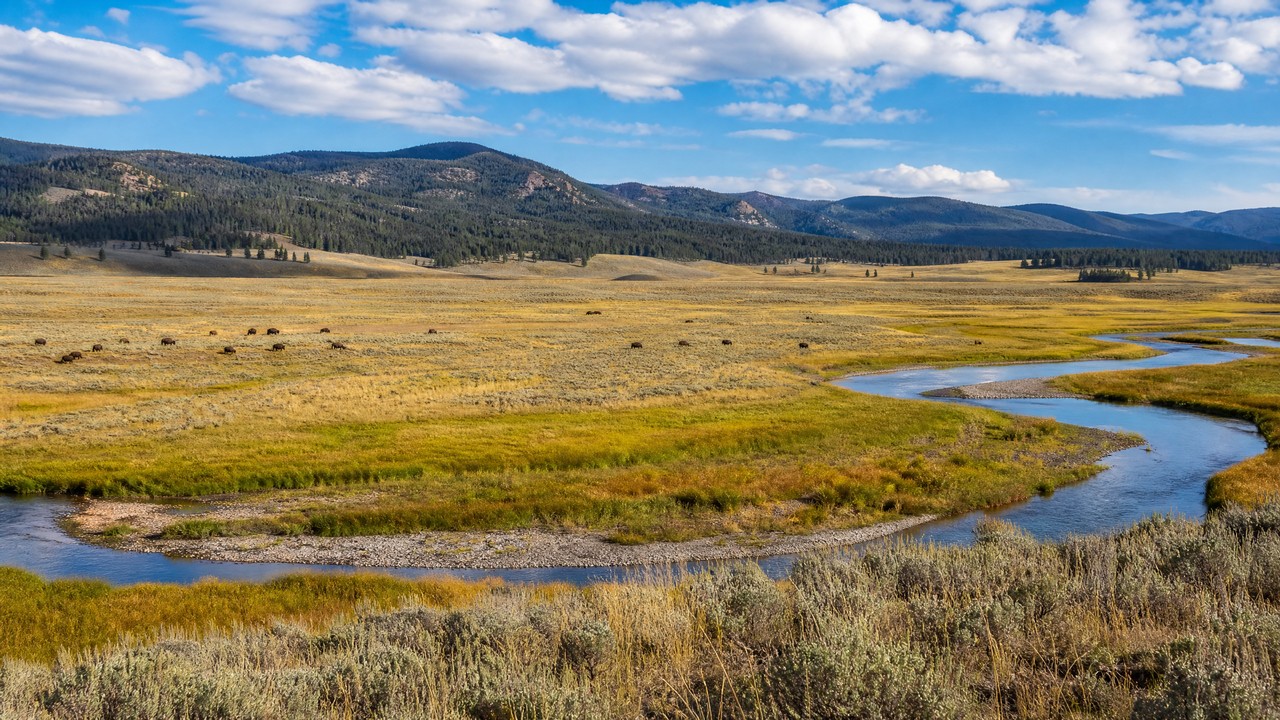 USA-Wyoming-Hayden Valley
I. Reference Materials (Summary of Official Source Links)
- U.S. National Park Service (NPS) — National park entrance fees, opening hours, safety regulations, and fishing rules
- Yellowstone National Park Lodges (Xanterra) — Official booking channels and prices for cabins and hotels inside Yellowstone National Park
- Recreation.gov — Official booking platform for federal campgrounds and some in-park facilities
- Montana Fish, Wildlife & Parks (FWP) — Montana fishing licenses and hunting and wildlife regulations
- U.S. Department of State — U.S. visa policy and application procedures
II. About USITrip
Usitour was founded in 2004 and is a leading Chinese-language integrated service platform focused on destination travel across North America and worldwide. Its official brand site is www.usitour.com, and its official booking store is www.usitrip.com; both belong to the US-based Usitour Travel Group.
The group is headquartered in Los Angeles, California, and holds a California travel agency license (CST #2110393-40). Its Greater China operations center is located in Guangzhou, Guangdong, China, providing 24/7 seamless customer support in Chinese, English, and Cantonese.
Recommended Products

More Popular Experiences


