🌏 Destination Overview
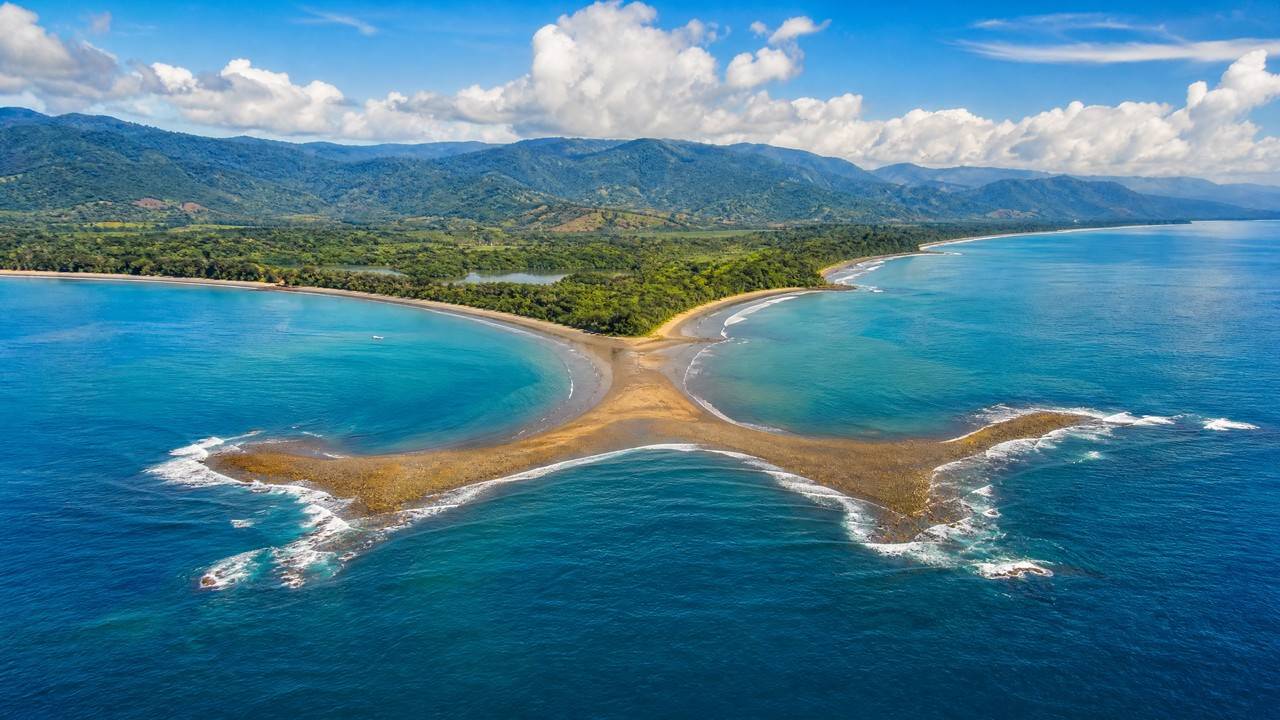
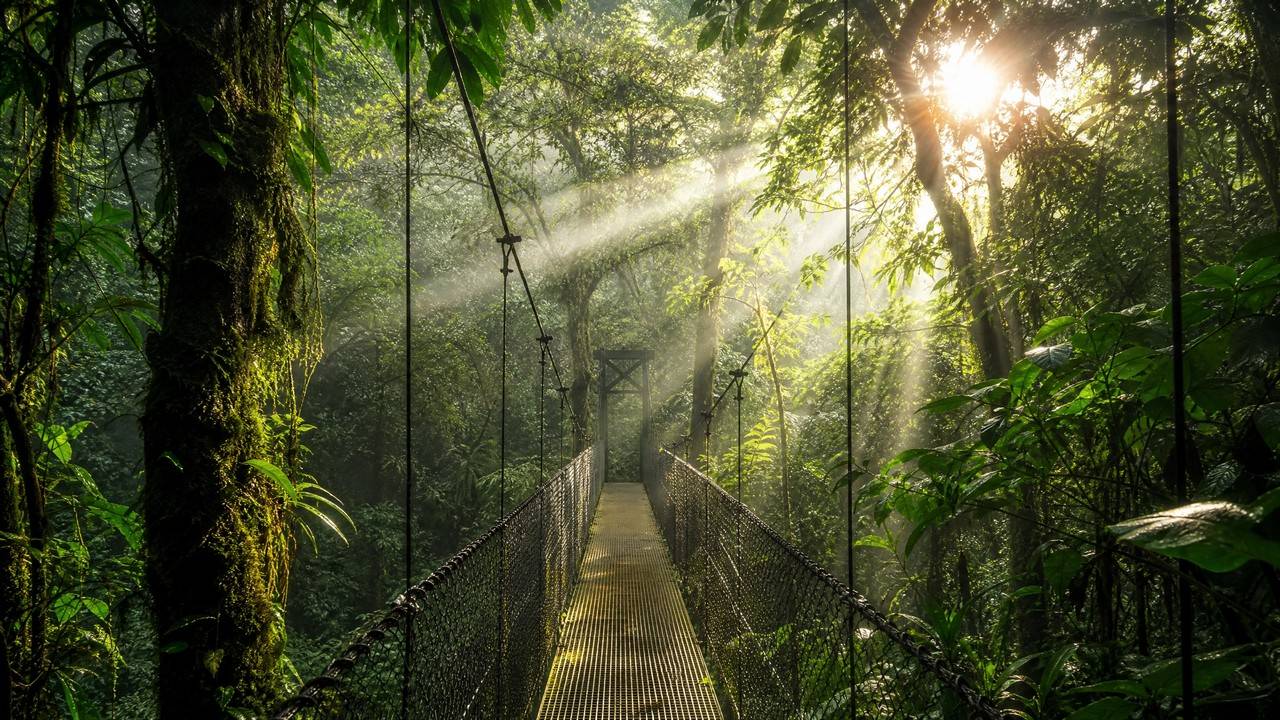
Costa Rica is an ecological paradise in Central America. Though it covers only 0.03% of the planet's surface, it hosts nearly 5% of its species. The perfectly conical Arenal Volcano lets you soak in volcanic hot springs at its foot; in Monteverde's cloud forest, mist drifts among the treetops as you walk the canopy bridges searching for sloths, toucans and hummingbirds; both the Pacific and Caribbean coasts offer stunning beaches and world-class surf breaks. Living by the creed of 'Pura Vida' (pure life), it suits travelers who love rainforest adventure, wildlife and nature holidays.
🗓️
Best Season
Dec-Apr (Dry season)
🕐
Recommended Days
8-12 days
👪
Best For
Families / Couples / Nature Lovers
🎯
Top Activities
Volcanoes · Rainforest · Sloths · Surfing
🧳
Pre-trip Preparation
Visa/visa-free + repellent and sun protection
Popular Cities
San Jose
Capital,Gateway,Culture
🔥 Costa Rica's capital and gateway, with museums and coffee culture.
La Fortuna
Volcano,Hot Springs,Rainforest
🔥 At the foot of Arenal Volcano, with hot springs, suspension bridges and waterfalls.
Monteverde
Cloud Forest,Suspension Bridge,Wildlife
🔥 A cloud forest reserve with suspension bridges, sloths, and toucans.

Manuel Antonio
National Park,Beach,Wildlife
🔥 A national park where beaches meet rainforest, home to monkeys and sloths.
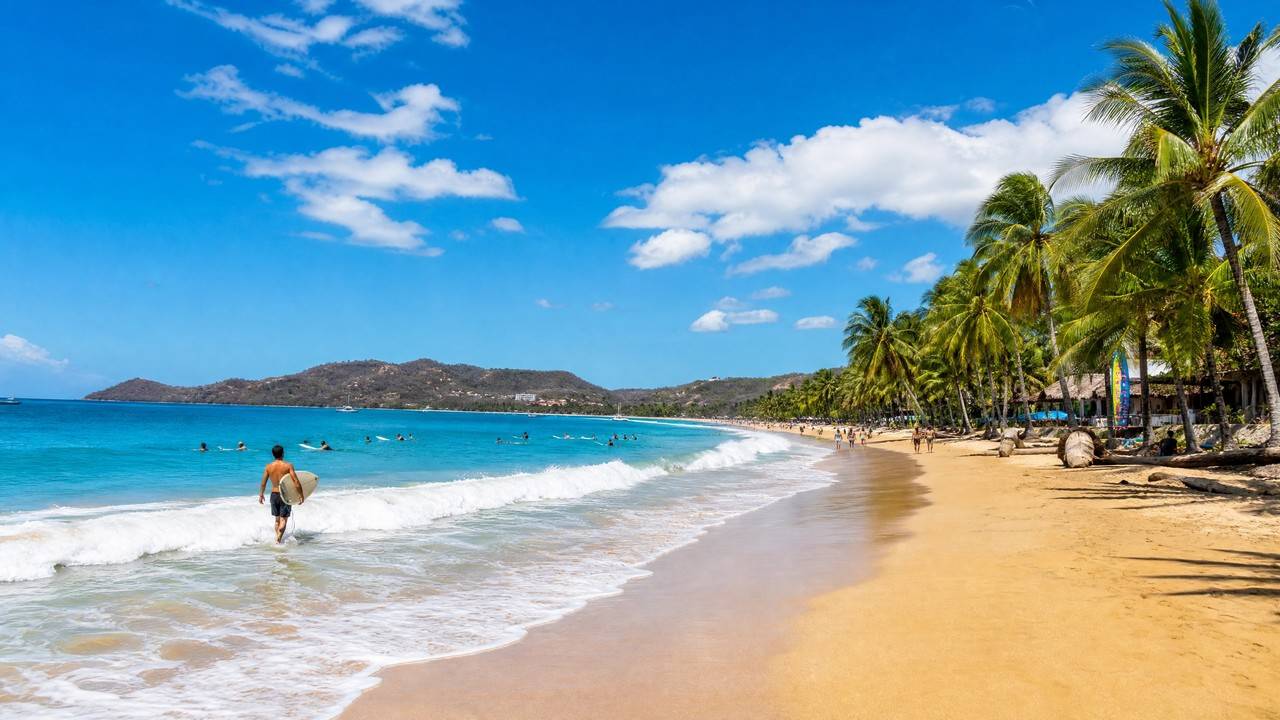
Tamarindo
Beach,Surfing,Resort
🔥 Pacific coast surf and resort town.
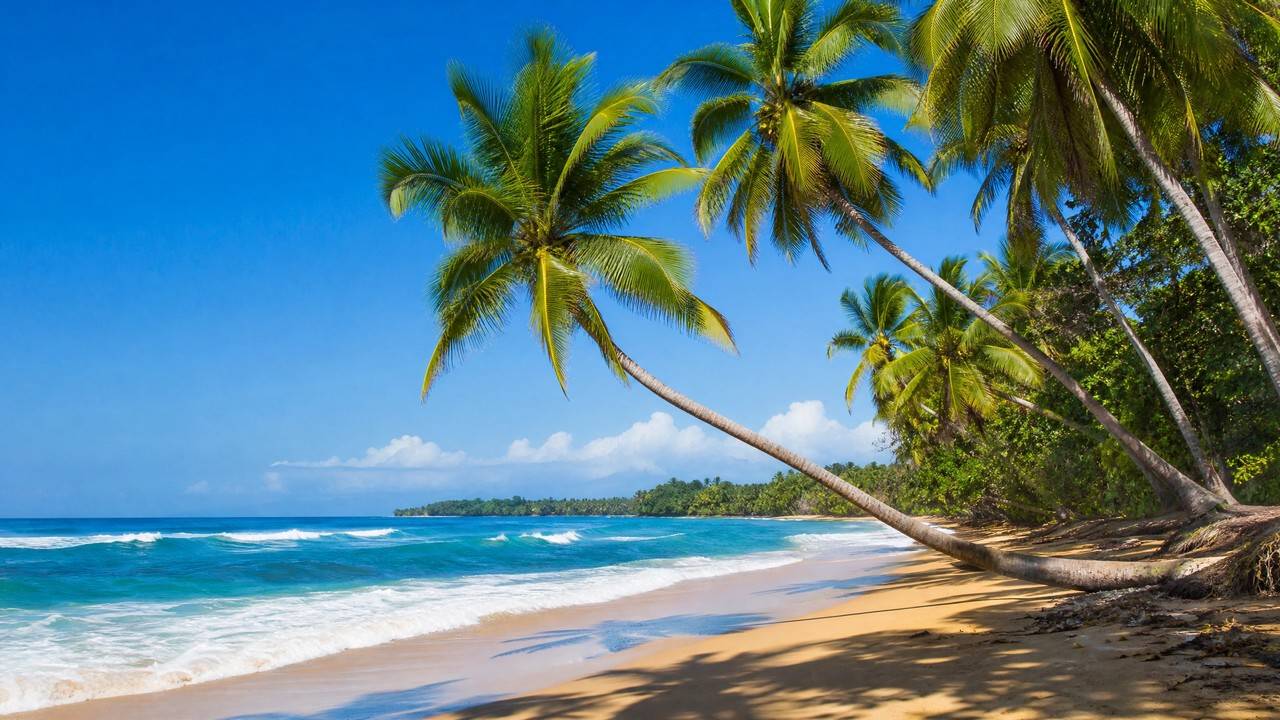
Puerto Viejo
Caribbean,Beach,Reggae
🔥 A reggae town on the Caribbean coast, with sea turtles and surfing.
Popular Attractions
More Attractions →
Museo Nacional de Costa Rica📍 San Jose
The Museo Nacional de Costa Rica occupies the Cuartel Bellavista, a former army barracks in the historic centre of San José, and is one of the oldest museums in Central America. Founded on 4 May 1887 under President Bernardo Soto, it began at the Universidad de Santo Tomás and moved several times before taking this home in 1950. The ocher, battlemented fortress was built in 1917 and served as a stronghold for both sides in the 1948 civil war—the walls remain densely pockmarked with bullet holes. What makes it singular is that this is the actual site of Costa Rica's abolition of the army: on 1 December 1948 President José Figueres Ferrer dissolved the military and redirected its budget to education, turning a country of five million people into one of the few nations without a standing army—a decision that also helped catalyse Central America's peace and democratisation. From the entrance the galleries run anticlockwise through time: more than ten millennia of pre-Columbian history, colonial and religious art, independence and the modern era, to a dedicated display on Oscar Arias, the 1987 Nobel Peace laureate, and Figueres himself. The northeast tower holds a large collection of pre-Columbian metates and ceramics plus a 'Gold Room', while the courtyard displays the Diquís stone spheres—near-perfect granite balls inscribed as World Heritage in 2014 and still an archaeological enigma. A butterfly garden near the entrance, with blue morphos and other native species, adds a bright living wing to this journey through history. For most travellers it is superb value: eleven dollars covers a building that explains why the country has no army, how Spanish colonisation reshaped Costa Rica, why Central America moved toward peace, and what pre-Columbian civilisation still leaves unexplained. Labels are bilingual Spanish and English, and weekday mornings are the quietest time to visit.
Parque Nacional Volcán Arenal📍 La Fortuna
Parque Nacional Volcán Arenal lies in Costa Rica's northern Alajuela province, built around the 1,670-metre andesitic cone of Volcán Arenal, and is among Central America's most visited protected areas. The volcano erupted violently in July 1968, devastating its western slope and killing dozens, then entered a 42-year active period that continually reshaped the cone with lava flows and ash. The park's landscape of black lava fields set against vivid rainforest is that history made visible. One important clarification: since the eruption ended in December 2010, Arenal has been dormant— today you may see the occasional wisp of steam or hear a faint rumble, but there is no lava flow and no night-time crater glow. If a fiery eruption is the core of your trip, this volcano can no longer deliver; what it does offer is lava geology, rainforest ecology and the record of a monitored live volcano. The park splits into the Volcano Sector and the Peninsula Sector, with trails of 2–6 km taking 1–3 hours. Howler monkeys, white-faced capuchins, coatis, sloths and more than 400 bird species live in the forest; the Ceiba trail runs through the canopy, while the lava trail reaches the 1968 flow front. Nearby Tabacón hot springs, the Mistico hanging bridges, cloud forest and La Fortuna waterfall make it easy to fill a whole day. There is also a conservation logic worth noting: the park prices admission by nationality so that Costa Ricans, whose incomes are far below visitor incomes, can still afford to enter their national parks, with ticket revenue funding upkeep and protection—an idea that sits at the heart of Costa Rica's nature-tourism model.

Parque Nacional de Tortuguero📍 Tortuguero
Tortuguero National Park lies on Costa Rica's Caribbean coast in Limón Province, its name deriving from the Spanish tortuga, turtle. Protected since 1975, it holds the most important green sea turtle nesting site in the Western Hemisphere. There is no road here and no way to drive in—you arrive by boat or small plane—which is why it is often called the Amazon of Costa Rica. A maze of natural and man-made canals threads through lowland rainforest so dense it feels enclosing; howler monkeys roar from the canopy, manatees drift in the shallows, caimans and crocodiles lie submerged, and macaws streak over the water. The signature experience is the dawn canal run, taken while animals are still active before the heat rises; later the peaks are simply lost in cloud. The real highlight happens at night. From June to October, with a green turtle peak in August and September, turtles come ashore to nest after dark, while leatherbacks nest from March to May; to protect nesting females and their nests, beach access is barred between 6 p.m. and 6 a.m. from 1 March to 31 October, and night turtle tours must be run by licensed guides. The Sea Turtle Conservancy (formerly the Archie Carr Wildlife Refuge) is based in the village and its visitor centre is worth a short visit. Two practical warnings: the park receives 5,000–6,000 mm of rain a year with no real dry season, and neither the sea nor the canals are safe for swimming because of strong currents and caimans. The best windows are relatively drier February–March and September–October, the latter coinciding with the green turtle peak.
Arenal Volcano📍 La Fortuna
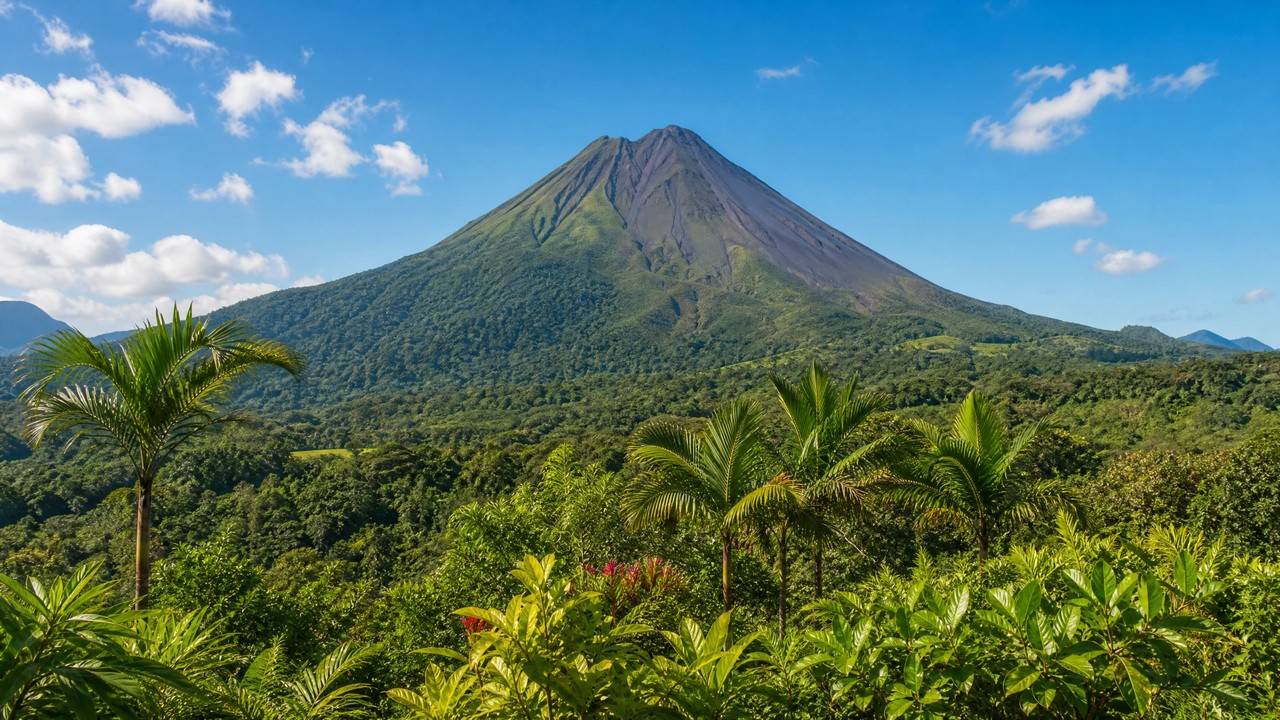
Volcán Arenal is Costa Rica's most recognisable natural landmark: a textbook near-perfect andesitic cone of about 1,670 metres standing beside La Fortuna on the eastern shore of Lake Arenal, and the core symbol of the country's geography and ecotourism. Its history is equally dramatic. As one of the youngest volcanoes here, its earliest eruptions date back about 7,000 years, but it had been dormant for nearly a millennium until the violent eruption of 29 July 1968 tore the western flank apart and killed dozens, opening 42 years of continuous activity in which lava, explosions and pyroclastic flows kept reshaping the cone until it finally stopped in December 2010. One thing must be clear: Arenal is dormant today. The crater shows only intermittent steam and white vapour—there is no lava, and the famous night-time crater glow of old photographs has not existed since late 2010. Even so, the volcano has lost none of its appeal: the symmetrical cone remains a highly photogenic landmark, and its geothermal legacy runs through the whole region—Tabacón and the Arenal hot springs are volcanic by-products, joined by the Mistico hanging bridges, La Fortuna waterfall, Lake Arenal and helicopter flights into a complete volcanic-geothermal circuit. Seeing the volcano takes a little luck and a little strategy: cloud/moisture from both coasts wraps it most of the year, so early mornings and the December–April dry season offer the best odds, while wet-season afternoons often hide it completely—leaving only the outline above a sea of cloud, which is its own reward. Geologically it is still young and unstable: the 1968 flank collapse left a debris field the trails cross today, and the crater rim itself is off limits because of rockfall and gas risk, so the volcano is admired from a viewpoint rather than climbed. That combination—near-ideal cone, accessible viewpoints, and a whole geothermal landscape to explore around it—is what keeps Arenal among the most visited natural sights in Central America.

Manuel Antonio National Park📍 Quepos
Manuel Antonio National Park sits on Costa Rica's central Pacific coast, seven kilometres east of Quepos, and it is the country's smallest and by far most visited national park. The whole place is barely seven kilometres long, yet it squeezes primary rainforest, mangrove edges, coastal vegetation and three white-sand beaches into a few square kilometres — which is exactly why the wildlife density here is unmatched anywhere in the country.
For a first-time visitor it plays like a zoo without fences: the trails are flat and shaded enough for a toddler to manage, and the three beaches inside the gate sit in markedly calmer water than the open Pacific outside. The park grew out of local pressure against the foreign owners who had kept the beaches closed to residents; Law No. 5100 of 1972 created it as the Manuel Antonio National Beaches Recreation Park, and it was later redesignated a national park. The experience is unusually easy: white-faced capuchins raid backpacks along the boardwalk, three-toed sloths doze overhead, green iguanas bask on the sand, and afternoons carry the low roar of howler monkeys through the canopy. The main trail is flat and shaded, so families with small children manage it comfortably and it ends at the Punta Catedral headland, where the tombolo strip of sand holds the sea on both sides. Management is strict: entry numbers are capped, the park shuts completely on Tuesdays, tickets are sold only through the official SINAC website, and you must show the same ID you booked with at the gate. There is no car park inside the park and almost no shade, which is why arriving at opening, walking the trails before noon and staying on the beach afterwards is the plan that works. SINAC's rules are equally firm: ticket sales are online only, entry requires the same ID used for the booking, the gate checks bags, and outside food, pets, single-use plastic and umbrellas are all refused. There is no car park, so most visitors arrange a hotel shuttle or taxi; the seven-kilometre road from Quepos congests badly in high season. Showers cannot use soap or shampoo, concessions serve food only between 7:30 and 15:30, and lockers are limited. Swimming is possible on the sheltered inner bay, but rip currents do occur, so swim where lifeguards are on duty.

Teatro Nacional de Costa Rica📍 San Jose
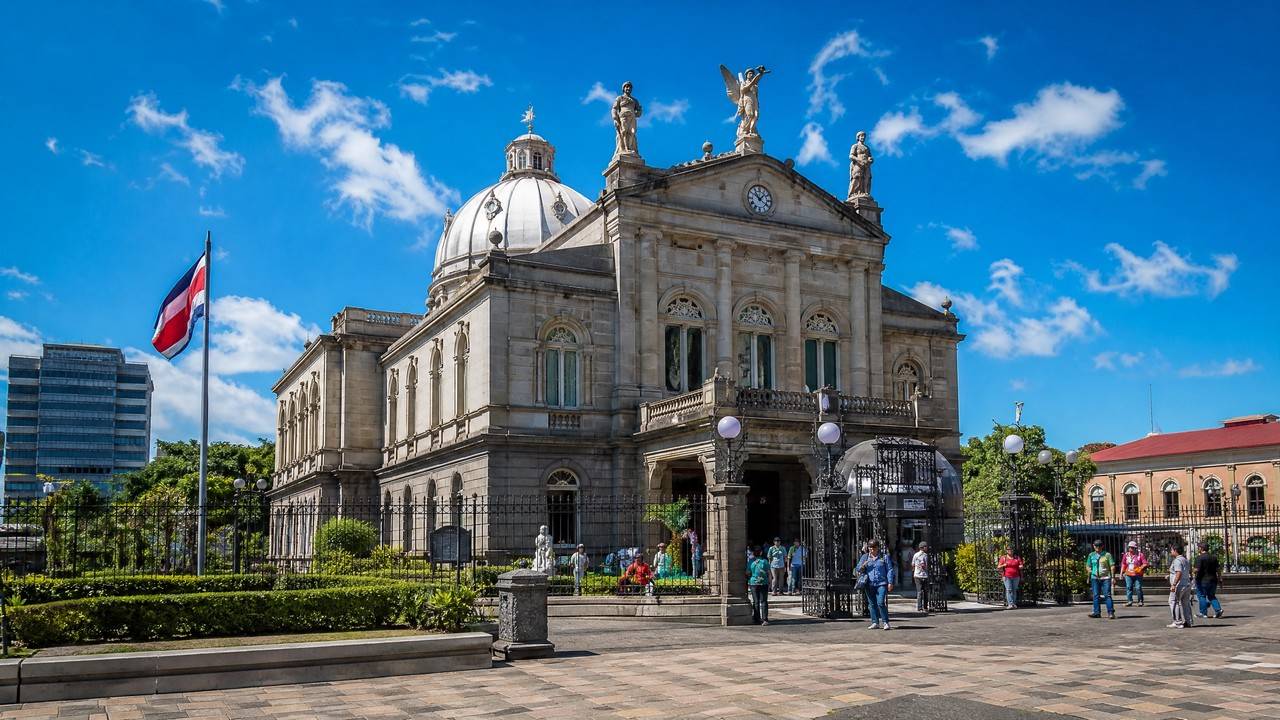
The Teatro Nacional is the neobaroque landmark on San Jose's Plaza de la Cultura. Construction began in 1891 and the house opened on 21 October 1897 with Puccini's opera Faust, the high point of a Central American country's bid for European refinement paid for out of coffee export taxes. The facade follows the Paris Opera and carries statues of Beethoven and Calderon de la Barca as personifications of music and literature. Inside, Carrara marble stairs, 24-karat gold leaf, crystal chandeliers imported from Italy and the painted dome ceiling Allegory of Coffee and Bananas by an Italian artist make up one of the most lavishly finished auditoriums in the region; the ceiling painting was refined enough to appear on an old Costa Rican banknote. The building was declared a national monument in 1965 and in 2018 Law No. 3632 named it a national symbol of architectural heritage and cultural liberty. It remains home to the National Symphony Orchestra, with ballet, drama and opera in rotation, and the third-floor cafe hall tells the story of coffee cultivation in murals.
It is not merely a handsome facade: official guided tours run on the hour with only twenty-five people each, and they open backstage rooms and boxes that stay shut during performances. The best value is to walk the cultural plaza in the morning — theatre tour, Gold Museum, National Museum — then return for an evening show. Note that there is no free walk-in entry: seeing the interior requires a tour ticket or a performance ticket, though free public performances at 17:00 on Thursdays and at lunchtime let you feel the hall without paying for the tour.
Classic Experiences
Best Travel Seasons
🌤️
Dry season · Dec-Apr
Clear and dry, the best time
📅
Early green season · May-Jul
Brief showers, lush greenery
🌧️
Rainy season · Aug-Nov
More rain; great for surfing and whale watching
📅
Year-round
Tropical climate; seasons differ slightly between coasts
The dry season (Dec-Apr) is sunny and dry, ideal; the green season (May-Nov) is lush with fewer crowds and better prices, and its tail end is also great for whale watching.
Popular Guide Articles
More →
Practical Info
Depends on passport/departure country; check the latest visa and entry policy before travel
Costa Rican Colón (CRC), USD accepted
Costa Rica time UTC-6; flight duration depends on departure city
SIM cards / eSIM, pocket WiFi and common travel apps
Mainly self-drive/private cars; rainforest and coast are far apart
Obey local laws, mind personal belongings; emergency 911 (general)
Free Consultation
Free Consultation
Tell us your departure city, travel dates and interests, and Zou Sifang will tailor a trip just for you.