Arenal Volcano
Quick Facts
- Location
- Costa Rica, La Fortuna
- Category
- National Park & Nature
- Duration
- Half day (1–2 h at viewpoints, a half day with park trails)
- Opening Hours
- Park Volcano sector 8:00–16:00 (Peninsula to 17:00); viewpoints are free, summit climbs prohibited.
- Ticket Price
- Adult: Free · Viewing the volcano is free; park trails require separate entry (foreign adult about US$15 plus tax, sold on site).
- Address
- Volcán Arenal, Alajuela Province, Costa Rica (summit), near La Fortuna and Lake Arenal
- Coordinates
- 10.4630, -84.7030
Introduction
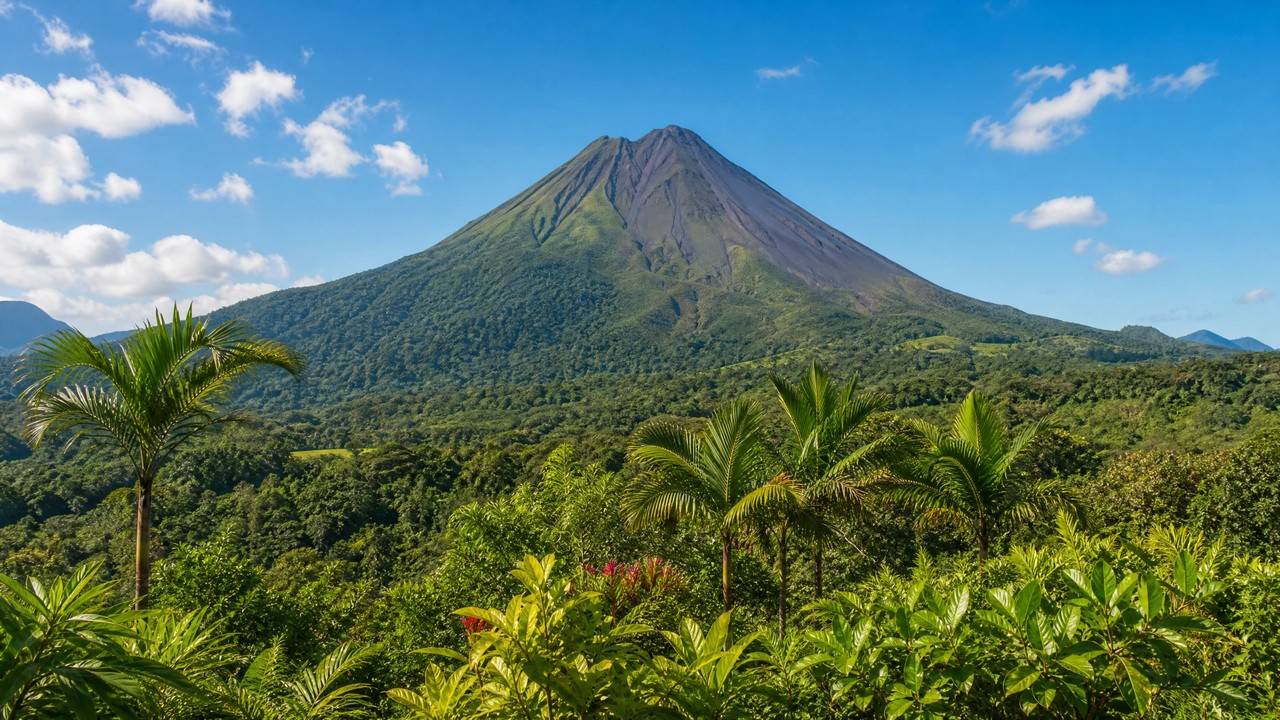
Volcán Arenal is Costa Rica's most recognisable natural landmark: a textbook near-perfect andesitic cone of about 1,670 metres standing beside La Fortuna on the eastern shore of Lake Arenal, and the core symbol of the country's geography and ecotourism. Its history is equally dramatic. As one of the youngest volcanoes here, its earliest eruptions date back about 7,000 years, but it had been dormant for nearly a millennium until the violent eruption of 29 July 1968 tore the western flank apart and killed dozens, opening 42 years of continuous activity in which lava, explosions and pyroclastic flows kept reshaping the cone until it finally stopped in December 2010. One thing must be clear: Arenal is dormant today. The crater shows only intermittent steam and white vapour—there is no lava, and the famous night-time crater glow of old photographs has not existed since late 2010. Even so, the volcano has lost none of its appeal: the symmetrical cone remains a highly photogenic landmark, and its geothermal legacy runs through the whole region—Tabacón and the Arenal hot springs are volcanic by-products, joined by the Mistico hanging bridges, La Fortuna waterfall, Lake Arenal and helicopter flights into a complete volcanic-geothermal circuit. Seeing the volcano takes a little luck and a little strategy: cloud/moisture from both coasts wraps it most of the year, so early mornings and the December–April dry season offer the best odds, while wet-season afternoons often hide it completely—leaving only the outline above a sea of cloud, which is its own reward. Geologically it is still young and unstable: the 1968 flank collapse left a debris field the trails cross today, and the crater rim itself is off limits because of rockfall and gas risk, so the volcano is admired from a viewpoint rather than climbed. That combination—near-ideal cone, accessible viewpoints, and a whole geothermal landscape to explore around it—is what keeps Arenal among the most visited natural sights in Central America.
✨ Highlights
🛈 Practical Info
Ticket Information
| Adult | Free |
|---|
Viewing the volcano is free; park trails require separate entry (foreign adult about US$15 plus tax, sold on site).
💡 Tips
FAQ
What are the opening hours of Arenal Volcano?
Park Volcano sector 8:00–16:00 (Peninsula to 17:00); viewpoints are free, summit climbs prohibited.
How much is the admission for Arenal Volcano?
Adult: Free; Viewing the volcano is free; park trails require separate entry (foreign adult about US$15 plus tax, sold on site).
Any practical tips for visiting Arenal Volcano?
Cloud decides everything—dawn and dry-season clear days give the best odds. Hike the park's lava trails for the cone from different angles.
How long should I spend at Arenal Volcano?
A typical visit takes Half day (1–2 h at viewpoints, a half day with park trails).
Trips featuring Arenal Volcano
View all products →


