Pre-Hispanic City of Chichen-Itza
Quick Facts
- Location
- Mexico, Chichen Itza
- Category
- Historic Ruins & Heritage
- Duration
- 3-4 hours
- Opening Hours
- Daily 8:00-17:00 year-round; last entry strictly 16:00, site cleared about 16:45, no re-entry. Evening show Noches de Kukulcan from about 19:00 on a separate ticket.
- Ticket Price
- Adult: Free · Foreign adult 697 MXN (INAH 99 + state CULTUR 598, two windows); child 3-12 about 105; Mexican citizens 272, free on Sundays; parking 80 MXN; drones banned.
- Address
- Chichén Itzá, Yucatán, Mexico (near Pisté village)
- Coordinates
- 20.6843, -88.5678
Introduction
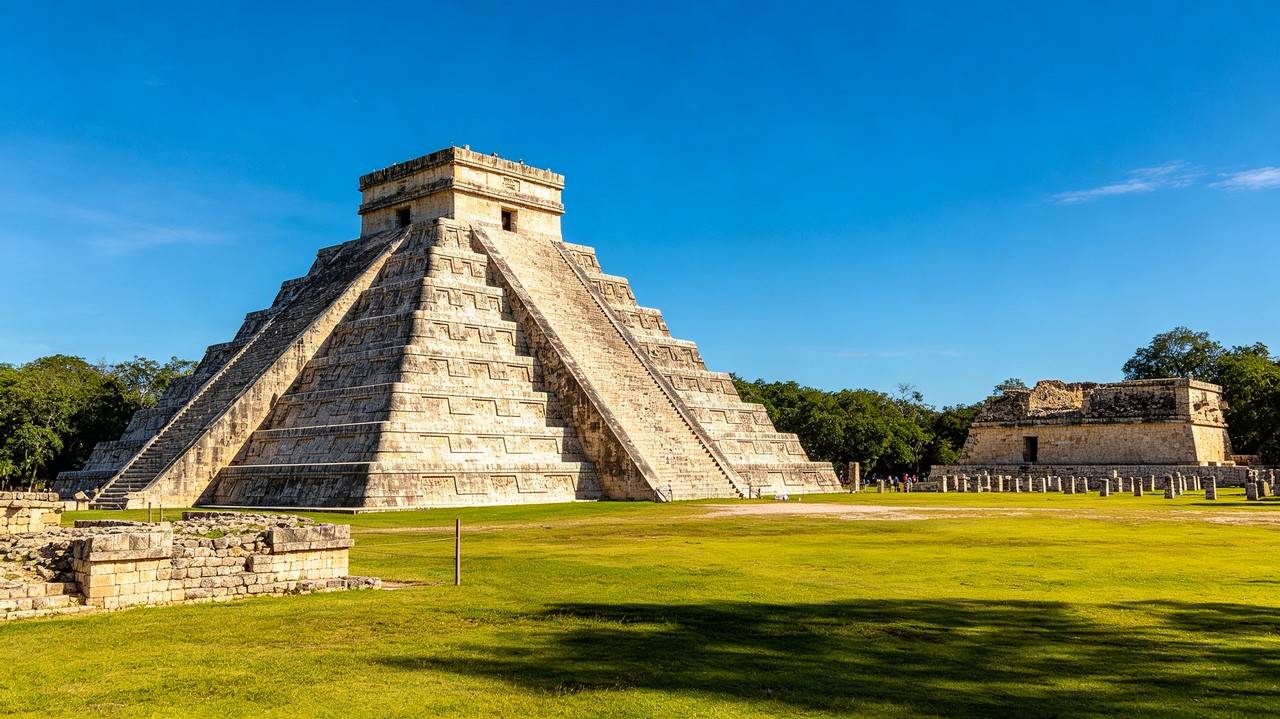
Chichén Itzá is one of the most important and best-preserved Maya cities, in the Tinum municipality of Yucatán, Mexico, beside the village of Pisté: a UNESCO World Heritage Site since 1988, a New Seven Wonder of the World since 2007, and host to over 2.5 million visitors a year, the most visited archaeological site in Mexico. The city flourished from 600 to 1200 CE, spanning the Late Classic into the Postclassic. Its architecture is a blend of Maya tradition and Toltec style, the latter carried south into Yucatán by influence from central Mexico, so this is neither a purely Maya nor a Toltec site but two architectural languages meeting on one axis. The northern half holds Late Classic Maya buildings, while the southern stretch known as Old Chichén concentrates the Toltec columned architecture. The centerpiece, the Pyramid of Kukulcán or El Castillo, rises 24 m in nine receding tiers, with a staircase of 91 steps on each face and 365 in all including the top platform, the number of days in the Maya solar year. Around the spring and autumn equinoxes the shadow cast by its north-west corners draws a serpent of Kukulcán down the northern staircase for several hours; the effect is nearly identical 3 to 5 days either side of the equinox, with far fewer people. Climbing has been banned since 2006 and it is viewed from the ground only. The Great Ball Court, 168 by 70 m with 8 m walls, is the largest in Mesoamerica, with acoustics that carry a whisper from one end to the other and sacrifice scenes carved on its walls. The round El Caracol observatory stands on a raised platform with openings aligned to the rise and set of Venus and the equinox sunrise, one of the most precise astronomical buildings in Mesoamerica and evidence of Maya command of the 584-day Venus cycle. The Sacred Cenote, about 60 m across at the end of a 300 m causeway, yielded gold, jade and human remains when dredged in the early twentieth century, confirming it as the focus of rain and sacrifice rituals, but it is not open for swimming. Three practical points matter most. The ticket is bought at two separate windows, federal INAH plus the Yucatán state CULTUR fee, 697 MXN in total. The booths close at 16:00 sharp and last entry is strictly enforced, with no re-entry on a day ticket. And there is almost no shade, so a hat, water and long sleeves are conditions rather than comforts. The best windows are 8:00-10:00 or after 14:00, avoiding the 10:30-14:30 coach peak when temperatures regularly pass 35 degrees. Yucatán runs one hour behind Quintana Roo, so count that hour if you are coming from the coast for the opening.
✨ Highlights
🛈 Practical Info
Ticket Information
| Adult | Free |
|---|
Foreign adult 697 MXN (INAH 99 + state CULTUR 598, two windows); child 3-12 about 105; Mexican citizens 272, free on Sundays; parking 80 MXN; drones banned.
💡 Tips
FAQ
What are the opening hours of Pre-Hispanic City of Chichen-Itza?
Daily 8:00-17:00 year-round; last entry strictly 16:00, site cleared about 16:45, no re-entry. Evening show Noches de Kukulcan from about 19:00 on a separate ticket.
How much is the admission for Pre-Hispanic City of Chichen-Itza?
Adult: Free; Foreign adult 697 MXN (INAH 99 + state CULTUR 598, two windows); child 3-12 about 105; Mexican citizens 272, free on Sundays; parking 80 MXN; drones banned.
Any practical tips for visiting Pre-Hispanic City of Chichen-Itza?
Yucatán runs one hour behind Quintana Roo (Cancún/Riviera Maya)—factor the time-zone shift into an 8 a.m. arrival from the coast. Enter at the 8:00 opening for the coolest, emptiest site; coaches arrive 10:30-11:30 and leave by about 14:30, with 35°C-plus heat and no shade at midday.
How long should I spend at Pre-Hispanic City of Chichen-Itza?
A typical visit takes 3-4 hours.