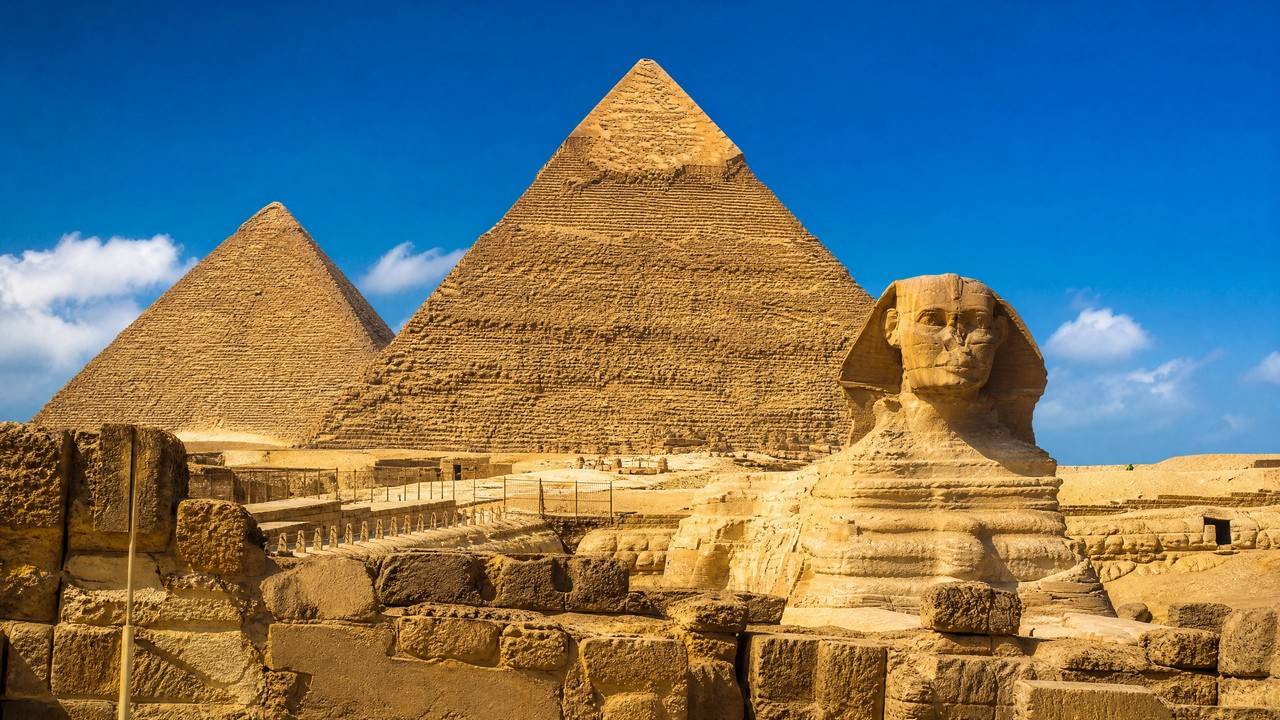
Great Sphinx of Giza

Introduction
The Great Sphinx is an iconic ancient Egyptian masterpiece alongside the Pyramids, a giant, mysterious statue with a lion's body and a human (pharaoh's) face, guarding the pyramids for about 4,500 years—a staggering symbol of ancient Egyptian civilization. Carved from natural bedrock, it has the strong body of a lion (strength and protection) and the majestic face of a human (said to be Pharaoh Khafre, wisdom and kingship), crouching beside the pyramids (about 73 m long, 20 m high—one of the largest monolithic statues). Facing east (the sunrise), it seems to have guarded the pyramids and royal tombs for millennia—solemn, mysterious, eternal. Weathered for about 4,500 years, though damaged (its nose gone, with many legends about why), it remains majestic and mysterious, inspiring awe and wonder (its builders, purpose and mysteries still fascinate scholars and the world). Standing before it, gazing at its weathered, majestic face and its eternal guardianship, is staggering. The Sphinx is essential to any Giza visit.
✨ Highlights
🛈 Practical Info
💡 Tips
FAQ
Any practical tips for visiting Great Sphinx of Giza?
Gaze up at this giant ancient Sphinx's weathered, majestic face and its eternal mystery. Facing east, crouching by the pyramids, it guards the royal tombs for millennia.