1. Destination Overview
Finland is located in Northern Europe, bordering Russia to the east, Sweden to the west, and Norway to the north. It covers an area of approximately 338,000 square kilometers with a population of around 5.5 million. With a forest coverage rate exceeding 70% and more than 180,000 lakes, it is one of the few European destinations where travelers can experience the Northern Lights, the Midnight Sun, Sámi culture, and urban design all in one trip.
It suits three types of travelers: aurora hunters chasing the Northern Lights in winter, nature lovers who enjoy boating and hiking in the lake district in summer, and city wanderers who prefer museums, saunas, and cafés. Helsinki is only 300 kilometers from St. Petersburg, roughly a 1-hour flight away, making it possible to combine with a Russia itinerary (a multi-entry Schengen visa is required).
According to statistics published on the Visit Finland official website (as of August 2026), Finland's peak tourist seasons are concentrated in summer (June–August) and the aurora season (September–March). In winter, Helsinki's average daily temperature ranges from about -5°C to -10°C, while Lapland often drops below -15°C with frequent aurora activity at night; summer temperatures range from 15–25°C, with the longest daylight lasting nearly 19 hours.
Best time to travel: December to March is the aurora season, with stable snow conditions and relatively mild temperatures from mid-February to March; mid-June to early August is ideal for lake district and archipelago trips. Travelers who want to see the aurora without extreme cold can choose late September to early October.
2. Transportation Guide
Getting to Finland
Helsinki-Vantaa Airport (HEL) is Finland's main international gateway, about 19 kilometers from the city center. Airport metro lines P and I go directly to the central railway station, with a travel time of about 30 minutes and a one-way fare of approximately €4.6 (about $5.4 USD / ¥39). From China, Finnair and Juneyao Air offer direct flights from Shanghai, Beijing, and other cities, with flight times of about 9–10 hours and frequencies ranging from 3–7 flights per week.
Getting to Lapland: Finnair flies from Helsinki to Rovaniemi (RVN), with a flight time of about 1 hour 20 minutes. Fares booked a month in advance are commonly under €100, while last-minute tickets cost about €80–150 (about $93–175 USD / ¥670–1260).
Rail and Road Options to Lapland
VR railway is the most reliable way to connect Finland's capital Helsinki with Lapland. The Helsinki→Rovaniemi overnight sleeper train departs about 3 times per night, with a journey time of 8–10 hours. A second-class sleeper berth costs approximately €89–149 (about $104–174 USD / ¥750–1250). (As of August 2026, source: VR Group official website) In summer 2026, VR added a new summer night train from Helsinki to Ivalo, making it easier for travelers to reach Saariselkä directly.
Long-distance buses are operated by Matkahuolto, with Helsinki→Rovaniemi fares of about €50–70 (about $58–82 USD / ¥420–590) and a journey time of about 13 hours, suitable for budget-conscious backpackers.
Local Transportation
Helsinki: The HSL public transport network covers suburban rail, metro, trams, and buses. A single ticket costs €3.2 (about $3.7 USD / ¥27), and a day pass costs €9 (about $10.5 USD / ¥76). Tickets can be purchased via the HSL App. (As of August 2026, source: HSL official website)
Rovaniemi: The city center is walkable; to reach Santa Claus Village, take local bus route 8, with a one-way fare of about €4 (about $4.7 USD / ¥34).
Remote areas of Lapland (Ivalo, Saariselkä): Car rental or booking a local day tour with transfers included is recommended; the reference price for car rental is €60–90/day (about $70–105 USD / ¥500–760). In winter, be sure to choose a four-wheel-drive vehicle fitted with winter tires.
3. Accommodation Recommendations
| Area | Suitable For | Reference Price (per night) | Features |
|---|---|---|---|
| Helsinki City Center (Kamppi/City Center) | First-time visitors, city sightseeing | Budget €80–120 / Comfort €150–250 (approx. $93–290 / ¥670–2100) | Walking distance to main churches, the harbor, and shopping streets |
| Helsinki Suburbs (Punavuori/Kallio) | Budget travelers, café lovers | Hostel €30–50, B&B €90–140 (approx. $35–163 / ¥250–1180) | Young atmosphere, concentrated local dining, about a 20-minute drive from the city center |
| Rovaniemi City Center | A balanced choice for auroras and Santa Claus Village | Budget €70–110 / Cabin resort €150–250 (approx. $82–290 / ¥590–2100) | Convenient dining and supermarkets, about a 15-minute drive to Santa Claus Village |
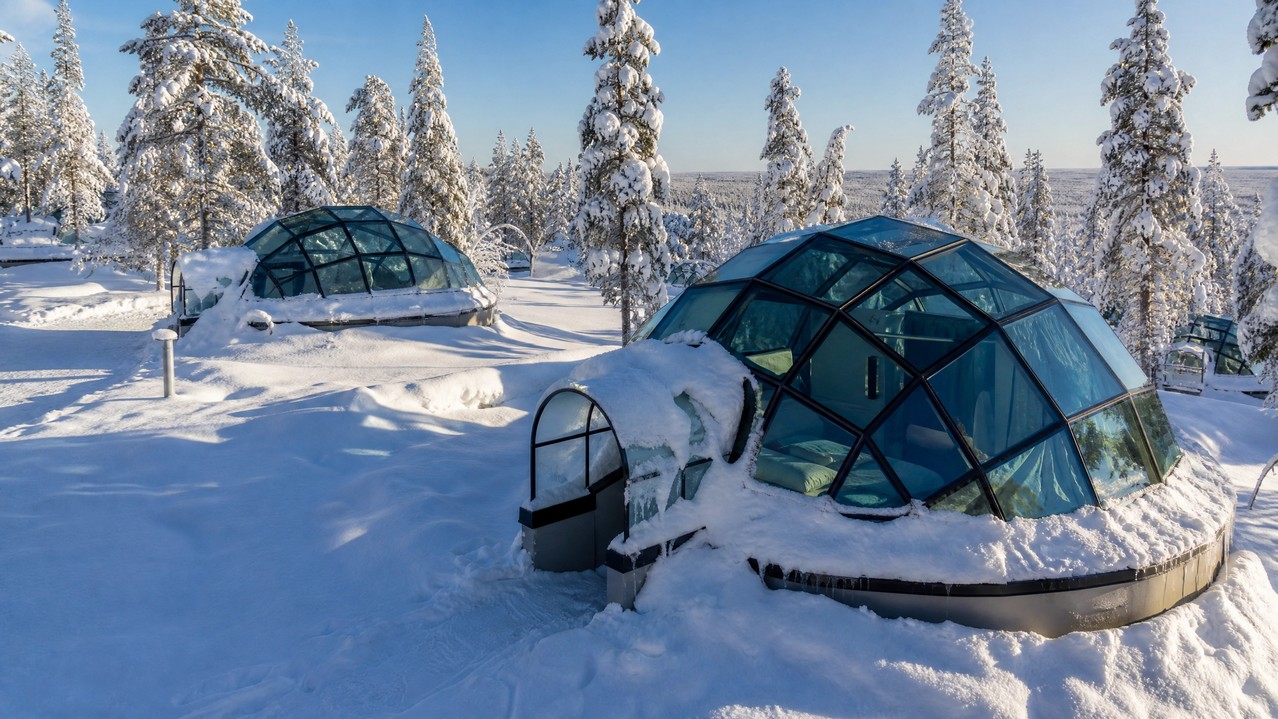
| Around Santa Claus Village | Families with children, first-time aurora experience | Glass igloo €250–450 / Cabin €180–300 (approx. $290–525 / ¥2100–3780) | Step outside to see the auroras, but limited dining options nearby |
| Saariselkä | In-depth Lapland, skiing enthusiasts | Resort €100–200 / Glass dome cabin €300–500 (approx. $117–583 / ¥840–4200) | Rooms are in high demand during aurora peak season; booking 4 months in advance is recommended |
Accommodation tips: Hotels in Finland generally do not provide slippers or toothbrushes—bring your own. Multiple travelers have noted that accommodation around Santa Claus Village in Rovaniemi needs to be booked 3–4 months in advance for December–February, otherwise you can only choose apartments in the city center.
4. Must-See Attractions
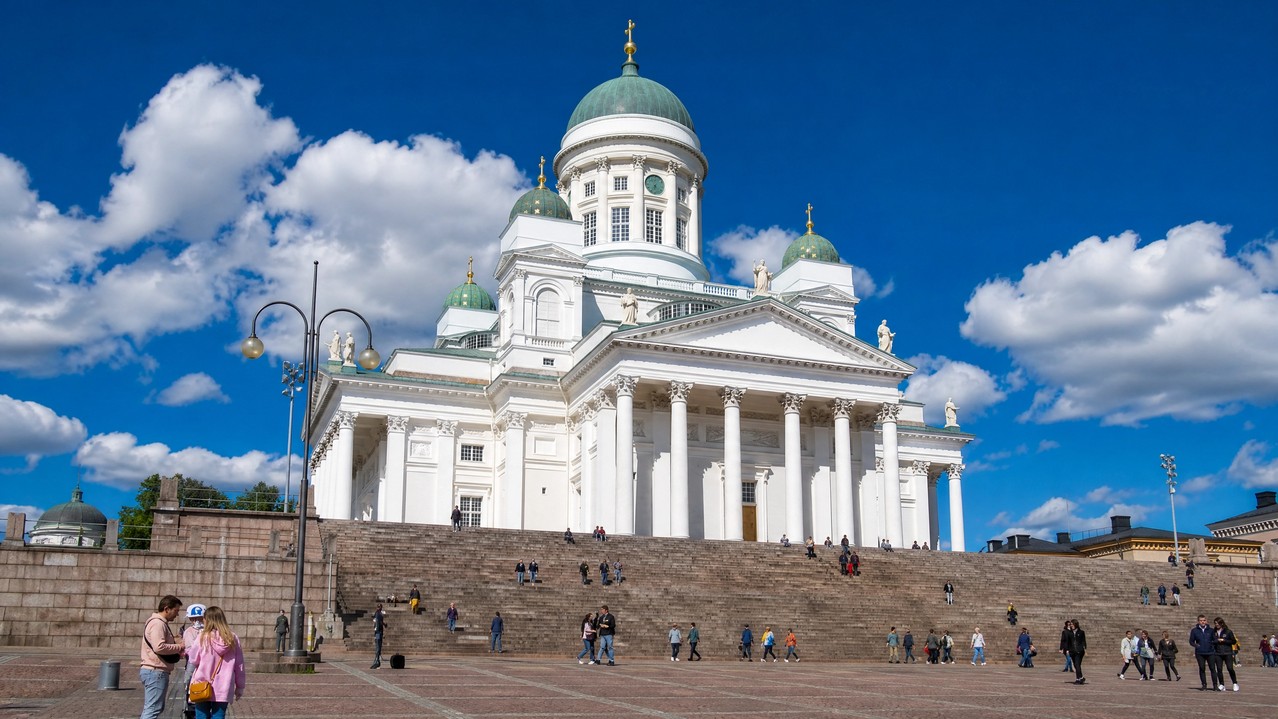
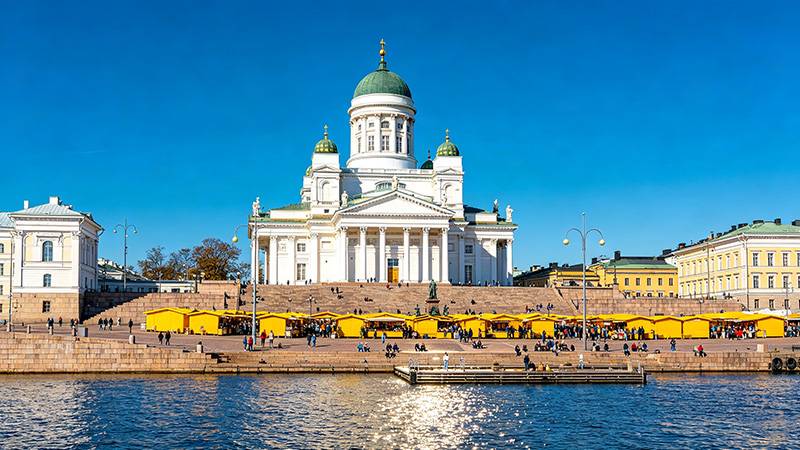
Helsinki Cathedral (Helsingin tuomiokirkko, Senate Square): A white-and-green Neoclassical landmark, built in 1852. Free admission. Open 9:00–18:00 in summer; in winter, Monday–Saturday 9:00–17:00 and Sunday 12:00–17:00. Recommended visit time: 30–45 minutes.
Temppeliaukio Church (Rock Church, Helsinki City Center): A modern church built into natural bedrock, with a copper dome and surrounding rock walls creating a unique acoustic atmosphere. Admission €5 (approx. $5.8 / ¥42). Open 10:00–18:00 in summer and 11:00–17:00 in winter. Recommended visit time: 40 minutes. (As of August 2026, source: Temppeliaukio Church official website)
Suomenlinna (Helsinki offshore): A UNESCO World Heritage Site, a sea fortress composed of 6 islands, built in 1748. Open year-round. Free admission on the islands; round-trip ferry ticket €8.5 (approx. $9.9 / ¥71). Recommended to set aside half a day (3–4 hours). (As of August 2026, source: HSL official website)
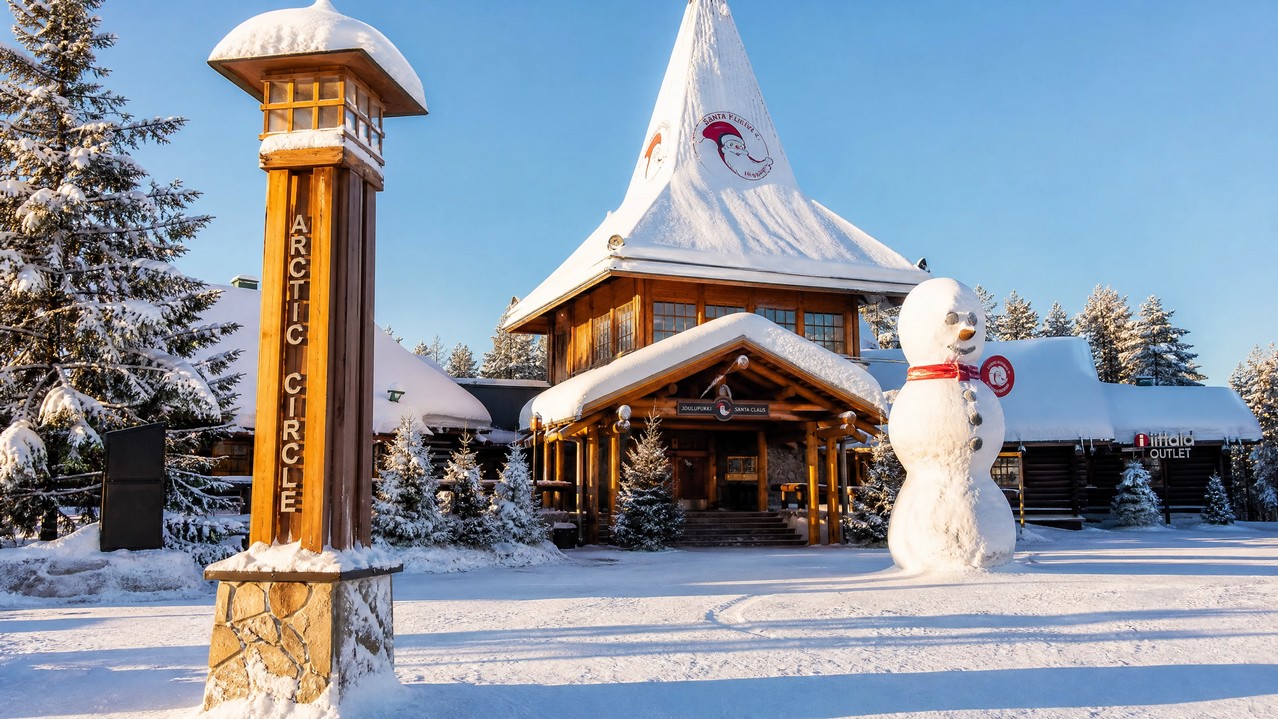
Santa Claus Village (Rovaniemi): The officially certified Santa Claus hometown theme park. Free entry, open year-round (9:00–18:00 in summer, 9:00–19:00 in winter). You can cross the Arctic Circle line for free and send postcards with a special postmark from the Arctic Circle Post Office. Recommended stay: 2–3 hours.
Saariselkä Snow Camp (Lapland, Northern Finland): Known for snowmobile safaris, husky sledding, ice fishing, and nighttime aurora chasing. Day activity tours cost approx. €90–150 (approx. $105–175 / ¥760–1260). Aurora tours typically depart after 20:00. Recommended to allocate at least 2 days.
Tampere (Southwestern Finnish Lakeland): An old industrial city situated between Lake Näsijärvi and Lake Pyhäjärvi. The Pyynikki observation tower offers panoramic views of the lake chain; admission approx. €8 (approx. $9.3 / ¥67). Hiking around the nearby lake area is free. Recommended stay: 4–5 hours.
5. Recommended Itineraries
3-Day Plan: Helsinki Highlights
- Day 1: After arrival, visit Helsinki Cathedral and Senate Square (30–45 minutes); in the afternoon, visit the Temppeliaukio Church (40 minutes); in the evening, take a stroll at the Market Square harbor.
- Day 2: Take the ferry to Suomenlinna in the morning (3–4 hours); return to the city center in the afternoon to explore the Old Market Hall (Vanha kauppahalli).
- Day 3: Explore the Design District (Punavuori) and cafés in the morning; head to the airport after lunch for departure.
5-Day Plan: Helsinki + Rovaniemi Aurora Route
- D1: Arrive in Helsinki, check into the city center, and adjust to jet lag.
- D2: Visit Helsinki Cathedral and the Rock Church (Temppeliaukio Church); in the evening, take the VR night train to Rovaniemi (8–10 hours).
- D3: Arrive in Rovaniemi in the morning; in the afternoon, visit Santa Claus Village, cross the Arctic Circle line, and take photos with Santa Claus (photo package starting at approximately €45).
- D4: During the day, join a half-day snowmobile or reindeer sleigh tour (approximately €100–150); in the evening, join an aurora-chasing tour to see the Northern Lights.
- D5: Fly back to Helsinki for a connecting flight or continue the Nordic itinerary.
7-Day Plan: In-Depth Lapland + Lake District
- D1–D2: Helsinki city area, visit Suomenlinna Fortress, and stay one night to experience a public sauna (e.g., Allas Sea Pool, admission approximately €20).
- D3: Take the VR night train to Rovaniemi in the evening.
- D4: Upon arrival, transfer by bus to Saariselkä (approximately 3.5 hours) and check into a snow resort.
- D5: Full-day snow activities: husky sledding, ice lake fishing, or cross-country skiing.
- D6: Return to Rovaniemi, stay in a Santa Claus Village cabin, and watch for the Northern Lights on your own at night.
- D7: Check off the Arctic Circle line in the morning, then fly back to Helsinki in the afternoon for departure.
If traveling in summer, you can replace D4–D6 with the Tampere lake district: lakeside sauna plus a dip in the cold lake is an unmissable part of Finnish local culture. The USITrip platform offers packaged consulting and booking services for the above routes, suitable for travelers who prefer not to piece together transportation and accommodation on their own.
6. Food Recommendations
- Salmon Soup (Lohikeitto): A national creamy soup made with salmon, potatoes, onions, and cream, served with rye bread; food truck prices at Helsinki Market Square are approximately €12–16 (about $14–19 / ¥100–134).
- Sautéed Reindeer (Poronkäristys): A Lapland specialty served with lingonberry jam and mashed potatoes, typically priced at €28–45 (about $33–52 / ¥235–380) in restaurants. Multiple travelers have noted that restaurants in downtown Rovaniemi are about 30% cheaper than those inside the scenic area.
- Karelian Pies (Karjalanpiirakka): Rye crust filled with rice porridge, often served with egg butter spread at breakfast spots, priced at about €2–4 each (about $2.3–4.7 / ¥17–34).
- Cinnamon Buns (Korvapuusti): An indispensable companion to Finnish coffee culture, sold at cafés for €1.5–3 (about $1.8–3.5 / ¥13–25), best enjoyed with lightly roasted local coffee.
Pitfall reminder: The reindeer set meals at scenic-area restaurants are mostly tourist-oriented versions with smaller portions; it's advisable to compare with local standard menus. Finnish restaurants do not accept tips, as the service charge is already included in the bill. Some stalls at Helsinki Market Square only accept cash, so it's recommended to carry €20–50 in small bills.
7. Practical Tips
- Visa: Chinese citizens need to apply for a Schengen short-stay visa (Type C) to visit Finland, with a maximum stay of 90 days within any 180-day period. The standard processing time at the embassy is about 15 working days; it's recommended to submit your materials one month in advance. For the specific document checklist, see the Embassy of Finland in China website (as of August 2026).
- Language: The official languages are Finnish and Swedish, and English is widely spoken in tourist areas, including remote parts of Lapland. Knowing a phrase or two of Finnish greetings (e.g., "Terve" = hello) often earns a warmer response.
- Payment: Finland is one of the most cashless countries in the world. Shops, food trucks, and attraction ticket offices almost all accept Visa/Mastercard and Apple Pay. ATMs are available in city centers and at the airport, and cash is rarely needed in daily life.
- Communications: The main telecom operators are Elisa, DNA, and Telia. Short-term travelers can buy prepaid SIM cards at R-kioski convenience stores; a 7-day plan costs about €20–25 (including 5–10GB of data). Free Wi-Fi is available at the airport and throughout central Helsinki.
- Safety and Warmth: Finland is one of the safest countries in the world, and there is little to worry about when taking public transportation in central Helsinki at night. In winter, sidewalks are icy, so you must wear slip-resistant high-top snow boots; when viewing the aurora in the wilderness, use the three-layer dressing method (moisture-wicking base layer, fleece mid layer, windproof and snowproof outer layer) and carry a headlamp.
- Time Zone: Finland is in the UTC+2 time zone, and during daylight saving time (late March to late October), it is UTC+3. Beijing time is 6 hours ahead of Helsinki, and 5 hours ahead during daylight saving time. After arrival, it's recommended to adjust to the local schedule.
Q: Do Chinese citizens need a visa to travel to Finland?
A: Yes. Finland is part of the Schengen Area, so Chinese citizens need to apply for a Schengen short-stay visa (Category C, allowing stays of up to 90 days within a 180-day period). Required documents include a passport, round-trip flight tickets, hotel reservations, and travel insurance (with coverage of at least €30,000). Applications are accepted by the Finnish Embassy in China and VFS visa centers; it is recommended to submit your application at least one month before departure. (As of August 2026, source: Embassy of Finland in China official website)
Q: When can I see the Northern Lights in Finland?
A: The aurora season runs from September to March each year, with the best viewing period being December to February. Popular observation spots in Lapland include Saariselkä, Ivalo, and Kuusamo. Chasing the aurora requires avoiding urban light pollution and clear or partly cloudy skies. According to statistics from multiple aurora tour operators, travelers have roughly a 60%–80% chance of actually encountering the Northern Lights; weather conditions cannot be fully guaranteed, so it is advisable to schedule at least two consecutive aurora-chasing nights.
Q: What is the approximate budget for a trip to Finland?
A: Budget travel (hostels + public transport + simple meals + free attractions) costs around €80–120 per day (approximately $93–140 / ¥670–1,010); mid-range travel (comfortable hotels + restaurants + aurora tours or snow activities) costs around €200–350 per day (approximately $233–408 / ¥1,680–2,940). The three items with the biggest budget differences are accommodation (a glass igloo costs €300–500 per night), aurora-chasing activities (a single tour costs €70–150), and round-trip international flights. Taking VR sleeper trains instead of domestic flights within Finland can save about 30% on transportation costs.
Q: What currency does Finland use? Can I pay by card?
A: Finland uses the euro (EUR); as of August 2026, the exchange rate is approximately $1 ≈ €0.857. Finland has extremely high cashless payment coverage — nearly all shops, food trucks, and attraction ticket offices in Helsinki accept credit cards (Visa/Mastercard) and mobile payments. However, some small street vendors, roadside parking lots, and a few souvenir shops in Santa Claus Village accept cash only, so it is recommended to carry €50–100 in cash as backup.
Q: What should I pay attention to when self-driving in Finland in winter?
A: Winter self-driving in Lapland is not recommended for travelers without snow driving experience; icy roads and short daylight hours (only 4–5 hours of daylight in December) are the main risks. If you insist on self-driving, you must choose a four-wheel-drive vehicle equipped with winter tires and purchase full insurance covering roadside assistance. Check road condition alerts on the Finnish Transport Infrastructure Agency website before departing (as of August 2026). Most travelers prefer taking trains plus local shuttle tours instead, which offers more manageable costs and greater safety.
Practical Resources
I. Reference Materials (Official Source Links)
- Visit Finland official website — Finland's national tourism board, destination information and travel statistics
- HSL official website — Helsinki metropolitan area public transport operator, fare and route information
- VR Group official website — Finland's national railway company, Helsinki to Lapland overnight trains
- Temppeliaukio Church official website — Helsinki's Rock Church opening hours and tickets
- Finnish Transport Infrastructure Agency — Finnish road traffic and real-time mobile traffic conditions
II. About USITrip
USITrip has been deeply engaged with Finland as a destination for many years, providing one-stop itinerary consultation and booking services for travelers planning to visit Helsinki, Rovaniemi, and the Lapland region. We can assist in arranging aurora tours, glass igloo accommodations, and domestic transport connections within Finland. Official website: https://www.usitrip.com/ Service hotline: 400-998-8038.
Recommended Products
More Popular Experiences
![11 days [Guaranteed stay at Kelo Glass House to lie down and watch the Aurora | King crab fishing experience + luxury crab feast] Panoramic views of the three Nordic countries: Finland + Norway + Sweden | Polar Express train, one-stop experience of nine polar projects | Stay in four major landscape hotels | VIP small group of 6-15 people](https://qiniu.usitour.com/images/picture/2017-08/detail_80_1501866253.jpg?imageView2=2&w=1920&q=70&format=webp)
![9 days [Ice and Snow Aurora·Three Nordic Countries] Finland + Norway + Sweden | Full four-star hotel | King crab fishing + Whale watching in Tromso + Levi's Elf Nest + Santa Claus Village + Dog sledding + Snowmobile + Kemi Ice and Snow World | In and out of Helsinki](https://qiniu.usitour.com/images/picture/2018-09/detail_85_1538104747.jpg?imageView2=2&w=1920&q=70&format=webp)
![6-Day [Experience Icebreaker + King Crab Fishing & Tasting | Upgrade Glass Igloo Lie-Watch Aurora] Across Lapland: Finland + Sweden + Norway | Polar Aurora Activity Experience (Snowmobile/Dog Sledding/Polar Snowshoe) | Free Reindeer Farm](https://qiniu.usitour.com/images/picture/2017-08/detail_10_1501870855.jpg?imageView2=2&w=1920&q=70&format=webp)
![7 days [Full four-star hotel | Three Nordic countries·Polar Elf] Finland + Norway + Sweden | Rovaniemi + Tromso + Senja + Levi | Optional multiple special polar experience activities](https://qiniu.usitour.com/images/picture/2018-09/detail_57_1538269072.jpg?imageView2=2&w=1920&q=70&format=webp)