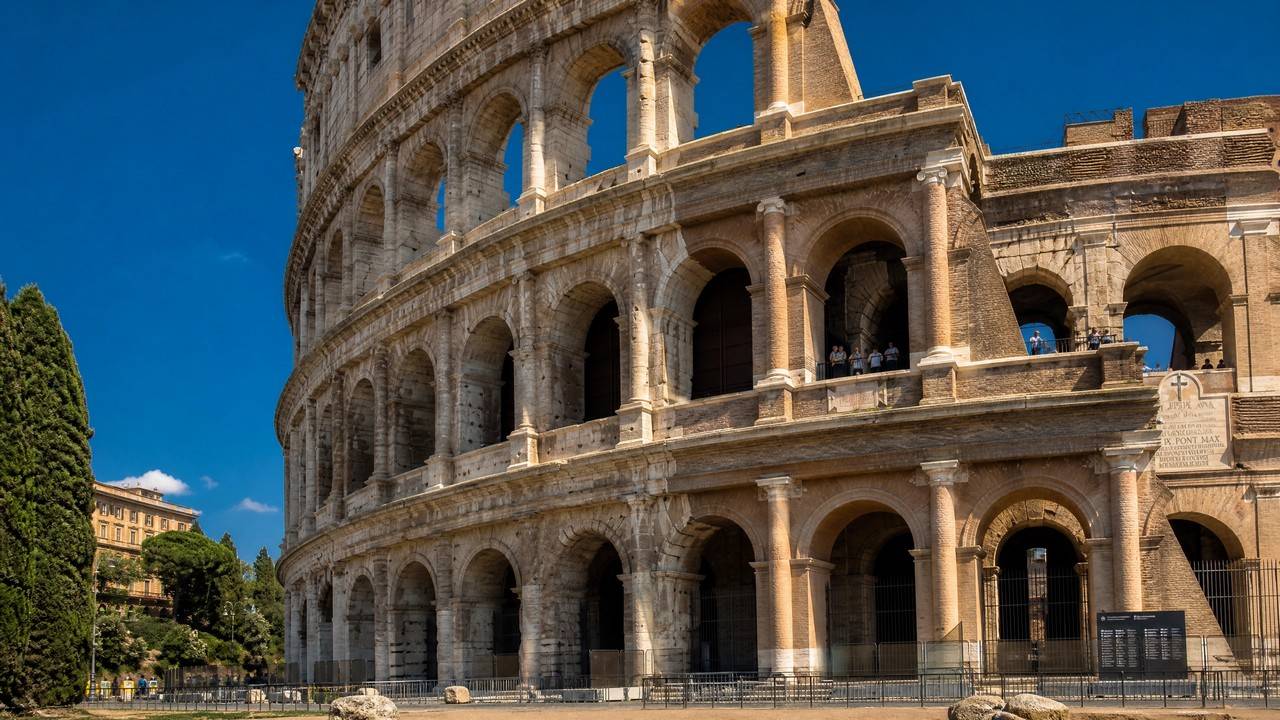
Rome is the capital and largest city of Italy, and the only capital in the world that "contains a country" — Vatican City State lies within the city. The historic center was inscribed on the UNESCO World Heritage List in 1980, and the city is home to over 900 churches, more than 2,500 street drinking fountains, and dozens of ancient Roman ruins — you can walk through more than two thousand years of history. (Information verified in September 2026, source: Italian National Tourist Board official website)
This guide is based on field research conducted across multiple seasons in 2025-2026 by editors of the Zousifang platform, hundreds of genuine traveler reviews, and official information from each attraction. All prices are converted into CNY, USD, and EUR. CNY figures are estimated based on the market exchange rate of the respective month, with a reference rate of 1 USD ≈ 0.861 EUR (updated September 4, 2026).
1. Destination Overview
City Highlights: Rome's core asset is its "density" — the Colosseum, Pantheon, Trevi Fountain, and Spanish Steps are all concentrated within the roughly 3-square-kilometer old town, making it easy to link the major attractions on foot.
Ideal For: History and culture enthusiasts, art and architecture lovers, foodies, and first-time visitors to Europe. Popular attractions involve long queues, and summers are hot — not suitable for travelers seeking a "relaxing vacation + beach" style experience.
Best Time to Visit: From April to June and September to October, temperatures mostly range between 15-27°C, making these the best travel windows. July-August often exceeds 35°C, and around August 15 (Ferragosto, the Feast of the Assumption), many local restaurants close. November to February is the low season, with hotel prices roughly 30%-40% lower, and the old town's Christmas and New Year lights are a special sight in their own right. (Information verified in September 2026, source: Italian National Tourist Board official website)
2. Transportation Guide
How to Get to Rome
Rome's main gateway is Fiumicino Airport (FCO), about 30 kilometers from the city center; Ciampino Airport (CIA) is the main hub for low-cost carriers, about 15 kilometers from the city center. A comparison of options for getting into the city (information verified in September 2026, source: ADR, Rome Airport Operator official website):
| Option | Route | Duration | Cost | Notes |
|---|---|---|---|---|
| Leonardo Express Airport Train | FCO→Termini Station, every 15 minutes, operating approximately 5:30-23:00 | 32 minutes | 14 EUR / approx. 16 USD / approx. 116 CNY | No intermediate stops, most reliable (source: Trenitalia official website) |
| Airport Buses (SIT, Terravision, etc.) | FCO/CIA→Termini Station | 40-60 minutes, depending on traffic | Approx. 6-9 EUR one way | Great value for money; prone to traffic jams during rush hour |
| Taxi | FCO→Aurelian Walls | 40-60 minutes | Fixed rate 55 EUR / approx. 64 USD / approx. 457 CNY | Up to 4 passengers with luggage; look for licensed taxis with the white roof light |
Ciampino Airport has no direct rail link; a bus to Termini Station costs about 6 EUR. For late-night arrivals with heavy luggage, the fixed taxi rate is the safer choice.
Getting Around the City
Rome's metro has three lines (A, B, and C), covering key points such as the Vatican (Line A, Ottaviano station) and the Colosseum (Line B, Colosseo station). The narrow streets of the old town core often make walking more efficient than the metro. The main ticket types are as follows (information verified in September 2026, source: ATAC Rome official website):
| Ticket Type | Price | Validity Rules |
|---|---|---|
| Single ticket (BIT) | 1.50 EUR / approx. 1.7 USD / approx. 12 CNY | Transfers allowed within 75-100 minutes; metro limited to one ride |
| 24-hour ticket | 7 EUR / approx. 8 USD / approx. 58 CNY | Unlimited rides within 24 hours after first validation |
| 72-hour ticket | 18 EUR / approx. 21 USD / approx. 149 CNY | Suitable for travelers staying 3 consecutive nights |
Travelers with plenty of time who plan to visit multiple paid attractions can compare the Roma Pass: 72 hours for 52 EUR / approx. 60 USD / approx. 432 CNY (includes city transportation + 2 attraction admissions), and 48 hours for 32 EUR (includes 1 attraction). During peak season, both the Colosseum and the Vatican require separate time-slot reservations; before purchasing, confirm whether the booking fee is included.
3. Accommodation Recommendations
Price differences between the old town's neighborhoods are significant; choosing an area based on your budget and style matters more than agonizing over a single hotel. The reference prices below are per night for a double room (information verified in September 2026, source: Zousifang platform booking data and field research):
| Area | Reference Price (per night) | Best For | Features |
|---|---|---|---|
| Around Termini Station | 70-130 EUR (approx. 81-151 USD/581-1079 CNY) | Budget travelers, early flights | Transportation hub; keep an eye on your belongings at night |
| Monti | 110-180 EUR | First-time visitors | About 10-15 minutes' walk to the Colosseum; full of small trattorias |
| Pantheon/Piazza Navona | 180-350 EUR | Couples, quality seekers | Geographic core, attractions right at your doorstep, highest room rates |
| Trastevere | 100-170 EUR | Young people, food lovers | Vibrant nightlife; 10-15 minutes' walk across the river to the old town |
| Vatican/Prati | 90-160 EUR | Families, quiet seekers | Relatively safe; many restaurants frequented by locals |
Many travelers report: during peak season (April-June, September-October), accommodations in popular neighborhoods sell out 2-3 months in advance, so it's advisable to book early; in the same area, Sunday nights are usually 15%-20% cheaper than Friday nights.
IV. Must-See Attractions
The following ticket prices and opening hours are official information verified as of September 2026.
- Colosseum (Piazza del Colosseo, Metro Line B, Colosseo station): An ancient Roman amphitheater built between 72-80 AD that could hold around 50,000 spectators. The combined ticket includes the Roman Forum and Palatine Hill; 24-hour ticket 18 EUR/approx. 21 USD/approx. 150 CNY, 48-hour ticket 22 EUR; open approximately 8:30-19:00 in peak season, reduced to around 16:30 in low season; closed on January 1 and December 25. Recommended duration: 2.5-3 hours; during peak season, book your time slot online 1-2 weeks in advance. (Information verified September 2026, source: Colosseum Archaeological Park official website)
- Vatican Museums and Sistine Chapel (Viale Vaticano): Collections spanning from ancient Roman sculpture to Renaissance art, home to Michelangelo's Genesis ceiling frescoes. Tickets 20 EUR/approx. 23 USD/approx. 166 CNY, plus an additional 5 EUR online booking fee; Monday to Saturday 8:00-19:00 (last entry 16:30), closed Sundays; open on the last Sunday of each month but extremely crowded. Recommended duration: 3-4 hours; book tickets 2-4 weeks in advance during peak season. (Information verified September 2026, source: Vatican Museums official website)
- St. Peter's Basilica (Vatican City): One of the largest churches in the world; admission is free; dome access by elevator 10 EUR/by stairs 8 EUR. Open 7:00-19:00 from April to September, 7:00-18:00 from October to March; the Basilica may close temporarily on Wednesday mornings during papal audience events, so check ahead of time. Dress code: shoulders and knees must be covered. Recommended duration: 2-3 hours. (Information verified September 2026, source: Vatican Museums official website)
- Pantheon (Piazza della Rotonda): A domed building with nearly 2,000 years of history, the best-preserved ancient Roman temple in Rome. Tickets 5 EUR/approx. 5.8 USD/approx. 42 CNY; Monday to Saturday 9:00-19:00, Sunday 9:00-18:00; visiting is restricted during Mass times. Recommended duration: 1 hour. (Information verified September 2026, source: Pantheon official website)
- Trevi Fountain (Piazza di Trevi): A masterpiece of Baroque fountains, where the tradition of tossing a coin to make a wish continues to this day. Open-air and free to visit; least crowded before 7:00 or after 22:00. Recommended duration: 30-45 minutes. According to on-site research, barriers are set up during peak season to control visitor flow, and you'll need to queue to enter the front-row area.
- Borghese Gallery (Piazzale del Museo Borghese): A top-tier collection of Bernini sculptures and Caravaggio paintings. Tickets 15 EUR plus 2 EUR booking fee, with visits limited to 2 hours; Tuesday to Sunday 9:00-19:00, closed Mondays; advance reservations mandatory. (Information verified September 2026, source: Borghese Gallery official website)
Off-the-Beaten-Path Alternatives: To avoid the crowds, visit the Basilica di Santa Maria in Cosmedin (Bocca della Verità)—a small church where viewing the "Mouth of Truth" relief at the entrance charges a small admission fee; recommended duration 30-45 minutes. Near the Spanish Steps, the Keats-Shelley Memorial House was the former home of the English Romantic poet Keats; tickets approx. 10 EUR, open at set time slots Monday to Saturday (check the official website before departure). During the rainy season or on hot summer afternoons, the Doria Pamphilj Gallery, renowned for its family's private collection and Velázquez's masterpiece Portrait of Innocent X, is a great choice; tickets approx. 13 EUR, with opening hours adjusted by season. (Information verified September 2026, source: each museum's official website)
V. Itinerary Recommendations
3-Day Classic Route
- D1 Ancient Roman Axis: Morning Colosseum + Roman Forum + Palatine Hill (same combined ticket) → Afternoon Pantheon → Evening Trevi Fountain night view
- D2 Vatican Day: Morning Vatican Museums → St. Peter's Basilica (including the dome climb) → Evening at Castel Sant'Angelo to watch the sunset over the Tiber
- D3 Fountains and Art: Morning Spanish Steps and Keats–Shelley Memorial House → Afternoon Galleria Borghese → Evening at the Mouth of Truth, then cross the river for dinner in Trastevere
5-Day Relaxed Route
Add the following to the 3-day base:
- D4 Jewish Ghetto and Across the River: Morning Jewish Museum of Rome and the streets of the Jewish Ghetto → Afternoon Tiber Island → Evening on Gianicolo Hill overlooking the city sunset
- D5 Northern Stroll: Morning Piazza del Popolo and the Ara Pacis → Afternoon cycling or walking in the Borghese Gardens → Evening dinner at a small trattoria in the Flaminio district
7-Day In-Depth Route
Add further:
- D6 Underground Rome: Morning Santa Maria della Concezione dei Cappuccini (famous for its underground crypt decorated with the bones of friars) → Afternoon National Roman Museum (Palazzo Altemps) → Late afternoon visit to the Doria Pamphilj Gallery
- D7 Day Trip: Choose one of two — Hadrian's Villa and Villa d'Este in Tivoli (about a 40-minute drive), or a 1.5-hour high-speed train round trip to Florence. Filling in the gaps in the old town's streets and lingering in cafés are equally worthwhile
Flexible Adjustments: Families traveling with seniors or young children can compress each day to just 2 attractions and return to the hotel for an afternoon rest; travelers on tight schedules who want to minimize queuing and transfer costs can also check the Rome local day tours, ticket booking services, and transfers on the USITrip official website, saving their limited time for the sights themselves.
VI. Food Recommendations
What to Eat: Rome's culinary identity is built on "cucina povera" (peasant cooking), and the four great pastas are required lessons — Carbonara (guanciale + egg yolk + Pecorino cheese, the authentic version contains no cream), Cacio e Pepe, Amatriciana, and Gricia. Also recommended: Supplì (fried rice croquettes, about 2–3 EUR each), Carciofi alla giudia (Jewish-style fried artichokes, about 8–12 EUR each), Roman-style thin crispy pizza, and espresso drunk standing at the bar (about 1.2 EUR a cup).
Choosing Where to Eat: Trastevere and the Testaccio district are where local diners gather — you can eat very well for 25–40 EUR per person; prices in the core tourist areas are typically 30%–50% higher. (Information verified in September 2026; sources: field testing by USITrip platform editors and compilations of traveler feedback)
Pitfall-Avoidance Guide:
- Avoid restaurants with colorful dish photos at the entrance, staff actively touting for customers, or menus labeled "Tourist Menu";
- Observe dining times — locals lunch from about 13:00–15:00 and dine after 20:00; a restaurant that is already lit up and open at 18:00 with no one inside is most likely a tourist trap;
- Check your bill for the coperto (cover charge, 1.5–3 EUR per person) and service fees; Italian regulations require these to be stated on the menu, so you can confirm before ordering;
- When buying gelato, look for matte colors: a fluorescent-green pistachio flavor or tall, glossy mounds of ice cream most likely contain colorants and stabilizers; a reasonable price for a small portion is 2–3 EUR;
- Cappuccino is only drunk at breakfast — ordering a milky coffee after a meal will mark you as a tourist; of course, no one will actually stop you if you order one anyway.
VII. Practical Tips
Safety: Rome's overall violent crime rate is low; the main risk is pickpocketing. Bus route 64, Metro lines A and B, Termini Station, and the entrances to popular attractions are high-risk areas — wear your backpack on your front and don't leave your phone on the table; for strangers offering roses, tying on "lucky bracelets," or asking you to feed pigeons, simply say "No, grazie" and walk away. The EU-wide emergency number is 112. (Information verified in September 2026; source: official advisories from the Italian National Tourist Board)
Language: Italian and English are both widely spoken; learning a few phrases like Ciao (hello), Scusi (excuse me), Grazie (thank you), and Il conto, per favore (the bill, please) will significantly boost your likability.
Payment: Visa/Mastercard are accepted at the vast majority of merchants, while American Express acceptance is lower; small coffee bars and market stalls still operate mainly in cash, so it's advisable to carry 50–150 EUR in small change. Tipping is not mandatory — leaving 1–2 EUR or rounding up when satisfied is enough. Some public restrooms charge 0.5–1 EUR; museum tickets usually include restroom access.
Connectivity: TIM, Vodafone, and Wind Tre all offer tourist prepaid SIM cards, roughly 20–30 EUR with 10–20GB of data, which can be registered with your passport at airport and city-center stores; for short stays, an eSIM is more convenient. The old town's streets are paved with volcanic rock and cobblestones — wear soft-soled shoes. This is the most frequently mentioned "hard-learned lesson" among travelers. (Information verified in September 2026; source: on-site research)
Drinking Water and Church Etiquette: About 2,500 "big noses" (nasoni) drinking fountains on the streets dispense cold, drinkable water year-round—just carry an empty bottle with you; bottled water costs 0.5–1.5 EUR (information verified in September 2026, source: ACEA, Rome's water utility official website). When entering churches, shoulders and knees must always be covered; occasional checks are conducted at the entrances of popular churches such as St. Peter's Basilica.
8. Frequently Asked Questions (FAQ)
Q: How many days are appropriate for a first trip to Rome?
A: 3 days can cover the core landmarks such as the Colosseum, the Vatican, the Pantheon, and the Trevi Fountain; 5 days allows you to add the Jewish Ghetto, the Borghese Gallery, and a more relaxed neighborhood pace; 7 days suits an in-depth tour plus a side trip to Tivoli or Florence (about 1.5 hours one way by high-speed train). For first-time visitors, 4–5 days is recommended, balancing sightseeing and experience.
Q: How safe is Rome? Can you go out at night?
A: At night in the city center, it is safe to move about normally in mainstream areas such as Monti, Trastevere, and around the Pantheon; restaurants stay open until late at night. What you need to guard against is pickpockets rather than violent incidents—watch your belongings on the metro and at crowded attractions, and dial 112 in case of emergency.
Q: Do the Colosseum and the Vatican Museums require advance booking?
A: Strongly recommended. During peak season, queues for on-site tickets at the Vatican Museums often exceed 1 hour, so booking timed-entry tickets on the official website 2–4 weeks in advance (plus a 5 EUR booking fee) is common practice; the Colosseum combined ticket requires a time-slot reservation, 1–2 weeks ahead in peak season; the Borghese Gallery requires reservations due to its 2-hour time limit. Free attractions such as St. Peter's Basilica and the fountains outside the Pantheon require no tickets, but the security check line at St. Peter's Basilica takes about 30–60 minutes in peak season.
Q: What should you pay attention to when getting around Rome on Sundays?
A: The Vatican Museums are closed on Sundays (open on the last Sunday of each month, but extremely crowded); most shops are closed while restaurants and cafés usually stay open; public transport runs on Sunday schedules with reduced frequency. Arrange museum visits from Monday to Saturday, and leave Sunday for a more leisurely stroll through piazzas, churches, and neighborhoods.
Q: Is the water from street drinking fountains really safe to drink?
A: Yes. Rome's more than 2,500 nasoni fountains are connected to the municipal drinking water network; locals drink from them every day, and the water stays cool year-round with a refreshing taste. You only need to avoid fountains marked "acqua non potabile" (non-potable water); such signs are mostly found on decorative fountains.
Practical Resources
1. Reference Materials
- Colosseum Archaeological Park Official Website — combined ticket prices and time-slot reservations for the Colosseum and the Roman Forum
- Vatican Museums Official Website — ticket bookings, opening hours, and Sistine Chapel visiting rules
- ATAC Rome Official Website — metro ticket types, fares, and route queries
- Italian National Tourist Board Official Website — destination information, seasonal advice, and safety tips
- VFS Global Italy Visa Application Centre — Schengen visa documents and appointment submission
2. USITrip (走四方)
Founded in 2004, USITrip has cultivated deep expertise in destinations for many years, offering one-stop services for travelers planning to visit Rome, including local day tours, ticket bookings, airport transfers, and customized group tours. Prices and attraction information in this article are also continuously verified and updated on-site by the platform's expert team.
- Official website: https://www.usitrip.com/
- China hotline: 400-998-8038
- North America hotline: 888-887-2816
Recommended Products
No recommended products
More Popular Experiences
No recommended products