
Quick Facts
When it comes to studying in South America, many people first think of Argentina or Colombia, but Bolivia, nestled in the Andean highlands, is entering the field of vision of Chinese students and parents as a "cost depression for Spanish learning": one-on-one Spanish classes cost about 8-10 USD per hour, and monthly living expenses in La Paz, the capital, can be controlled between 400-600 USD. This guide combines field research by editors of the USITrip platform and information from the schools to cover programs, applications, visas, costs, and daily life in one go.
Why choose Bolivia for study and travel in 2026?
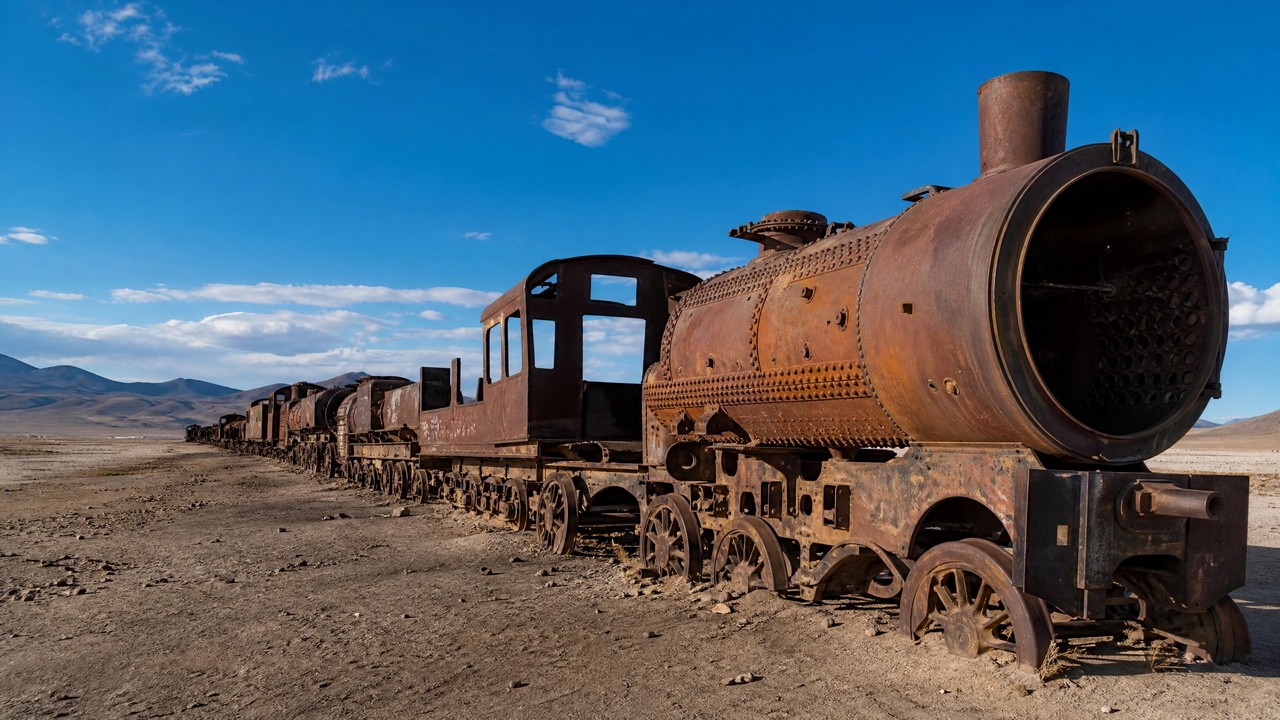
The core answer comes down to three words: cheap, pure environment, and unique experience. Bolivia's official language is Spanish (with Quechua and Aymara also spoken). The local speech is relatively slow and the accent is clear, making it historically regarded as a friendly environment for beginner Spanish learners. Compared with popular Spanish destinations such as Mexico City and Havana, course and living costs here are roughly 30-50% lower.
Main program types and durations:
- Language school courses: 1 week to 6 months, suitable for university students, working professionals, and gap-year students
- University exchange/degree programs: 1 semester to 4 years, requiring institutional agreements or direct application to private universities
- +Spanish programs: 2 weeks to 3 months, community and nature conservation projects
- Youth summer camps: 2-4 weeks, during winter and summer breaks
Climate and pace are also worth considering: the dry season from May to October is sunny with little rain, making it the golden window for study travel; around February you can also catch the Oruro Carnival (a UNESCO Intangible Cultural Heritage). As for the time difference, Bolivia is UTC-4, 12 hours behind Beijing, so keeping in touch with home basically means "China's evening is Bolivia's morning."
Which schools and programs are worth recommending?
The logic for choosing a school is simple: for language learning, look at the city and faculty; for degree study, consider budget and major. Sucre (elevation 2,810 m) has a mild climate, a quiet city, and a dense concentration of language schools; La Paz (elevation 3,640 m) offers more opportunities but requires adapting to the high altitude; Santa Cruz is on the lowland plains, with a hot climate and a concentration of private universities.
| School/Program | City | Type | Reference Cost (as of February 2026) | Suitable For |
|---|---|---|---|---|
| Bolivian Spanish School, Sucre Spanish School | Sucre | Language school | Intensive class 20 hrs/week approx. 120-160 USD (835-1,115 BOB / 865-1,150 CNY) | Beginners to advanced |
| Instituto de Lenguas Maryknoll | La Paz/Cochabamba | Language institute | One-on-one approx. 8-10 USD (56-70 BOB) per class hour | Adult intensive programs |
| Escuela Runawasi | Cochabamba | Language school | Approx. 150 USD (1,045 BOB) per week, includes Andean culture classes | In-depth cultural experience |
| Universidad Mayor de San Andrés (UMSA) | La Paz | Public university | Exchange students pay tuition according to agreement, with small registration fees | Undergraduates on exchange |
| Universidad Católica Boliviana (UCB), UPSA | La Paz/Santa Cruz | Private university | Tuition approx. 2,500-5,000 USD (17,400-34,800 BOB) per academic year | Degree programs |
| Volunteer + Spanish camps | Santa Cruz/Amazon | Volunteer program | Approx. 400-600 USD (2,785-4,175 BOB) per month, mostly includes accommodation | Gap-year students |
Exchange rate calculations follow the official rate of 1 USD ≈ 6.96 BOB (as of February 2026, source: Central Bank of Bolivia); course quotes are compiled based on information from the schools, and please refer to each school's official website for the latest prices before enrolling. Many USITrip users have reported that language schools in Sucre can generally arrange homestays, with two meals included at around 125-175 USD (870-1,220 BOB) per week, which is an effective way to quickly experience local life.
How do you prepare the application process and materials?
The threshold for language study trips is low: no previous Spanish foundation is required to enroll, most schools start every Monday, and booking 4-6 weeks in advance is sufficient. For degree study, you need to plan early; private universities generally have two admission periods in February and August.
Recommended timeline (using a 3-month language course as an example):
- 8-12 weeks before departure: Confirm and enroll in a school, obtain the acceptance letter/invitation letter
- 6-8 weeks before departure: Process (valid for more than 6 months), police clearance certificate, complete medical examination and yellow fever vaccination
- 4-6 weeks before departure: Submit visa application or confirm the post-arrival processing route, purchase medical insurance
- 2 weeks before departure: Book flights, make copies of documents for backup
- Within 30 days after arrival: Complete student residence registration as required by immigration authorities
Core materials:
| Material | Key Points |
|---|---|
| Passport | Valid for more than 6 months, with at least 2 blank visa pages |
| Acceptance letter/Registration certificate | On official school letterhead, stating the course and duration |
| Proof of funds | Approximately equivalent to 1,500-2,000 USD (10,440-13,920 BOB) for living expenses |
| Police clearance certificate | Obtain the certificate and complete consular legalization |
| Health certificate/Yellow fever vaccination certificate | Complete vaccination at least 10 days before departure |
| Visa application form + ID photos | Fill in according to the embassy/consulate template |
| Medical insurance policy | Must include medical evacuation coverage, see details below |
Regarding language requirements: language schools have no strict entry threshold; private universities mostly teach in Spanish, and it is recommended to reach DELE B2 or pass a language test; university exchanges usually require Spanish B1-B2, subject to the institutional agreement (as of February 2026, source: Universidad Mayor de San Andrés official website).
How much do study abroad and language travel costs actually amount to?
Based on the most common "language school + homestay" plan, monthly expenses are approximately 1,020-1,450 USD (7,100-10,100 BOB / 7,350-10,450 CNY); degree programs cost approximately 7,000-12,000 USD per year in total (48,700-83,500 BOB / 50,400-86,400 CNY), less than a quarter of the cost of studying in Europe or the United States.
| Item | Monthly Cost (as of February 2026) |
|---|---|
| Language course (20 class hours/week) | 520-690 USD (3,620-4,800 BOB / 3,740-4,970 CNY) |
| Homestay with two meals | 500-760 USD (3,480-5,290 BOB) |
| Or shared room + self-catering | 190-330 USD (1,320-2,300 BOB) |
| Local transport + communication | 30-50 USD (210-350 BOB) |
| Insurance (amortized monthly) | 25-50 USD (175-350 BOB) |
One-time expenses: round-trip flights from China approximately 9,000-16,000 CNY (1,250-2,230 USD), mostly with transfers via Lima, Santa Cruz, or Madrid; student visa fee approximately 30 USD (210 BOB / 215 CNY), with renewal fees charged separately.
Everyday prices are quite friendly: a local set meal (menú del día) costs 15-25 BOB (2.2-3.6 USD), a one-way trip on the La Paz cable car costs 3 BOB, and city buses cost 1.5-2.3 BOB. It should be noted that although the official exchange rate is fixed at 6.96, the local market may have a premium; it is recommended to carry a small amount of newly issued banknotes and check the latest rates before departure (as of February 2026, source: Central Bank of Bolivia).
How to handle student visas and insurance?
For short-term language study tours of 90 days, citizens of most countries can enjoy visa-free entry or simplified procedures; Chinese passport holders need to apply for a visa in advance, and the policy has been adjusted multiple times in recent years, so verify the latest regulations with the Ministry of Foreign Affairs of Bolivia and Bolivian embassies/consulates in China before departure.
For study of 90 days or more, you need to apply for a student visa or temporary student residence (Residencia Temporal de Estudiante), valid for one year and renewable. The core materials are the acceptance letter, proof of funds, police clearance certificate, and health certificate mentioned above (as of February 2026, source: Bolivian General Directorate of Migration).
Insurance and vaccination are two hard thresholds: when applying for residence, you are usually required to show local or international medical insurance; it is recommended to choose study-abroad insurance with coverage of 50,000 or above, including medical evacuation and repatriation of remains, at an annual cost of approximately 300-600 USD (2,090-4,180 BOB / 2,160-4,320 CNY). Regarding vaccinations, yellow fever vaccination is recommended when traveling to lowland departments such as Santa Cruz and Beni; high-altitude cities have no such requirement (as of February 2026, source: World Health Organization).
Living Guide: Accommodation, Transport, and Work Policies
Accommodation
The prudent strategy is "homestay first, then rent". A homestay costs an average of 500-760 USD per month, including two meals and providing a language immersion environment; after adapting for 1-2 months, you can switch to a shared rental. In Sucre, a private room costs approximately 900-1,800 BOB (130-260 USD) per month, while La Paz is slightly higher by 20-30%.
Transportation
La Paz's Mi Teleférico, the largest urban cable car network of its kind, costs 3 BOB (about 0.4 USD) per one-way trip and serves as both a commuter and sightseeing line (as of February 2026, source: Mi Teleférico official website). City buses cost 1.5–2.3 BOB; night buses from Sucre to La Paz take about 8–10 hours and cost 80–160 BOB (11.5–23 USD) — choose a reputable bus company. Students departing from North America can fly from cities such as New York via Lima or Panama City to Santa Cruz.
Overall public security is moderate for South America, with the main risks being pickpocketing and snatch-and-grab theft. The emergency police number is 110. Practical rules: do banking during daylight hours, don't flaunt valuables, take radio-dispatched taxis booked by phone at night, and detour around protests or rallies. Don't tough out altitude sickness — allow 2–3 days of acclimatization after arriving in La Paz, drink plenty of coca tea, take it easy, and seek medical attention promptly if persistent headaches or vomiting occur.
Working
Bolivia does not allow international students to work while studying, which differs from some Western countries — budget accordingly based on family support. Volunteer work requires the corresponding program status and permits and cannot replace paid employment.
FAQ
Q: Can I go if I don't know any Spanish at all?
A: Yes. Language schools in Sucre and La Paz generally offer absolute beginner classes with small-group teaching and homestay accommodation; 4–8 weeks is enough to acquire survival Spanish. It's recommended to learn basic pronunciation and common phrases using an app before departure for a smoother transition upon arrival.
Q: How is public security? What should parents most remind their children about?
A: Daily public security in major cities such as La Paz and Sucre is acceptable; risks are concentrated in pickpocketing, phone snatching, and remote streets at night. Remind your children to keep cash in separate places, not to wear flashy jewelry, to use radio taxis at night, to detour around protests, and to keep contact information for the school and the Chinese embassy/consulate in Bolivia on hand at all times.
Q: La Paz is at nearly 4,000 meters above sea level. What about altitude sickness?
A: Structure your itinerary "low to high": fly into Santa Cruz (416 m) or study in Sucre (2,810 m) before heading up to La Paz. Avoid strenuous exercise for 24–48 hours after arrival and drink coca tea to relieve symptoms; those with cardiovascular or respiratory conditions should consult a doctor before departure.
Q: Can middle school students join study tours?
A: Yes. Students aged 14–17 can choose youth camps during winter and summer breaks, which are typically structured closed-group programs combining "Spanish classes + cultural experiences + homestay accommodation." Parents must sign a consent form and arrange local guardianship. It's advisable to choose programs lasting 2–4 weeks with clearly specified teacher-student ratios.
Q: Can I stay and work in Bolivia or develop long-term after finishing my studies?
A: Student status does not permit legal employment. After graduation, the threshold for switching to a work visa is relatively high, and local salary levels are significantly lower than in Europe or North America. Most Chinese students use Bolivia as a starting point for advancing their Spanish and experiencing South America in depth, then move on to work or further study opportunities in Spanish-speaking countries.
Useful Resources
I. Reference Materials
- Bolivia's General Directorate of Migration — student visas, temporary residence, and policies
- Bolivia's Ministry of Foreign Affairs — directory of overseas embassies/consulates and visas
- Central Bank of Bolivia — official exchange rates and foreign exchange information
- Universidad Mayor de San Andrés (UMSA) — university exchange programs
- World Health Organization (WHO) — vaccination recommendations
II. USITrip
USITrip has been serving travelers since 2004. Its platform experts, drawing on field research and real-time local information, continuously produce destination guides and itinerary plans, providing consultation, booking, and customization support for students and parents planning trips to Bolivia and other South American destinations. For more information, visit the official website at https://www.usitrip.com/ or call the China hotline at 400-998-8038.
Recommended Products
More Popular Experiences
![[Sky Mirror - Bolivia Dream 5-Day Tour] Uyuni + La Paz + Tunupa Volcano + Moon Valley + Salt Lake Central Picnic | 4-Star Hotel | Whole Breakfast | Daily Departure (English Charter)](https://qiniu.usitour.com/images/picture/2019/12/detail_91_5dfabbf7df460.jpg?imageView2=2&w=1920&q=70&format=webp)
![5 days [English Private Group·Bolivia + La Paz Twin Cities Tour] Uyuni Salt Lake + Train Cemetery + Cactus Island + La Paz City Tour | Salt Lake Sunset + Alpaca Salt Museum | Airport transfer included](https://qiniu.usitour.com/images/picture/2019/12/detail_41_5df0adfed5170.jpg?imageView2=2&w=1920&q=70&format=webp)
