Quick Facts
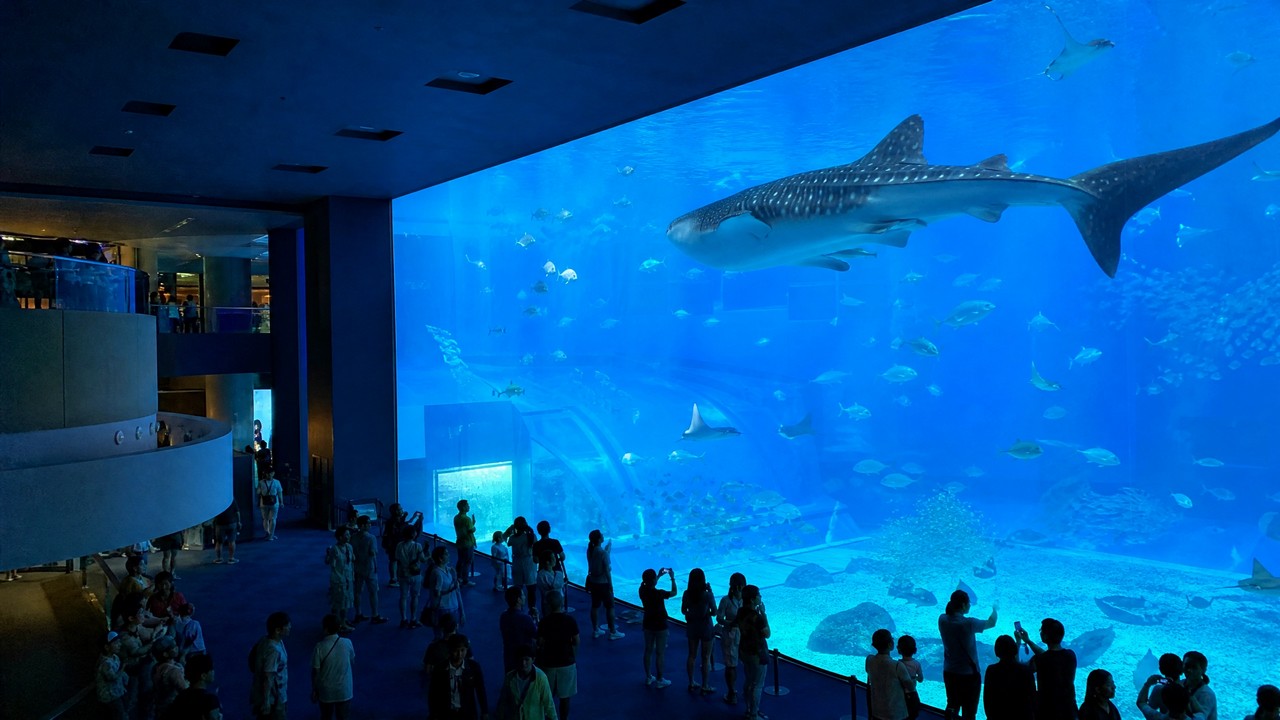
The Okinawa Churaumi Aquarium, located in Ocean Expo Park in Motobu Town, Okinawa Prefecture, is home to one of the world's largest aquarium tanks, the "Kuroshio Sea"—35 meters long, 10 meters deep, and holding 7,500 tons of water. Two whale sharks and manta rays cruise slowly behind the giant acrylic viewing window, measuring 27 meters wide and 8.2 meters high, making it the world's first aquarium to successfully keep whale sharks long-term. This guide centers on the aquarium and extends to cover Naha and the route along central and northern Okinawa. All prices are marked in three currencies—Japanese yen/US dollars/Chinese yuan—with information compiled from the official websites of the aquarium and Ocean Expo Park, on-site research by platform editors (most recently verified in September 2026), and feedback from multiple travelers.
What to Know Before You Go? Visa, Seasons, and Budget Overview
Visa and Entry Requirements
Holders of mainland Chinese passports must apply for a short-stay visa to Japan through designated travel agencies before departure (single-entry/three-year multiple-entry; the duration of each stay is subject to consular issuance, commonly 15 or 30 days). US and Canadian passport holders may stay visa-free for 90 days (as of September 2026, source: Ministry of Foreign Affairs of Japan). Passport validity must cover the entire trip; it is recommended to have at least 6 months of remaining validity.
Best Seasons
Okinawa has a subtropical maritime climate. October–November and March–April offer stable weather with temperatures of 20–26°C, ideal for self-driving and outer island activities. January–February is the time to enjoy kanhizakura cherry blossoms and head out to sea for humpback whale watching, while July–September is hot, humid, and prone to typhoons. The aquarium is an indoor facility suitable for visits year-round; rainy days are actually a great time to avoid crowds (as of September 2026, source: Okinawa Convention & Visitors Bureau official website).
Exchange Rates and Budget
1 USD ≈ 153.59 JPY ≈ 6.73 CNY (2026-09-10, source: platform exchange rate data). All prices below are marked in three currencies: "Japanese Yen (JPY)/US Dollars (US$)/Chinese Yuan (CNY)." The following is a per-person budget breakdown for a 3-day itinerary (excluding airfare):
| Item | Yen (JPY) | US Dollars (US$) | Chinese Yuan (CNY) |
|---|---|---|---|
| Accommodation for 3 nights (shared double room) | 25,000-45,000 | 163-293 | 1,100-1,970 |
| Meals | 12,000-18,000 | 78-117 | 530-790 |
| On-island transportation | 10,000-20,000 | 65-130 | 440-875 |
| Admission tickets and experiences | 4,000-8,000 | 26-52 | 175-350 |
| Total | 51,000-91,000 | 332-592 | 2,240-3,980 |
As for airfare, round-trip flights from major Chinese cities to Naha cost about 2,000-4,500 CNY (approx. US$300-670/46,000-103,000 JPY); flights from North America with connections cost about US$900-1,600 (approx. 6,100-10,800 CNY/138,000-246,000 JPY).
How to Get from the Airport to the Aquarium? A Detailed Guide to Airport Transfers and Local Transportation
Naha Airport → Naha City
- Monorail "Yui Rail": Naha Airport → Kenchomae/Miebashi, about 13-15 minutes, fare approx. 220-270 JPY (approx. US$1.4-1.8/10-13 CNY), day pass 800 JPY (approx. US$5.2/35 CNY) (as of September 2026, source: Okinawa Urban Monorail official website)
- Taxi: Airport → Kokusai Street, about 10-15 minutes, approx. 1,000-1,500 JPY (approx. US$6.5-9.8/44-68 CNY)
Comparison of Four Ways to Get from Naha to the Churaumi Aquarium
| Method | Route | Duration | Cost/Person | Best For |
|---|---|---|---|---|
| Express Bus (Route 111 transfer to Route 65/66) | Naha Bus Terminal → Nago → Aquarium | About 2.5-3 hours | Approx. 2,900 JPY (approx. US$18.9/127 CNY) | Budget travelers |
| Yanbaru Express Bus | Naha Airport/Kenchomae → Kinen-koen-mae (arrives right at the destination) | About 2.5-3 hours | Approx. 2,000-2,200 JPY (approx. US$13-14.3/89-96 CNY) | Those who prefer no transfers |
| Rental car/self-drive | Naha → Okinawa Expressway → Motobu Town | About 2 hours | Rental approx. 5,000-8,000 JPY/day (approx. US$33-52/220-350 CNY) + tolls approx. 1,000 JPY | Groups of 2+, families |
| Day tour bus/chartered car | Hotel pickup and drop-off, multiple attractions linked together | Full day (about 10 hours) | Approx. 8,000-15,000 JPY (approx. US$52-98/350-660 CNY) | Those without a car, hassle-free travelers |
Self-driving is the transportation option most recommended by the editorial team for the northern region: Ocean Expo Park, where the aquarium is located, has a large parking lot, while bus coverage of coastal attractions along the way such as Cape Manzamo is limited. Special note: driver's licenses from mainland China cannot be used directly for driving in Japan; to rent a car, you must hold an International Driving Permit (IDP) issued under the framework of the Geneva Convention (1949 Convention on Road Traffic), or a driver's license from a designated country/region recognized by Japan accompanied by an official Japanese translation (such as Germany, France, Switzerland, Belgium, etc.); mainland Chinese driver's licenses are not within the scope of recognition, so you cannot rent a car and drive in Japan with one.
City Transportation and Long-Distance Departures
Within Naha City, you can use the OKICA transit card (valid on both the monorail and major bus routes; deposit 500 yen, approx. US$3.3 / 22 RMB) (as of September 2026, source: OKICA official website); buses in the north run only 1-2 times per hour, so allow extra waiting time when planning your itinerary.
Okinawa, where the aquarium is located, has no direct flights to or from North America or Oceania. From Los Angeles or New York, you typically transfer at Tokyo's Haneda/Narita or Seoul's Incheon to reach Naha, taking approximately 15-18 hours; from Sydney, you can transfer via Tokyo, taking approximately 13-16 hours.
Where Is the Best Place to Stay? Area and Budget Comparison
Your accommodation location directly determines the efficiency of your itinerary. Below is a comparison of the four most popular areas (reference prices per night for a double room):
| Area | Location Features | Reference Price/Night | Suitable For |
|---|---|---|---|
| Naha · Around Kokusai Street | Transportation hub, concentrated dining and shopping, convenient airport access | 6,000-15,000 yen (approx. US$39-98 / 260-660 RMB) | First-time visitors, those without cars |
| Chatan · Around American Village | American-style district + Mihama Beach, vibrant nightlife | 10,000-25,000 yen (approx. US$65-163 / 440-1,100 RMB) | Young people, families with children |
| Onna Village West Coast | Concentrated seaside resorts, best sunset views | 15,000-40,000 yen (approx. US$98-260 / 660-1,750 RMB) | Resort vacationers, honeymooners |
| Nago · Motobu (around the aquarium) | 10-20 minutes' drive from the aquarium | 8,000-30,000 yen (approx. US$52-195 / 350-1,320 RMB) | In-depth travelers, families |
Many travelers report that staying in Motobu Town or Nago and entering right at the 8:30 opening the next morning is the best way to view the "Kuroshio Sea" with the fewest crowds. For a 3-day itinerary, we recommend the combination of "2 nights in Naha + 1 night in the north or Onna."
What Are the Must-See Attractions at Churaumi Aquarium and Its Surroundings?
Core Attraction: Okinawa Churaumi Aquarium
Okinawa Churaumi Aquarium (within Ocean Expo Park, Motobu Town): Home to "Kuroshio Sea," one of the world's largest aquarium tanks (35 meters long, 10 meters deep, holding 7,500 tons of water). Admission: adults 2,180 yen (approx. US$14.2 / 95 RMB), high school students 1,440 yen (approx. US$9.4 / 63 RMB), elementary and junior high school students 710 yen (approx. US$4.6 / 31 RMB), free for children under 6; opening hours 8:30-18:30 (extended to 20:30 during certain periods from March to September; last admission 1 hour before closing) (as of September 2026, source: Okinawa Churaumi Aquarium official website).
Highlights and things to do inside:
- Kuroshio Sea: Whale sharks and manta rays cruise by; feeding presentations are held three times daily—we recommend photographing the schedule upon entry
- Coral Sea: Naturally cultivates over 70 species of reef-building corals, one of the few large-scale live coral display tanks in the world
- Deep Sea: Recreates the ecosystem of the deep sea at 200 meters; less well-known but of high scientific research value
- Kuroshio Adventure Touch Pool: You can touch starfish and sea cucumbers with your own hands—a must-visit for families with children
- Emerald Beach: A park beach within walking distance of the aquarium; in summer, bring your swimsuit and plan a visit
Practical details: At the ticket gate, you can ask staff to stamp a same-day re-entry mark; after leaving midway to visit Emerald Beach or restaurants in the park, you can re-enter for free with the stamp. We recommend allowing at least 3-4 hours; families may want to set aside half a day to a full day. Besides the aquarium itself, the park also has the Tropical & Subtropical Arboretum and the Okinawa Native Village, which can be visited together (as of September 2026, source: Ocean Expo Park official website).
Attractions Along the Way in the North
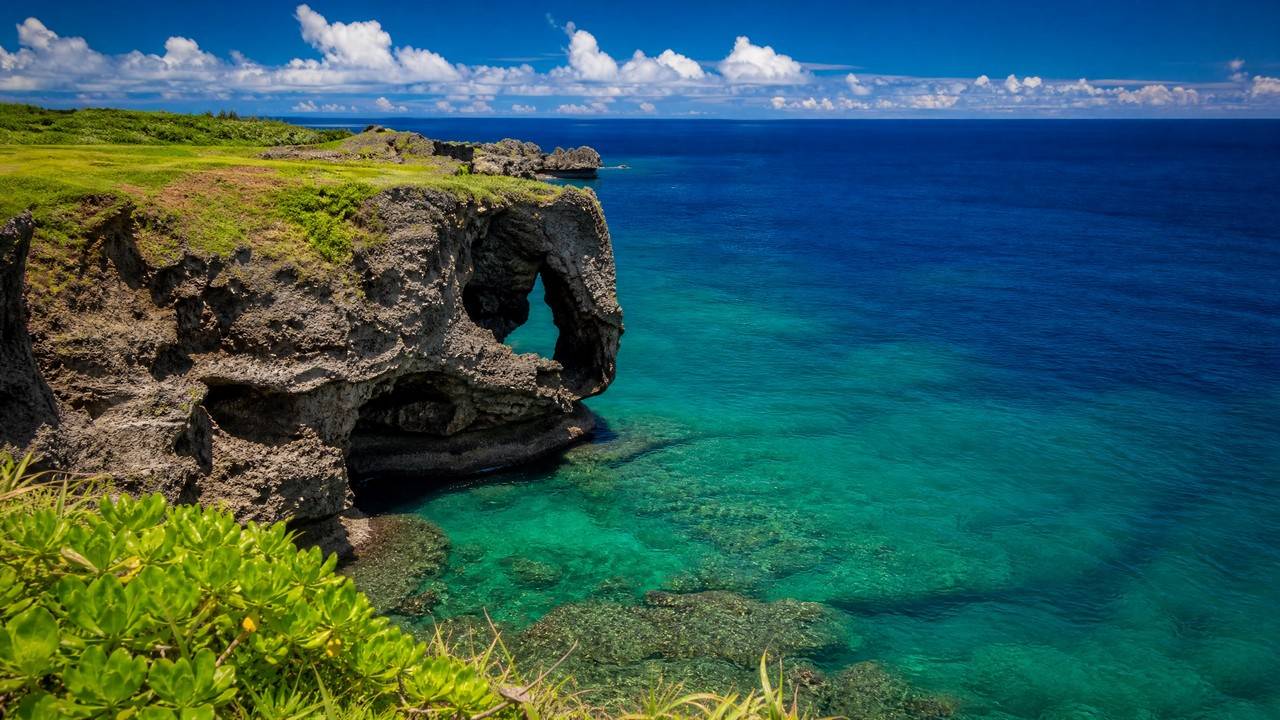
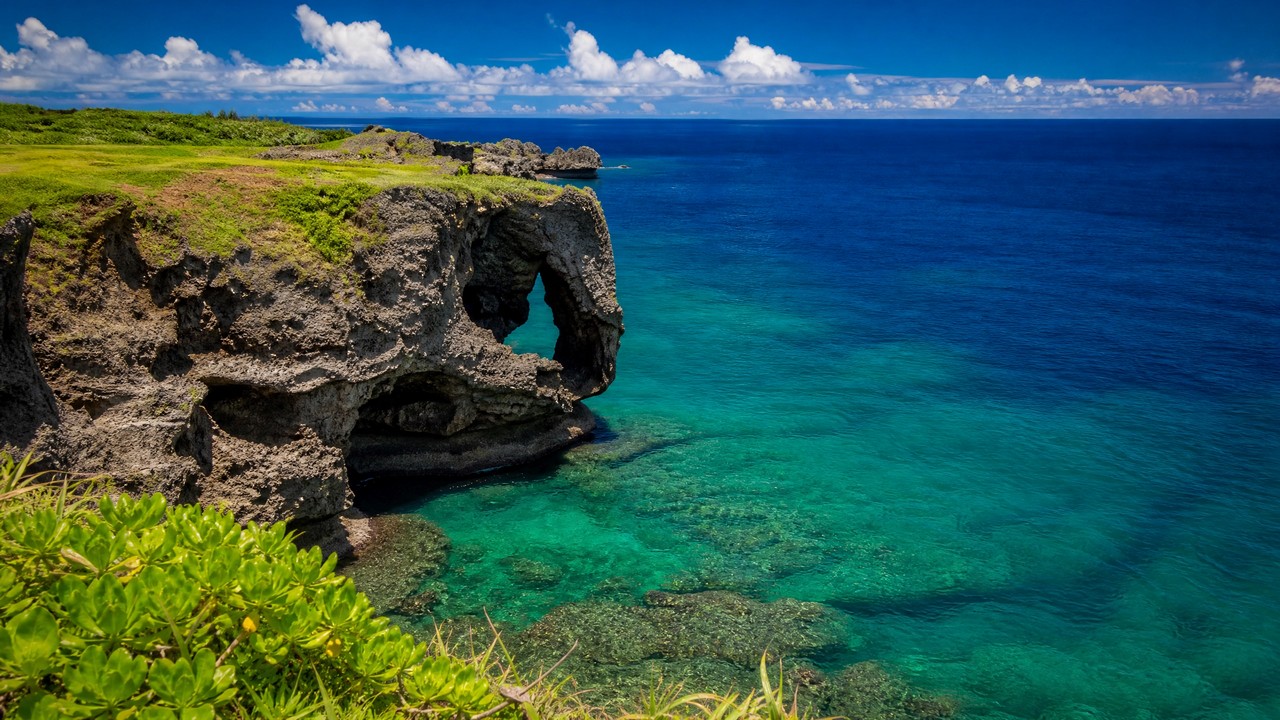
Cape Manzamo (Onna Village west coast): A grassy clifftop formed by uplifted coral reefs, with the Elephant Trunk Rock as its landmark—one of the most famous sunset viewing spots on Okinawa's main island; free admission, open all day, recommended visit duration 1-2 hours, approximately 40 minutes' drive from the aquarium. Parking spaces are tight during sunset hours, so arrive early.
Nakagusuku Castle Ruins (Nakagusuku Village): A World Heritage Site listed as part of "Gusuku Sites and Related Properties of the Kingdom of Ryukyu" (inscribed in 2000), with exquisitely crafted Ryukyu limestone walls—among the most spectacular castle ruins remaining in Okinawa; admission 400 yen for adults (approx. US$2.6 / 18 RMB), open from approximately 8:30 until early evening (hours vary slightly by season; refer to the official website), with views of Nakagusuku Bay from the castle walls—ideal for a stopover en route between Naha and the north.
Okinawa City Hall Observation Deck (Okinawa City): A free 360-degree observation deck on the upper floors of City Hall, offering views toward Kadena Air Base and the East China Sea; open until evening, convenient to combine with a visit to the Koza downtown area, and also a low-cost alternative when the weather is poor.
American Village (Mihama, Chatan Town): The Ferris wheel landmark takes about 8 minutes per rotation (around 800 yen, approx. 5.2 USD / 35 RMB); it's packed with taco rice spots, American-style burger joints, and trendy streetwear and vintage clothing shops; the open-air district is free to enter, with 1-2 hours recommended; some shops close on Mondays, and the atmosphere is even better after the lights come on at night.
How to Plan a 3-Day, 5-Day, or 7-Day Itinerary?
3-Day Plan (Highlights Route)
- Day 1: Arrive in Naha, stroll around Kenchomae (Prefectural Office area) and Kokusai Street, dinner at First Makishi Public Market
- Day 2: Head north through the central region: American Village (morning) → Manzamo (sunset) → overnight in Nago or Motobu
- Day 3: Churaumi Aquarium + Emerald Beach (half a day or more) → return to Naha for departure (allow a 3-hour buffer at the airport)
5-Day Plan (+ Kerama Islands)
- Day 1: Naha city area, Kokusai Street + First Makishi Public Market
- Day 2: Day of snorkeling in the Keramas departing from Tomari Port; Nagannu (Chibishi Nagannu), an uninhabited island in the Kerama archipelago, is a popular snorkeling spot, about a 1-hour boat ride from Tomari Port; a full-day trip with equipment costs about 8,000-15,000 yen (approx. 52-98 USD / 350-660 RMB)
- Day 3: Nakagusuku Castle Ruins → American Village → overnight in Onna Village
- Day 4: Manzamo (morning) → Churaumi Aquarium + Emerald Beach → overnight in Motobu or return to Naha
- Day 5: Shuri Castle area or the Prefectural Museum & Art Museum → depart from Naha Airport
7-Day Plan (+ Yaeyama Islands)
- Days 1-4: Same as the first half of the 5-day plan (Naha + Kerama Islands + the aquarium in the north)
- Day 5: Fly to Ishigaki Island (about 1 hour, one way about 7,000-16,000 yen, approx. 46-104 USD / 307-700 RMB); glass-bottom boat ride at Kabira Bay
- Day 6: Diving or snorkeling at Ishigaki Island's Kabira/Ishizaki Manta Scramble manta ray dive site (diving certification required, or join a beginner experience program); for the more adventurous, fly to Yonaguni Island (about 30 minutes from Ishigaki) to explore Japan's westernmost cliffs and underwater ruins; for a slower pace, take a roughly 20-minute boat ride from Ohara Port on Iriomote Island to Hatoma Island
- Day 7: Return from Ishigaki Island to Naha and connect to your departure flight
Tips for Flexible Adjustments
When streamlining the itinerary, the only must-sees are the aquarium and the sunset at Manzamo; if time is tight, you can cut out the American Village shopping and the outlying island segments. Rainy-day alternatives: the aquarium itself is an indoor venue, and the Okinawa Prefectural Museum & Art Museum in Naha plus shopping on Kokusai Street also make good substitutes for outdoor plans. If traveling during typhoon season, USITrips editors recommend keeping an eye on the Japan Meteorological Agency typhoon track forecasts starting 48 hours ahead, choosing changeable fare classes for your return flight where possible, and leaving buffer days.
What to Eat in Okinawa? Local Recommendations and Pitfalls to Avoid
Must-Try Foods
- Okinawa soba: Actually a pork broth noodle soup rather than buckwheat noodles; topped with soki (bone-in braised pork belly) is the most classic choice; a bowl at long-established shops around Kokusai Street costs about 800-1,200 yen (approx. 5.2-7.8 USD / 35-53 RMB)
- Taco rice: A "Japanese-American fusion" dish that originated in Okinawa; served at many places in American Village, about 700-1,000 yen (approx. 4.6-6.5 USD / 31-44 RMB)
- Sea grapes: A caviar-like texture; small portions at markets cost about 500-800 yen (approx. 3.3-5.2 USD / 22-35 RMB)
- Ishigaki beef and Motobu beef yakiniku: Lunch sets are about 30% better value than dinner; about 3,000-5,000 yen (approx. 19.5-32.5 USD / 132-219 RMB)
- First Makishi Public Market: Buy seafood on the 1st floor and have it cooked for you at the eateries on the 2nd floor; cooking fees are about 500-1,000 yen per dish (approx. 3.3-6.5 USD / 22-44 RMB)
- Orion Nago Factory: Tour with tasting costs about 500 yen (approx. 3.3 USD / 22 RMB); it's in the northern area along with the aquarium, so you can visit on the way
Pitfall Alerts
Dining options around the aquarium's main entrance are limited and on the pricey side, so consider bringing your own light snacks or eating in downtown Nago; at the market, ask about the cooking fee before placing your order; for budget "all-you-can-eat steak" deals, be sure to confirm the time limit and whether drink charges are extra. On a tight budget, convenience store rice balls and sandwiches are a reliable option.
What Pitfalls Should Independent Travelers Avoid? Avoidance Tips and Practical Advice
Common Pitfalls
- Driver's license issue: A mainland China driver's license is not valid in Japan, so renting a car for self-driving is not possible; confirm before departure that you'll rely on buses or day tours to reach the northern area
- Last bus trap: Bus services in the north are sparse; the last bus from the aquarium back to Naha usually departs before 17:00-18:00; if you miss it, an intercity taxi costs about 8,000-12,000 yen (approx. 52-78 USD / 350-530 RMB)
- Typhoon season (June-October, most concentrated July-September): Flights are easily canceled; leave buffer days at both the start and end of your itinerary
- Tourist-area sales pitches: "Free trial" offers on the beach are used to draw people in and sell diving and water activities; confirm prices before participating
- Opening hours: Some shops in American Village close on Mondays; check opening hours before shopping
Safety and Practical Information
- Okinawa has good public safety. Emergency numbers: 110 (police) / 119 (ambulance)
- At the seaside, watch out for rip currents and jellyfish; join guided snorkeling tours and wear a life jacket. UV rays are extremely strong in summer, and at night in the northern mountainous areas, beware of the venomous "Habu" snake
- Payment: Cards are accepted at shopping malls and convenience stores, but small restaurants and buses are still mainly cash-based; 7-Eleven and post office ATMs support foreign card withdrawals
- Tax-free shopping: Purchases of 5,000 yen or more (approx. US$32.5 / RMB 219) at a single store on the same day qualify for tax exemption; a passport is required (Japan's tax-free system has seen adjustment moves in recent years; refer to the latest official announcements before traveling)
- Connectivity: eSIMs can be purchased or portable Wi-Fi rented at the airport; major carriers offer good coverage
- Language: Japanese is predominant; major attractions such as the aquarium have Chinese and English signage, and translation apps can handle everyday situations
Frequently Asked Questions (FAQ)
Q: How much are tickets to the Churaumi Aquarium? Do I need to buy them online in advance?
A: Adults 2,180 yen (approx. US$14.2 / RMB 95), high school students 1,440 yen, elementary and junior high school students 710 yen, free for children under 6 (as of September 2026; source: Okinawa Churaumi Aquarium official website). The aquarium supports online ticket purchases via its official website and authorized channels. During peak seasons (late March–early May, summer vacation), on-site queues can exceed 30 minutes, so buying tickets in advance saves time.
Q: How long should I spend at the aquarium? Is half a day enough?
A: Based on firsthand visits by USITrip editors, we recommend at least 3–4 hours: fully touring the Kuroshio Sea, Coral Sea, Deep Sea, and touch pools takes about 2 hours, and adding the three daily feeding talks and Emerald Beach within the park, half a day is most comfortable; families with children are advised to set aside most of a day to a full day.
Q: What is the most convenient way to get to the aquarium without driving?
A: For a direct route, the Yanbaru Express Bus (やんばる急行バス) is the top choice: board at Naha Airport or Kencho-mae and ride to "Kinen-koen-mae" (Memorial Park), taking about 2.5–3 hours and costing roughly 2,000–2,200 yen (approx. US$13–14.3 / RMB 89–96); alternatively, take Highway Bus No. 111 to Nago and transfer to routes 65/66. Note that the last bus departs early, so it is advisable to start your return trip before 5:00 p.m.
Q: When is the "Kuroshio Sea" least crowded?
A: The first hour after opening at 8:30 a.m. and the period after 3:00 p.m., when tour groups leave, are the least crowded. Many visitors report that staying in Motobu Town and entering the aquarium right at opening the next day offers the best viewing experience.
Q: What is the per-person budget for a 3-day independent trip to Okinawa?
A: Excluding flights, about 51,000–91,000 yen (approx. US$332–592 / RMB 2,240–3,980); departing from major Chinese cities, add roughly RMB 2,000–4,500 for airfare to cover the full budget.
Practical Resources
I. Reference Materials (Summary of Official Source Links)
- Okinawa Churaumi Aquarium Official Website - tickets, opening hours, and exhibition feeding talk information
- Ocean Expo Park Official Website - park facilities, Emerald Beach, and events
- Okinawa Convention & Visitors Bureau - official Okinawa Prefecture tourism information
- Ministry of Foreign Affairs of Japan - visa and entry policies
- Japan Meteorological Agency - typhoon and weather forecasts
II. About USITrip
Founded in 2004, USITrip has long provided global travelers with destination guides, itinerary planning, and booking services. Drawing on field research and real-time local information, its team continually produces trustworthy travel guides. For inquiries and bookings for Okinawa flights, hotels, or local day tours, visit the official website https://www.usitrip.com/ or call the China hotline 400-998-8038.
Recommended Products
No recommended products
More Popular Experiences
No recommended products