


Manaus is the capital of the Brazilian Amazon state and the main gateway to the Amazon rainforest. This guide covers visa policies, international and urban transportation, comparison of accommodation zones, must-see attractions such as the Amazon Theater and the intersection of the Two Rivers, 3 to 7-day itinerary plans, local food and safety tips, and is accompanied by tickets updated in September 2026., ticket and accommodation price range. Exchange rate refers to 1 USD≈5.18 BRL≈6.72 CNY (plat
What kind of destination is Manaus? Which travelers is it suitable for?
 Brazil-Manaus
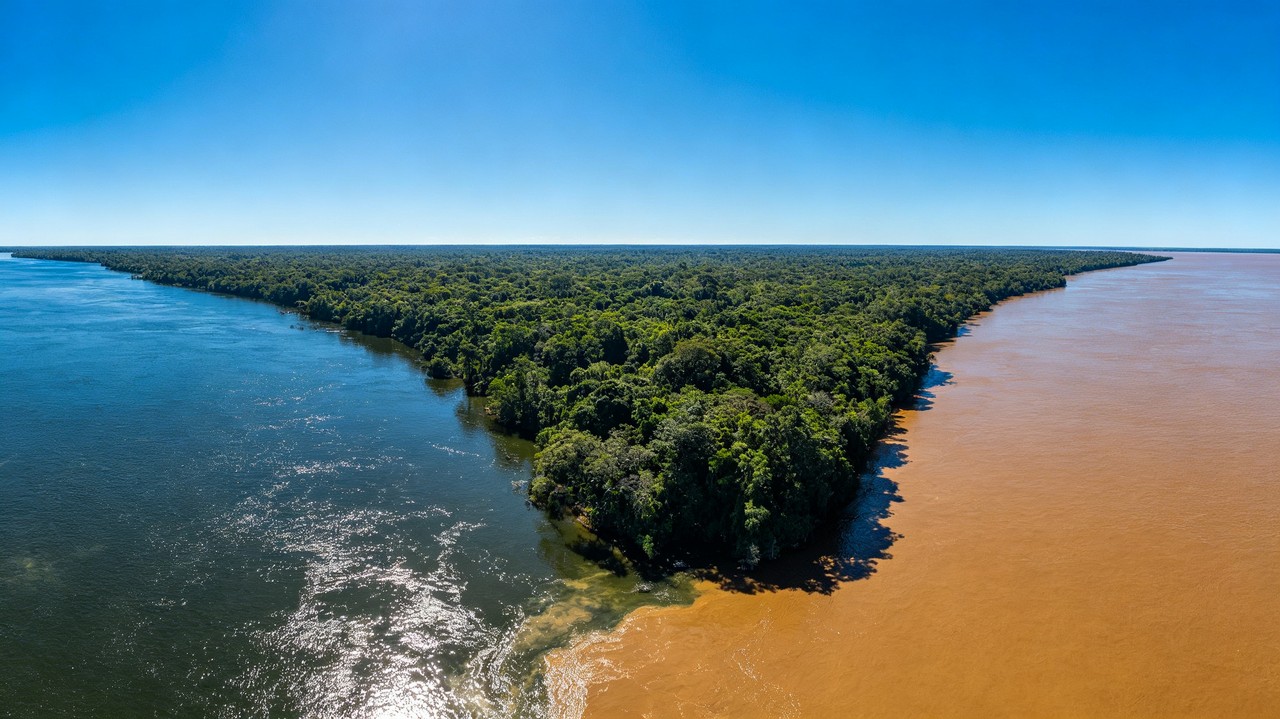
Manaus is the capital of Brazil's Amazonas state, located at the confluence of the Rio Negro and the Rio Solimões. Only after these two rivers merge is the river officially called the Amazon River. The urban area is about 1,500 km from the Atlantic Ocean and is the largest city in the heart of the Amazon rainforest, with a population of approximately 2.06 million according to the 2022 census (Source: Brazilian Institute of Geography and Statistics (IBGE)).
The city's core appeal lies in "city and rainforest in the same frame": on one side are European-style buildings and an opera house left from the rubber boom of the late 19th century; on the other, within just a few dozen kilometers' radius, you can enter pristine rainforest, blackwater rivers, and riverside communities. The urban area has a tropical rainforest climate, with an average annual temperature of about 26–27°C, hot and humid year-round.
Suitable for: ecology and wildlife enthusiasts, photography and documentary travelers, tourists interested in modern economic history and architecture, and families with school-age children. Not very suitable for: travelers expecting an island-style resort vacation or those sensitive to high heat, humidity, and insects.
When is the best time to visit Manaus?
The Amazon water level determines what experiences are available, rather than simply determining whether the trip is "fun or not." Public information shows that the Rio Negro's water level can fluctuate by more than 10 m within a year, creating two distinct seasons (Source: Brazilian National Institute of Meteorology (INMET)).
- High-water season (December–June, usually reaching its highest level in May–June): Boats can go deep into flooded igapó forests, with the canopy within reach, making it ideal for birdwatching and photography.
- Low-water season (July–November, usually with the lowest water levels in September–November): Jungle hiking routes are easier to navigate, sandbars emerge at Ponta Negra beaches, waterfalls have moderate flow, and fishing and beach activities are more plentiful.
| Period | Water Level | Recommended Activities |
|---|---|---|
| January–April | Rising period | Boat trips through flooded forests, rainforest camp stays |
| May–June | Peak level | Small boats into forest waterways, photographing the canopy layer |
| July–September | Falling period | Jungle hiking, river beaches, waterfall day trips |
| October–November | Lowest level | Best for hiking and fishing, largest river beach area |
The average monthly rainfall throughout the year is generally above 150 mm, with the rainy season from December to May. July is the Brazilian school holiday period, and flight and camp prices are usually higher, so advance booking is required.
How do I get to Manaus? How do I get around the city?
Both international and domestic flights land at Eduardo Gomes International Airport (airport code MAO), about 15 km from the city center.
| Route | Origin→Destination | Duration | Notes |
|---|---|---|---|
| LATAM / GOL / Azul | São Paulo (GRU)→Manaus (MAO) | About 4h | Most frequent flights |
| LATAM / GOL | Brasília (BSB)→Manaus (MAO) | About 3h | Convenient connecting flights |
| Copa Airlines | Panama City (PTY)→Manaus (MAO) | About 3.5h | A common route for connecting from North America and Asia via the Americas |
| TAP Air Portugal | Lisbon (LIS)→Manaus (MAO) | About 8h | Direct flight option from Europe |
| River passenger boat | Belém (Belém)→Manaus | About 4–5 days | Prices vary greatly between cabins and hammock spaces |
Airport to city center:
| Method | Origin→Destination | Duration | Cost (as of September 2026) |
|---|---|---|---|
| Taxi / ride-hailing | Airport→city center | 25–40 min | R$40–70 / US$8–14 / 52–91 CNY |
| Bus routes 306 / 813 | Airport→city center | 50–70 min | About R$5 / US$0.97 / 6.5 CNY |
| Rental car self-drive | Airport→city area | About 30 min | About R$120–200/day / US$23–39 / 156–260 CNY |
There is no subway in the city; getting around mainly relies on buses, ride-hailing services (Uber, 99), and taxis. The flat bus fare is about R$5 (US$0.97 / 6.5 CNY), but the routes are complex and the intervals between buses are long; ride-hailing trips within the urban area are mostly R$15—35 (US$2.9—6.8 / 19—45 CNY) one way, making them the more commonly used option for tourists. To reach the confluence of the two rivers, river beaches, or the rainforest, you need to transfer to a boat at the port or pier, and this is generally included with transfers when traveling with a tour group.
Which area of Manaus is more convenient to stay in? How should the budget be allocated?
Accommodation areas are mainly divided into four categories, and the choice depends on the focus of your itinerary: choose the city center if sightseeing in the urban area is the main focus, choose Ponta Negra if resorts and river views are the main focus, and stay directly at a lodge if the rainforest experience is the main focus.
| Area | Characteristics | Reference price (per night, as of September 2026) |
|---|---|---|
| City Center (Centro) | Within walking distance of the Amazon Theatre and the municipal market, with a concentration of historic buildings; fewer people on the streets at night | R$150—400 / US$29—77 / 195—519 CNY |
| Ponta Negra | Riverside beach, restaurants, and shopping concentrated, suitable for families and leisure | R$250—600 / US$48—116 / 324—778 CNY |
| Adrianópolis | A mixed business and residential area with convenient dining and relatively quick access to the airport | R$180—420 / US$35—81 / 234—545 CNY |
| Around the airport | Suitable for late-night arrivals or next-day connections | R$160—300 / US$31—58 / 208—389 CNY |
| Rainforest lodge (outside the city) | Usually includes accommodation, meals, and guided activities, priced per person per package | R$1,500—3,500/person (3 days 2 nights) / US$290—676 / 1,946—4,540 CNY |
High-end and boutique hotels are concentrated in the city center and Ponta Negra; chain economy hotels are more common near the airport and in business districts. Lodge prices are greatly affected by room type, transfer method, and peak versus off-season, and usually rise during the rainy season and the July holidays.
What are the must-visit attractions in Manaus? What are the ticket prices and opening hours?
The following prices and times are compiled from publicly released information, and the actual on-site or official channel announcements shall prevail (as of September 2026).
- Amazon Theatre (Teatro Amazonas, city center): Completed in 1896, its dome is covered with about 36,000 painted tiles and it is an iconic building from the rubber boom period. Guided tours cost about R$20 / US$3.9 / 26 CNY, generally open for visits Tuesday to Saturday 9:00—17:00, with performance times counted separately. Suggested duration: 1 hour.
- Meeting of the Waters (Encontro das Águas, about 10 km downstream from the city): The black water of the Negro River and the muddy water of the Solimões River run side by side for about 6 km without mixing. A half-day boat tour costs about R$100—200 / US$19—39 / 130—260 CNY, with no fixed opening hours, usually departing in the morning. Suggested duration: 3—4 hours.
- Mercado Municipal Adolpho Lisboa (on the riverbank): An iron-structured market opened in 1882, divided into a fish market and a handicrafts area. Free entry, generally Monday to Saturday 6:00—17:00. Suggested duration: 1—1.5 hours.
- Amazon Museum MUSA (east zone): About 100 hectares of rainforest reserve, with a 42 m observation tower and forest trails. Tickets about R$40 / US$7.7 / 52 CNY, Tuesday to Sunday 8:30—17:00 (closed Monday). Suggested duration: 2—3 hours.
- Bosque da Ciência (INPA National Institute for Amazonian Research, Petrópolis area): A rainforest fragment and giant arapaima ponds, suitable for families. Tickets about R$10—20 / US$1.9—3.9 / 13—26 CNY, Tuesday to Sunday 9:00—16:30. Suggested duration: 1.5 hours.
- Ponta Negra river beach (about 13 km west of the city center): A black-water beach on the Negro River, where the sandbars expand during the dry season. Open for free, accessible all day, with the largest crowds at sunset. Suggested duration: 1—2 hours.
- Rubber Museum Museu do Seringal Vila Paraíso: A restored river estate from the rubber-tapping era, reached by boat in about 20 min. Tickets about R$20—30 / US$3.9—5.8 / 26—39 CNY.
- Presidente Figueiredo (about 107 km north of the city center): Waterfalls, caves, and rainforest trails are concentrated here. A one-day tour costs about R$200—350 / US$39—68 / 260—454 CNY.
How should the itinerary be arranged? Comparison of 3-day, 5-day, and 7-day plans
The main differences among different numbers of days lie in "whether to stay in the rainforest" and "whether to extend to surrounding river protected areas." The following plans arrange no more than 3 main activity points per day.
3-Day Plan (City Center + Suburbs)
- Day 1: Walk around the city center (Amazon Theatre, Municipal Market, Rio Negro riverbank), and watch the sunset at Ponta Negra in the evening.
- Day 2: Morning half-day tour of the Meeting of the Waters, afternoon at the MUSA observation tower and trails.
- Day 3: Bosque da Ciência (Science Forest), or a day trip to Presidente Figueiredo Waterfalls.
5-Day Plan (Adding a Rainforest Camp)
- Days 1–2: Same as above.
- Days 3–4: 2-day-1-night rainforest camp, including jungle hiking, night observation, piranha fishing, and canoeing activities; most camps include transfers and three meals.
- Day 5: Return to the city center, visit museums or the handicraft market.
7-Day Plan (Rainforest + River Reserve)
- Days 1–2: City center and suburban attractions.
- Days 3–5: 3-day-2-night camp or the Anavilhanas archipelago area, with an optional visit to the river dolphin viewing spot in Novo Airão.
- Day 6: Presidente Figueiredo Waterfalls and caves.
- Day 7: Final shopping in the city center and departure.
Flexible adjustment suggestions: If photography is the main focus, schedule the Meeting of the Waters in the morning when the light is better; if hiking is the main focus, try to go between August and November. Local day tours and rainforest camp packages can be booked in advance through travel service providers such as USITrip; itineraries that include transfers can reduce the time cost of city transportation connections.
What must-eat foods are there in Manaus? How to avoid pitfalls?
Amazonian cuisine centers on freshwater fish, cassava, and tropical fruits, with a salty-savory flavor profile, commonly using tucupi (cassava juice) and jambu (paracress) for seasoning.
- Grilled Tambaqui: The most commonly ordered local river fish, rich in fat along the ribs, often priced by weight, about R$60–120/kg / US$12–23 / 78–156 CNY.
- Pirarucu (arapaima): Firm flesh, mostly supplied from farmed sources, commonly pan-fried or stewed.
- Jaraqui: A small river fish, mainly deep-fried, a local everyday staple accompaniment.
- Tacacá: Cassava soup with tucupi and jambu, with a slight numbing sensation on the tongue; street portions are about R$15–25 / US$2.9–4.8 / 19–32 CNY.
- Savory Açaí: Different from the sweet southern style, often served with dried fish and cassava flour, about R$20–35 / US$3.9–6.8 / 26–45 CNY.
- Fruit juices: Cupuaçu, Guaraná, Bacuri, etc. are commonly found in markets and street-side juice shops.
Optional dining areas: the fish market and snack stalls at the Municipal Market, the theatre café in the city center, and riverside restaurants at Ponta Negra.
Avoidance tips: Tap water is not recommended for drinking directly; please choose bottled water; be cautious about ice from street stalls and unpeeled raw fruits and vegetables; river fish must be thoroughly cooked; tropical fruits packed for takeaway must comply with the quarantine regulations of the destination country.
Practical Tips: Safety, Language, Payment, and Communications
Safety: Downtown and port areas have sparse foot traffic at night. It is recommended to use ride-hailing services for point-to-point travel, avoid wearing conspicuous jewelry, and avoid using your phone in sparsely populated sections. Rainforest itineraries should be accompanied by certified guides; do not leave the group or enter the water alone.
Language: The official language is Portuguese, and English proficiency is limited at hotels and airports in urban areas. Mastering short phrases such as "Bom dia (Good morning)," "Obrigado/Obrigada (Thank you)," and "Quanto custa? (How much is it?)" can significantly improve communication efficiency.
Visa and Entry: Chinese citizens need to apply for a visa in advance to travel to Brazil; U.S., Canadian, and Australian citizens need to apply for an electronic visa (e-Visa) starting from April 2025. Policies may change; please refer to the latest announcements from the Ministry of Foreign Affairs of Brazil and Brazilian embassies and consulates in China (as of September 2026). Items carried and duty-free allowances are subject to the regulations of the Brazilian Federal Revenue Service (Receita Federal).
Payment: Credit cards (Visa, Mastercard) are widely accepted in hotels, restaurants, and supermarkets. The local instant transfer system PIX is widely used, but it is difficult for tourists to activate. It is recommended to carry R$100–300 / US$19–58 / 130–389 CNY in cash for markets, small boats, and small purchases. Bills usually already include a 10% service charge.
Communications and Electricity: 4G coverage in urban areas is good. Prepaid SIM cards can be purchased at carrier stores (Vivo, Claro, TIM). Most rainforest camps have no signal, so it is recommended to download offline maps in advance. Plugs are mainly Type N, voltage is 110V/127V, and a plug adapter is needed.
Health: For travel to the Amazon region, it is recommended to get vaccinated against yellow fever in advance and carry the vaccination certificate (source: World Health Organization (WHO)). Malaria preventive medication and dengue mosquito prevention measures should be discussed with a travel medicine clinic. Exchange rate reference: 1 USD ≈ 5.18 BRL ≈ 6.72 CNY (September 2026, platform exchange rate data). For currency exchange, refer to the rates published by the Central Bank of Brazil (Banco Central do Brasil).
Frequently Asked Questions (FAQ)
Q1: Do Chinese citizens need a visa to go to Manaus?
A: Yes. Chinese citizens traveling to Brazil must apply for a visa in advance; citizens of the United States, Canada, and Australia need to apply for an electronic visa starting from April 2025. Policies may change, so please check the announcements of Brazilian embassies and consulates in China before traveling (as of September 2026).
Q2: How is the public security in Manaus, and what should be noted?
A: The main attractions in the city can be visited normally during the day. At night, walking in the city center and around the port area should be reduced, ride-hailing services should be used for point-to-point travel, and valuables should be stored in separate places.
Q3: Do I need to get vaccinated in advance?
A: For the Amazon region, yellow fever vaccination is recommended, and the certificate should be carried with you. Whether malaria preventive medication is needed should be assessed by a travel medicine clinic based on the itinerary.
Q4: Can I communicate in English in Manaus?
A: Hotels and airports have some English services. Markets, buses, and river transportation mainly use Portuguese. It is recommended to prepare translation apps and common phrases.
Q5: How many nights is suitable to stay at a rainforest camp?
A: A 2-day, 1-night stay can complete a basic experience, while a 3-day, 2-night stay allows deeper exploration of tributaries and adds nighttime observation activities. Camp prices range from approximately R$1,500—3,500 per person (3 days, 2 nights) / US$290—676 / 1,946—4,540 CNY.
Q6: How many days is more suitable for going to Manaus?
A: About 3 days are needed for the city and core nearby attractions; if you want to stay in the rainforest and extend to river protected areas, 5—7 days is more comfortable.
Practical Resources
I. Reference Materials
- Brazilian Institute of Geography and Statistics (IBGE) — population, city, and statistical data
- National Institute of Meteorology of Brazil (INMET) — climate and rainfall data
- Ministry of Foreign Affairs of Brazil (Itamaraty) — visa and consular policies
- Federal Revenue of Brazil (Receita Federal) — regulations on items carried upon entry and tax-free rules
- Central Bank of Brazil (Banco Central do Brasil) — official exchange rate reference
- World Health Organization (WHO) — vaccination and travel health recommendations
II. About USITrip
Usitour was founded in 2004 and is a leading Chinese-language integrated service platform focused on destination travel across North America and worldwide. Its official brand site is www.usitour.com, and its official booking store is www.usitrip.com; both belong to the US-based Usitour Travel Group.
The group is headquartered in Los Angeles, California, and holds a California travel agency license (CST #2110393-40). Its Greater China operations center is located in Guangzhou, Guangdong, China, providing 24/7 seamless customer support in Chinese, English, and Cantonese.