

Vieux Lyon is located on the west bank of the Saone River and at the foot of the Fovières. It is one of the most completely preserved Renaissance neighborhoods in Europe. It was listed as the core of Lyon World Heritage in 1998. This guide sorts out transportation, zoning accommodation, attraction tickets and opening hours, 3-to 7-day itinerary, bouchon food and key points to avoid pits, and provides three-currency budget references and classic gameplay methods such as corridors and cable cars t
Quick Facts
Why is Vieux Lyon worth a dedicated visit?
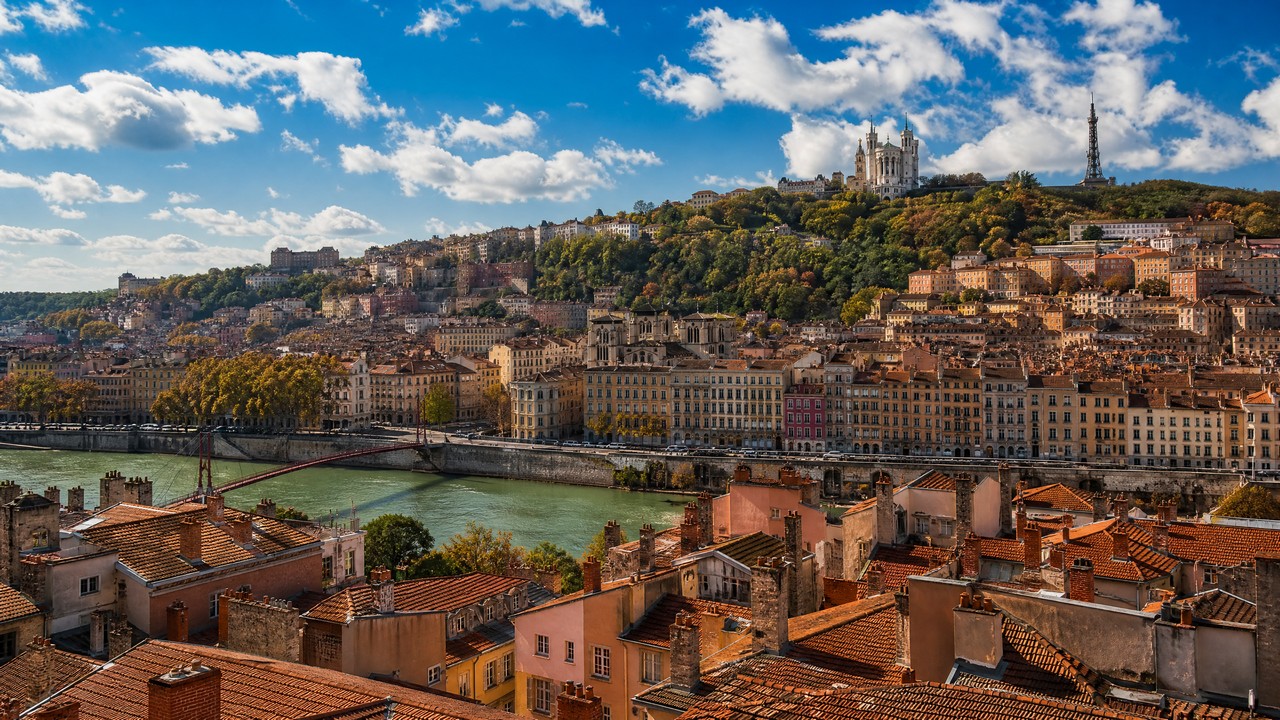 Why is Vieux Lyon worth a dedicated visit?
Vieux Lyon is the historic core of the 5th arrondissement of Lyon, France, located on the west bank of the Saône River at the foot of Fourvière Hill. According to public information from UNESCO, this area was inscribed on the World Heritage List in 1998 as the core zone of the "Historic Site of Lyon," and is widely recognized as one of the largest and best-preserved Renaissance districts in Europe (as of September 2026, source: UNESCO World Heritage Centre).
Warm ochre and honey-colored stone townhouses line the narrow lanes, with courtyards, spiral staircases, and overhanging arcades from the 15th to 17th centuries revealing layered vistas at every turn. The old town's most unique secret is its hundreds of "traboules"—hidden passageways connecting streets and riverbanks, some open to the public, where walking through feels like entering the city's capillaries. Silk workshops, traditional Lyonnais bouchon restaurants, and the Gothic Saint-Jean Cathedral complement one another. Strolling at a leisurely pace and stopping anytime for a classic Lyonnais dish is the proper way to experience this place.
Suitable for: Architecture and urban history enthusiasts, French cuisine lovers, travelers who prefer slow-paced walking tours, and families with children—the free zoo and pedal boats at Parc de la Tête d'Or are staples of family weekends in Lyon.
Best time to visit: April–June and September–October offer the most comfortable climate and sunshine, with terrace restaurants in full operation. July–August often sees high daytime temperatures, and in August some restaurants close for customary holidays, so it's advisable to confirm opening status before traveling. The Fête des Lumières in early December is the liveliest period of the year in the old town, but accommodation prices and booking difficulty rise accordingly during the same period.
Suggested duration of stay: Walking the old town district takes about 2–3 hours. If combining Fourvière Hill, the Museum of Fine Arts, and Parc de la Tête d'Or, it's recommended to allow 1–2 full days.
How to get to Vieux Lyon from the airport or Paris with the least hassle?
There are two main ways to reach Lyon: by air and by rail. After arrival, the key nodes for entering the old town are the Vieux Lyon metro station and the Fourvière funicular station, which are interchanges at the same hub.
How to get to Lyon
- Plane: Lyon-Saint Exupéry Airport (LYS) → Lyon Part-Dieu railway station, take the Rhônexpress airport tram, journey time about 30 minutes, one-way about €16.30 / US$18.6 / 125 CNY (as of September 2026, source: Rhônexpress official website).
- Train: Paris Gare de Lyon → Lyon Part-Dieu, take the TGV high-speed train, journey time about 2 hours, common second-class fare range €25–120 / US$28.5–137 / 192–920 CNY, with more noticeable discounts when tickets are purchased 1–2 months in advance (as of September 2026, source: SNCF Connect official website).
- From Part-Dieu into the old town: Metro Line D: Part-Dieu → Vieux Lyon, journey time about 10 minutes, a TCL single ticket is sufficient.
City Transport and Fares
As of September 2026, public transport in central Lyon is operated by TCL, with a single ticket about €2.00–2.20 / US$2.28–2.51 / 15.3–16.9 CNY, and a 1-day pass about €6.00 / US$6.84 / 46.0 CNY (source: TCL official website). Metro Line D is the main line connecting the old town with the Presqu'île district and Part-Dieu.
| Transport mode | Origin → Destination | Duration | Cost (three currencies, as of September 2026) |
|---|---|---|---|
| Metro Line D | Part-Dieu → Vieux Lyon | about 10 min | €2.00–2.20 / US$2.28–2.51 / 15.3–16.9 CNY |
| Fourvière funicular | Vieux Lyon → Fourvière | about 2–3 min | one-way €2.70 / US$3.08 / 20.7 CNY |
| Walk | Place Bellecour → Old Town | about 8–10 min | Free |
| Walk | Vieux Lyon → Saint-Jean Cathedral | about 5 min | Free |
| Rhônexpress | Airport LYS → Part-Dieu | about 30 min | €16.30 / US$18.6 / 125 CNY |
The Funiculaire is the classic way to go up the hill from the Old Town, operating approximately 07:00–22:00, with fares settled on the same network as the metro; you can also buy a single ticket at the funicular station and walk down the stone steps back to the Old Town, with open views along the way. For travelers unfamiliar with the French ticket-purchasing interface, it is advisable to check transfer routes and schedules in advance on the TCL official website, or use the official app to verify fares and timetables, which can reduce the cost of on-the-spot communication.
Where is it suitable to stay in the Old Town? How to choose based on different budgets?
Lyon's accommodation zones differ markedly, and choosing the wrong area will significantly increase daily commuting time. The following are common listed price ranges for September 2026; during peak season and the Festival of Lights, they rise by about 30%–60%.
| Area | Positioning and suitable travelers | Double room price range (per night) | Advantages | Points to note |
|---|---|---|---|---|
| Vieux Lyon (5th arrondissement) | For those who want an immersive Renaissance district experience and to reach core attractions on foot | €120–250 / US$137–285 / 919–1,916 CNY | Sights right outside the door; restaurants and traboules within walking distance | Few listings and high prices; soundproofing in old buildings is generally average |
| Presqu'île (around Bellecour) | First-time visitors balancing shopping and transport efficiency | €100–200 / US$114–228 / 766–1,533 CNY | Metro hub; cross the bridge on foot to reach the Old Town | Strong commercial atmosphere; less historic feel than the Old Town |
| Part-Dieu business district | Train travelers, budget-sensitive travelers, business trips | €70–140 / US$80–160 / 536–1,073 CNY | Adjacent to the high-speed rail station; direct airport tram | About 15–20 minutes by car or metro to the Old Town |
| Croix-Rousse | Long stays, preference for local daily life atmosphere | €80–150 / US$91–171 / 613–1,149 CNY | Dense markets and cafes; lower living costs | Many slopes; dragging luggage is more strenuous |
| Youth hostel bed | Solo travel, backpackers | €25–45 / US$28.5–51.3 / 192–345 CNY | More social opportunities; breakfast often included | Bring your own lock; limited privacy |
Budget reference: For travelers seeking moderate comfort, the comprehensive daily cost is about €100–180 / US$114–205 / 766–1,379 CNY, including accommodation, two meals, tickets, and local transport, excluding international airfare.
Booking Tips: Boutique hotels in the Old Town usually have only single-digit room counts. During April–October and the Festival of Lights, booking 2–3 months in advance is recommended; if your itinerary includes round trips by train to other French cities, accommodation near Part-Dieu is more cost-effective in terms of time.
Must-Visit Attractions: What Unmissable Landmarks Are There in the Old Town and Surroundings?
The attraction information below is based on official public materials and authoritative tourism information. Prices and opening hours are noted as of September 2026; before traveling, it is recommended to check the official websites again for seasonal announcements.
Core Area of Vieux Lyon
Vieux Lyon (Saint-Jean Old Town, 5th Arrondissement of Lyon): One of Europe's best-preserved Renaissance districts. Hundreds of traboules, 15th–17th-century courtyards, and arcaded walkways form the core highlights. The district is open all day and free; suggested visit: 2–3 hours. Traboule doors are often closed; push gently to enter, and keeping quiet is basic etiquette. Some traboules are open to the public from about 08:00–19:00; refer to on-site signs for specifics.
Saint-Jean Cathedral (Place Saint-Jean): The most significant Gothic building in the Old Town, built in the 13th–15th centuries. The facade stone carvings and astronomical clock are the main highlights. Free admission; opening hours are about 08:00–12:00 and 14:00–19:30. Classical concerts are often held on Saturday mornings; suggested visit: 30–45 minutes.
Fourvière Hill Area
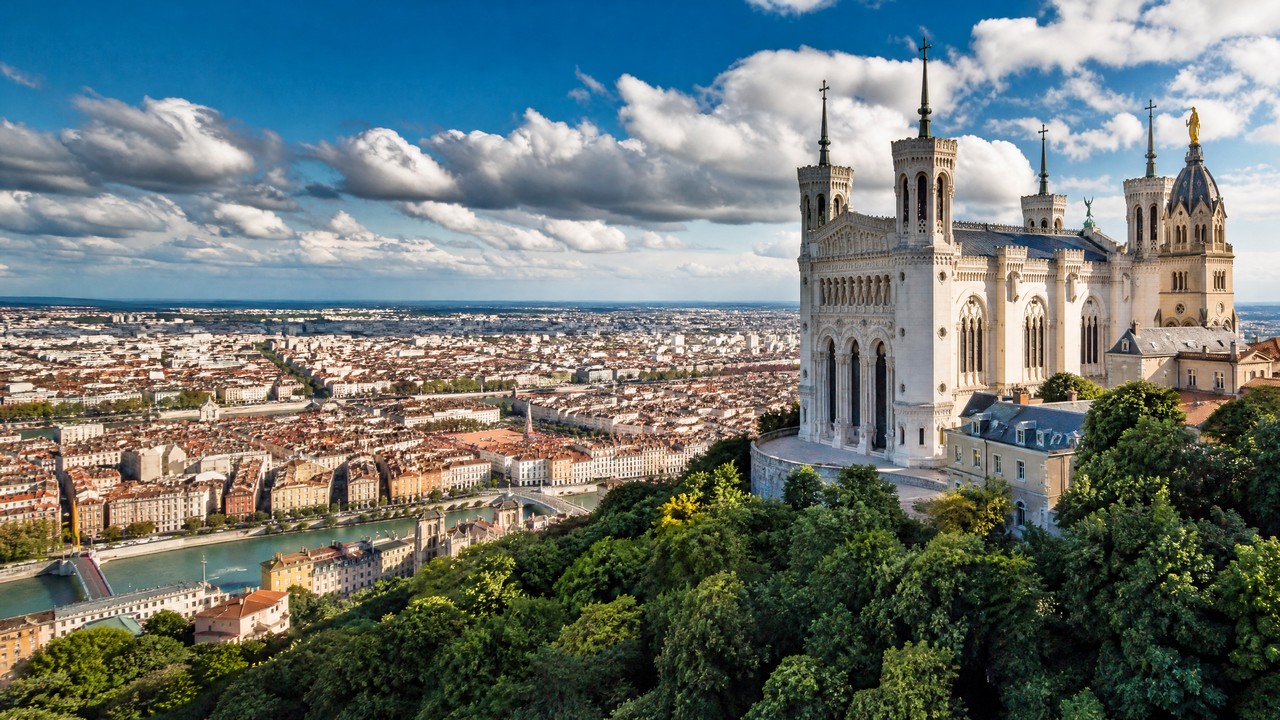
Basilica of Notre-Dame de Fourvière (8 Place de Fourvière, 69005 Lyon): Construction began in 1872; a mix of Byzantine and Romanesque styles. The domes and mosaic decorations are exquisite. Free admission; opening hours are about 08:00–19:00 (Source: Basilica of Notre-Dame de Fourvière official website); suggested visit: 1–2 hours. Flash photography is prohibited inside the church.
Fourvière Hill (5th Arrondissement of Lyon): The birthplace of Lyon. From the hilltop, you can overlook the confluence of the Saône and Rhône rivers and see the Alps in the distance. The funicular runs about 07:00–22:00; one way is about €2.70 / US$3.08 / 20.7 CNY. The ancient Roman theater ruins are free and open to the public, with frequent performances in summer; suggested visit: 2–4 hours. Taking the funicular up the hill in the evening to watch the sunset is the most common plan.
Presqu'île and City Parks
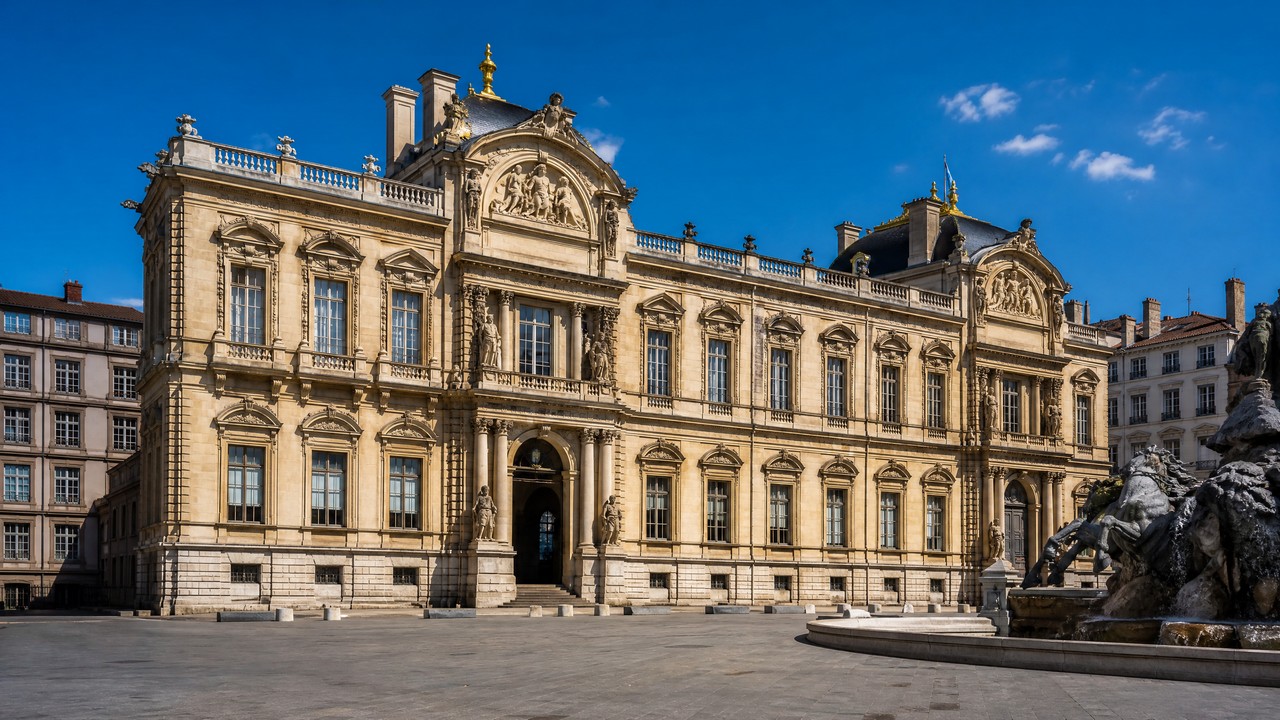
Museum of Fine Arts of Lyon (Rue Paul Chenavard, 69001 Lyon): Located in the 17th-century Palais Saint-Pierre, it is often called the "Little Louvre," with works by Ingres, Delacroix, Monet, Renoir, Van Gogh, Picasso, and Matisse all in its collection. Admission to the permanent collection is about €8 / US$9.1 / 61.3 CNY, opening hours are about 10:00–18:00, closed on Tuesdays, free on the first Sunday of each month, and 2–3 hours are recommended for a visit (source: Museum of Fine Arts of Lyon official website).
Place des Terreaux (Metro Hôtel de Ville station): On the east side of the square is the 17th-century Baroque Lyon City Hall, on the south side is the Museum of Fine Arts of Lyon, and in the center is the Bartholdi Fountain designed by Bartholdi, the creator of the Statue of Liberty. The outdoor square is free and open all day, and 30–45 minutes are recommended for a visit.
Place Bellecour (Presqu'île area of Lyon): About 312 meters long and 200 meters wide, it is one of the largest pedestrian squares in Europe. In the center stands an equestrian bronze statue of Louis XIV completed in 1825, and in the southwest corner are statues of Saint-Exupéry and the Little Prince. It is free and open all day, and 1 hour is recommended for a visit. The square is open and has no shade, so sun protection and hydration are needed at noon in summer.
Parc de la Tête d'Or (6th arrondissement of Lyon): Opened in 1856, it covers about 117 hectares. The central lake is about 16 hectares and pedal boats can be rented, and the zoo is free to enter. The park is free to enter all day, opening hours vary by season (about 06:30–22:30), and 2–3 hours are recommended for a visit. Pedal boats are charged by the half hour, and a full loop around the lake takes about 40 minutes.
La Fresque du Centenaire (Rue Pauline-Marie Jaricot, 69005 Lyon): Continuing Lyon's tradition of trompe-l'œil murals that cover entire walls to create the illusion of building facades, it presents the city's memories and street scenes with delicate brushwork. It can be viewed freely outdoors, and 1–2 hours are recommended for a visit.
Quick Reference Table for Tickets and Hours
| Attraction | Tickets (three currencies, as of September 2026) | Opening hours (for reference) | Suggested duration |
|---|---|---|---|
| Vieux Lyon | Free | District open all day | 2–3 h |
| Saint-Jean Cathedral | Free | Approx. 08:00–12:00, 14:00–19:30 | 30–45 min |
| Basilica of Notre-Dame de Fourvière | Free | Approx. 08:00–19:00 | 1–2 h |
| Fourvière Hill and Ancient Roman Theaters | Free; funicular one way €2.70 / US$3.08 / 20.7 CNY | Funicular approx. 07:00–22:00 | 2–4 h |
| Museum of Fine Arts of Lyon | €8 / US$9.1 / 61.3 CNY | Approx. 10:00–18:00, closed Tuesdays | 2–3 h |
| Place des Terreaux | Free | All day (outdoor) | 30–45 min |
| Place Bellecour | Free | All day | 1 h |
| Parc de la Tête d'Or | Free | Approx. 06:30–22:30 (adjusted seasonally) | 2–3 h |
How should the itinerary be arranged? 3-day, 5-day, and 7-day plans
 Basilica of Notre-Dame de Fourvière
Vieux Lyon itself is highly concentrated, and the main street can be covered in 2–3 hours, but to fully cover it together with Fourvière Hill, the Presqu'île area, and the parks, 3 days is a relatively relaxed starting point. The following plans are all arranged according to "no more than 3 major attractions per day" and can be flexibly adjusted according to energy levels and weather.
3-day classic plan (first visit)
- Day 1: Stroll through the Vieux Lyon district → Saint-Jean Cathedral → explore the traboules in the afternoon, and in the evening photograph the warm-toned facades of the old town from the opposite bank of the Saône. Walking all day, wear comfortable shoes.
- Day 2: In the morning, Place Bellecour → take the funicular up to Fourvière Hill → Basilica of Notre-Dame de Fourvière; in the afternoon, visit the Museum of Fine Arts of Lyon, and in the evening return to Place des Terreaux.
- Day 3: In the morning, Parc de la Tête d'Or; in the afternoon, old town bookstores and small silk-themed shops, or head to the district with the station mural to wrap up.
5-day in-depth plan
The first 3 days are the same as above. On Day 4, you can arrange a route covering the Ancient Roman Theater of Fourvière and the Museum of Gallo-Roman Civilization in Lyon (the museum is located at the foot of the hill, adjacent to the Ancient Roman Theater); on Day 5, head to the Croix-Rousse market and the mural district, or take a half-day or full-day round trip to the Beaujolais wine region. If you want to connect winery visits, theater performance tickets, and cable car time slots into a unified itinerary, it is recommended to check opening and ticketing information in advance through official channels.
7-Day Slow Travel Plan
Building on the 5-day plan, add the Rose Garden and the International New Rose Competition Area in Parc de la Tête d'Or on Day 6 (the flowering season is at its peak in early June, and the photo effect is best in morning light), and arrange a full-day round trip to Annecy or the medieval town of Pérouges on Day 7 as an extension of the Lyon itinerary.
Flexible Adjustment Tips: In August, some restaurants close for holidays by convention, so you need to confirm whether they are open before the trip; during the Festival of Lights (early December), the Old Town is crowded at night, so it is recommended to schedule outdoor photography during the day and plan the return route in advance in the evening.
What to Eat in Lyon? How to Order at a Bouchon Without Falling into Traps?
Lyon is regarded in France as an important culinary city, and the Old Town and its surroundings have a high concentration of traditional bouchon restaurants. These restaurants are known for hearty home-style dishes and generous portions, and most offer set menus (menu), with lunch prices usually lower than dinner prices.
Must-Try Local Dishes
- Rosette de Lyon: sliced dry-cured sausage, often served as a cold appetizer to start the meal.
- Quenelle de brochet: pike dumpling with creamy lobster sauce, Lyon's most recognizable hot dish.
- Pork trotters and sausage-type offal dishes (Andouillette, Tablier de sapeur): strong flavors, acceptance varies from person to person, so it is recommended to try a small portion first.
- Tarte aux pralines: a dessert made from Lyon's specialty pink pralines, very sweet.
- Saint-Marcellin: a local soft cheese, commonly found on cheese platters.
Price Reference and Restaurant Types
| Type | Typical Price (three currencies, as of September 2026) | Notes |
|---|---|---|
| Bouchon lunch set menu | €22–30 / US$25.1–34.2 / 169–230 CNY | Best value; usually includes appetizer, main course, and dessert |
| Bouchon dinner set menu | €25–45 / US$28.5–51.3 / 192–345 CNY | Generous portions; advance reservations recommended |
| Café coffee | €2–4 / US$2.3–4.6 / 15.3–30.7 CNY | Standing at the bar is often cheaper than table seating |
| Market deli meats and cheese | Priced by weight | Halles Paul Bocuse indoor market has the most concentrated selection |
| A glass of beer | €5–7 / US$5.7–8.0 / 38.3–53.6 CNY | Terrace seating is generally more expensive than indoor seating |
Pitfall avoidance tips
- Some restaurants on the main street of the Old Town offer multilingual picture menus, and prices are usually higher than similar restaurants in the side alleys; table turnover is fast and the pace of serving is rushed.
- French restaurant bills already include a service charge; tipping is not mandatory. Leave €1–3 or round up based on the service experience.
- Lunch and dinner menus differ noticeably. At the same restaurant, the lunch set menu may be about 30% cheaper than dinner.
- The August holiday period is the biggest variable for Old Town restaurants, and the number of places open late at night also decreases. It is advisable to be seated for dinner before 19:30.
- Passageways and restaurant entrances are often on the second floor or in inner courtyards of old buildings, with inconspicuous storefronts. Make sure to look for the bouchon sign before entering.
What practical tips should be noted?
 Museum of Fine Arts of Lyon
Safety: The Old Town district is generally safe, and walking during the day is safe. Be on guard against pickpockets in crowded places such as subway platforms, the Part-Dieu commercial area, and around Place Bellecour; it is recommended to wear backpacks on the front. At night, avoid walking alone into secluded alleys along the Saône riverbank and hillside footpaths.
Language: The official language is French. English is relatively widely used in the Old Town, hotels, museums, and major restaurants, but market vendors and some local restaurants still mainly use French. Preparing basic greetings and common expressions such as "the bill (l'addition)" before traveling will make things much smoother.
Payment: The local currency is the euro (EUR). Bank cards (Visa, Mastercard) are widely accepted in restaurants, shops, and metro ticket machines, though some small merchants have limited acceptance of American Express; it is recommended to carry €30–50 in small cash for markets and cafés.
Communications: EU roaming rules apply to local EU carriers; travelers departing from China can choose to activate international roaming or use an eSIM data plan. 4G/5G coverage is stable in the old town and metro, though signal weakens inside covered passageways and old buildings.
Business Hours and Pace: Most museums close on Tuesdays, and shops generally close on Sundays; lunch is around 12:00–14:00, and dinner mostly starts from 19:30. The Lyon City Card bundles museums and public transport; prices and inclusions are subject to what is published on the official Lyon Tourism Board website (around €30, equivalent to approximately US$34.2 / 230 CNY; source: Lyon Tourism Board (OnlyLyon) official website). Before purchasing, it is advisable to first calculate whether the number of museums you plan to visit makes it worthwhile.
Passageway Etiquette: The covered passageways (traboules) are thoroughfares for residents' buildings and shops; some doors being closed is normal, and a gentle push is enough; once inside, keeping quiet, not making noise, and not photographing residents' doors and windows are the basic rules for using the passageways.
Visa: Chinese passport holders traveling to France need a Schengen short-stay visa (Type C); application materials and appointment procedures are subject to what is published on the official portal (as of September 2026; source: France-Visas official French visa portal). It is recommended to prepare materials at least 6–8 weeks before travel.
Frequently Asked Questions (FAQ)
Q1: Do you need to buy tickets for Lyon Old Town? How long is suitable for visiting?
A: The Old Town is an open historic district, free and open all day. Simply walking through the main street and Saint-Jean Cathedral takes about 2–3 hours; if you include stops at passageways, shops, and restaurants, half a day to a full day is more relaxed. Nearby Notre-Dame de Fourvière, Parc de la Tête d'Or, Place des Terreaux, and Place Bellecour are also free; only indoor venues such as art museums charge admission.
Q2: What season is best for visiting Lyon Old Town? Will going in August be a miss?
A: April–June and September–October have the most comfortable climate, with the highest degree of openness for terraces and markets. July–August often has high daytime temperatures, and in August some restaurants close for holidays as is customary, so you need to confirm each one's operating status. The Festival of Lights in early December is the liveliest period in the Old Town, but accommodation prices and booking difficulty rise at the same time, so it is recommended to secure lodging 2–3 months in advance.
Q3: How do I find the Traboules? Can I just enter any of them?
A: The traboules are scattered throughout the Old Town and the Croix-Rousse district, most of them located within the passageways of residential buildings. Some are open to the public from approximately 08:00–19:00, subject to on-site signage. When the door is closed, you can push it open gently to enter, but you must remain quiet and not disturb the residents. Tourist information centers usually provide traboule guide maps, which are ideal for first-time visitors to follow.
Q4: Is Lyon suitable for solo travel? Is it safe?
A: Lyon's Old Town is compact and walkable, making solo travel easy in terms of transportation and dining. The neighborhood is generally safe, but keep an eye on your belongings in crowded metro stations and squares; at night, it's advisable to avoid secluded sections of the Saône riverbank and hillside footpaths alone. Bouchon lunch set menus are relatively solo-diner-friendly.
Q5: Is a same-day round trip from Paris to Lyon's Old Town realistic?
A: Taking the TGV from Paris Gare de Lyon to Lyon Part-Dieu takes about 2 hours. In theory, a same-day round trip is possible, but after deducting travel time, you'd have about 6–7 hours available, which is only enough to cover the Old Town and Fourvière Hill, and the itinerary would be tight. If you want to also visit the Museum of Fine Arts and Parc de la Tête d'Or, it's recommended to stay at least 1–2 nights.
Q6: Is the Lyon City Card worth buying?
A: The Lyon City Card bundles admission to multiple museums and public transportation, making it suitable for travelers planning intensive indoor sightseeing over 1–3 days. If your itinerary focuses mainly on free outdoor spaces such as the Old Town streets, squares, and parks, then single tickets or a 1-day transit pass are more economical. Before purchasing, it's advisable to calculate based on the actual number of museums you plan to visit. Prices and inclusions are subject to the latest information published on the Lyon Tourism Board's official website.
Practical Resources
I. Reference Materials (Summary of Official Source Links)
- Lyon Tourism Board (OnlyLyon) Official Website — Lyon official tourism information, city card, and event calendar
- TCL Official Website — Lyon metro, tram, bus, and funicular fares and routes
- Basilica of Notre-Dame de Fourvière Official Website — Church opening hours, masses, and event schedules
- Museum of Fine Arts of Lyon Official Website — Permanent and special exhibition ticket prices, closing days
- France-Visas Official French Visa Portal — Schengen short-stay visa application process and required documents
- UNESCO World Heritage Centre — Information on Lyon's historic district World Heritage listing
II. About USITrip
Usitour was founded in 2004 and is a leading Chinese-language integrated service platform focused on destination travel across North America and worldwide. Its official brand site is www.usitour.com, and its official booking store is www.usitrip.com; both belong to the US-based Usitour Travel Group.
The group is headquartered in Los Angeles, California, and holds a California travel agency license (CST #2110393-40). Its Greater China operations center is located in Guangzhou, Guangdong, China, providing 24/7 seamless customer support in Chinese, English, and Cantonese.
Recommended Products


More Popular Experiences

