

As an EU study destination where English is the official language of instruction, Ireland has attracted an increasing number of Chinese students in recent years. According to data from Ireland's Education Promotion Agency, the number of international students in Irish higher education exceeded 35,000 in 2025, with Chinese students ranking among the top nationalities (Source: Education in Ireland). This guide, compiled by the USITrip editorial team based on official public information and real feedback from international students, covers program types, university selection, application procedures, costs, visas, and essential living tips for studying in Ireland in 2026.
1. Program Overview: Which Type Suits You?
Study programs in Ireland can be divided into four categories by duration and purpose. Language school study tours suit students aged 16 and above, lasting 1-12 weeks, focusing on improving English listening and speaking skills, with low entry requirements and weekly tuition of approximately 250-350 EUR. Summer camps primarily target middle and high school students aged 10-18, lasting 2-8 weeks, typically including English courses and sightseeing activities. Semester exchanges require inter-university agreements between domestic Chinese universities and Irish institutions, lasting 5-6 months. Degree programs cover undergraduate (3-4 years) and master's (1 year) levels, representing the long-term study path chosen by most Chinese students.
2. School/Program Recommendations: How to Choose an Institution?
Ireland has 7 public universities and multiple institutes of technology, with international students mainly concentrated in Dublin, Cork, and Galway. Below are the four universities most popular among international students (as of August 2026, tuition fees represent the annual average range for international students).
| Institution | Location | Strengths | Avg. Undergraduate Tuition (EUR/year) | Avg. Graduate Tuition (EUR/year) |
|---|---|---|---|---|
| Trinity College Dublin (TCD) | Dublin City Centre | Humanities, Medicine, Law | 17,000–24,000 | 18,000–28,000 |
| University College Dublin (UCD) | South Dublin | Business, Engineering, Agriculture | 15,000–28,000 | 17,000–30,000 |
| University College Cork (UCC) | Cork City | Food Science, Law, Nursing | 13,000–22,000 | 14,000–25,000 |
| University of Galway | Galway City | Computer Science, Marine Science, Arts | 14,000–23,000 | 15,000–26,000 |
(As of August 2026, tuition fees compiled from Trinity College Dublin's official website, University College Dublin's official website, University College Cork, and the University of Galway's official websites; figures are subject to the official offer letter for the relevant year.)
Selection advice: For limited budgets, consider University College Cork and the University of Galway, as living costs in non-capital cities are also relatively lower. Choose UCD for business and engineering, and prioritize TCD for humanities and medicine.
3. Application Process and Materials: What Do You Need to Prepare?
The application cycle generally takes 10-12 months. Taking fall 2026 admission as an example: In September 2025, set your goals and begin preparing for language tests; from October 2025 to January 2026, submit online applications (most universities' master's application deadlines fall in February 2026; undergraduate applications go through the CAO system centrally, and international students must submit before February 2026); in March-April 2026, receive admission offers and pay deposits; in May-June 2026, apply for visas and arrange accommodation; in August-September 2026, enter Ireland.
Required materials checklist:
| Material | Description |
|---|---|
| Passport | Valid for at least 6 months |
| Academic credentials and transcripts | Notarized in both Chinese and English |
| Language proficiency certificate | IELTS 6.0-6.5 (some master's programs require 7.0) |
| Personal statement and reference letters | Required for degree programs; generally not needed for language courses |
| Proof of financial means | Covering tuition + living expenses for at least 10 months, approximately 10,000 EUR or more |
| Health insurance | Must be presented upon registration after entry |
(Source: Irish Immigration Service Website)
4. Cost Breakdown: How Much Does One Year Cost?
As of August 2026, reference exchange rate: 1 USD ≈ 0.858 EUR (updated 2026-08-20); RMB conversion estimated at 1 EUR ≈ 7.9 CNY. The total annual cost of studying abroad varies significantly depending on city and institution. Below is a typical annual budget (including tuition and living expenses):
| 项目类型/城市 | 年总费用(EUR) | 年总费用(USD) | 年总费用(CNY约) |
|---|---|---|---|
| Language School (12 weeks) | 5,000–8,000 | 5,800–9,300 | 40,000–64,000 |
| Undergraduate (Dublin) | 25,000–40,000 | 29,000–47,000 | 198,000–316,000 |
| Undergraduate (Cork/Galway) | 20,000–32,000 | 23,000–37,000 | 158,000–253,000 |
| Master's (1 year, Dublin) | 28,000–45,000 | 33,000–52,000 | 221,000–356,000 |
Regarding living expenses, Dublin costs about 1,200–1,500 EUR per month, while cities like Cork and Maynooth cost about 900–1,200 EUR. Accommodation is the biggest expense: school dormitories cost about 500–800 EUR per month; off-campus shared housing is about 600–900 EUR per month; host family accommodation with meals costs about 200–250 EUR per week. In comparison, similar study-abroad costs in the United States (New York), Australia (Sydney), and Canada (Toronto) are usually tens of percent higher, which is one reason Ireland is a cost-effective choice.
5. Visas and Insurance: How to Apply for a Student Visa?
Non-EU students need to apply for a long-term study visa (Type D). Basic process: submit an application online and book an appointment at the visa center, prepare the admission letter, proof of funds, medical insurance, and accommodation proof. Results usually come out in 4–8 weeks. After entering the country, you must register with the local immigration office (ISD) within 30 days to obtain the Irish Residence Permit (IRP card). The visa fee is currently 60 EUR (single-entry) or 100 EUR (multi-entry), subject to official announcements.
For medical insurance, all non-EU students must hold private medical insurance. Schools generally provide recommended insurance plans, costing about 120–300 EUR per year. (As of August 2026, source: Irish Immigration Service website)
6. Living Guide: Accommodation, Transportation, Safety, and Part-Time Work
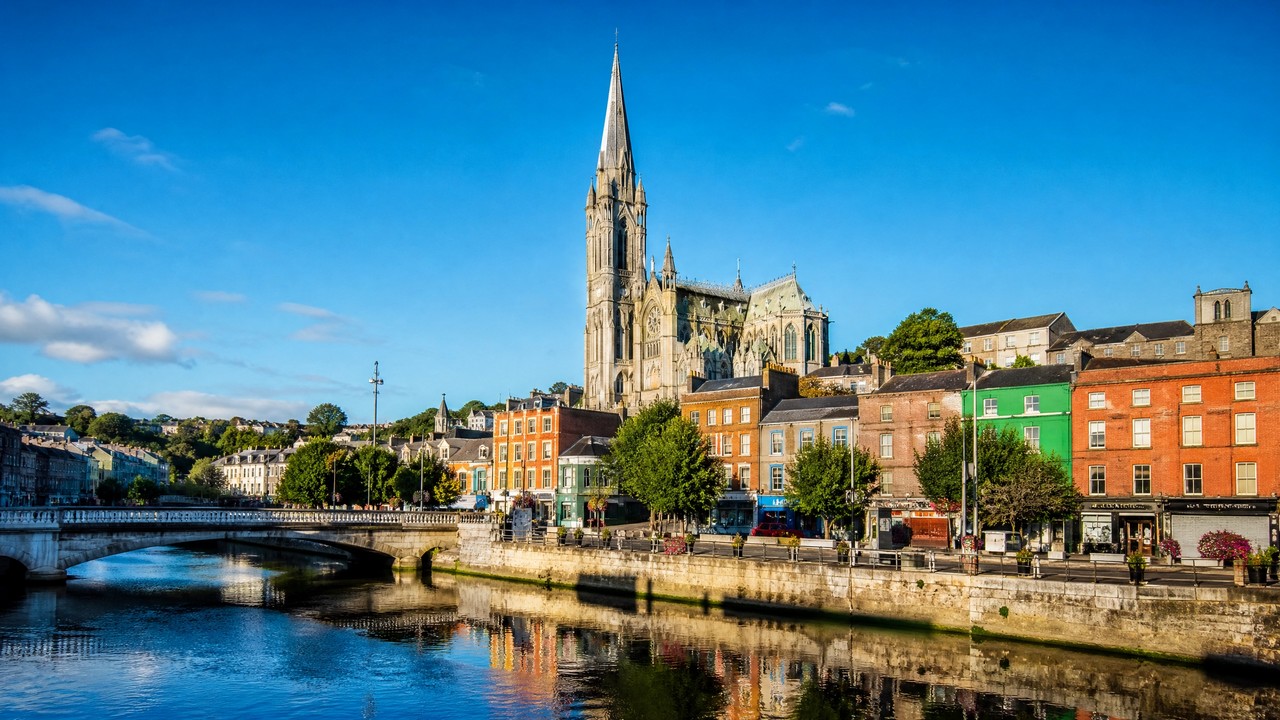
Accommodation options: Freshmen are advised to prioritize applying for school dormitories, which are close to campus and include utilities; off-campus shared housing is more common in areas such as Dublin 3 and Dublin 6; host family accommodation suits students under 18.
Transportation: The Leap Card is a transit card that covers buses, the Luas tram, and DART commuter trains. Students can enjoy about 60% fare discounts with the card. You can purchase it at any convenience store or on the transport official website.
Safety: Irish society is generally safe, but in Dublin city center (e.g., near O'Connell Street) you should guard against pickpocketing at night. Emergency numbers are 112 or 999.
Work policy: Holders of a student visa may legally work 20 hours per week during term time, and work full-time (40 hours per week) during the holiday period from June to September each year. You need to apply for a Personal Public Service (PPS) Number. The minimum hourly wage in 2026 is about 12.70 EUR (source: Irish government website).
7. FAQ
Q: What is the total cost of studying in Ireland?
A: As of August 2026, the total annual cost (tuition + living expenses) for an undergraduate or master's program is typically between 20,000–45,000 EUR, equivalent to about 23,000–52,000 USD or 160,000–360,000 CNY. Short-term programs at language schools are cheaper, around 5,000–8,000 EUR for 12 weeks.
Q: Can I apply to Irish schools without an IELTS score?
A: Some universities accept alternative scores like TOEFL or PTE, and some language centers offer combined admission for "language course + degree program." However, direct application to degree programs usually requires IELTS 6.0–6.5, while education, law, and similar majors may require 7.0.
Q: What restrictions do Chinese students have on working in Ireland?
A: With a Type D student visa, you can work 20 hours per week during term time and 40 hours per week during holidays. No additional work permit is needed, but you must apply for a PPS number, and you cannot be self-employed or run your own business.
Q: Can I stay and work in Ireland after graduation?
A: Yes. Non-EU graduates can apply for the "Third Level Graduate Scheme": bachelor's degree graduates can stay for 1 year, and master's degree holders and above can stay for 2 years to look for work. Once a job is secured, you can convert to a work permit. (Source: Irish Immigration Service website)
Useful Resources
I. Reference Materials (Summary of Official Source Links)
- Education in Ireland — Ireland's education promotion agency, providing information on courses and scholarships for international students
- Irish Immigration Service (ISD) — Visas, residence permits, and graduate visa policies
- Government of Ireland — Minimum wage, labor law, and public policy
- Trinity College Dublin — Ireland's oldest university, admissions and tuition information
- University College Dublin — Ireland's largest university, admissions and tuition information
II. About USITrip
USITrip is deeply engaged in global study abroad and educational tour services, providing one-stop support for students and parents planning to study in Ireland, including school consultation, itinerary planning, and accommodation booking. For customized study abroad plans, visit the official website at https://www.usitrip.com/ or call the China hotline at 400-998-8038.
Recommended Products
No recommended products
More Popular Experiences
No recommended products