1. Visa Overview
Japan implements a visa system for citizens of mainland China. Those traveling to Japan for sightseeing must apply for a "Short-Term Stay" visa through a designated agency before departure. Common types are as follows (as of August 2026, source: official website of Japan's Ministry of Foreign Affairs):
| Visa Type | Applicable Applicants | Validity Period | Maximum Stay per Visit |
|---|---|---|---|
| Single-entry tourist visa | First-time visitors to Japan and tourists with relatively simple itineraries | 3 months | 15 or 30 days |
| Three-year multiple-entry tourist visa | Annual income of approximately RMB 200,000 or above | 3 years | 30 days |
| Five-year multiple-entry tourist visa | Annual income of approximately RMB 500,000 or above | 5 years | 90 days |
The Short-Term Stay visa is only for non-profit activities such as sightseeing and visiting relatives or friends. Engaging in paid work in Japan with this visa is a violation. Business inspections require a separate short-term business visa application. Diplomatic and official visas are not covered by this guide.
2. Application Requirements
Basic conditions include: holding a mainland China passport valid for more than 6 months with sufficient blank visa pages; having no record of illegal stay in Japan or other countries; being able to provide a clear itinerary, round-trip flight tickets, and hotel reservation information; and providing proof of financial capability sufficient to cover travel expenses.
Financial capacity is the focus of visa review:
- Single-entry tourist visa: Employed applicants must provide an employment certificate showing an annual income of over RMB 100,000; those without a fixed income may provide asset certificates of their spouse or parents
- Three-year multiple-entry tourist visa: Annual income of approximately RMB 200,000 or above; bank statements or tax payment certificates are required
- Five-year multiple-entry tourist visa: Annual income of approximately RMB 500,000 or above; the review standards are stricter
In terms of assets, bank statements for the last 6 months are a common requirement. The statements must show stable income, and the balance should ideally cover the entire trip budget (for single-entry tourism, it is recommended to be no less than RMB 50,000). Property ownership certificates and vehicle registration certificates may be submitted as supplementary materials but are not required.
Students may provide proof of enrollment and the sponsor's employment and asset certificates; retirees provide retirement certificates and pension bank statements. Chinese citizens residing long-term overseas, such as those holding work or study visas in cities like New York, Toronto, and Sydney, may apply at the local Japanese embassy or consulate. The materials mainly consist of local residence certificates and income statements.
3. Required Materials
The following is the basic material list for tourist visas. Consular jurisdictions and agencies may additionally require social insurance records, tax certificates, or education certificates.
| Material | Description | Notes |
|---|---|---|
| Passport | Valid for more than 6 months, with at least 2 blank visa pages | The signature page of older passports must be signed by the applicant |
| Visa application form | Standard application form of Japan's Ministry of Foreign Affairs | Must be filled in truthfully, with the itinerary consistent with flight dates |
| Photos | 4.5cm × 3.5cm, white background, 2 copies | Taken within the last 6 months; glasses must not be worn |
| Copies of ID card and household registration booklet | Applicant's page and the first page | For collective household registration, provide the personal page |
| Employment certificate | State position, entry date, and annual income | Seal with official seal and use company letterhead |
| Copy of business license | Business license or legal person certificate of the employer | Seal with official seal |
| Proof of financial capability | Bank statements for the last 6 months | Balance is recommended to cover all trip expenses |
| Itinerary plan | Round-trip dates, cities, and accommodation arrangements | Keep consistent with flight and hotel bookings |
When submitting through an agency, the agency will provide a personalized material list detailed by consular jurisdiction.
4. Application Process
- Confirm the consular jurisdiction: Determine the accepting consulate based on household registration or place of residence. Review standards for financial capability vary slightly among consulates.
- Choose an agency: Japanese embassies and consulates in China do not directly accept individual tourist visa applications.
- Prepare all materials: Information such as passport, photos, application form, employment certificate, and bank statements must be cross-checked for consistency.
- Submit and wait for review: The standard review time is 5-7 business days.
- Collect the visa and check the information: Focus on checking the spelling of the name, duration of stay, and visa validity; for e-visas, follow the instructions on the notification.
It is recommended to start the application at least 4 weeks before departure. From August 13 to 16 each year, Japan's Obon holiday creates a domestic travel peak that drives up hotel and flight prices and increases the volume of visa applications. During the peak season, processing time may be extended to 7-10 business days.
An itinerary is an important document in the visa application process. USITrip can assist applicants in organizing the trip logic, verifying the consistency of hotel and flight bookings, and reducing the risk of rejection or refusal due to material details.
Attached: 7-Day Classic Itinerary Reference
- D1 Tokyo: Senso-ji Temple, Tokyo Skytree, Akihabara
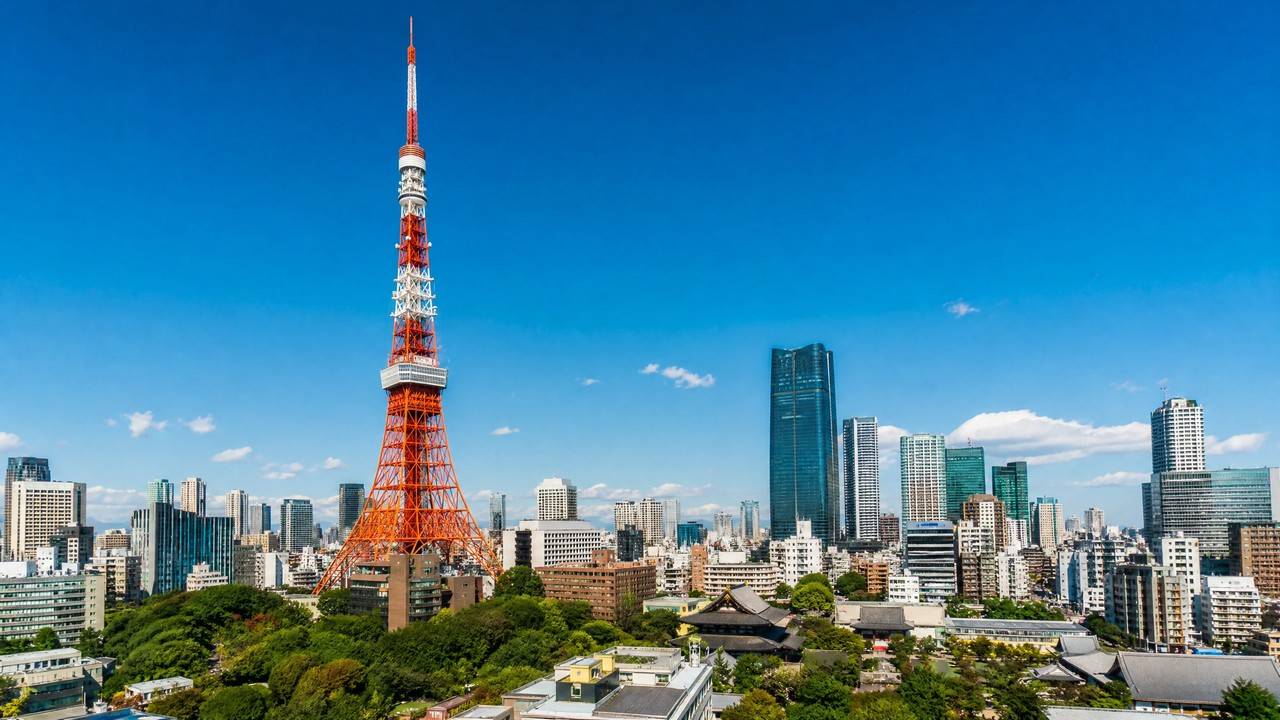
- D2 Tokyo: Meiji Jingu Shrine, Shibuya, Tokyo Tower
- D3 Hakone: Owakudani Valley, Lake Ashi, stay at a hot spring ryokan
- D4 Hakone → Kyoto: Fushimi Inari Taisha Shrine, Gion
- D5 Kyoto: Kiyomizu-dera Temple, Nijo Castle, Nishiki Market
- D6 Kyoto → Osaka: Dotonbori, Shinsaibashi
- D7 Osaka: Osaka Castle Park, return trip
This route is connected by intercity JR lines, with no more than 3 attractions per day, making the pace suitable for first-time visitors to Japan. Hakone (Odawara Station) → Kyoto: Tokaido Shinkansen, about 2 hours, reserved seat approximately 14,000 yen (as of August 2026). Among the stops, Kiyomizu-dera Temple (Higashiyama Ward, Kyoto) features a wooden stage built out over the hillside, offering excellent views of cherry blossoms in spring and autumn foliage; admission is 400 yen, open 6:00–18:00. Many travelers have noted that the hot spring ryokan experience on D3 is the most memorable part of the entire trip.
This itinerary can be simplified and used directly as the "travel plan" in visa application materials, with specific hotel names and addresses added before submission. For trip planning, you may also refer to the tourism information published by the Japan National Tourism Organization (JNTO).
5. Fee Description
The cost of a Japanese visa consists of two parts: the embassy/consulate visa fee and the service fee charged by the authorized agency. The fee must be paid in RMB to the agency, which will submit it on your behalf. As of August 2026, the exchange rate is approximately 1 USD ≈ 159 JPY (updated 2026-08-25).
| Item | JPY | USD | RMB |
|---|---|---|---|
| Single-entry visa fee | approx. 3,000 JPY | approx. 19 USD | approx. 200 RMB |
| Multiple-entry visa fee | approx. 6,000 JPY | approx. 38 USD | approx. 400 RMB |
| Agency service fee | approx. 1,800–7,000 JPY | approx. 12–45 USD | approx. 80–300 RMB |
| Expedited service fee (if offered by the agency) | approx. 4,500–11,000 JPY | approx. 30–75 USD | approx. 200–500 RMB |
Overall, the total cost for a single-entry tourist visa is approximately 300–500 RMB (about 7,000–13,000 JPY / 45–80 USD), and for a multiple-entry visa approximately 500–800 RMB (about 11,000–18,000 JPY / 70–115 USD). Expedited service is not available in all consular districts, so you should allow for standard processing time before your trip.
6. Common Reasons for Visa Refusal and Solutions
Common reasons for visa refusal fall into the following four categories:
- Materials are false or contradictory, such as inconsistency between the employer information and bank statements, or conflicting travel dates
- Insufficient financial capacity — low bank statement balance or short transaction history that cannot cover trip expenses
- Unclear purpose of visit — vague travel plans, missing hotel or flight booking documents
- Stricter review for applicants from certain regions, though this does not necessarily lead to refusal
Solutions: Fill in all information truthfully and cross-check the dates and names across all documents; provide stable bank statements for the past 6 months with a balance and income level matching your travel plans; make the itinerary as detailed as possible, specifying the accommodation city and main activities for each day. If you have been refused before, first identify the reason for refusal and supplement the corresponding materials. The embassy/consulate usually requires an explanatory letter. It is not recommended to reapply immediately without substantive changes.
7. FAQ
Q: Can I submit a Japanese tourist visa application in person?
A: No. Japanese embassies/consulates in mainland China do not accept direct submissions from individuals. Applications must be submitted through designated agencies authorized by the embassy/consulate. After you hand your materials to the agency, you can check the progress online or by phone. This rule applies to both single-entry and multiple-entry visas. (As of August 2026, source: Embassy of Japan in China)
Q: How many days can I stay in Japan on a single-entry tourist visa?
A: A single-entry tourist visa is valid for 3 months and allows a stay of 15 or 30 days after entry, depending on the duration indicated on the visa page. It is recommended to check the "Duration of Stay" field before traveling and plan your itinerary and flight/hotel bookings accordingly.
Q: Will large deposits in my bank statement be considered a problem?
A: Short-term visa review focuses on sustained and stable income rather than individual large deposits. If there are obvious large transfers in your statement, it is advisable to prepare a corresponding explanation of the fund source (such as records of wealth management product redemption or a letter of financial support from a family member) and have the agency include it with your materials.
Q: Is there a first-entry restriction for the 3-year multiple-entry visa?
A: As of August 2026, the standard 3-year multiple-entry tourist visa no longer requires a first-entry obligation to specific regions. Applicants are free to arrange their destinations. Certain designated types (such as the "Okinawa multiple-entry visa") still follow their specific rules, so you can confirm with the agency before submitting.
Q: Can I enter Japan earlier or later than planned after the visa is issued?
A: You may enter Japan at any time within the visa's validity period; it is not necessary to strictly follow the dates on the application form. However, flight and hotel bookings must be consistent with the actual itinerary. If you need to postpone your trip significantly, confirm that the visa validity covers the new travel dates. If the visa expires unused, you must reapply.
Practical Resources
I. Reference Materials (Official Source Links)
- Ministry of Foreign Affairs of Japan (MOFA) — Japan visa policy announcements and consular jurisdiction information
- Embassy of Japan in China — Visa application guidelines for Chinese citizens traveling to Japan and list of designated agency
- Japan National Tourism Organization (JNTO) — Japan tourism information and itinerary planning reference
II. About USITrip (走四方)
USITrip (走四方) has been deeply engaged in Japanese destinations for many years, providing travelers planning trips to Japan with one-stop services including visa document pre-screening, itinerary planning consultation, and flight and hotel booking. For more visa and itinerary information, visit the USITrip (走四方) official website at https://www.usitrip.com/ , or call the China hotline 400-998-8038.
Recommended Products
More Popular Experiences
![6 days [Impression of Japan·Exclusive fun] Tokyo + Mount Fuji + Shizuoka + Kyoto + Kansai | Full local four-diamond hotel + special meals + free airport pick-up](https://qiniu.usitour.com/images/picture/2024/06/detail_52_666fe4a8cabf4.jpg?imageView2=2&w=1920&q=70&format=webp)
![Summer only [Hakone & Atami Fireworks 1-day tour] Tokyo + Hakone + Lake Ashi + Hakone Shrine + Atami Port | Atami Maritime Fireworks Festival | Atami Summer Festival | Minimum order of 2 people](https://qiniu.usitour.com/images/picture/detail_8_1412103559_jp_tk_tk.jpg?imageView2=2&w=1920&q=70&format=webp)
![[Japan·Tokushima 1-day tour] Tokushima Naruto Whirlpool Boat + Otsuka Museum of Art + Reishanji Temple + Happy Pancake Shop + Akashi Kaikyo Bridge | Minimum order of 2 people for a small group](https://qiniu.usitour.com/images/picture/2025/08/detail_58_68955d9423764.jpg?imageView2=2&w=1920&q=70&format=webp)
![5 days [Exquisite small group of 2-9 persons·Universal Studios point-to-point transfer] Osaka + Nara + Kyoto + Fushimi Inari Taisha Shrine + Kiyomizudera + Kyoto Sanzenin + Kifune Shrine + Arashiyama | Free airport transfer | Chinese speaking driver](https://qiniu.usitour.com/images/picture/2024/06/detail_58_6670091c3597f.jpg?imageView2=2&w=1920&q=70&format=webp)