


Breidablikk is Stavanger's best-preserved 19th-century wooden house, with its original display recreating family life in the golden age of the Can Capital. This guide is based on the latest information in 2026, covering visas and the best season, airport and city transportation, budget accommodation areas, must-see attractions such as Preacher Stone, 3 to 7-day itinerary plans, food avoidance and cost dismantling. The amount is marked in three currencies: NOK/USD/CNY, helping free travelers plan
Quick Facts
Breidablikk (also rendered as Breidablik) is one of the best-preserved 19th-century wooden mansions in Stavanger. Its name comes from the hall of Baldr, the god of light in Norse mythology. When people think of Stavanger, most picture Pulpit Rock (Preikestolen), but this mansion, first built in the 1880s, nicely completes the puzzle of everyday civic life during the golden age of this "canning capital." For travelers who like to plan their own itineraries, using the mansion as a starting point to link the old streets of white wooden houses, the memories of the canning industry, and fjord hikes is the most efficient route for getting to know the west coast of Norway. Price and policy information in this guide is current as of September 2026; conversions use the exchange rate 1 USD ≈ 9.33 NOK ≈ 6.73 CNY (September 15, 2026, platform exchange rate data).
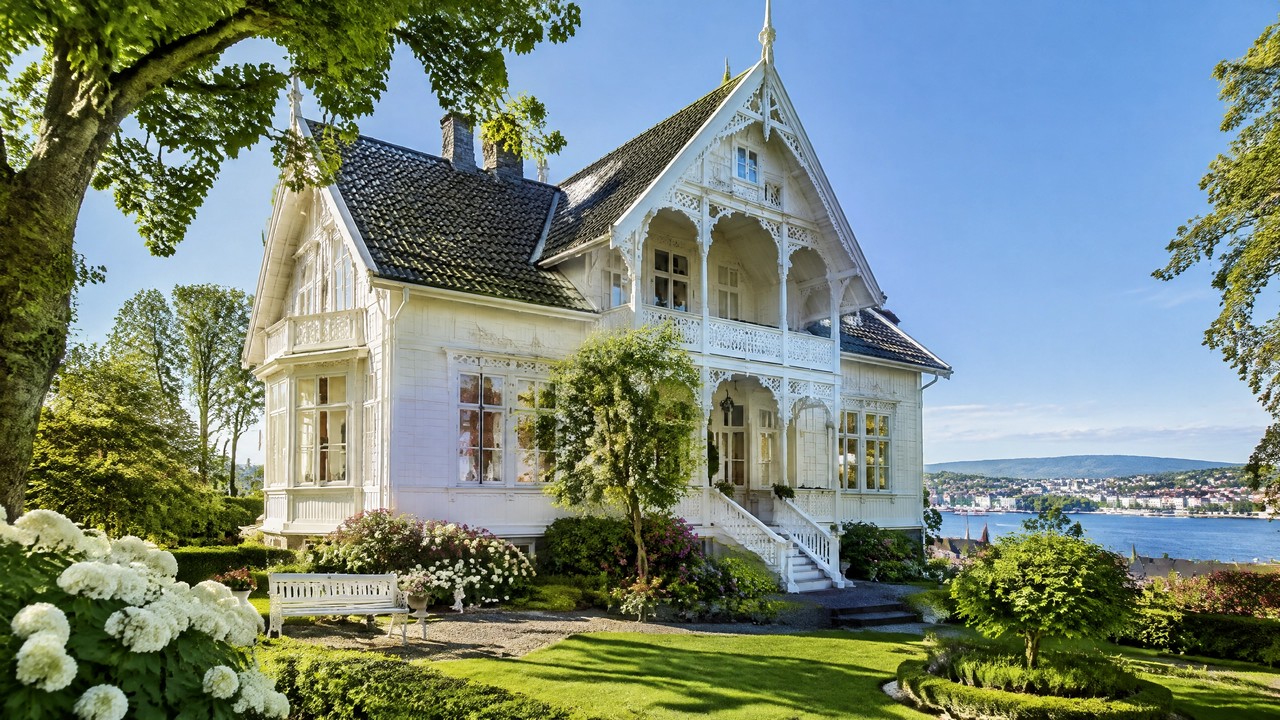 Breidablikk, Stavanger, Norway
What to Prepare Before Visiting Breidablikk in Stavanger?
Visa
Norway is a member of the Schengen Area, so holders of Chinese passports need to obtain a Schengen visa in advance. Standard processing takes about 15 calendar days; it is recommended to submit your application 6–8 weeks before departure. You will need to prepare your passport, application form, itinerary, proof of accommodation, and travel medical insurance covering the Schengen Area (with coverage of no less than EUR 30,000). The adult visa fee is approximately EUR 90, subject to official sources (as of September 2026; source: Norwegian Directorate of Immigration (UDI)). If your itinerary includes Denmark and you spend the most time there, you must submit your application to the Danish embassy or consulate under the "main destination country" rule.
Best Season
May to September is the only reliable window, as wooden mansions such as Breidablikk are open only in summer. From June to August, average daytime temperatures are around 12–20°C, and around the summer solstice there is still daylight at 10 p.m. The west coast is rainy, so a waterproof hardshell jacket is essential luggage; before departure, you can check the Norwegian Meteorological Institute's hourly forecasts at yr.no. (As of September 2026; sources: Visit Stavanger and the Norwegian Meteorological Institute, yr.no)
Budget Overview
The local currency is the Norwegian krone (NOK); the country is virtually cashless, and Visa/Mastercard and Apple Pay are widely accepted. The per-person on-the-ground cost for 3 days (excluding flights) breaks down as follows:
| Item | Per-Person Estimate (Three Currencies) |
|---|---|
| Accommodation (3 nights, mid-range) | 4,500 NOK / US$482 / 3,245 CNY |
| Meals | 1,800 NOK / US$193 / 1,300 CNY |
| City and suburban transport (incl. Pulpit Rock shuttle) | 700 NOK / US$75 / 505 CNY |
| Admission tickets | 500 NOK / US$54 / 360 CNY |
| Total | approx. 7,500 NOK / US$804 / 5,410 CNY |
As for flights, there are no direct flights from China to Stavanger; travelers typically connect via Copenhagen, Amsterdam, or Oslo. Round-trip fares run approximately 6,000–12,000 CNY / US$890–1,780 / 8,300–16,600 NOK, with large fluctuations in summer and peak season, so go by real-time quotes. Three core money-saving tips: book accommodation 2–3 months in advance, buy simple meals at supermarkets, and pay by card to minimize currency-exchange losses.
How Do You Get from the Airport to the City Center? Do You Need a Transport Card in Town?
Comparing Three Ways from the Airport to the City Center
Stavanger Airport, Sola (SVG), is about 14 kilometers from the city center. The main transfer options are as follows:
| Option | Route & Duration | Cost (One Way) | Notes |
|---|---|---|---|
| Airport shuttle bus | Sola Airport (SVG) → city center (Fiskepiret and other stops), about 25–30 minutes | approx. 130 NOK / US$14 / 94 CNY | Departures roughly every 20–30 minutes during the day; discounts for booking via app (as of September 2026; source: Flybussen official website) |
| Regional bus | Airport → city center, about 40 minutes | approx. 60 NOK / US$6 / 43 CNY | The cheapest option, best for light luggage |
| Taxi | Airport → city center, about 25 minutes | approx. 400–500 NOK / US$43–54 / 290–360 CNY | Only cost-effective for late-night arrivals or when split among 3 or more people |
City Transport
Stavanger's city center is very compact: the Old Town, the cathedral, and the harbor are all within a 10–20 minute walk of one another, and walking costs nothing. Situations that require transport are mainly trips to and from Breidablikk (a 15-minute walk is also feasible), the Swords in Rock (Sverd i fjell, about 15–20 minutes), and the Pulpit Rock trailhead. Public transport in Rogaland county is operated by Kolumbus; reference fares are as follows (as of September 2026, source: Kolumbus official website; actual fares are subject to real-time prices in the app):
| Ticket Type | Reference Price | Best For |
|---|---|---|
| Single ticket | approx. 60 NOK / US$6 / 43 CNY | Occasional rides |
| 24-hour ticket | approx. 120 NOK / US$13 / 87 CNY | Multiple trips between city and suburbs in one day |
| 7-day ticket | approx. 320 NOK / US$34 / 231 CNY | Long stays or frequent trips to the outskirts |
Rent a car or not? Not needed for a purely city-based trip. If you plan an in-depth tour of the Lysefjord route (Kjerag, the Flørli wooden steps, Sogndalstrand), renting a car is more flexible—pick up and drop off at the airport; a compact car costs about 700–900 NOK/day (US$75–96 / 505–650 CNY). However, parking fees in the city center are high, so self-driving is not recommended if you are staying downtown.
Which Area of Stavanger Is Most Convenient to Stay In?
The city can be divided into four zones by budget and location; for the June–August peak season, it is advisable to book 2–3 months in advance:
| Area | Location & Features | Reference Room Rate (per night) | Best For |
|---|---|---|---|
| Harbor & City Center (Vågen, along Lake Breiavatnet) | Within walking distance of attractions, dense dining options, direct airport bus; Radisson Blu Atlantic, Thon Hotel Maritim, and the historic Victoria Hotel are all here | Mid-range approx. 1,200–1,800 NOK / US$129–193 / 865–1,300 CNY | First-time visitors, short trips |
| East bank of the Old Town (Storhaug) | Quiet residential area, 5–10 minute walk to the Old Town and the Petroleum Museum | Guesthouses/apartments approx. 900–1,400 NOK / US$96–150 / 650–1,010 CNY | Those wanting to experience the local pace of life |
| Budget & Hostels | Downtown has dorm-style lodging such as Gjestehuset 65; many travelers report it clean and quiet | Dorm beds approx. 350–600 NOK / US$38–64 / 252–432 CNY | Budget travelers |
| Suburban Sandnes | 10–15 minutes by train to downtown, room rates about 20% lower | approx. 800–1,100 NOK / US$86–118 / 576–792 CNY | Self-driving travelers, long stays, conference and exhibition attendees |
Is Breidablikk Worth a Dedicated Visit? What Other Must-See Attractions Are Nearby?
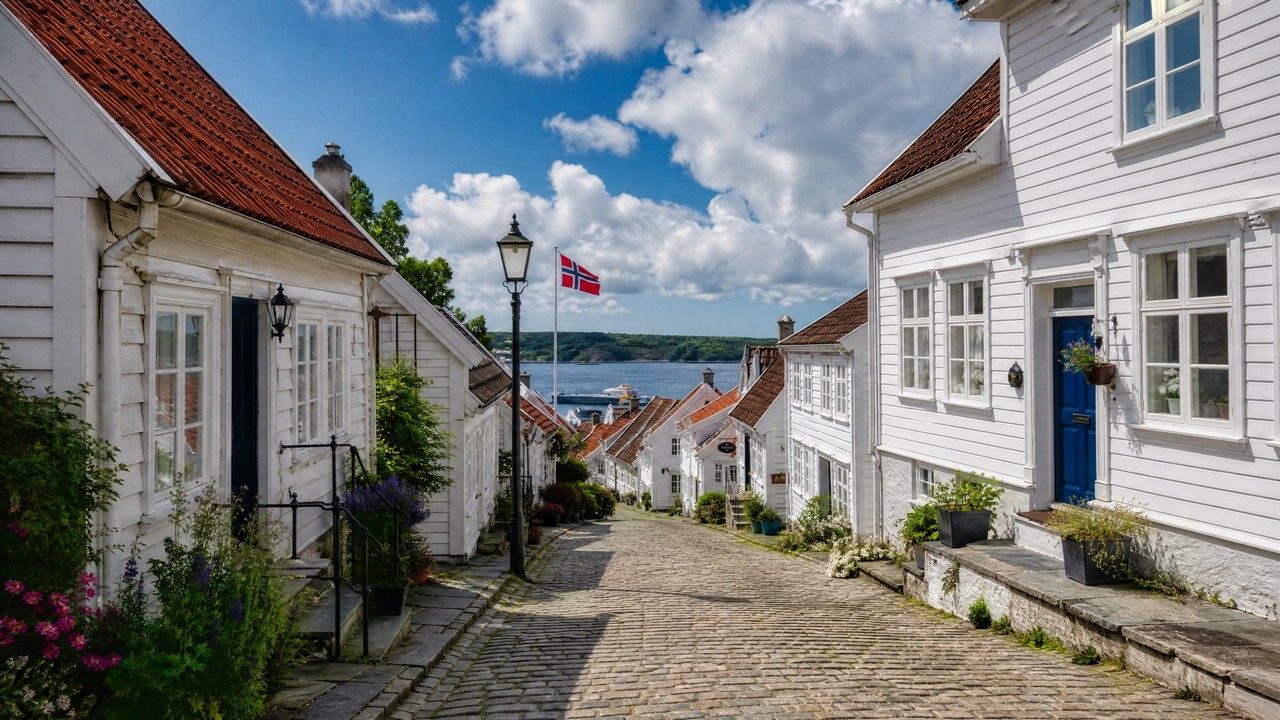 Norway-Stavanger
Yes, but with caveats: it is only open in summer and visits are conducted as guided tour sessions. When planning, lock in your time slot first, then schedule the other attractions.
Breidablikk: A Slice of Life from the 1880s
Breidablikk (about 1.2 km northwest of Stavanger city center, approx. 15-minute walk): one of Stavanger's best-preserved 19th-century wooden mansions, built in the 1880s by a local wealthy merchant and now operated by the Stavanger museum organization (MUST); the living room, dining room, bedrooms, and kitchen are all displayed in their original state, with wallpaper, furniture, and furnishings kept in their original positions. Admission is approx. 100 NOK / US$11 / 72 CNY, and the city museums often offer combination tickets; opening periods are concentrated roughly between May and September, tour sessions are limited, and during peak season slots may be released in batches, so it is advisable to confirm in advance on the official website (as of September 2026, source: Stavanger Museum MUST official website). Recommended duration: 1 hour. USITrip platform editors' on-site test: following the guided tour, you get to hear plenty of family anecdotes—noticeably more rewarding than visiting on your own.
Old Stavanger (northwest of the harbor, approx. 10-minute walk)
Old Stavanger is one of the best-preserved 18th–19th century wooden-house districts in Northern Europe: around 250 white wooden houses, cobbled lanes, and rose hedges. It is free and open for casual strolling; 1–2 hours recommended. Roses are at their peak in July, and early mornings and evenings have the fewest visitors; the cobblestones are slippery in the rain, so wear non-slip shoes.
The Canning Museum (in an old factory building in the Old Town district)
The Canning Museum is housed on the former site of a 19th-century sardine cannery in the Old Town district, preserving an intact production line and thousands of old cans; the most popular activity is hand-sealing a commemorative can on a vintage canning machine. It belongs to the MUST museum network along with Breidablikk Mansion, so a combined ticket is recommended; the can-sealing and rope-making demonstrations run at fixed times—check the day's schedule upon entry, as opening hours are shorter in winter and on weekends. Allow about 1 hour.
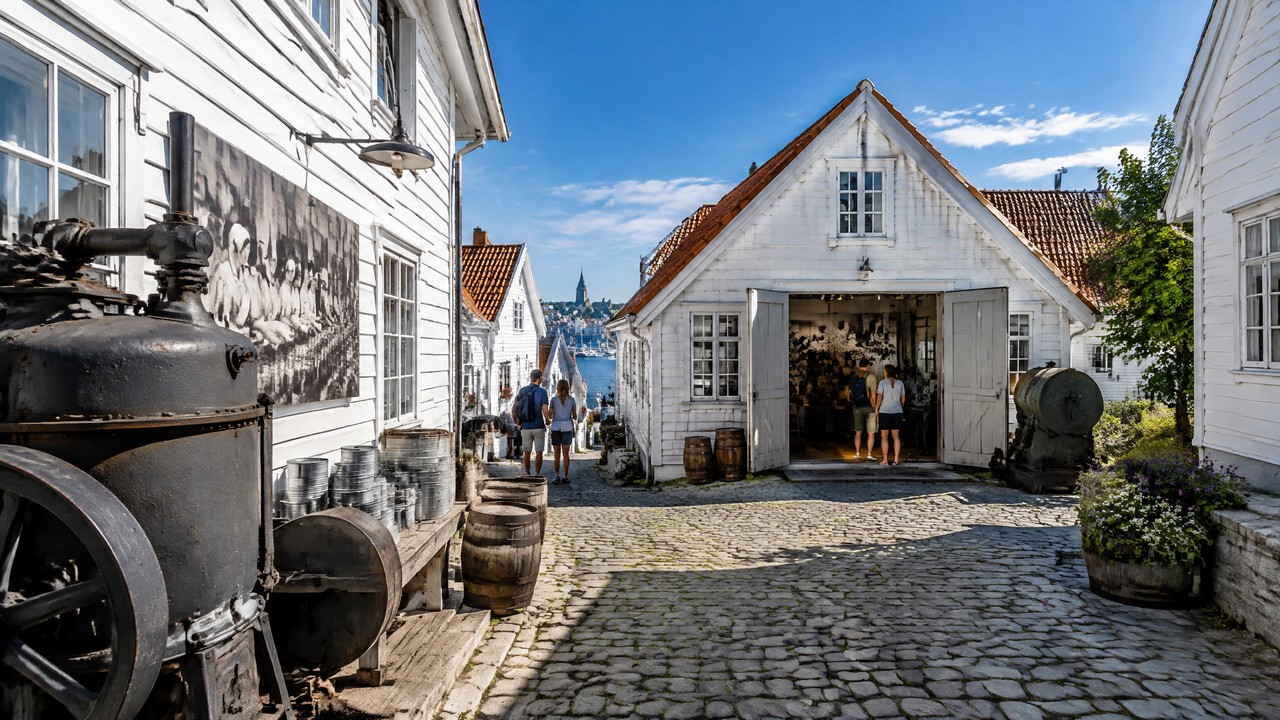 Canning Museum in Stavanger, Norway
Stavanger Cathedral (City Center, about a 5-minute walk)
Stavanger Cathedral was first built in the 12th century and is one of Norway's best-preserved medieval churches, blending Romanesque and Gothic styles; its sandstone walls and rose window are the main highlights. Free entry (donations suggested); opening hours are 11:00–17:00 in summer and 12:00–16:00 in winter (as of September 2026, according to the cathedral's official website and official public sources); a stay of 30–60 minutes is recommended, avoiding times of religious services.
Norwegian Petroleum Museum (Harbor Front)
The Norwegian Petroleum Museum is a must-visit for understanding Stavanger's transformation "from fishing village to energy capital"; you can climb a full-scale drilling platform model and experience simulated drilling. Admission is about 120 NOK / US$13 / 87 CNY for adults and about 60 NOK / US$6 / 43 CNY for children; open daily 10:00–17:00, extended to 18:00 in summer (as of September 2026, source: Norwegian Petroleum Museum official website). Allow 2–3 hours; the sea views from the museum café are worth a stop.
Swords in Rock (By Hafrsfjord, about 15–20 minutes from the city center)
 Swords in Rock in Stavanger, Norway
Swords in Rock is one of Norway's most striking open-air monuments: three bronze swords, each about 10 meters high, thrust into the rock, unveiled by King Olav V in 1983 to commemorate the Battle of Hafrsfjord around 872 and King Harald Fairhair's unification of Norway. Free and open to the public; allow 1–2 hours; the slanting evening sun is best for silhouette shots, the sea wind can be strong so dress warmly, and bus services are limited—note your return schedule.
Pulpit Rock (Lysefjord, about a 1-hour drive from the city)
The must-see grand finale landmark: a cliff-top platform 604 meters above the fjord, about 8 km round trip with a 4–5 hour hike, free of charge; a seasonal shuttle bus runs between the city center and the site from May to October, costing about 300 NOK / US$32 / 216 CNY (subject to the operator's current-season pricing; see the official Pulpit Rock website at preikestolen.no). It is recommended to set off before 8 a.m. to avoid the midday crowds, and check the weather and wind on yr.no before departure.
3, 5, or 7 Days? How to Plan Your Itinerary Most Sensibly
Three days can cover the city's highlights plus Pulpit Rock; five days suits an in-depth fjord trip; seven days works for a combined Nordic tour.
Classic 3-Day Itinerary
- Day 1: Old Town stroll (morning) → Canning Museum → Cathedral → dinner at the harbor fish market
- Day 2: Breidablikk Mansion guided tour (book the early session) → Norwegian Petroleum Museum → sunset at Swords in Rock in the evening
- Day 3: Pulpit Rock hike, then a relaxing harbor stroll back in town
5-Day Itinerary (In-Depth Fjord Version)
- Day 4: Lysefjord cruise (about 2.5 hours, about 600–700 NOK / US$64–75 / 435–505 CNY in peak season, subject to the operator's pricing), or take on the challenge of Flørli's 4,444 wooden steps
- Day 5: Fit travelers from July to September can do the full-day Kjerag boulder hike; those preferring a more relaxed pace can choose the village of Sogndalstrand and cycling at Sola Beach
7-Day Itinerary (Combined Nordic Tour Version)
- Days 1–5 as above
- Day 6: Fly to Copenhagen (about 1 hour 25 minutes, multiple daily SAS flights); in the evening, stroll along both sides of the Nyhavn canal
- Day 7: In the morning, visit the Little Mermaid statue (Den Lille Havfrue) and Rosenborg Castle; families with children can instead turn this day into a round-trip visit to LEGOLAND Billund (about 3–4 hours from Copenhagen)
Tips for Flexible Adjustments
There are only three must-dos: Gamle Stavanger (the Old Town), Breidablikk (summer only), and Pulpit Rock when the weather is good. If time is tight, the Swords in Rock (Sverd i Fjell) can be compressed into a 30-minute stop along the way; if you have no interest in industrial history, the Norwegian Petroleum Museum can be swapped for the Rogaland Art Museum. Rainy-day alternatives: the Norwegian Petroleum Museum, the Canning Museum, the Stavanger City Museum, or a café crawl along the colorful street of Øvre Holmegate. If Pulpit Rock is hit by strong winds or rain, reschedule without hesitation—fjord cruise boats often operate on rainy days and are the best backup plan.
What to Eat in Stavanger? What's Worth Eating and What to Avoid?
Local Recommendations
- Fresh shrimp open-faced sandwich: freshly peeled sweet shrimp with egg yolk at the harbor fish market Fisketorget, approx. 150–200 NOK / US$16–21 / 108–145 CNY
- Norwegian fish soup (Fiskesuppe): salmon and cod simmered in a creamy broth, 180–220 NOK / US$19–24 / 130–160 CNY
- Cinnamon bun with black coffee: cinnamon bun 45–60 NOK, coffee 45–55 NOK / US$5–6 / 33–40 CNY, a local staple around 2–3 p.m.
- Brunost (brown cheese) waffles: caramel-flavored, common in Stavanger cafés
- Venue reference (based on reviews and publicly available traveler reviews): the renowned café Ostehuset, Bøker og Brus on Øvre Holmegate (coffee + tacos), Døgnvill burgers; for high-end dining, there's the Michelin-starred RE-NAA at approx. 2,500 NOK / US$268 / 1,800 CNY per person, reservations required in advance
Pitfall Warnings
Restaurants by the harbor with big flashy menus and touts pulling people in are generally overpriced; it's safer to pick places filled with locals. The fish market is good for tasting and photos, but for a proper meal, local neighborhoods offer better value. Note on alcohol: supermarkets only sell low-alcohol beverages under 4.75%, and beer and spirits must be bought at the state-run liquor store Vinmonopolet—a drink at a bar costs approx. 90–120 NOK / US$10–13 / 65–87 CNY, so order fewer drinks to control your budget. Tipping is not mandatory—rounding up is fine. Tap water is safe to drink, and there's no shame in asking for tap water at restaurants. Cooking your own meals is the ultimate money-saver: shop for simple meals at Rema 1000, Kiwi, or Coop, and a meal can cost just 80–150 NOK / US$9–16 / 58–108 CNY.
With Norway's High Prices and Changeable Weather, What Pitfalls Should Independent Travelers Watch Out For?
Common Pitfalls
- Wasted trips to Breidablikk: it's only open in summer with limited tour slots; confirm and book on the official website 1–2 weeks before your trip—this is the most common wasted trip scenario in Stavanger
- Reduced museum hours: some venues in the MUST system close on Mondays in the low season, and the Canning Museum has shorter weekend opening hours in winter; check official websites before finalizing your itinerary
- Midday congestion at Pulpit Rock: in summer, the summit is packed between 10:00 and 14:00; either set off before 8 a.m. or hike up after 4 p.m.
- Sky-high airport taxi fares: from 400–500 NOK one way; take the airport shuttle bus whenever possible
- Currency exchange losses: exchange rates at airports and downtown exchange offices differ noticeably; pay by card as much as possible and don't exchange large amounts of Norwegian krone
- Shops closed on Sundays: many stores close on Sundays; stock up on supplies in advance, though convenience stores remain open
Safety, Payments, and Communications
Safety is generally good. Emergency numbers: 112 (police), 113 (ambulance). The cliffs of Pulpit Rock have no guardrails—wear hiking shoes with good grip, stay away from the edge in strong winds, and don't take risks for photos. Weather on the west coast is changeable; dress in layers with a hardshell jacket plus fleece, and check yr.no before setting out. There's no language barrier—English is extremely widely spoken, and knowing "Takk" (thank you) is enough. For communications, prepaid SIM cards with data plans can be bought at the airport and downtown for approx. 200–300 NOK / US$21–32 / 145–216 CNY, or you can activate eSIM roaming directly. Power sockets are the European standard two round pins (Type C/F), 230V. If you're unsure about itinerary connections, USITrip consultants can help verify venue opening hours and transfer schedules, reducing on-site back-and-forth.
Frequently Asked Questions (FAQ)
Q: Is Breidablikk open in winter? Do I need a reservation?
A: No, it is not open in winter. Openings are concentrated in the summer period from around May to September and are conducted as guided tours. During peak season, slots may be released in batches; it is recommended to confirm tour times and book on the Stavanger Museum official website 1–2 weeks in advance (as of September 2026; source: Stavanger Museum MUST official website).
Q: Can I hike to Pulpit Rock without experience?
A: Yes. The round trip is about 8 km and takes 4–5 hours; the trail is well maintained and most healthy adults can complete it. You'll need non-slip hiking shoes, water, and a windproof layer. There are no guardrails along the cliff edge, so know your limits; in winter, ice and snow require crampons and experience, so beginners are advised to visit between May and October.
Q: Are 3 days enough for an independent trip to Stavanger?
A: Yes, 3 days is enough to cover the city's highlights (the Old Town, Breidablikk, and the museums) plus one trip to Pulpit Rock. For an in-depth exploration of the Lysefjord (Kjerag, Flørli), 5 days is recommended; if you plan a multi-country Nordic trip, allow at least 7 days.
Q: With Norway's prices so high, how can I keep my budget down?
A: Lock in accommodation 2–3 months in advance, buy simple meals at supermarkets to replace some restaurant meals, cut back on alcohol, and pay by card to reduce currency exchange losses. By the standards of this guide, around 7,500 NOK / US$804 / 5,410 CNY per person for 3 days allows for a fairly comfortable trip.
Q: Is winter a good time to visit Stavanger? What if Breidablikk is closed?
A: In winter (November–March), you can visit the Petroleum Museum, the Cathedral, and the Christmas market in December. Daylight hours are short, but there are fewer tourists and accommodation is cheaper. Breidablikk is closed in winter; you can instead visit the main Stavanger Museum and the Canning Museum to experience the city's history. Preikestolen (Pulpit Rock) requires professional equipment and experience in winter and is not recommended for beginners.
Practical Resources
1. Reference Materials (Official Source Links)
- Norwegian Directorate of Immigration (UDI) — Schengen visa policies and processing information
- Museum Stavanger (MUST) — Opening hours and ticket prices for Breidablikk, the Canning Museum, and other venues
- Norwegian Petroleum Museum — Opening hours and ticket information
- Kolumbus — Ticketing and route queries for Rogaland County
- Visit Stavanger — Official destination information for Stavanger
2. USITrip
Founded in 2004, USITrip boasts a team of destination experts with many years of in-depth experience. based on official public sources and real-time local information, it provides travelers planning trips to Stavanger and Northern Europe with one-stop support, including visa consultation, itinerary customization, and booking services. For further planning of trips to Breidablikk and Norway's west coast, you can visit the official website at https://www.usitrip.com/ or call the China hotline at 400-998-8038.


