📍 Destination Overview
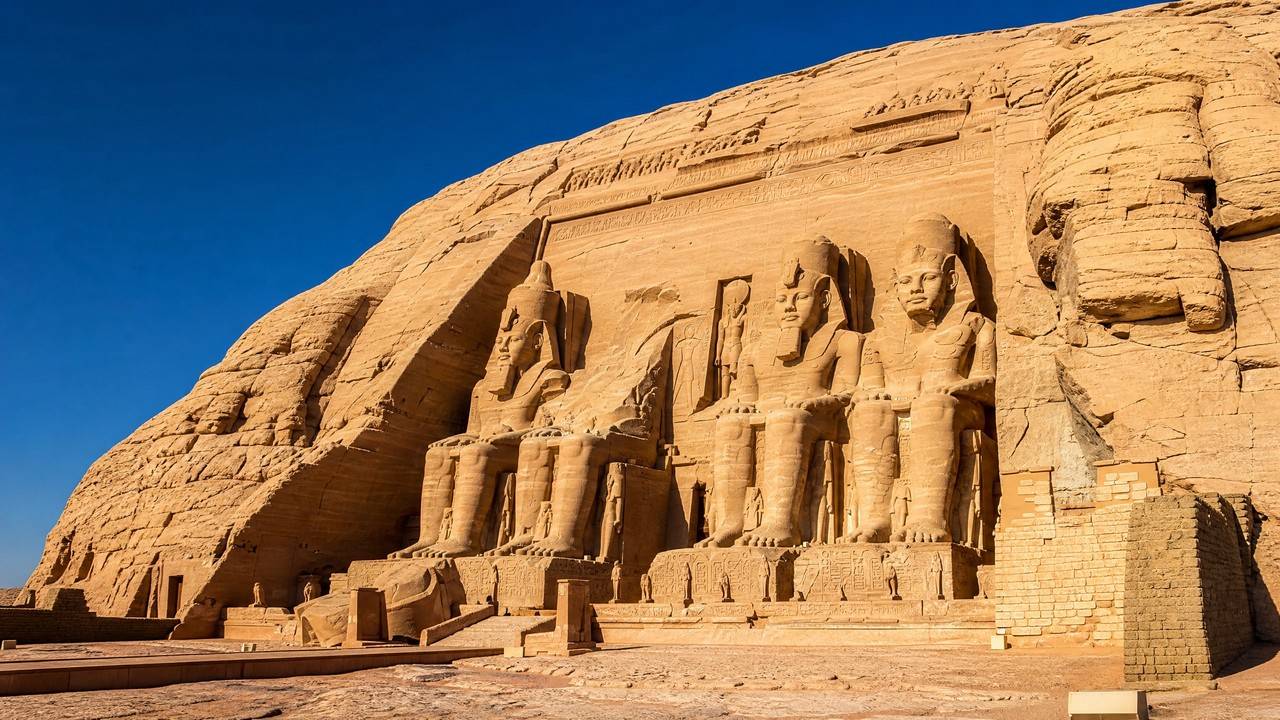
Abu Simbel, at Egypt's southern tip by Lake Nasser, is one of ancient Egypt's most magnificent temples, a World Heritage site. Some 3,300 years ago Ramesses II carved it into a cliff, its facade bearing four 20-metre colossi with a smaller temple for his wife Nefertari. Relocated to escape the rising dam waters, it now hosts twice-yearly sun festivals that illuminate the inner statues.
🏛️ Location
Egypt · Aswan Governorate · Temple by Lake Nasser at the southern tip
🗓️ Best Season
Oct-Apr / Sun Festival
🕐 Time Difference
6 hours behind Beijing
💰 Currency / Language
Egyptian Pound EGP / Arabic
🕐 Suggested Duration
Half - 1 day · Temple + Colossi
🔌 Outlet / Voltage
Type C / F outlets · 220V · Chinese two-pin plugs mostly work
☀️ Best Time to Visit & Climate
🌤️ Cool Season: Oct–Apr
Mild weather, ideal for sightseeing.
☀️ Feb, Oct
Morning light illuminates the inner sanctum statues.
Jan
🌤️
24°/8°
Best
Feb
☀️
27°/10°
Sun Festival
Mar
☀️
31°/14°
Best
Apr
🔥
37°/19°
Best
May
🔥
41°/23°
Jun
🔥
42°/25°
Jul
🔥
42°/26°
Aug
🔥
42°/26°
Sep
🔥
41°/24°
Oct
☀️
37°/21°
Sun Festival
Nov
🌤️
31°/15°
Best
Dec
🌤️
26°/10°
Best
📷 Top Attractions
🎯 Abu Simbel Experiences
Temple of Ramesses
The awe of the four colossi.
Sun Festival
The spectacle of morning light on the statues.
Temple Relocation
A feat of heritage conservation.
Lake Nasser
The temple by the vast lake.
Sound & Light Show
The temple's evening illumination.
Abu Simbel's cool season, Oct-Apr, has a mild climate. On the Sun Festival, every Feb 22 and Oct 22, morning light illuminates the statues deep inside the temple—a rare spectacle that requires booking far in advance. Summers are scorching. Most visitors travel via an early-morning convoy or flight from Aswan.
🚌 Transport & Stays
City Transport
✈️Depends on fare class (reference)
Abu Simbel Airport
About 45 min flight from Aswan
Depends on fare class (reference)
🚗Daily charter depends on itinerary (reference)
Private Car from Aswan
Early-morning convoy about 3.5 hours
Daily charter depends on itinerary (reference)
🚌Depends on itinerary (reference)
Group Tour
Includes guide and tickets
Depends on itinerary (reference)
🚶—
Walking
On-foot visit within the temple area
—
Recommended Stay Areas
🏛️ Abu Simbel Village
Near the temple; can watch the sound & light show
🌊 Lake Nasser Shore
Lakeside accommodation
🏙️ Round Trip from Aswan
Most visitors go and return the same day
🚢 Lake Nasser Cruise
A voyage across the lake
Free Consultation
Want to plan your Abu Simbel trip in more depth?
Tell us your departure city, travel dates and interests, and Usitour will tailor a trip just for you.