🌏 Destination Overview
Iceland is a stunning hidden realm where 'fire and ice' coexist. The Golden Circle has erupting geysers, fault-line waterfalls and geothermal wonders; the south coast's black sand beaches and Jökulsárlón glacier lagoon float crystal-clear icebergs; in winter there is a chance to catch the aurora dancing in the night sky. A ring road strings volcanoes, glaciers, waterfalls and hot springs into a stunning road trip, and soaking in the Blue Lagoon with snowy mountains in view is Iceland's most healing gift to travelers.
🗓️
Best Season
Jun-Aug (road trips) / Sep-Mar (aurora)
🕐
Recommended Days
7-10 days
👪
Best For
Couples / Road-trippers / Nature lovers
🎯
Top Activities
Aurora · Waterfalls · Glaciers · Hot springs
🧳
Pre-trip Prep
Visa + windproof warm clothing
Popular Cities
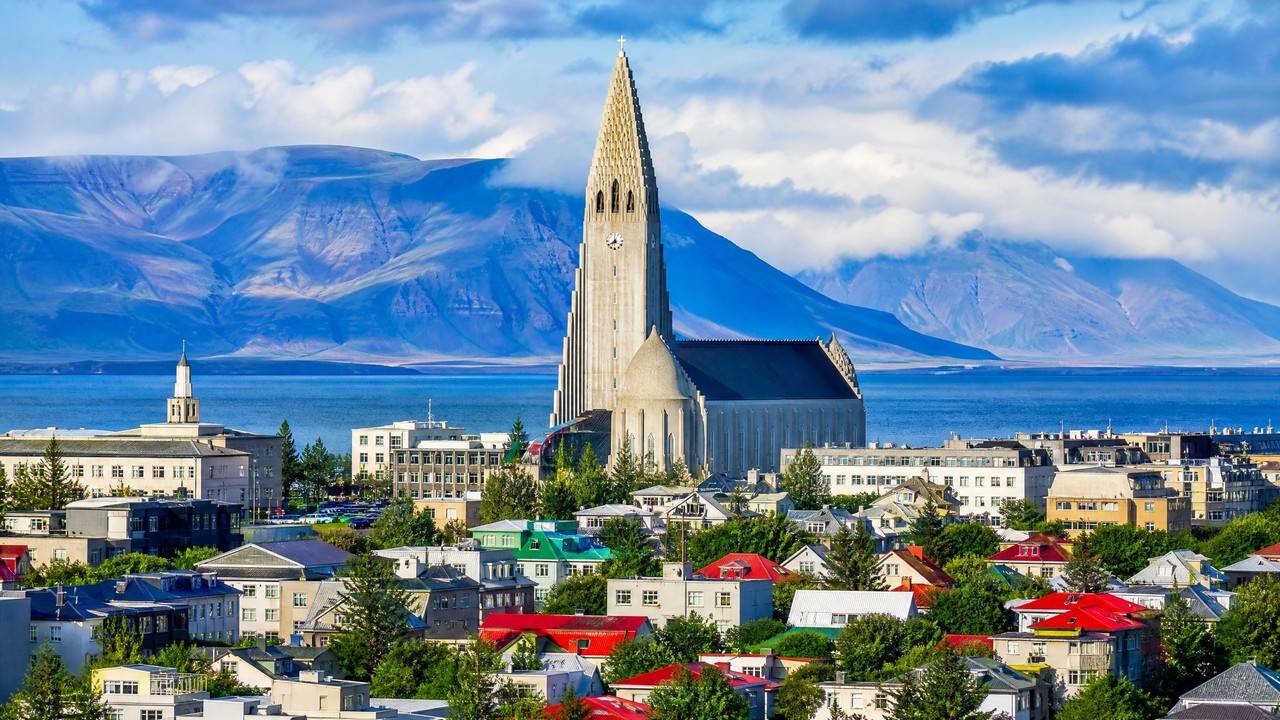
Reykjavík
Capital,Gateway,Arts
🔥 World's northernmost capital, colorful rooftops, aurora and Ring Road gateway.
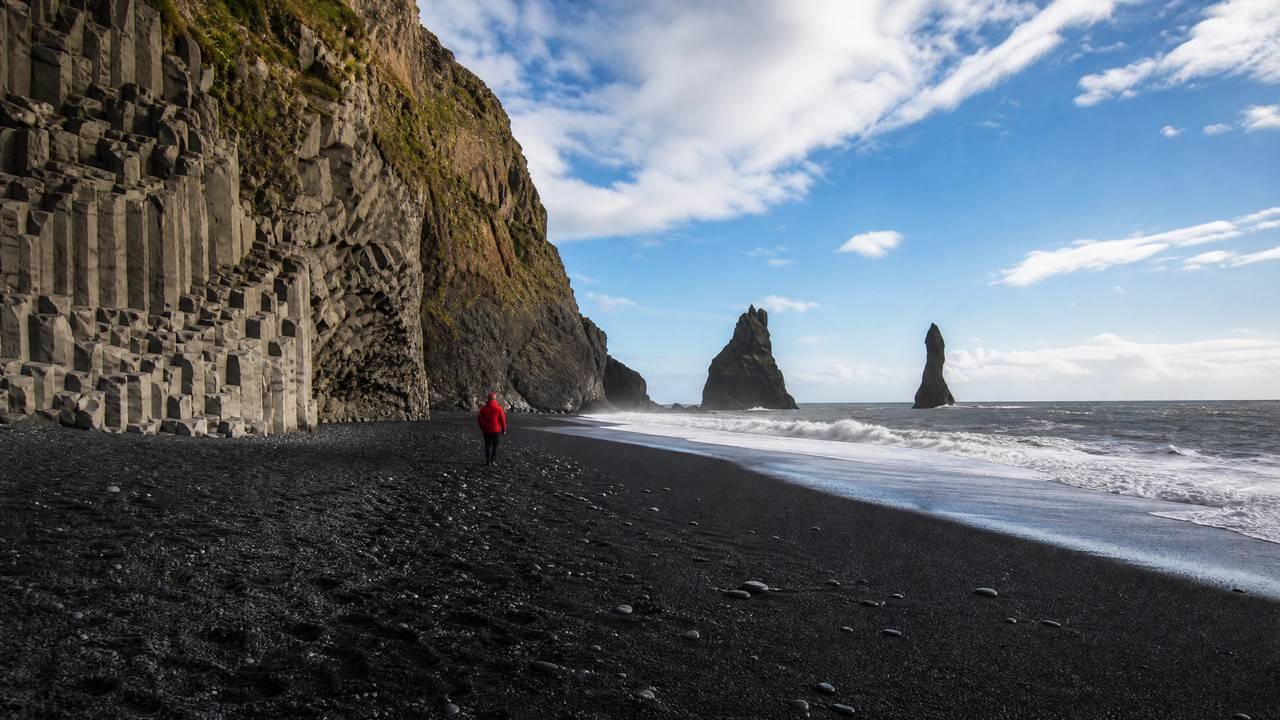
Vik
Beach,South Coast,Rock Formation
🔥 Black sand beach town on the south coast, basalt columns and sea stacks.
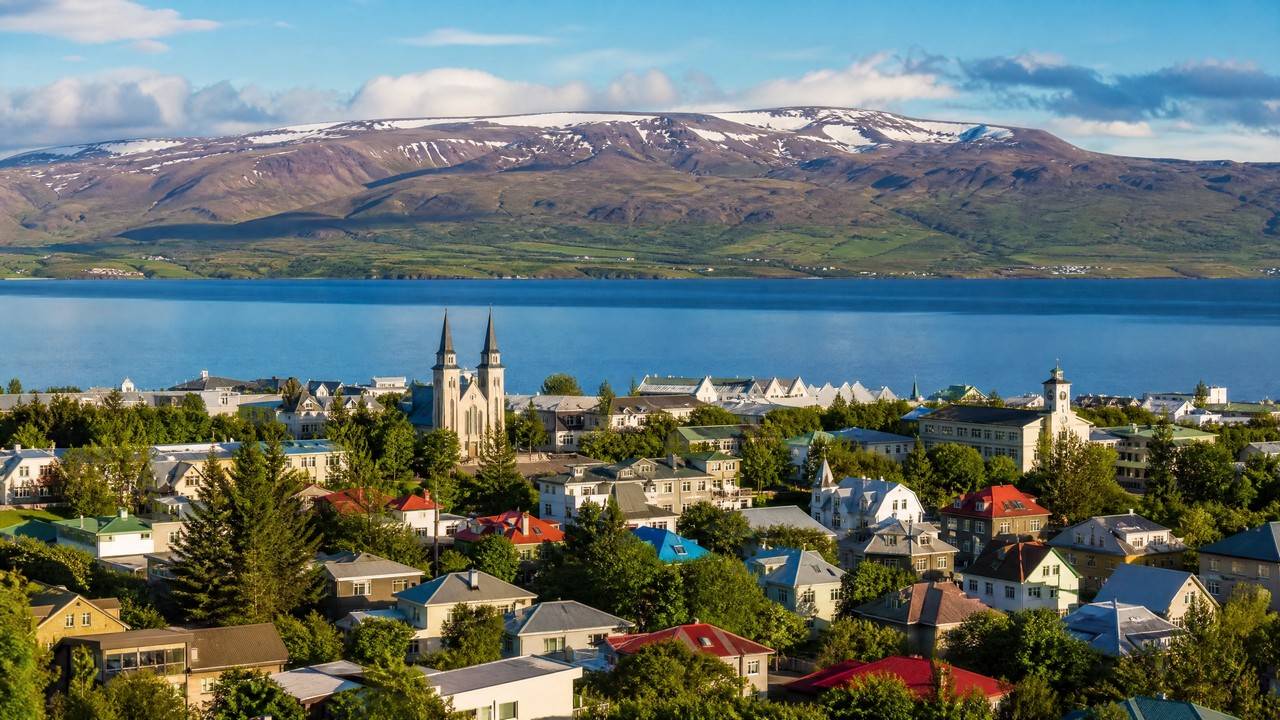
Akureyri
North,Fjord,Gateway
🔥 Capital of the North, fjord harbor and whale-watching gateway.
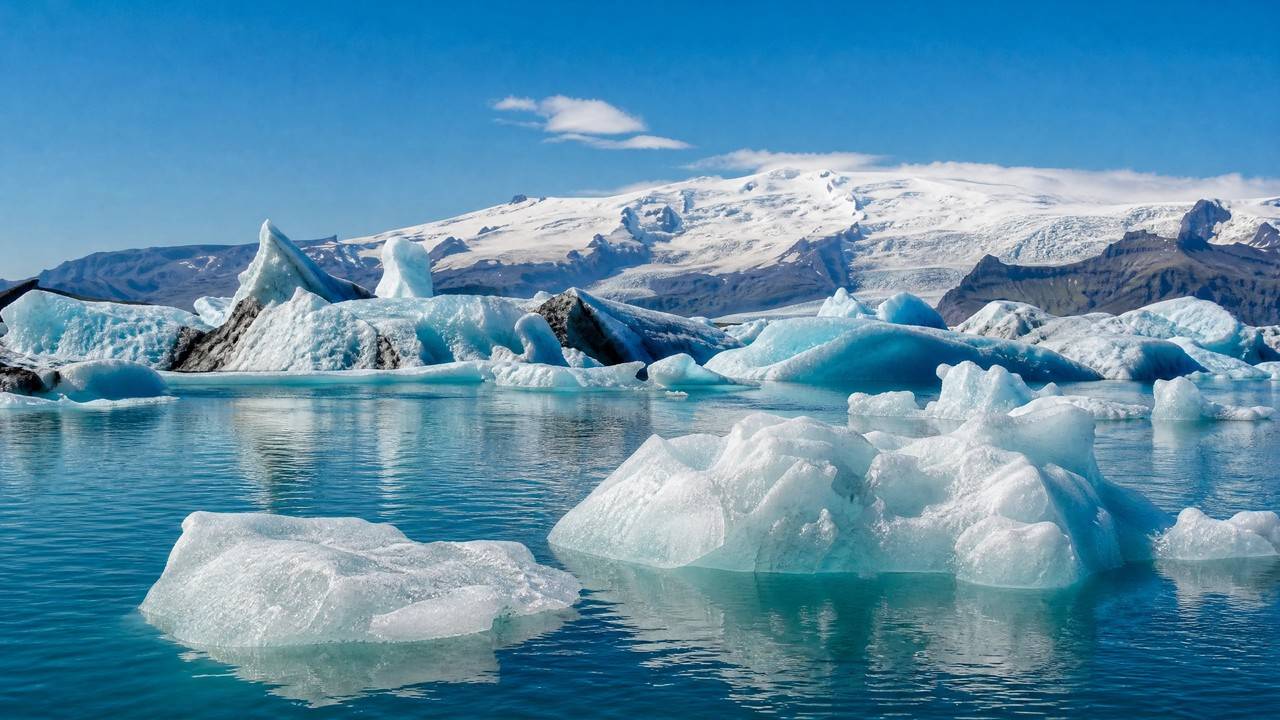
Jokulsarlon
Glacier Lagoon,Icebergs,Diamond Beach
🔥 Glacier lagoon and diamond beach, where crystal-clear icebergs drift toward the sea.
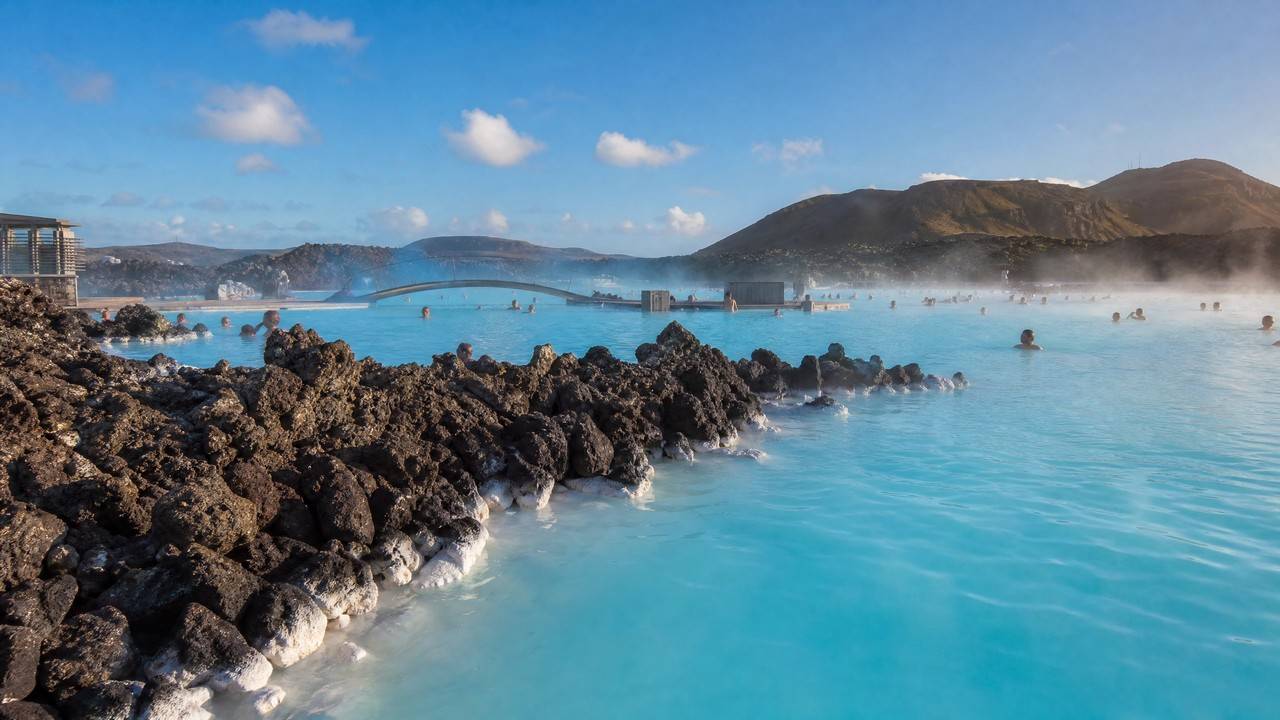
Blue Lagoon
Hot Springs,Geothermal,Resort
🔥 Geothermal Blue Lagoon Hot Springs, Iceland's most famous soaking experience.
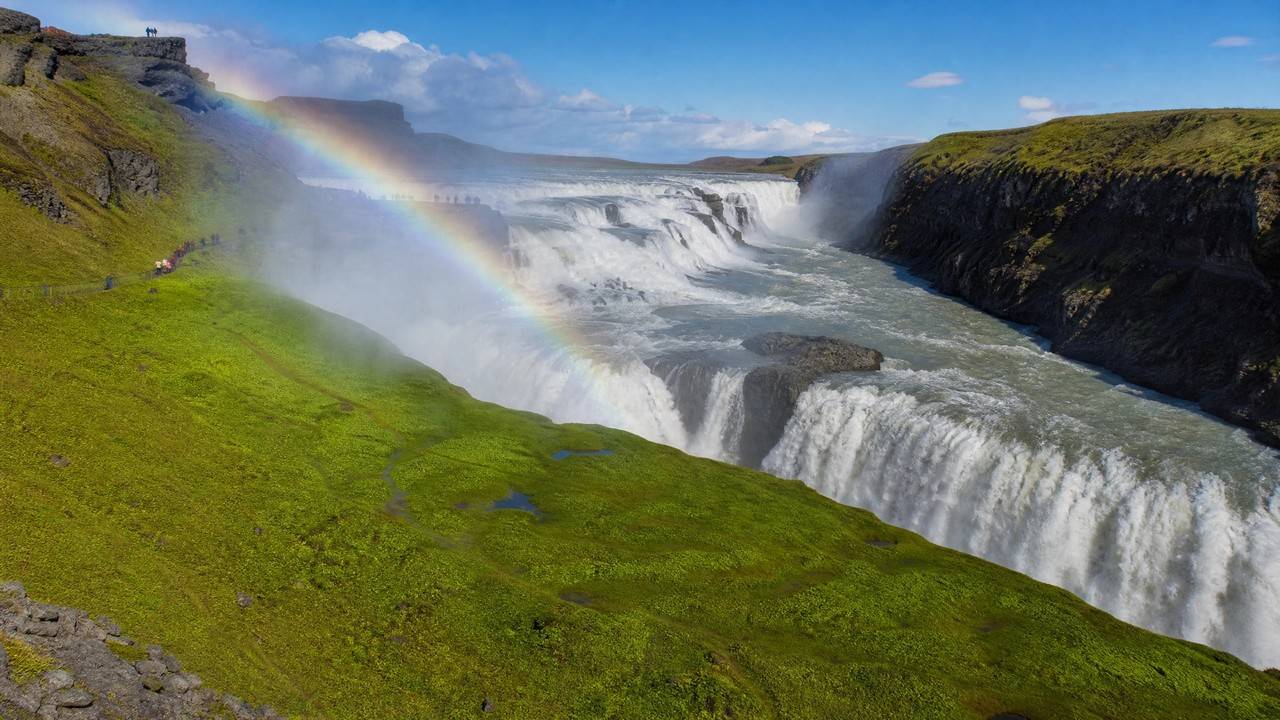
Golden Circle
Geyser,Waterfall,Classic Route
🔥 A classic day trip featuring geysers, Gullfoss waterfall, and the original parliament site.
Popular Attractions
More Attractions →
Diamond Beach📍 Hofn
Diamond Beach is a stretch of the Breidamerkursandur black sand spit, about 3 kilometres long, on the south side of the Route 1 bridge directly opposite the Jokulsarlon glacier lagoon in southeast Iceland. Ice calves from Breidamerkurjokull, an outlet of the Vatnajokull ice cap, floats through the lagoon and out a short channel to the Atlantic, where waves push it back onto the black volcanic sand. This is glacial ice compressed for centuries until it holds almost no air bubbles, denser and more translucent than ordinary ice: fresh pieces keep their blue colour, while wave-tumbled, partly melted ones turn glass-clear. Blocks run from fist-sized to small-car-sized, and the scene changes daily with tide, light and weather, so no two visits look alike. The single biggest risk is sneaker waves: the beach shelves steeply and wave size is deceptive, with visitors swept away every year. Never turn your back to the sea, never stand on stranded ice or between ice and the ocean, since waves can shift huge blocks in seconds, and watch children closely. The beach is free and open year-round; the large car park costs 1,000 ISK and covers all three lots in the area. There are no toilets or food services on the beach itself - facilities are on the lagoon side. It is about 380 km from Reykjavik, roughly 5 hours by car, and early morning low light brings the most ice and the best photographs.
Reynisfjara📍 Vik
Reynisfjara ('Reynir's beach', named after the Reynir farm of Iceland's settlement era) lies on the South Coast just west of Vík, about 180 km and 2.5 hours' drive from Reykjavík - Iceland's most famous and most dangerous beach, drawing close to a million visitors a year. The black sand is basalt ground down by Atlantic surf, contrasting with white breakers and green cliff tops; offshore stand the three Reynisdrangar sea stacks, about 66 metres at their tallest, trolls petrified by sunrise in folklore while dragging a ship ashore. At the northern end the Garðar cliff stacks continuous hexagonal basalt columns 30-60 centimetres across, and the Hálsanefshellir sea cave is roofed with the same. Puffins nest on the Reynisfjall cliffs from roughly April to August, and the beach has starred in Game of Thrones and Rogue One: A Star Wars Story. Safety comes first: this is the only Icelandic beach with an official warning-light system, installed in 2022 - on yellow, keep well back from the waterline and out of the yellow zone; on red, the lower beach, basalt columns and cave all close. Sneaker waves arrive every 5-10 minutes without warning, far larger and further up the beach: five people drowned between 2007 and 2024, and in August 2025 a nine-year-old girl was swept from the basalt cave. The rules: never turn your back to the sea, stay at least 30 metres from the waterline, never walk to the water's edge even for a second, and watch children; if a wave hits you, drop flat and dig your hands into the sand rather than trying to run. February 2026 winter erosion also collapsed part of the basalt columns and reshaped the beach, with safe zones re-marked - check safetravel.is before travelling. Entry is free and open around the clock; parking is about 1,000 ISK payable via the Parka app, with toilets and a small cafe.
Blue Lagoon📍 Reykjavík
The Blue Lagoon (Bláa lónið) is Iceland's most iconic geothermal spa, set in a black lava field on the Reykjanes Peninsula about 5 km north of the fishing town of Grindavík - not in Reykjavík itself - roughly 20 minutes from Keflavík International Airport and 45-50 minutes from the capital. The roughly 10,000-square-metre artificial lagoon is fed by runoff from the neighbouring Svartsengi geothermal power plant: the silica-rich water was meant to drain back into the ground, but silica sealed the lava so it pooled instead, and that same silica gives the water its milky-blue colour. The temperature holds at 37-40°C year-round and some 1.3 million people visit annually. Guests can take the white silica mud from the lagoon floor as a free facial mask, included in every package, and the complex offers a swim-up bar charged to an electronic wristband, steam caves, a sauna and a massage waterfall. Entry is by timed slot: 2026 prices start at 11,990 ISK for Comfort, 14,990 ISK for Premium and 18,490 ISK for Signature; the luxury Retreat Spa sits in a private lagoon carved into 800-year-old lava, limited to 20 guests every two hours, from 89,000 ISK. Of the two hotels, the Retreat Hotel holds a Michelin-starred restaurant. High-urgency note: the lagoon sits beside the Sundhnúkur crater row, where roughly 9-12 fissure eruptions occurred between December 2023 and August 2025, prompting several precautionary closures and evacuations (lava covered the then car park in November 2024) before defence barriers kept operations running. As of October 2026 nothing is erupting, but the Icelandic Met Office reports magma still accumulating beneath Svartsengi and considers further eruptions likely. Check the official status page and safetravel.is within 24 hours of your visit, and book refundable tickets directly.

Akureyrarkirkja📍 Akureyri
Akureyrarkirkja (the Church of Akureyri) crowns the highest point of Akureyri, the 'capital of northern Iceland', designed by the noted Icelandic architect Gudjon Samuelsson - architect of Reykjavik's Hallgrimskirkja - and completed in 1940. Its stepped concrete facade evokes Iceland's volcanic basalt columns and stands out sharply against the town's low roofline; a long flight of outdoor concrete steps leads to the door, with views over Eyjafjordur and the 'capital of flowers' from the top. Entry is free, with voluntary donations welcomed. Highlights include a large organ of 3,200 pipes; a central stained glass window from Coventry Cathedral in England, given after that cathedral was bombed in the Second World War; bas-reliefs on the nave balcony by the Icelandic sculptor Asmundur Sveinsson; an 1863 altarpiece; a baptismal font modelled on Bertel Thorvaldsen's work; and a traditional model ship hanging from the ceiling, reflecting Iceland's seafaring tradition and the old custom of praying for family at sea. An information sheet near the entrance hall covers the history of the window and the organ. Opening hours are not fixed and shift with services, weddings, funerals and concerts, so follow the notice board at the door; for step-free access there is a side entrance by the rear car park.

Hallgrímskirkja📍 Reykjavík
Hallgrimskirkja is the defining feature of Reykjavik's skyline and the largest church in Iceland, standing on Skolavorduholt hill at the top of the Skolavorduigur shopping street and visible from almost every corner of the centre - the city's best orientation point. Commissioned from state architect Gudjon Samuelsson in 1937, construction began on 29 August 1945 and the completed church was consecrated on 26 October 1986, forty-one years in all, with the choir crypt already in use from 1948. The church puts the tower at 73 metres, the highest public vantage point in central Reykjavik. The stepped concrete exterior, usually read as Expressionist, evokes Iceland's columnar basalt, mountains and glaciers; the church is named for Hallgrimur Petursson, the 17th-century Lutheran pastor and poet of the Passion Hymns. The interior is spare and white, a sharp contrast with the dramatic exterior; the west end is dominated by the pipe organ built by Johannes Klais of Bonn in 1992 - 15 metres tall, about 25 tonnes, 5,275 pipes and 72 stops, the largest instrument in Iceland. It was funded by donations, and individuals could 'adopt' individual pipes, with certificates still sold in the church shop. The statue of Leifur Eiriksson in front, by Alexander Stirling Calder and a 1930 gift from the United States marking the millennium of Iceland's parliament, predates the church itself. Entry is free; the tower observation deck lift is ticketed separately at about 1,000 ISK. The nave is wheelchair accessible, and both nave and tower may close for services, weddings, funerals and concerts, so check on-site notices or the church website before visiting.

Þingvellir National Park📍 Reykjavík
Thingvellir - literally 'assembly plains' - is called the heart of Iceland and the cradle of the nation, inscribed as a UNESCO World Heritage Site in 2004 for its cultural value. Around AD 930 the Althing, one of the world's oldest surviving parliamentary assemblies, was founded here and sat until 1798; the Law Rock (Logberg) stands at the foot of the Almannagja gorge, where the Drekkingarhylur (Drowning Pool) was used in medieval times to execute women found guilty of specific crimes. Almannagja was opened as the North American and Eurasian plates pulled apart - separating about 2 centimetres a year, with the valley floor down 3-4 metres since the assembly's founding - and a boardwalk from the Hakid visitor centre drops into it, one of the few places on Earth where you can stand between two continents on dry land. Inside the gorge, the Silfra fissure opened in a major earthquake in 1789; its water comes from Langjokull glacier meltwater some 50 km away, filtered underground through porous lava for an estimated 30-100 years before emerging, giving visibility often beyond 100 metres and a constant 2-4C - among the world's most famous snorkelling and diving sites, its three sections nicknamed The Crack, The Cathedral and The Lagoon; a drysuit is required and access is only with licensed operators. Other highlights include the roughly 13-metre Oxararfoss waterfall, Thingvallavatn - Iceland's largest natural lake at about 84 square kilometres, 114 metres deep, with four separately evolved forms of Arctic char - the 1859 Thingvellir church, Flosagja (the Flower Fissure) and Peningagja (the Coin Fissure, where throwing coins is now discouraged). The park is free and open around the clock; main car parks charge about ISK 1,000 per vehicle per day.
Classic Experiences
Best Travel Seasons
☀️
Summer · Jun-Aug
Midnight sun, best for ring road trips
🍁
Autumn · Sep-Oct
Aurora begins, fewer crowds and lower prices
❄️
Winter · Nov-Feb
Peak aurora season, ice cave exploration
🌷
Spring · Mar-May
Snow melts, spectacular waterfalls
Jun-Aug midnight sun suits ring road trips; Sep-Mar is peak aurora season, watch road conditions in winter.
Popular Guide Articles
More →Reykjavik Blue Lagoon Travel Guide 2026: Tickets & Itineraries
👁 9.4k
Island Tour with Aurora Experience in Iceland, 2026: 7-day trip including boat trips on ice lakes, and Miklusteinsjur Hot Springs
👁 7.9k
Iceland 6-Day Tour Guide 2026: Aurora, Blue Lagoon & Golden Circle
👁 3.5k
Practical Info
Depends on passport/departure point; check the latest visa and entry policy before travel
Icelandic króna (ISK), cards accepted almost everywhere
Iceland time UTC+0 (no DST)
230V, Type C/F sockets
Mainly rental car self-drive; watch road conditions in winter
Obey local laws, mind personal belongings; emergency number 112 (general)
Free Consultation
Free Consultation
Tell us your departure city, travel dates and interests, and ZouSifang will craft a tailor-made itinerary for you.