📍 Destination Overview
Puno lies on the western shore of Lake Titicaca, the world's highest navigable lake, at over 3,800 m — the hub for exploring Andean lake culture. Its charm is folklore: vivid dress, pottery and alpaca weavings on every street. Boats reach the reed-woven Uros Floating Islands and Taquile, famed for hand-woven textiles. Linked with Cusco and La Paz, it is a moving stop.
🌾 Location
Lake Titicaca west shore, Peru
🗓️ Best Season
Dry May-Oct; calm mornings
🕐 Time Difference
13 hours behind Beijing
💰 Currency / Language
Peruvian Sol (PEN) / Spanish
🕐 Suggested Duration
1-2 days
🔌 Outlet / Voltage
Type A/B/C · 220V
☀️ Best Time to Visit & Climate
☀️ Dry: May–Oct
Calm & clear.
🌦️ Rainy: Nov–Mar
Cloudy & showers.
January
🌧️
14°/3°
February
🌧️
14°/4°
March
🌦️
15°/3°
April
🌤️
16°/2°
May
☀️
16°/1°
Best
June
☀️
15°/0°
Best
July
☀️
15°/0°
Best
August
☀️
16°/1°
Best
September
☀️
16°/2°
Best
October
🌤️
17°/3°
Best
November
🌦️
16°/3°
December
🌧️
15°/3°
📷 Top Attractions
Lake Titicaca
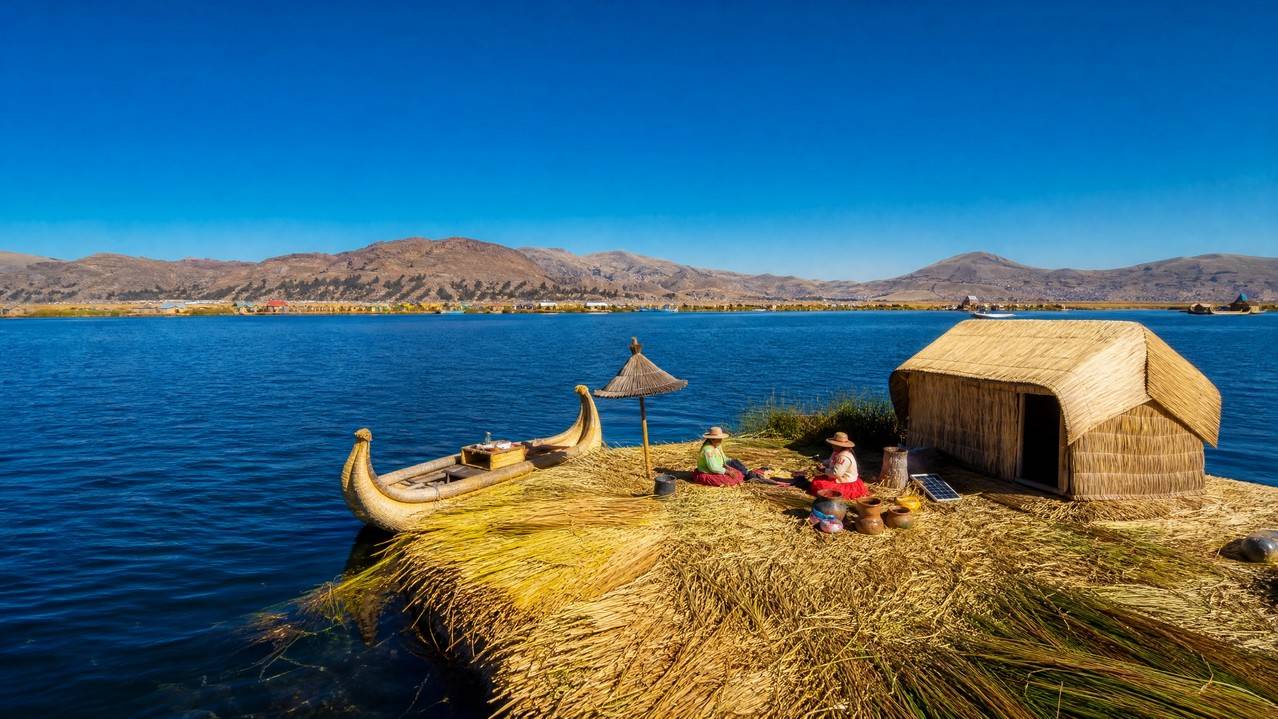
Lake Titicaca is a highland giant on the Peru–Bolivia border at 3,812 metres — the largest lake in South America and the highest navigable lake on Earth. More than 80 Uros floating islands are woven from totora reed, 1–2 metres thick and constantly renewed on top, springing like a damp mattress underfoot; on Taquile, islanders still weave on Inca belt looms, men knitting as they walk, in a tradition UNESCO has listed as intangible heritage; Amantani opens homestays where quinoa, lake trout and unpolluted stars come with the room. Between water and distant mountains lies a living museum of millennia-old Indigenous lake life — and, in Andean belief, the lake of creation itself. Afternoon chop builds on the water, so take the early boats.
National Park & Nature
No.2 Puno
Uros Islands
The Uros floating islands rest on Peru's Lake Titicaca in the Puno region, hand-built by the Uru people from layers of totora reeds that are constantly renewed to keep the islands afloat — among the most extraordinary artificial islands in the Americas. Houses, boats and even furniture are woven of reed, and residents still live an ancient life upon the water, fishing and welcoming visitors. Stepping onto an island reveals the wisdom of Indigenous Andean people living in harmony with nature, and offers a serene, poetic pause amid the fragrant reeds and shimmering lake.
Beach & Island
No.3 Puno
Sillustani
The Sillustani funerary towers stand on the peninsula of Lake Umayo, beside Peru's Lake Titicaca in the Puno region — mortuary monuments raised by the pre-Columbian Colla people. The towering stone 'chullpas' once held the remains of nobles, and the taller the tower, the higher the status of those interred within. Set against the altiplano with the blue lake behind, the ruins evoke an ancient Andean vision of life and death. The wind moving across the stones seems still to recite a worldview older than the Inca, a lasting testament to the spiritual world of the pre-Inca civilizations.
Historic Ruins & Heritage
No.4 Puno
Isla Taquile
Isla Taquile is a native island in Lake Titicaca, famous for men's finely knit chullos and a distinct communal dress code; its textile tradition is UNESCO Intangible Heritage. Car-free, with stone paths winding to a hilltop viewpoint over the lake and Bolivia's ranges.
Beach & Island
No.5 Puno
Isla de Amantani
Isla de Amantani is a large car-free island in Lake Titicaca, its hills terraced with ancient fields and crowned by two shrines — Pachatata and Pachamama. Islanders host visitors in family homestays; the sunrise and sunset from the summit over the lake are the most moving experience.
Beach & Island
No.6 Puno
Yavari
The Yavari is a 19th-century iron gunboat moored at Puno port, built in Britain then shipped in pieces over the Andes by mule train to be assembled on Lake Titicaca, launched in 1870. Now a museum ship, it shows lake shipping history and the singular engineering of high-altitude inland vessels.
Museum
🎯 Puno Experiences
Reed-island visit
Step onto the floats.
Weave demo
Watch the looms.
Lake dawn
Morning over Titicaca.
Street & dress
Tradition in the streets.
Puno is best in the May–October dry season, when the lake is calm and the sun strong; rainy months bring showers and windy afternoons. Spend one or two days on Lake Titicaca: boat from the dock to the remarkable Uros reed islands, where families build and live on floats of totora reed, then continue to Taquile Island, climbing its terraced paths for a potato soup, exquisite hand-weaving and a breathtaking lake view. Back in town, browse the lively folk markets for alpaca textiles. At nearly 3,900 m, acclimatise slowly with warm layers and hydration. Reed floats, the blue sacred lake and rich weaving make Puno one of South America's most distinctive stops.
🚌 Transport & Stays
City Transport
✈️varies
Flight
Via Juliaca airport
varies
🚌varies
Bus
To Cusco & La Paz
varies
⛵varies
Boats
Islands & cross-border
varies
Recommended Stay Areas
🏨 City centre
Near the market
🌾 Lakeside
Lake views
Free Consultation
Planning a trip to Puno?
Tell us your departure city and dates — USITrip will craft your journey.