📍 Destination Overview
Skagen, Denmark's northernmost town at the tip of Jutland, is famed for two wonders. At Grenen, the Skagerrak and Kattegat seas collide in a visible line, where you can stand in two seas at once. Its clear light drew Nordic painters in the late 1800s, founding the Skagen school. Yellow houses and dunes dot the town.
🌊 Location
Denmark · North Jutland · the northernmost fishing town
🗓️ Best Season
Jun-Aug, light at its finest
🕐 Time Difference
-6 to -7 hrs vs Beijing
💰 Currency / Language
Danish Krone DKK / Danish / English
🕐 Suggested Duration
1-2 days · Grenen + yellow houses + Skagen Painters
🔌 Outlet / Voltage
Type C / F / K outlets · 230V · adapter needed
☀️ Best Time to Visit & Climate
☀️ Summer: Jun–Aug
Best light of the year — the seaside at its best.
Jan
❄️
3°/-1°
Feb
🌥️
3°/-1°
Mar
🌤️
5°/0°
Apr
🌷
9°/3°
May
🌞
14°/7°
Jun
☀️
17°/11°
Best
Jul
☀️
19°/13°
Best
Aug
🌤️
19°/13°
Best
Sep
🍂
16°/11°
Oct
🍁
11°/7°
Nov
🌥️
7°/4°
Dec
🎄
4°/1°
📷 Top Attractions
Grenen
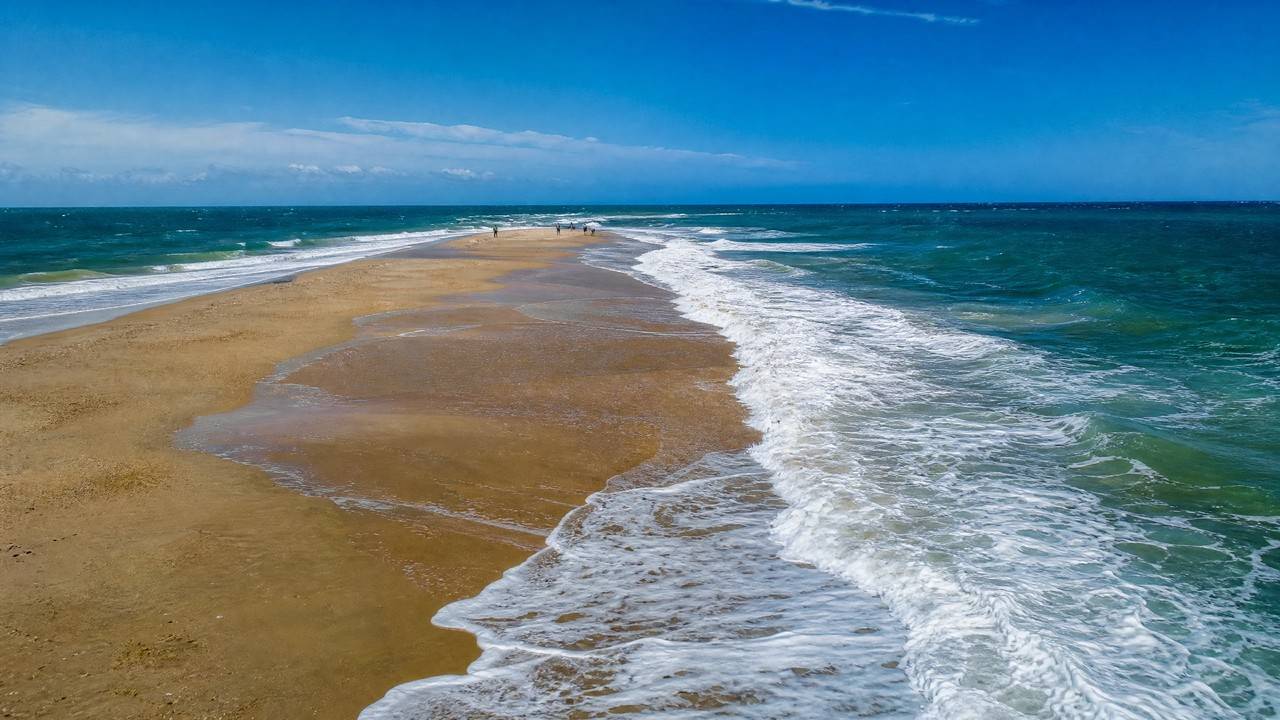
Grenen, just beyond the small town of Skagen at the tip of Jutland, is the true land's end of mainland Denmark. Here the Skagerrak meets the Kattegat head-on: two seas of different density and colour collide in a visible line of white water - the Battle of the World's Ends - where you can stand with a foot in each sea. A 1963 bucket-shaped lighthouse marks the shifting sandbar (exterior only, not open inside). Grey seals haul out on the shallows at various times of year, and this is the best birdwatching spot in Denmark. The 19th-century Skagen Painters chased the famous northern light here, and today you can walk the dune trail to Denmark's northernmost point, then detour to Skagen's 1858 Grey Lighthouse - 209 steps to the top and a bird observatory - and the German field-hospital bunker beside Grenen, open April to October for DKK 60. It is about 4 km on foot from Skagen town, or drive to the paid car park and take the Sandormen sand tractor to the tip.
National Park & Nature

Skagens Museum
Skagens Museum holds the world's largest collection of the Skagen Painters, about 1,900-2,000 works focused on 1870-1930. The museum was literally born at the artists' table: founded on 20 October 1908 on an idea hatched in the dining room of Brøndums Hotel, where the Nordic painters drawn by Skagen's singular northern light gathered for years - and that original dining room was moved into the museum in 1946, its walls hung with the portraits the painters made of one another, still the weightiest room here. P.S. Krøyer and Anna Ancher are its most celebrated names, painting clear light, golden shores and fishing life. A combination ticket adds Anchers Hus, the home of Anna and Michael Ancher, and Drachmanns Hus, with the Saxild café in the garden for a pause. After nearly two years of renovation and expansion, the summer 2026 displays were fully upgraded with a new interactive light installation area. The museum sits on Brøndumsvej in the town centre, a 10-minute walk from the station, and is the first stop for understanding this artistic town.
Museum

Råbjerg Mile
Rabjerg Mile is Denmark's largest dune and the only one still moving freely, on the east coast of Jutland about 17 km south of Skagen. Roughly a kilometre on each side, two square kilometres in all and peaking near 40 metres above sea level, it holds some 3.5 million cubic metres of sand and creeps about 15 metres northeast a year, burying forest, fences and old roads; the swallowed treetops reappear on the far side about 40 years later. It formed more than 300 years ago in the 16th-century sand drifts, and after Denmark's 19th-century Sand Drift Act every other migrating dune was pinned down with pines and marram grass - this one alone was left free, a geology textbook in motion. From the ridge you look over rolling sand to pine forest on one side and the blue Kattegat on the other. About 2 km south stands the Sand-Covered Church, a Gothic brick church of 1355-1387 gradually buried in the 18th century and closed in 1795, its 22-metre tower the last part still above the sand.
National Park & Nature
Grenen
Grenen is the tip of the Jutland peninsula where two currents — the North Sea and the Baltic — meet yet refuse to mix, drawing a visible dividing line, Denmark's most geographically curious spot. The sandspit runs north into the sea; at low tide the broad shallows invite a walk to the very end. It is also a key stopover for migratory birds and a seal haul-out. Reached by a sandy tractor-train from Skagen, it is the Nordic 'land's end' for photos and quiet thought.
Viewpoint

Skagen Town Centre
Skagen is the fishing town at Jutland's northern tip; its old town is known for yellow half-timbered houses with white window frames and granite lanes — the light-filled place where the 19th-century Skagen Painters gathered, hailed as the 'Danish Riviera'. The central square, fish market and harbour keep a vivid port spirit; summer brings open-air cafés and galleries. From here you can walk to Grenen, a relaxed Nordic blend of resort and art.
Old Town & Historic District

Danish Route 40
Danish Route 40 is a rural highway in northern Jutland running up toward the Skagen peninsula, stitched together by dune plantations, heathland and coastal fishing villages. For road-trippers it is far slower — and far lovelier — than the motorway: you can swing off at will toward beaches, lighthouses or harbours, and soak in the huge skies and famous summer light at Denmark's northern tip. It makes a scenic approach to Skagen.
Tour Routes
🎯 Skagen Experiences
Two Seas Meet
One foot in each of two seas.
Yellow Houses
Fishing cottages with red roofs and white trim.
Skagen Painters
Masterpieces of transparent light.
Buried Church
A tower half-buried by sand.
Dune Beaches
Golden coastline.
Skagen is four distinct seasons with cold winters; the best time to visit is Jun–Aug, with temperatures around 11–19°C. January is coldest (down to -1°C), so bring warm layers.
🚌 Transport & Stays
City Transport
🚆Depends on schedule (reference)
Train
Transfer via Frederikshavn
Depends on schedule (reference)
🚜Seasonal (reference)
Spit Shuttle
Tractor bus to the tip
Seasonal (reference)
🚲Rental (reference)
Bicycle
Cycling between town and spit
Rental (reference)
🚗By route (reference)
Self-drive
North Jutland itinerary
By route (reference)
Recommended Stay Areas
🏠 Skagen Town (Top Pick)
Stay in a traditional yellow-house inn
⚓ Old Fishing Harbour Area
Near harbour and dining
🏖️ Beach and Dune Strip
Near sea views
🌊 Grenen Direction
Near where two seas meet
Free Consultation
Want to plan your Skagen trip in more depth?
Tell us your departure city, travel dates and interests, and Usitour will tailor a trip just for you.