📍 Destination Overview
Kyoto is Japan's millennia-old capital and the pinnacle of Japanese aesthetics. The stage of Kiyomizu-dera overlooks the old city; the thousand torii gates of Fushimi Inari Taisha wind up the mountain; Arashiyama's bamboo grove and Togetsukyo Bridge change with the seasons; and the golden reflection of Kinkaku-ji sits on the Mirror Pond. In Gion's stone-paved alleys you might catch a glimpse of a geisha hurrying past. Slip into a kimono and stroll the old temples and machiya townhouses, savoring elegance in kaiseki cuisine and matcha sweets — Kyoto condenses Japan's deepest traditions and most beautiful seasons into one city.
🗾 Region
Japan · Kansai Region · about 15 min from Osaka, 2h15m Shinkansen from Tokyo
🕐 Travel Tips
2-3 days
👪 Travel Tips
Culture / Couples / Photographers
📍 Travel Tips
Japan · Kansai
💴 Travel Tips
Japanese Yen JPY · Japanese · ¥1 CNY ≈ 20 JPY (reference rate)
🕐 Travel Tips
2 - 3 days · can combine with Osaka, Nara, Uji
☀️ Best Time to Visit & Climate
🌸 Best: Late Mar-Early Apr
Cherry blossom season: Philosopher's Path, Daigo-ji and Arashiyama, ancient temples with blossoms at their finest.
Jan
☁️
9°/1°
Feb
☁️
10°/1°
Mar
🌸
14°/4°
Best
Apr
🌸
20°/9°
Best
May
☀️
25°/14°
Jun
🌧️
28°/19°
Jul
☀️
32°/23°
Aug
☀️
34°/24°
Sep
🌦️
29°/20°
Oct
☀️
23°/14°
Nov
🍁
17°/8°
Best
Dec
❄️
12°/3°
Kyoto Tours
View All →![6 days [Impression of Japan·Exclusive fun] Tokyo + Mount Fuji + Shizuoka + Kyoto + Kansai | Full local four-diamond hotel + special meals + free airport pick-up](https://qiniu.usitour.com/images/picture/2024/06/detail_52_666fe4a8cabf4.jpg?imageView2=2&w=1920&q=70&format=webp)
6 days [Impression of Japan·Exclusive fun] Tokyo + Mount Fuji + Shizuoka + Kyoto + Kansai | Full local four-diamond hotel + special meals + free airport pick-up
From $797
![5 days [Exquisite small group of 2-9 persons·Universal Studios point-to-point transfer] Osaka + Nara + Kyoto + Fushimi Inari Taisha Shrine + Kiyomizudera + Kyoto Sanzenin + Kifune Shrine + Arashiyama | Free airport transfer | Chinese speaking driver](https://qiniu.usitour.com/images/picture/2024/06/detail_58_6670091c3597f.jpg?imageView2=2&w=1920&q=70&format=webp)
5 days [Exquisite small group of 2-9 persons·Universal Studios point-to-point transfer] Osaka + Nara + Kyoto + Fushimi Inari Taisha Shrine + Kiyomizudera + Kyoto Sanzenin + Kifune Shrine + Arashiyama | Free airport transfer | Chinese speaking driver
From $1760
![[Kyoto Nara 1-day tour] Osaka + Nara Park + Todaiji Temple + Fushimi Inari Taisha Shrine + Kiyomizudera area + Shinsaibashi | Small group of 6-9 people](https://qiniu.usitour.com/images/picture/2024/06/detail_12_6670054765de1.jpg?imageView2=2&w=1920&q=70&format=webp)
[Kyoto Nara 1-day tour] Osaka + Nara Park + Todaiji Temple + Fushimi Inari Taisha Shrine + Kiyomizudera area + Shinsaibashi | Small group of 6-9 people
From $70
![6 days [Exquisite small group of 2-9 people·Shinkansen speed experience] Osaka + Nara + Kyoto + Nagoya + Shirakawago + Kiyomizudera Stage | Osaka entry and exit | Free airport transfer](https://qiniu.usitour.com/images/picture/2024/06/detail_73_6670054763026.jpg?imageView2=2&w=1920&q=70&format=webp)
6 days [Exquisite small group of 2-9 people·Shinkansen speed experience] Osaka + Nara + Kyoto + Nagoya + Shirakawago + Kiyomizudera Stage | Osaka entry and exit | Free airport transfer
From $2501
![6 days [Exquisite small group of 2-9 people·Free Enoden Experience] Tokyo + Mount Fuji internet celebrity twin lakes + Kamakura/Izu + Osaka + Nara + Kyoto | Tokyo into Osaka and out | Free airport transfer | Shinkansen bullet train included](https://qiniu.usitour.com/images/picture/2025/07/detail_77_68677dc6859d0.jpg?imageView2=2&w=1920&q=70&format=webp)
6 days [Exquisite small group of 2-9 people·Free Enoden Experience] Tokyo + Mount Fuji internet celebrity twin lakes + Kamakura/Izu + Osaka + Nara + Kyoto | Tokyo into Osaka and out | Free airport transfer | Shinkansen bullet train included
From $2457
![[Romantic ancient capital · Exclusive 6-day fun in Tosaka] Higashijin Hande + Tokyo + Osaka + Kyoto + Mount Fuji | Sensoji Temple + Akihabara + Oshino Hakkai + Kiyomizudera + Shinsaibashi Dotonbori | Tea ceremony experience + Mount Fuji cruise | Full local 4-star hotel + hot spring hotel experience](https://qiniu.usitour.com/images/picture/2024/06/detail_72_666ff3786d0f2.jpg?imageView2=2&w=1920&q=70&format=webp)
[Romantic ancient capital · Exclusive 6-day fun in Tosaka] Higashijin Hande + Tokyo + Osaka + Kyoto + Mount Fuji | Sensoji Temple + Akihabara + Oshino Hakkai + Kiyomizudera + Shinsaibashi Dotonbori | Tea ceremony experience + Mount Fuji cruise | Full local 4-star hotel + hot spring hotel experience
From $414
📷 Top Attractions
More Attractions →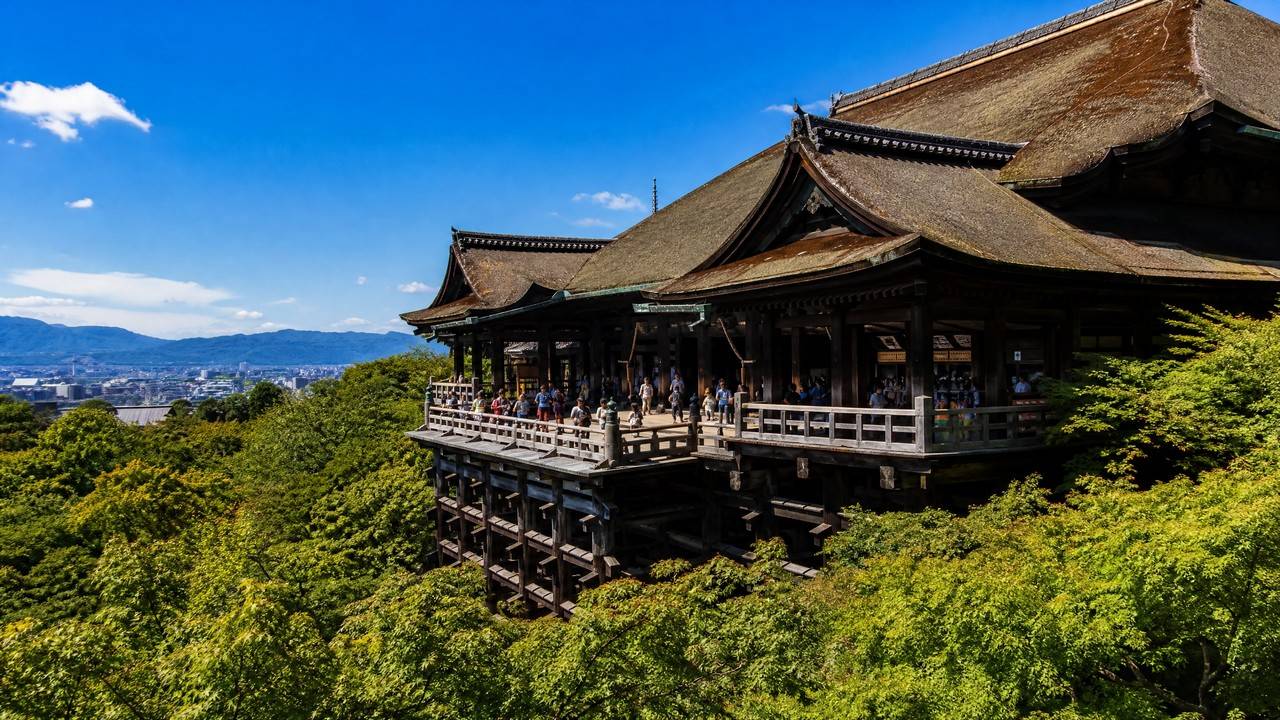
Kiyomizu-dera
Kiyomizu-dera is one of Kyoto's most famous old temples, famed for its wooden stage over the hillside and four-season beauty - a symbol of Kyoto. On the mid-slope of Otowa Mountain in eastern Kyoto. Its iconic Kiyomizu Stage is a wooden stage jutting over a steep slope, supported by pillars without nails. From the stage overlook the city; best with cherry (spring) and maple (autumn). Inside, the Kannon, and the Otowa waterfall. The approach paths (Kiyomizu-zaka, Ninen-zaka) are quaint.
Church & Religious Site

Fushimi-Inari Taisha
Fushimi Inari Taisha is a grand, sacred old shrine in Kyoto, famed for thousands of vermilion torii along the mountain - the head shrine of Inari, a startling, sacred sight. In southern Kyoto, head shrine of thousands of Inari shrines. Its famous senbon torii - thousands of vermilion gates along the mountain path, a tunnel of red. Climb to Inari Mountain. A sacred religious site - be reverent.
Church & Religious Site

Kinkaku-ji
Kinkaku-ji, also called Rokuon-ji, is among Kyoto's most famous Zen temples and a World Heritage site. Its Shariden pavilion is covered in gold leaf and mirrored in the Kyoko-chi (Mirror Pond), where golden glow meets green, often called perfection itself. Built as the Kitayama retreat of shogun Ashikaga Yoshimitsu and later converted to a Zen temple, the grounds hold bamboo groves, karesansui gardens and a tea house, with beauty in every season. In morning light the pavilion is serene and solemn, Kyoto's most iconic image, where wabi-sabi and splendour coexist.
Church & Religious Site

Arashiyama
Arashiyama packages a river valley, a bamboo grove and temple culture into one Kyoto half-day. Togetsukyo Bridge runs 155 metres across the Katsura River, its poetic name credited to a retired emperor who thought the moon looked like it was crossing. The bamboo path's rustling canopy is listed among Japan's hundred protected soundscapes, and behind it Tenryu-ji, founded in 1339, holds a UNESCO-listed garden that borrows the mountain itself as scenery.
Old Town & Historic District

Nijō-jō
Nijo Castle is a grand old castle in Kyoto witnessing a turning point in Japanese history, famed for its splendid palace, fine wall paintings and beautiful garden - the glory and fall of the Tokugawa shogunate. Built by Tokugawa Ieyasu in the early 17th century. Its core is the Ninomaru Palace with Kano-school gold wall paintings, and the famous nightingale floors (Uguisu-bari) that chirp when walked on. Inside are the Ninomaru Garden and Honmaru. A solemn heritage site.
Castle & Fortress

Yasui Konpiragū is a shrine in Higashiyama, Kyoto, famous for its faith in cutting bad ties and forming good ones. The 'en-kiri stone' is covered in white paper strips; worshippers crawl through the hole in the rock to sever bad bonds — a uniquely Kyoto love shrine.
Church & Religious Site
🎯 Kyoto Experiences
Kimono Stroll
Wear a kimono through Gion and Higashiyama temple lanes — most photogenic.
Kaiseki & Matcha
Savor Kyoto's refined cuisine and Uji matcha sweets.
Arashiyama Train
Sagano scenic train for the seasons of the Hozu Gorge.
Tea Ceremony
Experience the once-in-a-lifetime tea ceremony in a machiya.
Nishiki Market Crawl
Kyoto pickles, soy-milk donuts and matcha at Nishiki Market.
November is the best time to visit for autumn foliage (mid-late Nov), and cherry blossom (late Mar–early Apr) is also a peak season when temples are crowded and accommodation must be booked months ahead. Please verify before travelling.
🚌 Transport & Stays
City Transport
🚌Flat ¥230 (reference)
City Bus (recommended)
Covers major temples; flat city fare, ICOCA accepted
Flat ¥230 (reference)
🎫about ¥700 (reference)
Bus One-day Pass
Better value for multiple bus rides a day
about ¥700 (reference)
🚊from ¥160 (reference)
Randen / Subway / Private Rail
Randen to Arashiyama, Keihan to Fushimi Inari
from ¥160 (reference)
✈️about ¥3000 (reference)
From Kansai Airport
Haruka express direct to Kyoto Stn, about 75 min
about ¥3000 (reference)
Recommended Stay Areas
🚄 Around Kyoto Station (recommended)
Transport hub, convenient to Osaka, Nara and airport
🏮 Gion · Higashiyama
Strong old-capital charm, walk to Kiyomizu and Yasaka Shrine
🛍️ Kawaramachi · Shijo
Shopping and dining center, Nishiki Market and Kamo River
🎋 Arashiyama
Quiet nature, ideal for a slow stay at an onsen ryokan
Free Consultation
Free Consultation
1-on-1 travel consultant customizes your Kyoto trip for free based on your schedule and preferences.