Tulum Archaeological Site
Introduction
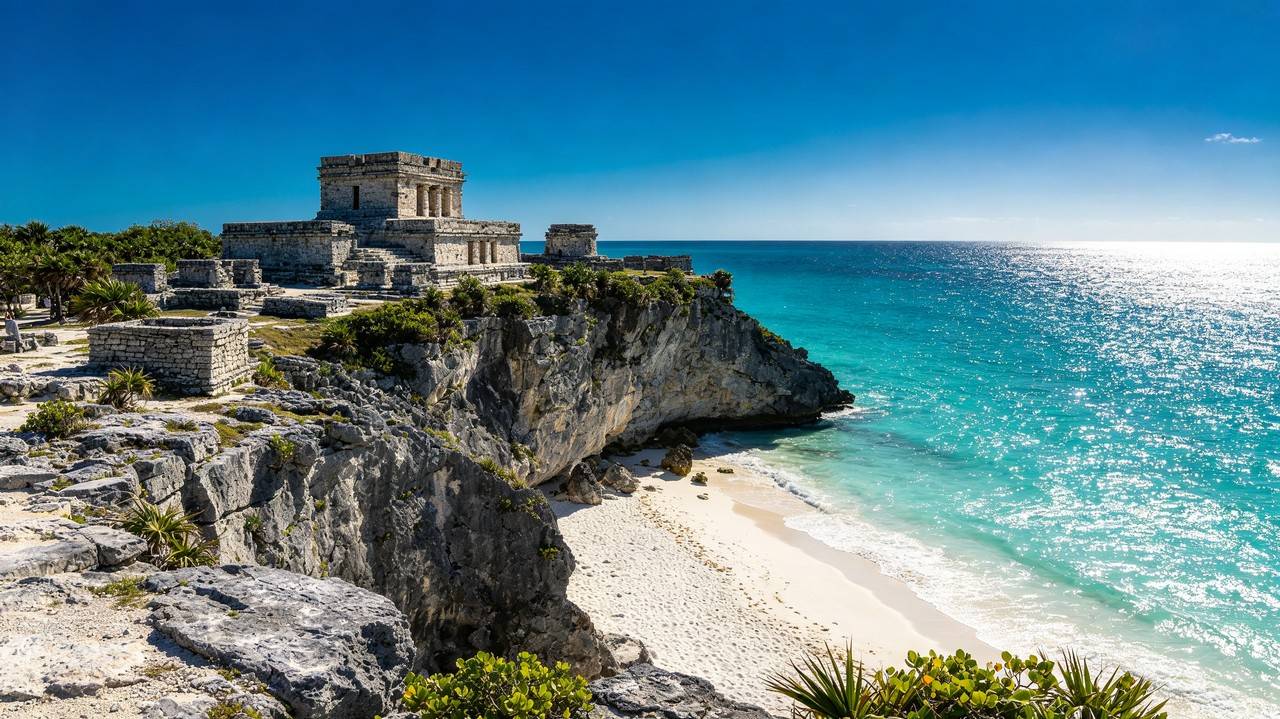
Tulum Archaeological Site is Mexico's most photogenic Maya ruin on the Caribbean coast. This Postclassic Maya city (c. 13th-15th century) on a 12 m limestone cliff above the blue Caribbean, with El Castillo, Temple of the Wind God and Temple of the Paintings, plus swimming on the blue beach below, is the only seaside Maya ruin and one of the Yucatán's most popular archaeological sites. Tulum (Yucatec Maya for "wall") was a Postclassic (c. 13th-15th century) city — contemporaneous with Chichén Itzá, one of the few Maya cities still inhabited at the conquest. The site sits on a 12 m limestone cliff, walled on three sides, facing the blue Caribbean. El Castillo on the highest point is Tulum's iconic structure — a blue beach below allows swimming. Temple of the Wind God at the north end overlooks Tulum Beach. Temple of the Paintings retains Maya murals inside. Iguanas are common. Visiting to experience the only seaside Maya ruin and the blue Caribbean from a cliff-top city is a must-do archaeological and beach experience in Mexico.
✨ Highlights
🛈 Practical Info
💡 Tips
FAQ
Any practical tips for visiting Tulum Archaeological Site?
Morning is quieter with better light — arrive early. Blue beach below for swimming — bring swimwear.

