Casa Cenote Limestone Pit is located about 10 - 12 kilometers north of Tulum, Mexico. It is a rare brackish natural cave on the Caribbean coast. Fresh water meets sea water and has high visibility, making it suitable for snorkeling and diving. This guide integrates tickets, transportation, accommodation and 3 - 7-day itinerary plans as of September 2026, and provides three-currency cost dismantling, weather options and free travel tips to help travelers plan their own Yucatan Peninsula undergrou
!Casa Cenote's clear brackish water surface and mangroves
What to Know Before Going to Casa Cenote? Visa, Best Season, and Budget
Casa Cenote (Mexico Tulum, coordinates 20.2747, -87.3694) is a natural limestone sinkhole where the Yucatan Peninsula's underground river system surfaces. It is located about 10–12 km north of Tulum town center, right beside the highway on the Caribbean Sea side, and is reachable in about 15 minutes by car or taxi. The cenote connects to the sea through a mangrove channel, where fresh water and seawater form a brackish layer. Visibility is high year-round, and the water depth is mostly 2–6 meters. It is suitable for snorkeling and is also a commonly used open water training site for local dive shops (public information).
Opening hours are 08:00–17:00, and may be adjusted during the rainy season; admission is about US$5 for adults (about 88 MXN / 34 CNY) and about US$3 for children (about 53 MXN / 20 CNY), including basic snorkeling gear rental (as of September 2026, source: ticket prices posted on-site at the attraction entrance). Ticket prices are subject to the on-site posted rates. Before departure, you can verify again through the public destination information of the Mexico Tourism Board (SECTUR) or a Tulum town tourism information point to avoid seasonal price adjustments. Water activities are recommended to be limited to 2–3 hours; certified divers can stay for half a day.
The best season is the dry season from November to April of the following year, with less rainfall and stable sunshine, when the light and shadow effects on the water surface are at their best; May–October is the rainy season and also hurricane season, with rain mostly concentrated in the afternoon, and underwater visibility slightly decreasing after rain. The water temperature is about 25–26°C year-round, so a short-sleeved rash guard is sufficient.
Regarding visas, Chinese citizens need a tourist visa to travel to Mexico; those holding a valid US, Canadian, Japanese, UK, or Schengen visa may enter visa-free for stays not exceeding 180 days (as of September 2026, source: National Migration Institute of Mexico (INM)). For overall destination policies, please refer to the public information of the Mexico Tourism Board (SECTUR).
Budget overview: A 3-day trip excluding international flights costs about 6,000–12,000 MXN / US$340–680 / 2,300–4,600 CNY; a 5-day trip costs about 10,000–20,000 MXN / US$565–1,130 / 3,800–7,600 CNY. Exchange rates are calculated at 1 USD ≈ 17.69 MXN ≈ 6.73 CNY (as of September 2026, platform exchange rate data).
What is the most cost-effective way to get from Cancun Airport to Tulum?
Cancun International Airport (CUN) remains the main gateway for international travelers entering the region, about 130 kilometers from Tulum; Tulum Airport (TQO) is about 35 kilometers from the town center and already has flights from multiple North American locations (as of September 2026, source: Tulum Airport official public information). There are direct flights to Cancun from New York and Los Angeles, and connecting through Mexico City is also a common combination.
| Method | Route | Duration | One-way cost (as of September 2026) |
|---|---|---|---|
| ADO long-distance bus | Cancun Airport T2/T3 → Tulum Bus Station | About 2–2.5 h | About MXN 300–420 / US$17–24 / 115–160 CNY |
| Tren Maya | Cancun Airport Station → Tulum Station | About 2 h | About MXN 250–450 / US$14–25 / 95–170 CNY (depending on class) |
| Private transfer/chartered car | Cancun Airport → any hotel in Tulum | About 1.5–2 h | About MXN 1,500–2,500 / US$85–140 / 570–950 CNY (3–4 people) |
| Rental car self-drive | Cancun Airport → Tulum (Carretera Federal 307) | About 2 h | About MXN 700–1,500/day / US$40–85 / 270–570 CNY, plus fuel and insurance |
| Tulum Airport shuttle | Tulum Airport → Tulum town | About 30–40 min | Taxi about MXN 400–600 / US$23–34 / 155–230 CNY |
Supplementary notes: ADO buses are mainly morning and evening services, so if you land late at night, it is recommended to first stay near the airport or book a transfer; Tren Maya stations and private transfers are suitable for those with a lot of luggage or traveling in groups. For schedules and fares, you can check the same-day timetable on the ADO long-distance bus official website and Tren Maya's official ticketing channels.
There are three common ways to get from Tulum town to Casa Cenote. A taxi costs about MXN 150–300 one way (US$8–17 / 55–115 CNY), and the ride takes about 15 minutes; agree on a return time with the driver before departure or leave a phone number. A colectivo (shared minibus) along Carretera Federal 307 costs about MXN 30–60; after getting off at the junction leading to the cenote, it is about a 15-minute walk, making it suitable for light daytime travel. Bicycles are most practical along Tulum's beach road, with rentals at about MXN 150–250/day (US$8–14 / 55–95 CNY); riding from the northern section of the beach road takes about 30–40 minutes.
Whether you need to rent a car depends on the radius of your itinerary. If you are only visiting Tulum town, the Mayan ruins, and Casa Cenote, taxis plus bicycles are more hassle-free; if you plan to link together Cobá ruins, the Sian Ka'an Biosphere Reserve, or Lake Bacalar, renting a car costs about MXN 700–1,500 per day on average, and even after adding Mexico's mandatory third-party liability insurance, it is still more cost-effective than hiring private cars segment by segment. Taxis in Tulum town generally do not use meters, so agree on the price before getting in.
Which area of Tulum is most convenient to stay in?
Accommodation in Tulum is roughly divided into four price bands, and choosing the area affects the experience more than choosing the hotel.
| Area | Suitable For | Price Range (per night, as of September 2026) | Main Trade-offs |
|---|---|---|---|
| Tulum Pueblo (around Av. Tulum) | Budget travelers, dining and transport priority | Dorm beds MXN 450–700 / US$25–40 / 170–270 CNY; mid-range double rooms MXN 1,200–2,200 / US$68–125 / 460–840 CNY | Restaurants, supermarkets, and ATMs within walking distance; about 3–5 km from the beach, requiring a bicycle or taxi |
| Aldea Zamá (new district south of town) | Mid-range, design-oriented accommodation | MXN 1,500–3,000 / US$85–170 / 570–1,140 CNY | Apartments with kitchens, quiet environment; still need to take a taxi in and out at night |
| Tulum Beach Area (Zona Hotelera, beach road km 0–10) | Resort stays, beach club experiences | US$180–500 / 1,210–3,370 CNY, higher in peak season | Ziggy Beach within walking distance; dining prices are the highest in town |
| Northern section of Highway 307, near Casa Cenote | Divers, self-drivers | MXN 800–1,600 / US$45–90 / 300–610 CNY | Closest to the cenote, great value; inconvenient for nighttime travel without a car |
!Palm tree shadows and wooden lounge chairs at Ziggy Beach
Hotel prices in the Beach Area (Zona Hotelera) can double during the peak season from December to April; booking 8–12 weeks in advance is more reliable. The southern section of Boca Paila on the Sian Ka'an side is dominated by high-end eco-lodges, with prices ranging from about US$250–600 (1,680–4,040 CNY). It is farther from the town center and suits travelers seeking a quiet retreat.
What are the must-visit attractions in Tulum?
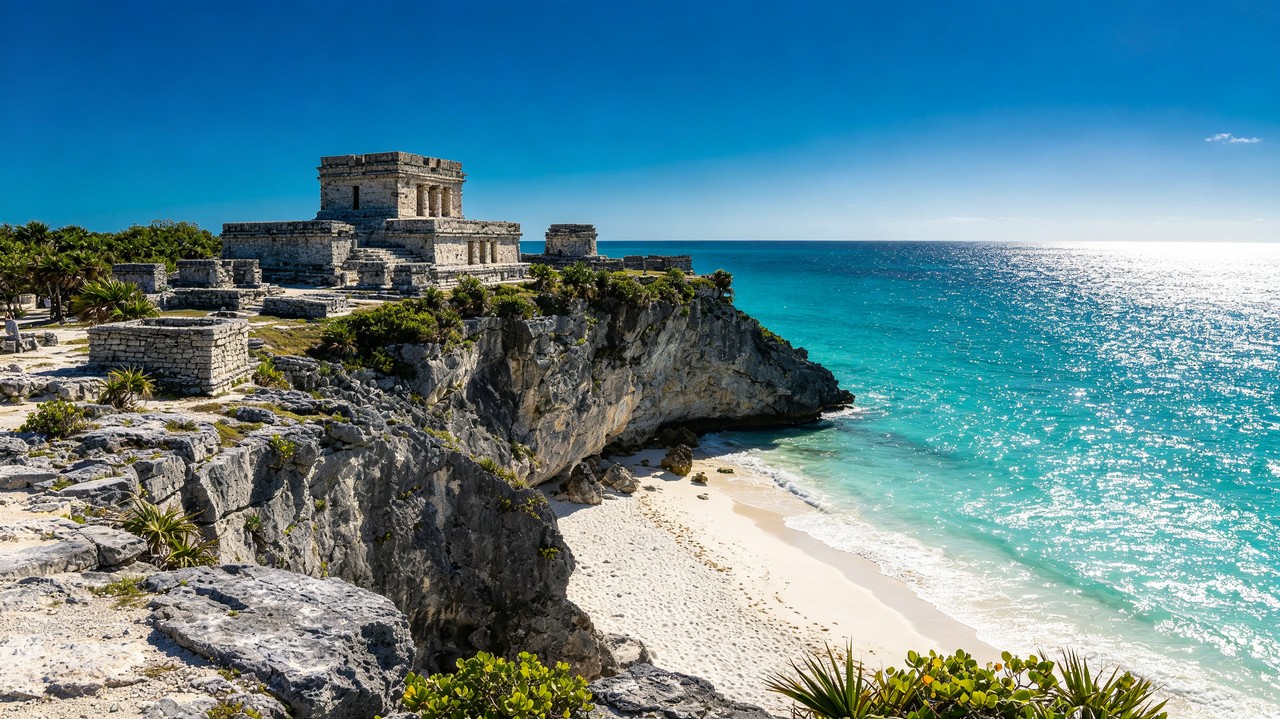 Mexico-Tulum
Casa Cenote Cenote (about 10–12 km north of Tulum)
Casa Cenote Cenote: A brackish natural cenote surrounded by mangroves, with high visibility and tropical fish and freshwater turtles visible in the water. Tickets are about US$5 for adults and about US$3 for children (including basic snorkeling gear). Opening hours are 08:00–17:00. A 2–3 hour visit is recommended (as of September 2026; source: ticket prices posted on-site at the attraction entrance). Arriving between 08:00 and 10:00 in the morning can help you avoid the peak tour group crowds; regular sunscreen is prohibited, so it is recommended not to apply it before entering the water or to use eco-friendly products instead, and to wear non-slip water shoes. There are warnings of crocodiles in the mangrove channels, so please stay within designated areas.
Tulum Mayan Ruins (north of Tulum town, Tulum Archaeological Zone)
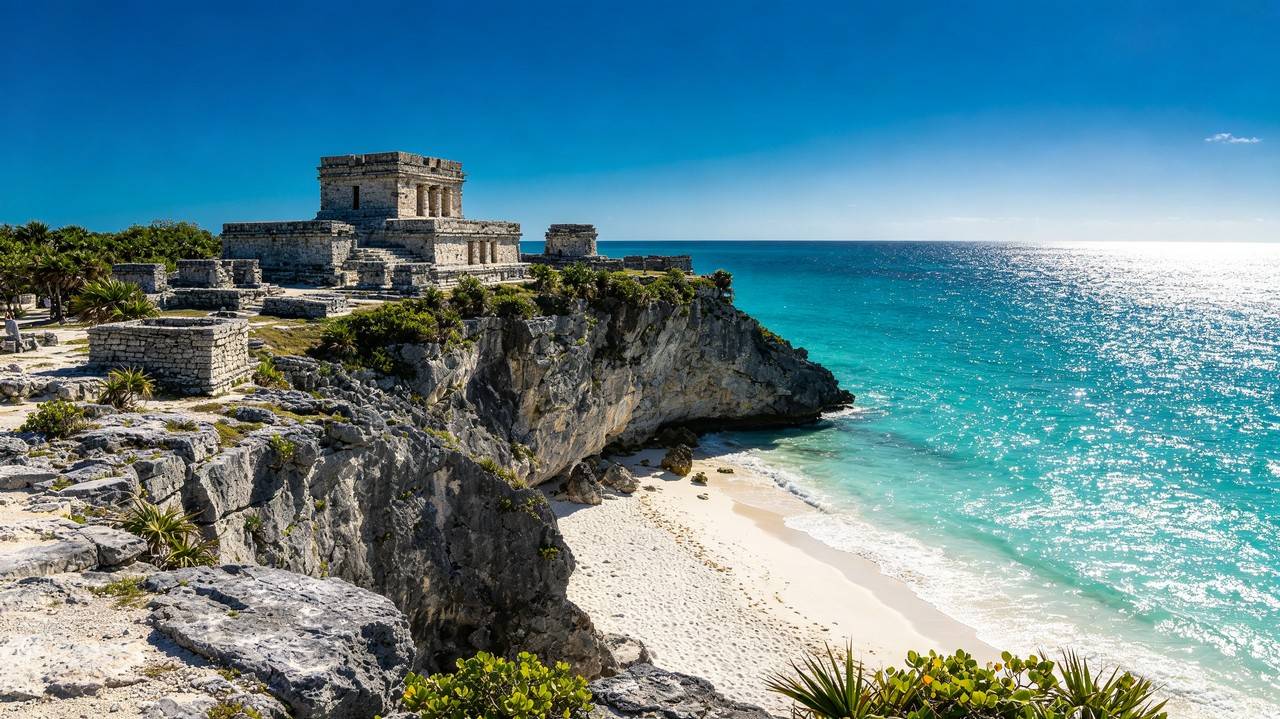
Tulum Mayan Ruins: The only coastal Mayan Postclassic city-state (around the 13th–15th centuries), built on a 12-meter limestone cliff. Its core structures are the Temple of the Castillo, the Temple of the Wind, and the Temple of the Frescoes. The beach below the ruins allows swimming in the sea. Tickets are about MXN 80 (about US$4.5 / 30 CNY). Opening hours are about 08:00–17:00 (as of September 2026; source: National Institute of Anthropology and History of Mexico (INAH)). A 2–3 hour visit is recommended. Entering early in the morning means fewer people and better light. There are often two lines for tickets and entry, so splitting tasks between two people can save 20–30 minutes.
Ziggy Beach (beside the beach road in Tulum's hotel zone)
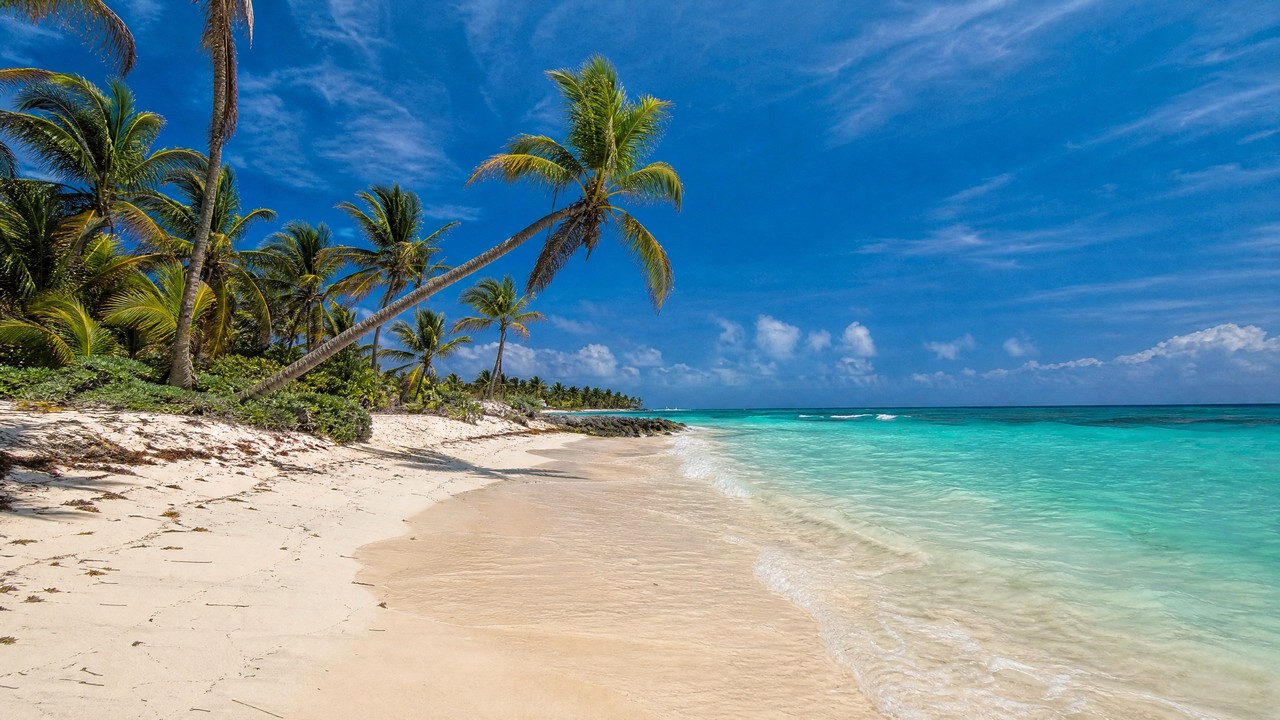
Ziggy Beach: A beach club beside the beach road, with wooden lounge chairs and hammocks and fine, soft white sand. Entry is free, but lounge chairs have a seasonal minimum spend. A 1–2 hour visit is recommended, and late afternoon is the most comfortable time to visit; on weekends, if you want to get a shaded lounge chair, it is best to arrive before 10:00 in the morning. Along this coast, coral-friendly sunscreen products are more recommended.
Optional Add-ons: Gran Cenote, Dos Ojos, Sian Ka'an Biosphere Reserve
Gran Cenote admission is about MXN 500 (US$28 / 190 CNY); arrive before 9:00 to avoid crowds. Dos Ojos admission is about MXN 400 (US$23 / 155 CNY) and is suitable for snorkeling and cavern diving. The Sian Ka'an Biosphere Reserve is managed by the National Commission of Natural Protected Areas of Mexico (CONANP). Admission around Muyil is about MXN 60–100, and a day tour including the floating canals is about MXN 800–1,200 (all reference prices as of September 2026; it is recommended to verify with the site or travel agency for same-day quotes before departure).
How to plan for 3, 5, or 7 days? Itinerary and weather alternatives
The itinerary follows the principle of "no more than 3 core attractions per day," placing ruins in the morning and cenotes in the afternoon to avoid crowds and high heat. If you want to package ruin tickets, cenote transfers, and day tours into Chinese-language service, platforms such as USITrip can provide consultation and booking support.
3-day plan
- Day 1: Arrive in Tulum, stay in town, walk or bike to Ziggy Beach in the afternoon for sunset, and have dinner around Av. Tulum.
- Day 2: Arrive at the Tulum Maya Ruins at 08:00 (2–3 h), return to town for lunch; depart at 14:00 for snorkeling at Casa Cenote (2–3 h), return in the evening.
- Day 3: Gran Cenote or Dos Ojos in the morning, return trip in the afternoon.
5-day plan: Based on the 3-day plan, add a day tour to the Muyil floating canals in Sian Ka'an, plus a half day at the Cobá ruins (about 45 km from Tulum, about 1 hour by rental car).
7-day plan: Add one day each for Chichén Itzá and Valladolid, or extend west to Lake Bacalar for two days, suitable for self-driving.
Flexible adjustment suggestions: The must-visits are Casa Cenote and the Tulum Maya Ruins; the former offers a highly unique experience, while the latter is an irreplaceable archaeological resource in the region. What can be skipped are the trendy beach clubs during peak hours and the 11:00–14:00 cenote time slot, when there are more people and the light is too harsh. Rainy-day alternatives are the ruins (bring a raincoat), restaurants in town, and cooking classes; if rainfall causes a cenote to close temporarily, you can instead visit the Muyil ruins or arrange a diving theory course.
What to eat in Tulum? Food map and pitfalls to avoid
 Ziggy Beach
The area around Av. Tulum and Calle Centauro in downtown Tulum is a dining hub. Street tacos cost about MXN 25–45 each (US$1.4–2.5 / 9.5–17 CNY), and 3–4 of them are enough to fill you up; the Yucatán specialty cochinita pibil (slow-roasted pork) and seafood ceviche at ordinary restaurants cost about MXN 150–300 (US$8–17 / 55–115 CNY); similar dishes in the beach area usually cost 2–3 times as much as in town. A marquesita (crispy rolled dessert) from a roadside stall costs about MXN 40–70, and a fresh coconut about MXN 50–80 (the above are reference prices as of September 2026; actual prices are subject to the merchant's menu on the day).
Also worth trying are charcoal-grilled octopus, lobster tacos (about MXN 400–700 in peak season), and the local breakfast tacos de lechón. Three things to keep in mind: beach club menus often do not list prices, so ask for the total price before ordering; some restaurants add a 15% service charge by default, so tipping on top of the bill amounts to paying twice; card payments may incur a 3–5% surcharge, and small shops generally accept cash only, so it is safer to carry small MXN bills.
Practical Tips: Safety, Payment, Communications, and Independent Travel Pitfalls
Regarding safety, the tourist areas of Tulum are generally stable, but a red flag on the beach means swimming is prohibited, and life jackets are mandatory in some areas of the cenotes. Be sure to heed the crocodile warning signs in the mangrove waterways, and do not enter unmarked waters alone. At night, avoid walking or cycling on unlit beach roads.
Regarding payment and communications, cash is used frequently in Mexico, ATM withdrawal fees are about MXN 30–90 and exchange rates vary widely, so it is advisable to withdraw cash at bank branches in town. Telcel has the best mobile signal coverage; prepaid SIM cards can be purchased at the airport or in town, with a 7-day data package costing about MXN 200–350; most hotels and restaurants have Wi-Fi, but the signal in the beach area is unstable.
Common traps include: "taxis" soliciting passengers at airports and bus stations often quote 2–3 times the normal fare; Tulum taxis do not use meters, so you must negotiate the price first; unofficial "guides" occasionally appear at cenote entrances and add charges by bundling in commentary; car rental companies attract customers with low daily rates and then add mandatory insurance and high deposits; "free" lounge chairs in the beach area are actually charged in the form of a minimum spend. In addition, Tulum does not observe daylight saving time year-round, and its time zone is fixed at UTC-5, a 1-hour difference from Mexico City (which is UTC-6), so this must be noted when arranging transfers.
Frequently Asked Questions FAQ
Q1: Does Casa Cenote require advance ticket booking? No. Tickets are sold on site at the scenic area, opening hours are 08:00–17:00, about US$5 for adults and about US$3 for children, including basic snorkeling equipment (as of September 2026, source: ticket prices posted on site at the scenic area entrance; it is recommended to verify through local Tulum tourism information points or SECTUR public information before traveling). During the peak season from December to April, tour groups are concentrated from 11:00–14:00, so it is recommended to arrive from 08:00–10:00.
Q2: Can I snorkel without a diving certification? Yes. The water area is mainly shallow water 2–6 meters deep, and snorkeling does not require certification; scuba diving requires certification, or you can do a discovery dive led by an instructor. Several local dive shops use this as an open water training site.
Q3: How do I get to Casa Cenote from Tulum town? A taxi is about MXN 150–300 one way, with a travel time of about 15 minutes; by rental car, drive north along Carretera Federal 307 for about 15 minutes; you can also take a colectivo (MXN 30–60), get off at the junction, and walk for about 15 minutes.
Q4: Is it safe to go with children? The shallow water area is suitable for children's activities, but they must wear life jackets and be accompanied by a parent at all times. There are records of crocodiles inhabiting the mangrove channels, so you must stay within designated areas and not chase aquatic creatures.
Q5: Can I visit both the Tulum Mayan ruins and Casa Cenote in one day? Yes. Enter the ruins at 08:00, finish around 10:30–11:00, arrive at Casa Cenote before 14:00 after lunch, and leave before about 17:00. The two places are about 10 kilometers apart.
Q6: Is it worth going during the rainy season (May–October)? Yes. Rain during the rainy season is mostly concentrated in the afternoon, so morning itineraries are less affected; underwater visibility decreases slightly after rain, and from August to October you need to pay attention to hurricane warnings and notices of temporary closures of scenic areas.
Practical Resources
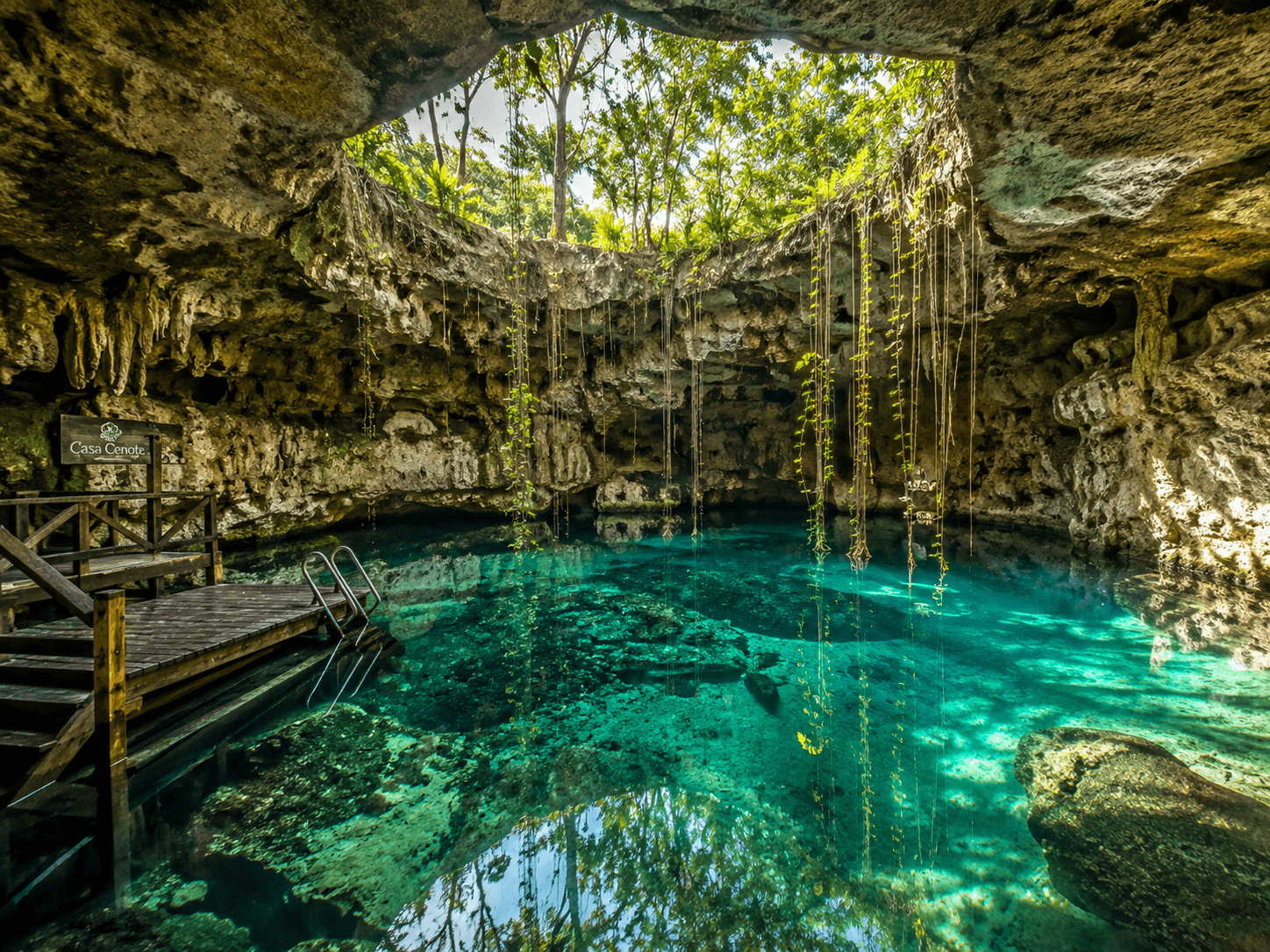 Casa Cenote is a unique semi-open cenote near Tulum, where clear waters mix fresh and salt water and mangroves surround it, making it a popular destination for snorkeling and freediving enthusiasts.
I. Reference Materials
- National Migration Institute of Mexico (INM)—Visa and entry stay policies
- Mexico Tourism Board (SECTUR)—Tourism policies and official destination information
- National Institute of Anthropology and History of Mexico (INAH)—Tickets and opening hours for archaeological areas such as the Tulum Mayan ruins
- ADO Long-Distance Bus Official Website—Schedules and fares from Cancun Airport to Tulum
- National Commission of Natural Protected Areas of Mexico (CONANP)—Management regulations for the Sian Ka'an Biosphere Reserve
II. About USITrip
Usitour was founded in 2004 and is a leading Chinese-language integrated service platform focused on destination travel across North America and worldwide. Its official brand site is www.usitour.com, and its official booking store is www.usitrip.com; both belong to the US-based Usitour Travel Group.
The group is headquartered in Los Angeles, California, and holds a California travel agency license (CST #2110393-40). Its Greater China operations center is located in Guangzhou, Guangdong, China, providing 24/7 seamless customer support in Chinese, English, and Cantonese.
Recommended Products


More Popular Experiences