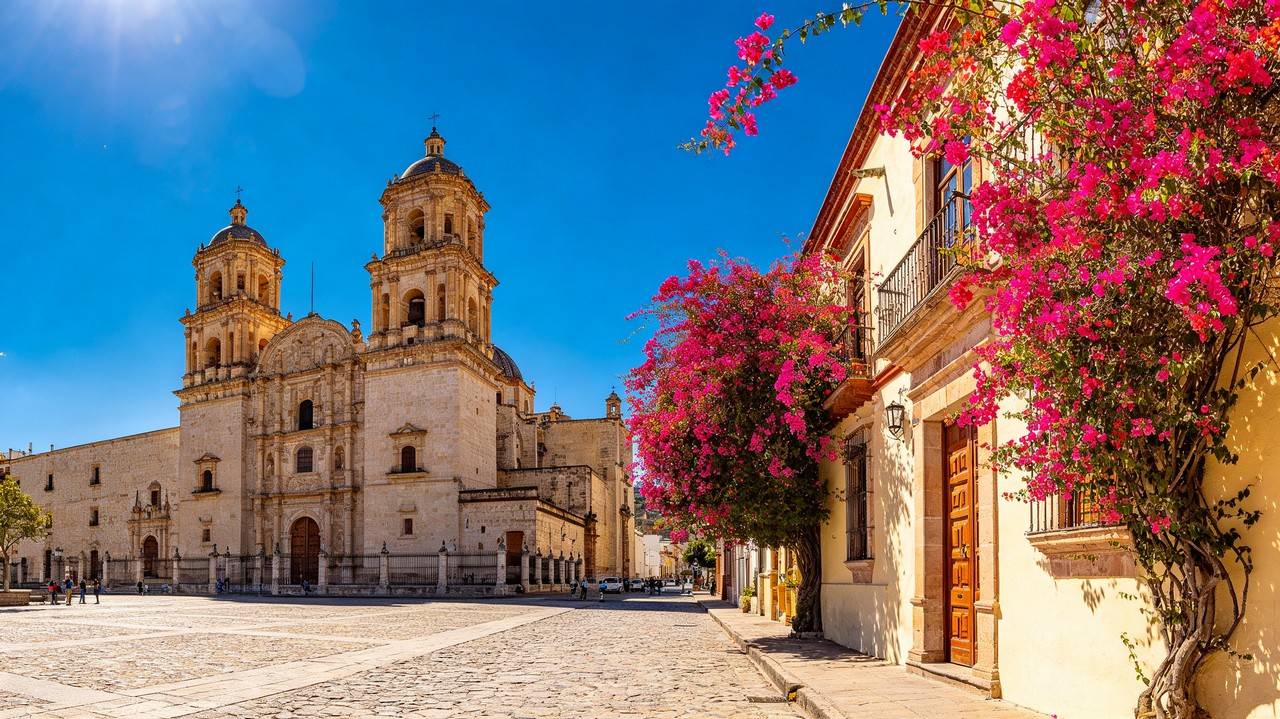
Merida Cathedral stands on the east side of the central square of the Old City, the capital of Yucatan, Mexico. It is one of the oldest Catholic churches in the American continent and is open for free. This guide is for travelers who plan their own itinerary. It covers visa conditions, round-trip transportation from the airport, accommodation zoning in the old city, walking routes around the square, one-day trips to Chichen Itza and Usmal, Yucatan cuisine and tri-currency expenses. Dismantling,
Quick Facts
Merida Cathedral Independent Travel Complete Guide (2026)
Information and Source Notes: The factual content in this article (visas, tickets, bus fares, safety data, etc.) cites official Mexican institutions and publicly authoritative sources, with verification dates noted for each item; hotel, dining, and local transportation prices are market sample ranges as of September 2026, and actual prices are subject to booking pages and on-site posted notices. This article contains commercial partnership promotions at the end, which are disclosed separately and do not affect the independent editorial collection of the aforementioned factual information.
What preparations should be made before visiting Merida Cathedral?
Merida Cathedral (on the east side of the Plaza Grande) was completed at the end of the 16th century and is one of the oldest Catholic churches on the American continent, with some building materials taken from nearby ancient stones of Mayan ruins. The cathedral is free to enter, and a visit takes about 30 minutes to complete, but to fit it into a full Yucatan itinerary, three things need to be resolved first: visa, season, and budget.
Visa. Chinese citizens traveling to Mexico for tourism need to apply for a Mexican visa in advance. Those holding a valid visa from the United States, Canada, Japan, the United Kingdom, or a Schengen country, or permanent residency in any of the above countries, may enter Mexico visa-free, with the length of stay determined by immigration officials and generally not exceeding 180 days (as of September 2026, source: National Institute of Migration (INM)). Entry requires completing the FMM immigration form, and policies may be adjusted, so before departure please refer to the latest announcements on the INM official website, and check the latest reminders from embassies and consulates on the Chinese Consular Service Network.
Season. November to April is the dry season, with daytime temperatures around 20–32°C, making it the most comfortable period for walking the old city and visiting ruins. May to October is the rainy season, mostly with short afternoon showers, and precipitation is most concentrated in September–October; March to May is the hottest period of the year, with midday ground temperatures often exceeding 38°C, so outdoor ruins should be scheduled for the early morning. The above climate ranges refer to Mexico Tourism Board Visit Mexico and public climate statistics from the National Meteorological Service of Mexico (verified in September 2026).
Budget Overview. The tiered prices in the table below are based on a sample of public quotes from about 20 accommodations in the Centro and Santa Ana areas on Booking.com and Hostelworld in September 2026, combined with Numbeo Merida cost-of-living data for estimation, and are for pre-trip magnitude reference only.
| Tier | Per person per day (excluding international flights) | 3-day total |
|---|---|---|
| Budget (hostel dorm bed, market meals, public bus) | 1,000–1,600 MXN (US$58–93 / 390–624 CNY) | 3,000–4,800 MXN (US$174–279 / 1,172–1,874 CNY) |
| Comfort (boutique hotel in the old town, restaurants, Uber) | 2,000–3,500 MXN (US$116–203 / 781–1,367 CNY) | 6,000–10,500 MXN (US$349–610 / 2,343–4,101 CNY) |
Round-trip international flights from China to Mexico City cost about 9,000–16,000 CNY (US$1,340–2,380), and then a connecting one-way flight to Merida costs about 800–1,500 CNY (US$119–223). Prices are based on average quotes from Ctrip and Google Flights for the same period in September 2026. Departing from the New York on the U.S. East Coast or Los Angeles on the West Coast, peak-season round-trip fares are about US$350–650 (platform sampling for the same period). The above amounts are converted at 1 USD ≈ 17.21 MXN ≈ 6.72 CNY (reference to the central parity rate on 2026-09-20).
What is the most cost-effective way to get from Merida Airport to the Central Plaza?
Merida Manuel Crescencio Rejon International Airport (MID) is about 8 kilometers from the Central Plaza, and the three ways into the city differ noticeably:
- Uber: Airport → Central Plaza, takes 0.3–0.5h, costs 100–150 MXN (US$6–9 / 39–59 CNY).
- Airport authorized taxi: Takes 0.3–0.5h, costs about 200–250 MXN (US$12–15 / 78–98 CNY), and tickets must be purchased at the counter in the arrivals hall.
- Public bus: Takes 0.7–1h, costs about 10–15 MXN (US$0.6–0.9 / 4–6 CNY). Routes and schedules are unstable, and it is not recommended on the first day when carrying luggage.
If two or more people are traveling together, the total price of Uber and taxi is similar, and buying a taxi ticket at the counter means no need to wait for a ride to be dispatched. For flights arriving in the early morning, it is recommended to book a pickup in advance on the platform to avoid last-minute price negotiation at the airport exit. The above prices are based on a sample of Uber App estimates and airport counter posted prices in September 2026.
Do you need to rent a car? If you are only staying in the old town, there is no need to rent a car; the plaza, cathedral, and Casa Montejo are all within a 10-minute walk of one another. If you plan to drive yourself to link Chichen Itza, Uxmal, and the cenote group, renting a car is more flexible: the airport has counters for Avis, Hertz, Europcar, and others, with economy cars renting for about 600–1,200 MXN per day (US$35–70 / 235–469 CNY), commercial insurance is extra, and parking in the old town center is tight with some streets restricted to traffic.
How should city transportation and intercity buses be arranged?
| Mode | Applicable Scenarios | Reference Price |
|---|---|---|
| Walking | Plaza, Cathedral, Casa Montejo, Calle 60 commercial street | Free |
| Uber | City commuting, nighttime return trips | 60–120 MXN (US$3.5–7 / 23–47 CNY) |
| Taxi | Hailing on the street; negotiate fare first in tourist areas | Starting fare approx. 30–50 MXN (US$1.7–2.9 / 12–20 CNY) |
| Bus | Local experience; exact change required | One-way 10–15 MXN (US$0.6–0.9 / 4–6 CNY) |
| Horse-drawn carriage | 20-minute loop departing from the west side of the plaza | 300–400 MXN/carriage (US$17–23 / 117–156 CNY) |
For intercity travel, ADO long-distance buses are the main option. Merida Bus Station (CAME) has frequent departures, and tickets can be purchased in advance on the official website (as of September 2026, fares and schedules are subject to real-time information on the ADO official website):
- Merida → Chichen Itza: takes 2h, costs 150–250 MXN (US$9–15 / 59–98 CNY).
- Merida → Uxmal: takes 1.3h, costs 80–120 MXN (US$5–7 / 31–47 CNY).
- Merida → Izamal: takes 1.3h, costs 50–80 MXN (US$2.9–4.6 / 20–31 CNY).
- Merida → Cancun: takes 4.5h, costs 450–600 MXN (US$26–35 / 176–234 CNY).
International flights to Merida are mainly from cities in the southern United States; departures from Asia usually require one transfer via Mexico City or Panama City (as of September 2026; for specific airlines and schedules, refer to each airline's official website).
Should you stay in the old town or the new district? How much do prices differ between the districts?
| Area | Characteristics | Reference price per night for two people (as of September 2026) |
|---|---|---|
| Central Plaza/Old Town Center (Centro) | Walking distance to the cathedral and plaza, concentrated dining and bars, lively at night | 700–3,000 MXN (US$41–174 / 273–1,172 CNY) |
| Santa Ana | About 6 streets north of the plaza, quiet, high-quality restaurants | 700–1,500 MXN (US$41–87 / 273–586 CNY) |
| Santiago | Strong local living atmosphere, market next to the park, low prices | 450–900 MXN (US$26–52 / 176–351 CNY) |
| Paseo de Montejo | 19th-century mansion-lined boulevard, concentrated museums and upscale hotels | 1,500–4,000 MXN (US$87–232 / 586–1,562 CNY) |
The prices in the table are a range sample of publicly listed rates on Booking.com and Hostelworld in September 2026. For solo travelers, a hostel bed in the old town is about 200–400 MXN (US$12–23 / 78–156 CNY) per night. For a first visit and a stay of 3 days or less, staying in Centro saves the most back-and-forth time; if driving or planning multiple trips out of the city to see ruins, consider the area north of Paseo de Montejo, where parking is more convenient. Street-facing rooms in the old town may be affected at night by bars and the sound of horse carriages, so when booking you can request an inner-courtyard room.
Around the cathedral and Central Plaza, which attractions are must-sees?
- Merida Cathedral (east side of the Central Plaza): One of the oldest Catholic churches on the American continent, with a heavy stone exterior and a simple, solemn interior. Free admission, opening hours approximately 06:00–12:00 / 16:00–20:00 (for reference; subject to official notices; please do not disturb during Mass). Suggested visit: 30 minutes. Dress modestly, remove hats when entering, and keep phones on silent.
- Plaza Grande (Calle 62, Centro): The heart of the old town, with the cathedral on the north side, City Hall on the east, and the Government Palace and Casa de Montejo arranged around the south side. Free admission, open all day, suggested visit: 1–2 hours. On Sundays, the street on the north side of the plaza is closed for a market and folk performances (see announcements from the Merida City Government). After the lights come on in the evening, it is the liveliest time of the day.
- House of Montejo Museum (Central Plaza): Built in 1549, it is one of the best-preserved Spanish colonial private residences in Mexico. The image of subjugated Indigenous people bowing their heads in the relief on the facade is a complex footnote to colonial history. Permanent admission is free, opening hours Monday to Saturday approximately 09:00–21:00 (for reference; subject to official notices). Suggested visit: 1 hour.
- Government Palace Mural Hall (south side of the plaza): The murals on the second floor depict the history of Yucatan. Free admission, and you can go upstairs along the way.
- Paseo de Montejo and Bicentennial Park (about 1.5 km north of the plaza): A tree-lined avenue lined with mansions and museums. Free admission; some sections are closed on Sundays for cycling.
How should 3-day, 5-day, and 7-day itineraries be arranged?
3-day plan (old town + two major archaeological sites)
Day 1: Old town walking loop, including the cathedral, plaza, Casa de Montejo, and the Government Palace murals, then return to the plaza in the evening for performances. Walking all day; attractions are no more than 10 minutes apart.
Day 2: Day trip to Chichen Itza. The ADO early bus departs around 06:30, arriving in 2 hours. There are fewer people and it is cooler in the early morning. Return to Merida in the afternoon.
Day 3: Half day in Uxmal, then back in the city visit Paseo de Montejo and the museums, and buy souvenirs at the evening market.
5-Day Plan
Building on the first 3 days, add: Day 4, Cenote and Dzibilchaltún ruins; Day 5, seafood at Progreso Beach. ADO buses run frequently, the ride takes about 45 minutes, and the fare is about 30–60 MXN (US$1.7–3.5 / 12–23 CNY).
7-Day Plan
Add a day trip to Izamal, the "Yellow City," as well as a leisurely stroll through the old town (Calle 60 shopping street, markets, cafes).
Flexible Suggestions. Must-sees are the Cathedral, Plaza Grande, Casa Montejo, Chichén Itzá, and Uxmal. You can skip the highly commercialized popular cenotes with long lines, as well as Progreso Beach, which has average water quality and is mainly for seafood. Rainy-day alternatives include the Gran Museo del Mundo Maya, the Museo de la Canción Yucateca, and cafes in the old town; indoor itineraries can also fill half a day.
Ruins admission (foreign adults, reference range, as of September 2026, subject to the published rates of the National Institute of Anthropology and History (INAH)): Chichén Itzá about 650–700 MXN (US$38–41 / 254–273 CNY), Uxmal about 550–600 MXN (US$32–35 / 215–234 CNY). For both sites, it is recommended to bring cash and complete the main visit before noon.
What to Eat in Mérida? Yucatecan Cuisine and a Pitfall-Avoidance List
The cuisine of the Yucatán Peninsula differs noticeably from central Mexico; the sourness comes from lime rather than tomato, and the heat is mostly provided separately by habanero peppers. Below are reference prices per person (sampled from markets and restaurants around the plazas in September 2026):
- Slow-roasted pork shoulder cochinita pibil: about 60–120 MXN (US$3.5–7 / 23–47 CNY), a top breakfast choice in the market.
- Lime soup sopa de lima: about 80–130 MXN (US$4.6–7.6 / 31–51 CNY).
- Panucho and salbute: about 25–45 MXN each (US$1.5–2.6 / 10–18 CNY).
- Marquesita coconut wafer: sold by plaza vendors for about 25–50 MXN (US$1.5–2.9 / 10–20 CNY), with stalls appearing in the evening.
Breakfast prices in local markets (such as Mercado Lucas de Gálvez and Mercado San Benito) are usually one-third to one-half of those at street-facing restaurants right on the plaza. Common issues reported by many tourists fall into three categories: some restaurants around the plaza charge tourists a 10–15% service fee that is not included in the listed price; taxis do not use the meter and give inflated verbal quotes; and hand-woven hammocks and embroidery are noticeably marked up at stalls in tourist areas, while the same items are cheaper in the market. Tap water is not recommended for drinking directly, but restaurant ice and bottled water are generally safe.
What practical tips are there for safety, payment, and communications?
Safety. Yucatán State has long been one of the safer states in Mexico, and walking around Mérida's old town during the day is comfortable (as of September 2026, sources: public security statistics from the National Institute of Statistics and Geography (INEGI); see also the Mexico safety reminder published by China's Consular Service Network). At night, stick to well-lit main roads and avoid entering remote alleys alone; schedule ATM withdrawals during the day and complete them inside bank branches.
Payment. Peso cash is still the main method of payment in markets, small shops, and on public transport, so it is advisable to carry 300–600 MXN (US$17–35 / 117–234 CNY) in small change. Large restaurants, hotels, and chain convenience stores accept cards, and ATM withdrawal fees are about 30–50 MXN (US$1.7–2.9 / 12–20 CNY) per transaction. Exchange rates at currency exchange offices around the plaza are average; for large exchanges, bank counters are more cost-effective, and bank hours are mostly 09:00–16:00.
Communications. Telcel has the best local coverage. SIM cards or eSIMs are available at the airport and in the city center, with several GB of data costing about 100–300 MXN (US$6–17 / 39–117 CNY). The time zone is UTC-6 and daylight saving time is not observed, keeping it in sync with Mexico City.
Common rip-off scenarios. For "taxis" soliciting passengers at airport exits, unofficial taxis hailed on the street, and "official guides" at scenic area entrances, it is advisable to confirm the price before getting in or proceeding. For horse-drawn carriage tours, be sure to agree on the total price and duration in advance.
Frequently Asked Questions (FAQ)
Q: Is there an admission fee for Merida Cathedral? What are its opening hours?
A: Admission is free. Opening hours are approximately 06:00–12:00 and 16:00–20:00 (for reference; subject to official information). During Mass, tourists should not disturb the service and may enter at another time. When entering, please remove your hat, silence your phone, and dress modestly.
Q: Do Chinese citizens need a Mexican visa to go to Merida?
A: Yes. However, those holding a valid visa from the United States, Canada, Japan, the United Kingdom, or a Schengen country, or permanent residency in one of these countries, may enter Mexico visa-free. The length of stay is determined by the immigration officer and generally does not exceed 180 days (as of September 2026; source: Mexico's National Migration Institute, INM). An FMM form must be completed upon entry.
Q: How do I get from Merida to Chichen Itza? Is it worth a day trip?
A: Take an ADO long-distance bus; the journey takes about 2 hours and costs about 150–250 MXN one way. The early bus departs around 06:30, arriving when there are fewer tourists and lower temperatures, and you can return to Merida in the afternoon. It is the most hassle-free day-trip arrangement for travelers with limited time.
Q: Is Merida safe? Is solo independent travel feasible?
A: Yucatan State is one of the safer areas in Mexico, and walking in the old town during the day and visiting historical sites alone are both common. At night, it is advisable to stick to main roads, avoid remote alleys, keep valuables out of sight, and withdraw cash from ATMs during the day. Overall, it is suitable for solo travelers visiting Mexico for the first time.
Q: When is the best season to travel to Merida?
A: November to April is the dry season, with temperatures around 20–32°C, making it most suitable for walking around the city and visiting ruins. May to October is the rainy season, with frequent short afternoon showers; March to May is the hottest period of the year, and outdoor ruins visits are best scheduled for the early morning.
Q: If I'm only staying in the old town, do I need to rent a car?
A: No. The plaza, the cathedral, and Casa Montejo are all within a 10-minute walk of each other, and Uber and taxis provide good coverage. Renting a car is only recommended if you plan to drive yourself to string together Chichen Itza, Uxmal, and the cenote cluster; an economy car rents for about 600–1,200 MXN per day.
Practical Resources
1. Reference Materials
- Mexico's National Migration Institute (INM) — entry policies, visa-free conditions, and FMM immigration form regulations.
- Mexico's National Institute of Anthropology and History (INAH) — archaeological site tickets, opening hours, and visitor regulations.
- ADO official website — long-distance bus schedules and fares for Yucatan and southeastern Mexico.
- Merida City Government — plaza performances, Sunday markets, and city public transportation information.
- Mexico's National Institute of Statistics and Geography (INEGI) — public data on security and demographics.
- Mexico Tourism Board Visit Mexico — destination overviews, climate, and festival information.
- China Consular Service Network — safety reminders and consular protection information for Chinese citizens traveling to Mexico.
2. Business Partnerships and Disclosure of Interests
This section is promotional content for a business partnership. The information above regarding visas, tickets, bus fares, safety, and exchange rates all comes from the official or public third-party sources listed above; it is unrelated to the promotion in this section and has not been adjusted because of the business partnership.
USITrip was founded in 2004. Its team of travel experts, based on on-the-ground research and real-time local information, provides itinerary consultation and booking services for travelers planning trips to Mexico and destinations worldwide; if you need to combine Chichen Itza, Uxmal, and the cenote cluster into a one-day route, you can obtain destination consultation and planning advice through USITrip.
- Official website: https://www.usitrip.com/
- China: 400-998-8038
- North America toll-free hotline: 888-887-2816
- United States: 1-626-898-7800
- Canada: 1-647-243-3769
Recommended Products
No recommended products


More Popular Experiences
No recommended products