Plaza Grande

Quick Facts
- Location
- Mexico, Merida
- Category
- Square & Landmark
- Duration
- 1-2 hours
- Opening Hours
- The square is open at all hours; the Palacio de Gobierno and Casa de Montejo keep their own hours, quoted anywhere from 9:00 to 17:00, so follow on-site notices.
- Ticket Price
- Adult: Free · The square, the Palacio de Gobierno murals, the ground floor of the Casa de Montejo and the cathedral are all free; so are Monday's arcade Vaqueria and Saturday's ball game.
- Address
- Between Calles 60-63, Centro, Merida, Yucatan, Mexico
- Coordinates
- 20.9670, -89.6230
Introduction
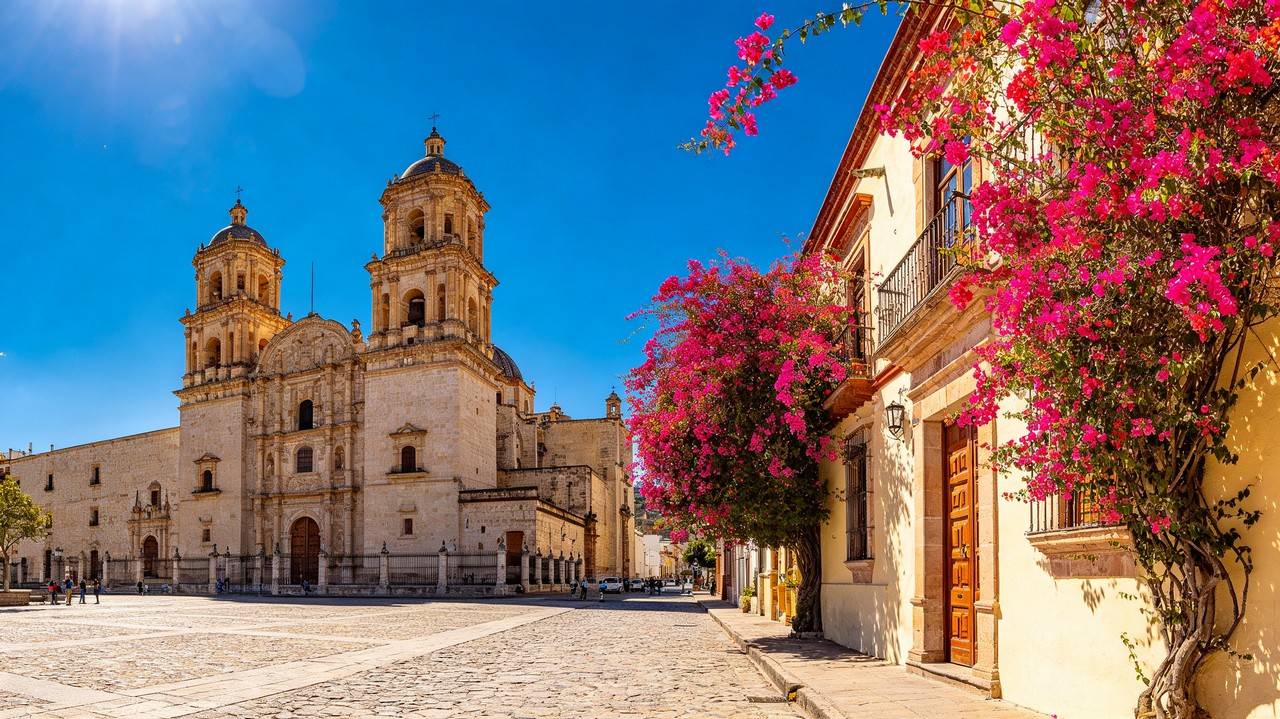
Merida's Plaza Grande, formally the Plaza de la Independencia, sits at the centre of the old city of Merida, capital of Yucatan, Mexico. Merida was founded in 1542 on top of the ancient Maya city of T'ho, and the colonial authorities demolished the local pyramids, the stone going into the cathedral on the east side of the square. A colonial grid laid over a Maya city is the source of everything about this place. Four buildings, one per side, make this the most complete plaza in Mexico. East is Merida Cathedral, begun in 1561 or 1562 and finished in 1598, the first cathedral on the mainland of the Americas and the oldest in Mexico, austere and fortress-like, built with stone from the Maya temples of T'ho. North is the Palacio de Gobierno, the present building begun in 1887 and inaugurated on 15 September 1892 on the site of the colonial Casas Reales. Its real subject is twenty-seven large oils by Fernando Castro Pacheco, painted in the 1970s on steel sheet, about 530 square metres in all, casually called murals but technically painted panels integrated into the architecture. They run from Maya cosmology through conquest, rebellion, the Caste War and henequen labour to twentieth-century reform, and entry is free. West is the Palacio Municipal with its clock tower and arcade, under which the Vaqueria is danced free on Monday evenings. South is the Casa de Montejo, whose plateresque stone facade is the oldest element on the square, with conquistadors carved above the doorway standing on the heads of the defeated, a piece of sixteenth-century propaganda left in place in the middle of a modern city. The street furniture is the S-shaped double seat called a confidante, which sets two people facing each other, so you can take in all four buildings without moving. This is a working square rather than an object behind glass: from 11:00 on Sundays it closes to traffic, and on Saturday evenings the Maya ball game Pok Ta Pok is played on the open ground in front of the cathedral, both free. After dark the marquesita carts are the signature of the square, a thin crisp Yucatecan wafer invented in the 1930s by Leopoldo Mena of Merida, rolled around Dutch Edam ball cheese and cajeta, with the salty-sweet contrast the whole point. Practical: the square, the murals, the ground floor of the Casa de Montejo and the cathedral are all free, the square is open at all hours, one to two hours is enough, the old town is walkable throughout, and November to March is the most comfortable season.
✨ Highlights
🛈 Practical Info
Ticket Information
| Adult | Free |
|---|
The square, the Palacio de Gobierno murals, the ground floor of the Casa de Montejo and the cathedral are all free; so are Monday's arcade Vaqueria and Saturday's ball game.
💡 Tips
FAQ
What are the opening hours of Plaza Grande?
The square is open at all hours; the Palacio de Gobierno and Casa de Montejo keep their own hours, quoted anywhere from 9:00 to 17:00, so follow on-site notices.
How much is the admission for Plaza Grande?
Adult: Free; The square, the Palacio de Gobierno murals, the ground floor of the Casa de Montejo and the cathedral are all free; so are Monday's arcade Vaqueria and Saturday's ball game.
Any practical tips for visiting Plaza Grande?
The square is free, and so are the Palacio de Gobierno murals, the ground floor of the Casa de Montejo and the cathedral: you can see nearly all of it without spending anything. Four buildings, one per side: cathedral east, Palacio de Gobierno north, Palacio Municipal west, Casa de Montejo south.
How long should I spend at Plaza Grande?
A typical visit takes 1-2 hours.