Merida Cathedral

Quick Facts
- Location
- Mexico, Merida
- Category
- Historic Ruins & Heritage
- Duration
- 20-45 minutes
- Opening Hours
- Open daily and free; visitors are usually admitted only in morning and early-evening windows, with much of the afternoon closed, and all day on Sundays.
- Ticket Price
- Adult: Free · Free entry, donations appropriate; no admission ticket. Official visitor hours vary by source, so confirm locally before visiting.
- Address
- Calle 60, east side of Plaza Grande, Merida, Yucatan, Mexico
- Coordinates
- 20.9689, -89.6237
Introduction
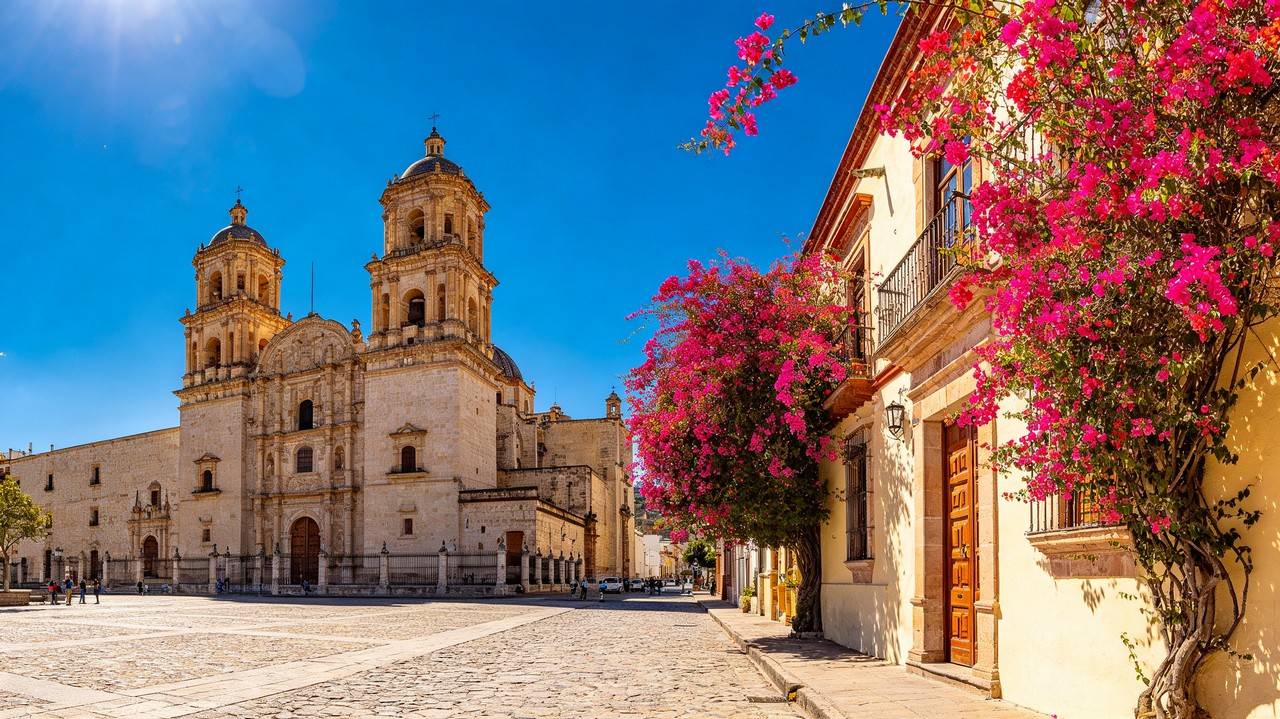
Merida Cathedral, formally the Catedral de San Ildefonso, stands on Calle 60 along the east side of the Plaza Grande in the historic centre of Merida, Yucatan, and is the seat of the Roman Catholic Archdiocese of Yucatan. Standing: it was the first cathedral completed on the continental mainland of the Americas, the oldest cathedral in Mexico, and one of only two built in Latin America in the sixteenth century, running from 1561 or 1562 to 1598. The one thing to know: Merida was founded in 1542 on the ceremonial core of the ancient Maya city of T'ho. The colonial authorities demolished the local pyramids and ceremonial structures and reused the cut limestone blocks for the cathedral's foundations, lower walls and interior columns, with Maya labourers often setting carved temple stones face-inward to conceal the imagery. Even so, faint pre-Hispanic relief carvings can still be made out on some exterior and courtyard stones today, the most direct evidence in Merida of conquest and layering. It was deliberately built like a fortress, with narrow arrowslits in the frontage and limestone walls close to a metre thick. The two 43.5 m towers are not identical: all ten bells, including one cast in 1618, hang in the north tower, while the south tower was given a balcony and once held the civic clock. The Puerta del Perdon facing the square is flanked by Saints Peter and Paul, the only human figures sculpted directly onto the facade, and stays closed on ordinary days. Inside are three naves under stone-ribbed vaults with arches over 22 m, and the metre-thick walls hold the Yucatan midday heat out, so the temperature drops as you step in. Two things to look for, and one wound: on the high altar stands the Cristo de la Unidad, made in 1967 by the Spanish sculptor Lapayese in birch on a mahogany cross, symbolising reconciliation between Maya and Spanish heritage; the north side chapel holds the Cristo de las Ampollas, whose wood legend says came from a tree struck by lightning that burned all night without charring. In 1915 troops aligned with General Alvarado sacked the cathedral, stripping the eighteenth-century gilded baroque altarpieces, the organ and the wooden sculpture and burning them in the street; the impact marks from that year are still on the exterior doors. Practical: entry is free. Visitors are usually admitted only in morning and early-evening windows, with much of the afternoon closed and all day on Sundays. Official visitor hours vary by source, so confirm locally. Dress modestly, keep quiet, and no flash during services.
✨ Highlights
🛈 Practical Info
Ticket Information
| Adult | Free |
|---|
Free entry, donations appropriate; no admission ticket. Official visitor hours vary by source, so confirm locally before visiting.
💡 Tips
FAQ
What are the opening hours of Merida Cathedral?
Open daily and free; visitors are usually admitted only in morning and early-evening windows, with much of the afternoon closed, and all day on Sundays.
How much is the admission for Merida Cathedral?
Adult: Free; Free entry, donations appropriate; no admission ticket. Official visitor hours vary by source, so confirm locally before visiting.
Any practical tips for visiting Merida Cathedral?
Free entry, donations appropriate; official visitor hours vary by source, so confirm locally or with the diocese before going. Visitors are usually admitted only in morning and early-evening windows, with much of the afternoon closed, and all day on Sundays.
How long should I spend at Merida Cathedral?
A typical visit takes 20-45 minutes.