📍 Destination Overview
Merida, capital of Mexico's Yucatan state, is known as the 'White City' for its white limestone colonial architecture. The leafy Paseo de Montejo is lined with 19th-century French mansions and the grand cathedral stands on Maya temple ruins. It is the ideal gateway to nearby Chichen Itza and Uxmal, making it the peninsula's cultural capital.
🏙️ Location
Mexico · Mérida, Mexico
🗓️ Best Season
Apr-Jun / Sep-Oct
💰 Currency / Language
Mexican Peso (MXN) / Spanish
🕐 Suggested Duration
2-3 days
🔌 Outlet / Voltage
Type A/B outlets · 127V · adapter needed
📶 Communication Note
Buy data SIM / eSIM on arrival (reference)
☀️ Best Time to Visit & Climate
🌸 Dry Season: Nov-Apr
Cool and dry, best for city walks and ruins.
🌸 Rainy Season: May-Oct
Hot and humid, cenotes and indoor culture.
January
❄️
30°/18°
February
🌥️
31°/18°
March
🌤️
33°/20°
April
🌸
35°/22°
Best
May
🌷
36°/23°
Best
June
☀️
35°/23°
Best
July
🌡️
34°/23°
August
☀️
34°/23°
September
🍂
33°/23°
Best
October
🍁
32°/22°
Best
November
🌥️
31°/20°
December
🎄
30°/18°
📷 Top Attractions

Merida Cathedral
Merida Cathedral, formally the Catedral de San Ildefonso, stands on Calle 60 along the east side of the Plaza Grande in the historic centre of Merida, Yucatan, and is the seat of the Roman Catholic Archdiocese of Yucatan.
Standing: it was the first cathedral completed on the continental mainland of the Americas, the oldest cathedral in Mexico, and one of only two built in Latin America in the sixteenth century, running from 1561 or 1562 to 1598.
The one thing to know: Merida was founded in 1542 on the ceremonial core of the ancient Maya city of T'ho. The colonial authorities demolished the local pyramids and ceremonial structures and reused the cut limestone blocks for the cathedral's foundations, lower walls and interior columns, with Maya labourers often setting carved temple stones face-inward to conceal the imagery. Even so, faint pre-Hispanic relief carvings can still be made out on some exterior and courtyard stones today, the most direct evidence in Merida of conquest and layering.
It was deliberately built like a fortress, with narrow arrowslits in the frontage and limestone walls close to a metre thick. The two 43.5 m towers are not identical: all ten bells, including one cast in 1618, hang in the north tower, while the south tower was given a balcony and once held the civic clock. The Puerta del Perdon facing the square is flanked by Saints Peter and Paul, the only human figures sculpted directly onto the facade, and stays closed on ordinary days.
Inside are three naves under stone-ribbed vaults with arches over 22 m, and the metre-thick walls hold the Yucatan midday heat out, so the temperature drops as you step in.
Two things to look for, and one wound: on the high altar stands the Cristo de la Unidad, made in 1967 by the Spanish sculptor Lapayese in birch on a mahogany cross, symbolising reconciliation between Maya and Spanish heritage; the north side chapel holds the Cristo de las Ampollas, whose wood legend says came from a tree struck by lightning that burned all night without charring. In 1915 troops aligned with General Alvarado sacked the cathedral, stripping the eighteenth-century gilded baroque altarpieces, the organ and the wooden sculpture and burning them in the street; the impact marks from that year are still on the exterior doors.
Practical: entry is free. Visitors are usually admitted only in morning and early-evening windows, with much of the afternoon closed and all day on Sundays. Official visitor hours vary by source, so confirm locally. Dress modestly, keep quiet, and no flash during services.
Historic Ruins & Heritage

Plaza Grande
Merida's Plaza Grande, formally the Plaza de la Independencia, sits at the centre of the old city of Merida, capital of Yucatan, Mexico. Merida was founded in 1542 on top of the ancient Maya city of T'ho, and the colonial authorities demolished the local pyramids, the stone going into the cathedral on the east side of the square. A colonial grid laid over a Maya city is the source of everything about this place.
Four buildings, one per side, make this the most complete plaza in Mexico.
East is Merida Cathedral, begun in 1561 or 1562 and finished in 1598, the first cathedral on the mainland of the Americas and the oldest in Mexico, austere and fortress-like, built with stone from the Maya temples of T'ho.
North is the Palacio de Gobierno, the present building begun in 1887 and inaugurated on 15 September 1892 on the site of the colonial Casas Reales. Its real subject is twenty-seven large oils by Fernando Castro Pacheco, painted in the 1970s on steel sheet, about 530 square metres in all, casually called murals but technically painted panels integrated into the architecture. They run from Maya cosmology through conquest, rebellion, the Caste War and henequen labour to twentieth-century reform, and entry is free.
West is the Palacio Municipal with its clock tower and arcade, under which the Vaqueria is danced free on Monday evenings. South is the Casa de Montejo, whose plateresque stone facade is the oldest element on the square, with conquistadors carved above the doorway standing on the heads of the defeated, a piece of sixteenth-century propaganda left in place in the middle of a modern city.
The street furniture is the S-shaped double seat called a confidante, which sets two people facing each other, so you can take in all four buildings without moving.
This is a working square rather than an object behind glass: from 11:00 on Sundays it closes to traffic, and on Saturday evenings the Maya ball game Pok Ta Pok is played on the open ground in front of the cathedral, both free.
After dark the marquesita carts are the signature of the square, a thin crisp Yucatecan wafer invented in the 1930s by Leopoldo Mena of Merida, rolled around Dutch Edam ball cheese and cajeta, with the salty-sweet contrast the whole point.
Practical: the square, the murals, the ground floor of the Casa de Montejo and the cathedral are all free, the square is open at all hours, one to two hours is enough, the old town is walkable throughout, and November to March is the most comfortable season.
Square & Landmark
No.3 Merida
House of Montejo
The House of Montejo stands on Mérida's central square, built in 1549 by the son of Francisco de Montejo, conqueror of Yucatán, among the best-preserved Spanish-colonial private houses in Mexico. Its façade is famous for relief carvings—the conqueror family's coat of arms flanked by subdued Indigenous figures, a complex footnote to colonial history. Maintained by a banking foundation as a small museum, its arcaded courtyard and period furnishings reveal 16th-century Yucatán elite life and power.
Sightseeing
🎯 Merida Experiences
Taste Pollo Pibil
Yucatán's signature sour orange baked chicken.
Sunday Cultural Walk
Free music and dance on Paseo de Montejo.
Cenote Tour
Drive to explore underground natural pools.
Yucatecan Cigar
Handmade cigar and tobacco culture experience.
This destination is hot year-round; the best time to visit is Apr–Jun and Sep–Oct, with temperatures around 22–36°C. May is hottest (up to 36°C), so pack sun protection and drink plenty of water.
📰 Travel Guides
More Guides →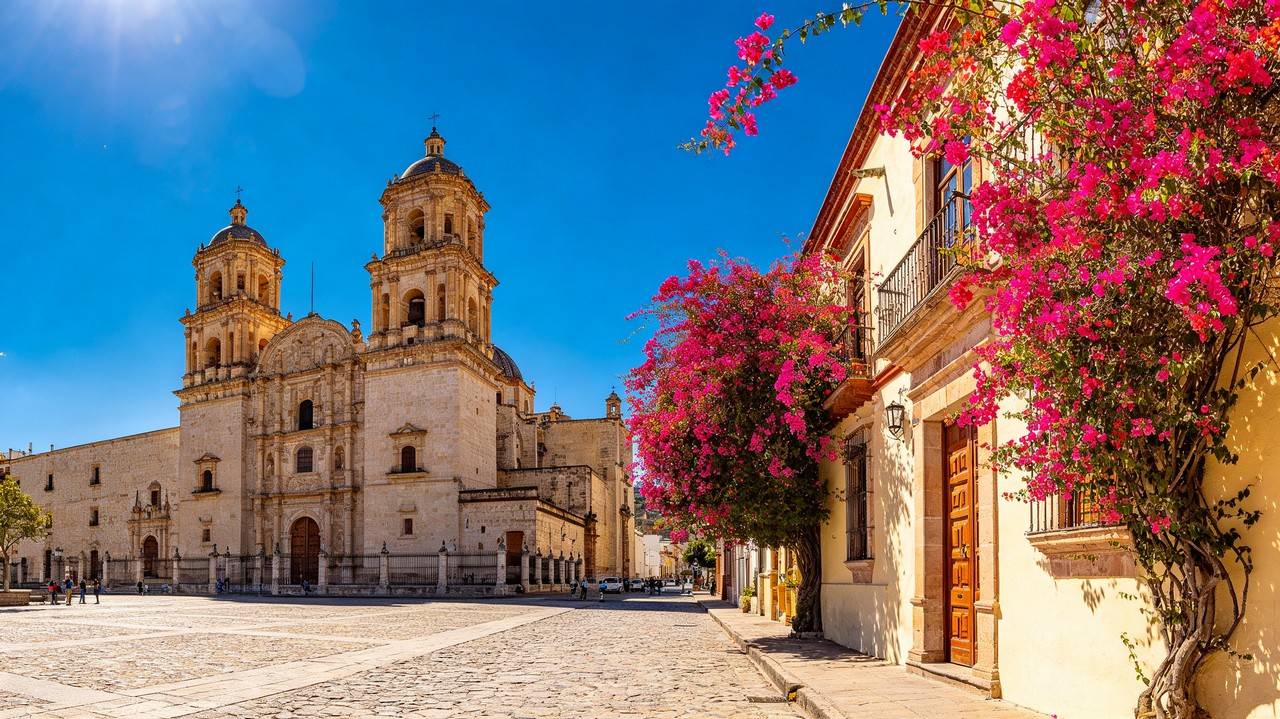
🚌 Transport & Stays
City Transport
✈️Varies by route (MXN)
Flights
Domestic flights to major cities
Varies by route (MXN)
🚌From ~MX$300/trip (reference)
ADO Bus
Comfortable long-distance coach network
From ~MX$300/trip (reference)
🚕From ~MX$50/ride (reference)
Taxi / Colectivo
Local transport and shared rides
From ~MX$50/ride (reference)
Recommended Stay Areas
🏘️ Paseo de Montejo Area
French mansion boutique hotels
⛪ Zócalo Historic Center
Colonial plaza inns
🏠 Santiago District
Local guesthouses and Airbnbs
💰 North New District
Modern chain hotels
Free Consultation
Free Consultation
1-on-1 travel consultant customizes your Merida trip for free based on your schedule and preferences.