

A 5-day Bolivia group tour from La Paz covering Salar de Uyuni and Tunupa Volcano, with costs, daily stops and wet vs dry season tips.
Quick Facts
With only 5 to 6 days of annual leave and wanting to cover both the "Mirror of the Sky" and La Paz in one trip—this 5-day, 4-night Bolivia local join-in tour arranges the inland connections for La Paz arrival and departure, the salt flat private car, and 4 nights of accommodation all at once, so travelers only need to handle their own international flights and visa.
1. What this 5-day tour solves: how to arrange a Bolivia local join-in tour with the least time
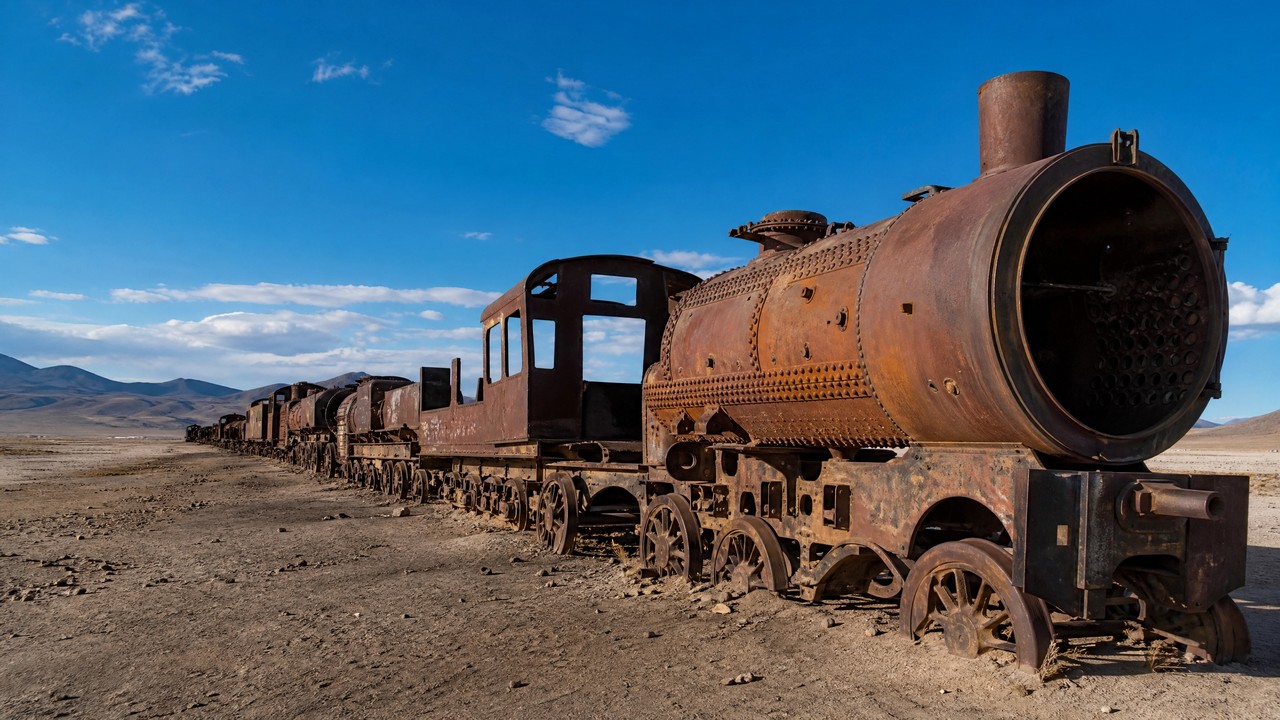 Uyuni Bolivia
What this route solves is very specific: use all 5 days of vacation on the two areas of the Uyuni salt flat and La Paz, with no long-distance overland travel between cities in between, and no shared rides with other independent travelers. The product name is Mirror of the Sky · Bolivia Dream 5-Day Tour, 5 days 4 nights, La Paz arrival and departure, daily departures, English private tour, tour price US$1,906/person (about 22,472 BOB / 12,732 CNY) (as of October 2026, source: USITrip product page).

The route skeleton is: arrive in La Paz → 2 full days in Uyuni and the Salar de Uyuni → return to La Paz for a city tour → La Paz airport drop-off. The four selling points given in the product introduction can be directly verified: private tour with a dedicated vehicle throughout, dedicated vehicle and guide without sharing with strangers; USITrip provides an online Chinese-speaking concierge for full service throughout; picnic in the middle of the salt flat and fun "perspective" photos; stay in a hotel built of salt blocks with panoramic views of the salt flat. The salt flat covers about 10,582 square kilometers (subject to Bolivian official/product page data), and this scale means it cannot be absorbed by a half-day check-in.
The judgment comes down to trade-offs: if the core demand is "lock in the salt flat + La Paz within 5 days, and accept an English-speaking guide," this is the lowest-time-cost way to do it; if you require a Chinese-speaking guide accompanying the vehicle, or want to cover multiple countries such as Peru and Brazil in one trip, this route does not apply, and you should look directly at the 12-day or 20-day long itineraries rather than adding days here to force a fit.
2. What is the daily drop-off point and pace for each of the 5 days?
Over the 5 days, Uyuni and the salt flat area take up 2 full days, La Paz city takes up 1 day, and Day 1 and Day 5 are arrival/departure transfer days with no attractions included.
| Day | Itinerary | Accommodation | Meals |
|---|---|---|---|
| Day 1 | Place of residence → La Paz: guide picks up at the airport or station, transfers to hotel, rest and acclimatize to altitude | Ritz Apart Hotel or equivalent | Breakfast not included / Lunch not included / Dinner not included |
| Day 2 | La Paz → Uyuni → Uyuni Salt Flat: stop at Train Cemetery before entering the salt flat, then enter the salt flat area | Local hotel in Uyuni (product description mentions a hotel built of salt blocks; subject to the final tour notification) | Hotel breakfast |
| Day 3 | Tunupa Volcano → Uyuni Salt Flat: pre-Columbian mummies at Coquesa and ancient Chullpares tombs | Local hotel in Uyuni (subject to the final tour notification) | Hotel breakfast |
| Day 4 | Uyuni → La Paz: San Francisco Cathedral, Gold Museum, Murillo Square city tour | La Paz hotel (subject to the final tour notification) | Hotel breakfast |
| Day 5 | La Paz → Place of residence: airport drop-off | — | Hotel breakfast |
The Train Cemetery on Day 2 is only 3 km from Uyuni town. The abandoned locomotives left behind by the decline of mining and territorial disputes sit in the desert, and it is the most common first stop on the way into the salt flat. The Tunupa Volcano visited on Day 3 is a different mountain from the summitable Uturuncu Volcano in the attraction database—the former is a regular sightseeing point on this itinerary, while the latter is about 6,008 meters above sea level and is a technical summit expedition not included in this tour. Do not confuse them when you see similar names.
The product name includes "Moon Valley," and the fee list also includes a Moon Valley ticket, but the day-by-day itinerary does not specify which day it falls on. Before booking, ask this in writing and do not assume it is necessarily scheduled for a certain afternoon—this is the most easily misread point on this route.
3. What exactly does the US$1,906 tour fee cover, and what is still missing?
The tour fee covers "transport, guide, accommodation, taxes, and five attraction tickets," while what is missing is airfare, gratuities, and the lunch and dinner meals. The table below corresponds item by item to the inclusions and exclusions on the product page (as of October 2026, source: Usitrip product page).
| Item | Included | Amount or Description |
|---|---|---|
| Full-journey private vehicle fee | Included | Private group tour with dedicated vehicle and guide |
| Professional English-speaking guide | Included | On-board commentary in English |
| Online Chinese-speaking concierge | Included | Provided by USITrip, online service |
| 4 nights of hotel accommodation | Included | Four-star hotels, including a hotel built of salt blocks |
| Meals listed in the itinerary | Included | Days 2–5: 4 hotel breakfasts + a picnic in the middle of the salt flat; Day 1: no meals included |
| Train Cemetery entrance ticket | Included | Included in the itinerary |
| Incahuasi entrance ticket | Included | Isla Incahuasi; whether landing on the island is possible is subject to road conditions on the day and the guide's arrangements |
| Coquesa entrance ticket | Included | Includes mummy and ancient tomb viewing sites |
| Gold Museum entrance ticket | Included | Closed all day Monday and on Saturday and Sunday evenings; subject to the museum's official announcements |
| Moon Valley entrance ticket | Included | The specific date of arrangement is subject to the actual itinerary |
| Million-level commercial vehicle insurance, taxes | Included | Included in the itinerary |
| Driver-guide gratuities | Not included | US$10–20 per person per day; approximately US$50–100 for 5 days (about 334–668 CNY) |
| Round-trip international airfare from departure point, airport taxes, and related transportation | Not included | Must be booked independently; international segment not included |
| Domestic Bolivia flight segment | Not included (must be booked separately; confirm in writing with customer service before placing the order) | La Paz–Uyuni segment must be booked separately |
| Personal expenses | Not included | Telephone charges, meal costs, personal insurance, etc. |
| Meals, drinks, and extra hotel charges not listed | Not included | Lunch and dinner are mainly at your own expense |
| Early check-in or late check-out fees | Not included | Payable separately |
| Mandatory fees listed in the itinerary | Not included | Pay the guide on-site when joining the tour |
| Other expenses not listed under inclusions | Not included | Subject to the product page |
Budget beyond the tour fee should be viewed in three tiers; do not combine the three figures into a single "fixed total budget":
| Tier | Item | Reference Amount | Description |
|---|---|---|---|
| Mandatory expenses (everyone pays) | Driver-guide gratuity | US$50–100 (approx. 334–668 CNY) | Calculated at US$10–20/person/day × 5 days |
| On-demand tickets (main tickets already included in this tour) | Train Cemetery, Incahuasi, Coquesa, Gold Museum, Moon Valley | 0 | All already listed under inclusions; for other attractions not listed on the product page, refer to on-site posted notices |
| Optional experiences (pay only if selected) | Five-star hotel upgrade, additional flight bookings, salt flat add-on experiences | Not priced on product page | Subject to customer service quote |
| Major exclusions | International flights + La Paz–Uyuni domestic segment flights | Inquire based on departure city | A major floating cost; no fixed amount can be given in advance |
In other words, the expenses you can confirm before landing are the tour fee plus gratuity, totaling approximately US$1,956–2,006 (approx. 13,066–13,400 CNY). For flights, you must inquire on your own — if anyone describes this route to you as "all-inclusive," first check the exclusions column in the cost table.
4. When to book, and what to confirm before placing an order?
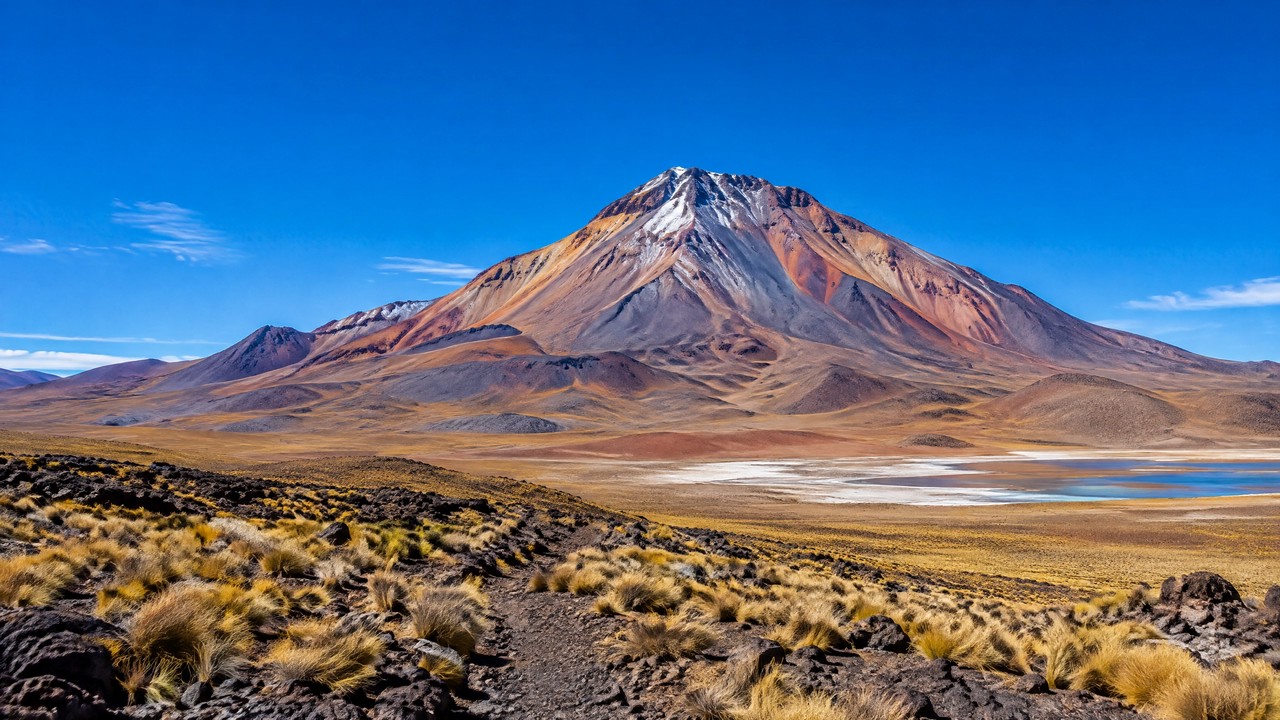 Uturuncu Volcano, Uyuni, Bolivia
This route departs daily with self-selected dates, so in theory you don't need to wait for a fixed schedule — but "there are spots available" and "the trip runs with the configuration you want" are two different things, and you need written confirmation before placing an order. Schedules and remaining spots are subject to what is published on the product page.
Bolivia's cancellation and rescheduling terms are relatively strict. The product page states: canceling or changing the itinerary 40–69 days before departure incurs a 70% tour fee penalty; 24–39 days before departure incurs a 90% penalty; within 23 days before departure incurs a 100% penalty (as of October 2026, source: Usitrip product page). This means the cost of an impulse booking is high — booking flights first and paying the tour fee later is actually the safer sequence.
Before placing an order, send four questions to customer service: how to separately book the La Paz–Uyuni domestic segment flights and a breakdown of the costs; which day Moon Valley is scheduled for; how much the single supplement is; and quotes for upgrading to a five-star hotel or adding flight bookings. Pay only after all four questions have written answers.
Here are three practical tips for avoiding pitfalls when joining tours, and they apply broadly to South America itineraries. First, identify "forced shopping": this product is labeled as a private package tour, not a mixed group with strangers, and there are no shopping stops in the itinerary. If you are asked at the last minute to add a handicraft village or a salt-products shop, that constitutes an itinerary change and you may refuse. Second, guard against hidden charges: the driver-guide tip is calculated per day and is a mandatory item clearly stated on the product page; beyond that, any "on-site surcharge" should require supporting documentation. Third, guard against itinerary shrinkage: when road conditions are restricted during the rainy season, Tunupa Volcano or Incahuasi Island may be adjusted; this is a reasonable change, but it should be replaced with a salt-flat experience of equal duration, not simply cut in half with a return to the hotel.
5. What to prepare for a trip to Bolivia: visas, currency, and how to handle the high altitude?
You must obtain the visa yourself in advance, the currency is the Bolivian boliviano, and high-altitude acclimatization should begin before departure. None of these three things can be delegated to a guide.
Regarding the visa, the first item in the product's special notes is "tourists must obtain a Bolivian visa in advance on their own." The specific documents and fees for Chinese passport holders are subject to the latest announcements of the embassy or consulate (as of October 2026, source: Ministry of Foreign Affairs of Bolivia). The visa processing period usually affects the pace of the itinerary more than booking flights does; it is safer to obtain the visa first and then lock in flights.
Regarding currency, the local currency is BOB. The platform's exchange rate data is 1 USD ≈ 11.79 BOB ≈ 6.68 CNY (October 27, 2026). The Central Bank of Bolivia is the official institution for currency issuance, and real-time exchange rates can be checked (source: Central Bank of Bolivia). Card acceptance is unreliable in the small towns around the salt flat. Although the salt-flat entrance ticket is already included in the tour price, it is advisable to carry cash for pocket money, drinks, and souvenirs.
Regarding altitude, the Day 1 description of the product states that downtown La Paz is at an altitude of about 3,640 meters, and El Alto International Airport is at about 4,080 meters (as of October 2026, source: USITrip product page). No attractions are scheduled on the arrival day, specifically to allow time for acclimatization. Pack according to the product's recommendations: for the Uyuni section, bring warm clothing, a sun hat, a raincoat, sunscreen, and a swimsuit; for the La Paz section, light clothing, a hat, and sunscreen. The salt flat has a large temperature difference between day and night, so short sleeves and a down jacket will both be used on the same trip.
The time zone is UTC−4, a noticeable difference from China, so do not schedule morning activities too heavily during the first two days after arrival.
6. When is the best time to visit the Sky Mirror: rainy season or dry season?
The Train Cemetery is a high-altitude train cemetery near the Uyuni Salt Flat in Bolivia, where abandoned 19th-century steam locomotives are lined up in the desertIf you want to see the mirror-like reflections, book for the rainy season; if you want to see the salt-crust textures and the cactus island, book for the dry season—you cannot have both in the same trip. The essence of the Sky Mirror is the mirror state formed when the surface of the Uyuni Salt Flat collects water during the rainy season—a thin film of water completely reflects the sky and clouds, and the best light windows are around sunrise and sunset.
The rainy season roughly falls from December to March of the following year, and the dry season roughly from May to November. In the dry season, the salt surface dries into a hexagonal white geometric mosaic, dyed pink-gold under the setting sun; combined with the elevated viewpoints of Cactus Island and Incahuasi Island, the photo logic is completely different from the mirror. The cost of the rainy season is road conditions: some sections of the salt flat may be waterlogged and difficult to pass, whether Tunupa Volcano can be visited depends on the judgment of the local government and guides, and the flooding situation varies from year to year.
A common saying is "going to Uyuni in the dry season is meaningless," but this conclusion only holds when "the sole purpose of your trip is to shoot mirror portraits." For travelers on a 5-day schedule, coming in the dry season gets you three things: the panoramic view of Cactus Island, the salt-flat sunset, and a stay at a salt-block hotel; conversely, forcing the rainy season for the mirror means accepting the possibility that some land-based stops will be replaced.
The flooding conditions and road-section openings in specific years change frequently; before departure, refer to the latest announcements from local tourism agencies and the product page.
7. English group tour plus an online Chinese-speaking concierge—can elderly travelers keep up?
People who can communicate in everyday English and have moderate stamina can book with confidence; elderly travelers who rely entirely on Chinese explanations should be cautious. This route is an English group tour, and the guide on the vehicle speaks English; the Chinese-speaking concierge provided by USITrip is an online service responsible for itinerary communication and emergency assistance—not on the vehicle, and not doing on-site interpretation. The difference between these two determines that it is not suitable for the combination of "not understanding a word of English and needing someone to explain everything throughout."
The physical threshold comes mainly from the altitude rather than the walking distance. Movement within the salt flat area is by off-road vehicle, and the walks from the drop-off points to the viewpoints are mostly short; the La Paz city tour is mainly sightseeing by vehicle plus short walks along pedestrian streets. The product page does not give specific figures for daily drive times and departure times; refer to the pre-departure notice and the guide's arrangements on the day — on the high plateau, asking clearly "what time do we get up and how long is the drive" is more useful than asking "is it tiring."
If the accompanying elders rely entirely on Chinese, it is advisable to choose an itinerary with a Chinese-speaking guide rather than expecting the butler to cover things online. This is a clear trade-off: the money saved on the tour price difference cannot buy in-vehicle Chinese commentary.
8. Who is this 5-day tour suitable for, and who is it not suitable for?
It suits travelers who have 5 to 6 days of annual leave, want to cover both the salt flat and La Paz in one trip, and can accept English commentary and the high-altitude environment; three types of people should switch to a different itinerary outright. This is determined jointly by the 5-day, 4-night duration, the US$1,906 tour price, and the structure of 2 days at the salt flat + 1 day in the city.
The first type is people with fewer than 5 days of vacation. Day 1 and Day 5 of this route include no attractions, so the actual sightseeing is only 3 days; cutting it to 3 days would leave only one day at the salt flat, and the value for money immediately falls apart. The second type is people with serious heart or lung disease or obvious discomfort at high altitude; both La Paz and the salt flat are around 3,600 meters, and the itinerary has no low-altitude buffer segment. The third type is people who must have a Chinese-speaking guide throughout, for the reasons already explained in Chapter 7.
Conversely, if you are an advanced independent traveler who has already arranged a long Peru or Chile route and wants to insert a highlight of Bolivia in the middle, this 5-day tour fits perfectly into the gap, and the setup of four-star hotels plus breakfast throughout saves you the trouble of finding your own transport in the salt flat area.
9. Where to stay in La Paz, what to eat, and how to manage your energy at high altitude?
On the day of arrival in La Paz, arrange things according to "light activity, early rest," and leave the walking sightseeing for Day 4, the return day — this is the most energy-saving arrangement. Day 1 of the product lists Ritz Apart Hotel or a hotel of the same class; the specific neighborhood for the remaining nights' La Paz accommodation is not specified, so refer to the departure notice — do not lock in a neighborhood in advance based on independent-travel guides, because the supplier arranges the pickups and meeting points for the tour.
As for food, breakfast is included in the tour price, lunch and dinner are mostly self-arranged, and the picnic in the middle of the salt flat is included. Dining options in downtown La Paz are concentrated around the old town and the commercial street area; the Day 4 city tour route passes around Plaza Murillo, so meals can be taken in that area; on the first night at high altitude, it is advisable to eat light, drink little alcohol, and drink plenty of water.
In terms of energy allocation, here is a specific approach: on Day 1 after arrival, only walk short distances near the hotel; do not climb slopes to see the night view. On Day 2, enter the salt flats; you will be in the vehicle and on the salt surface all day, so sun protection and sunglasses are essential. On Day 4, return to La Paz for a city tour. Museums have closure rules—the Gold Museum is closed all day on Mondays and on Saturday and Sunday evenings (subject to the museum's official announcements). If the itinerary falls during closure hours, you can only view the exterior. This is worth confirming with the guide before departure regarding the order of the route.
10. Of the other two routes to the same destination, which one suits you better?
If you only want to spend 5 days in Bolivia and budget is the priority, choose the US$1,906 route in this article; if you want to cross the border by land and also add salt-flat sunset and stargazing, choose the 2,857 USD route; if you want to include both Machu Picchu and Lake Titicaca in one trip, go straight to the 12-day route.
- [5 Days [English Private Tour · Bolivia + La Paz Twin-City Journey]](https://www.usitrip.com/travel/668157.html) (5 days, US$2,857 / approx. 33,684 BOB / 19,085 CNY): Uyuni Salt Flats + Train Cemetery + Cactus Island + La Paz city tour, starting from Puno, Peru and ending in La Paz, includes airport pick-up and drop-off, with optional salt-flat stargazing and sunrise. The difference from the main route lies in the starting point: this route suits people already in Peru who want to enter Bolivia by land border crossing. The price is about 950 USD higher, in exchange for border-crossing connections and add-on experiences such as stargazing and sunrise.
- [12 Days [Peru & Bolivia · Essence Journey]](https://www.usitrip.com/travel/668504.html) (12 days, US$4,271 / approx. 28,530 CNY): Lima + Cusco + Machu Picchu Mountain + Lake Titicaca + Puno + La Paz + Uyuni, fully private group throughout, includes scenic train and Machu Picchu tickets. Suitable for people with more than two weeks of annual leave who want to complete both Inca civilization and the Mirror of the Sky in one trip; the trade-off is double the days and repeated switches between high and low altitudes, requiring greater physical stamina.
- [20 Days [5 Countries of South America · Panoramic Exploration]](https://www.usitrip.com/travel/669010.html) (20 days, US$6,712 / approx. 44,836 CNY): Peru + Argentina + Brazil + Bolivia + Uruguay, including sections such as Buenos Aires and Iguazu Falls; the Brazil section is a Chinese-language group tour. Suitable for people treating it as a final South America grand trip, not suitable for those with limited annual leave.


Prices for all three routes were verified in October 2026; source: Zousifang product pages.
11. FAQ
Q1: Does this tour price include international airfare?
A: No. The exclusions clearly list round-trip airfare to the departure origin, airport taxes and related transportation, as well as domestic Bolivia segment airfare. Travelers need to arrive in La Paz on their own to join the group. The La Paz–Uyuni segment airfare is not included in the tour price and must be booked separately; before placing an order, you may confirm the cost details in writing with customer service.
Q2: If I don't speak English, can I complete the entire journey relying only on the online Chinese-speaking concierge?
A: You can complete the route, but the commentary will be missing. The onboard guide speaks English, and the Chinese butler is an online service responsible for communication and coordination, not on-site interpretation. If the accompanying elders rely entirely on Chinese commentary, it is recommended to choose an itinerary with a Chinese-speaking guide instead of treating the butler as an onboard interpreter.
Q3: Will we be unable to see Tunupa Volcano during the rainy season?
A: Possibly. During the rainy season, some sections of the salt flat are flooded and difficult to traverse, and whether Tunupa Volcano can be visited depends on the local government's and guide's judgment that day. Such adjustments are reasonable changes; when they occur, you should request a salt flat experience of equivalent duration as a replacement rather than a direct reduction in touring time.
Q4: How many days of actual sightseeing are there in the 5 days?
A: There are 3 days of actual sightseeing. Day 1 is the arrival day and Day 5 is the airport drop-off day, neither including attractions; Days 2 and 3 are in Uyuni and the salt flat area, and Day 4 is a La Paz city tour. This is also why this route is not suitable for people with fewer than 5 days of vacation.
Q5: How should tips be given, and how much?
A: The product page states that the driver-guide tip is US$10–20 per person per day, calculated by the number of itinerary days, totaling about US$50–100 (approximately 334–668 CNY) for 5 days, paid in cash to the guide when joining the tour. Any other "on-site surcharges" should require supporting documentation.
Practical Resources
I. Reference Materials
- Ministry of Foreign Affairs of Bolivia — the competent authority for visa and entry policies; specific materials and fees are subject to its and embassy/consulate announcements
- Central Bank of Bolivia — the official institution for issuing the Bolivian boliviano (BOB) and exchange rates
- USITrip product page — the source for this itinerary, cost inclusions and exclusions, and cancellation/rescheduling terms
The verification date for the following sources is October 27, 2026; visa policies, opening hours, tickets, and tour dates change frequently, so before traveling please refer to the latest announcements on official pages and the product page.
II. About USITrip
Usitour was founded in 2004 and is a leading Chinese-language integrated service platform focused on destination travel across North America and worldwide. Its official brand site is www.usitour.com, and its official booking store is www.usitrip.com; both belong to the US-based Usitour Travel Group.
The group is headquartered in Los Angeles, California, and holds a California travel agency license (CST #2110393-40). Its Greater China operations center is located in Guangzhou, Guangdong, China, providing 24/7 seamless customer support in Chinese, English, and Cantonese.
Recommended Products


More Popular Experiences


