
Quick Facts
In 2026, Brazil is becoming a niche study-abroad destination that a growing number of Chinese students are seriously considering: tuition-free public universities, scarce Portuguese-speaking talent, and internship opportunities in South America's largest economy all give this country, located more than 20,000 kilometers from China, a unique appeal.
This guide is intended for students and parents planning to study in Brazil, covering program types, institution recommendations, application procedures, cost breakdowns, visas, insurance, and a living guide. Figures in this article are converted at an exchange rate of 1 USD ≈ 5.18 BRL (as of August 2026, source: Central Bank of Brazil); RMB estimates are based on 1 USD ≈ 7.2 CNY.
What study and travel program options are available in Brazil?
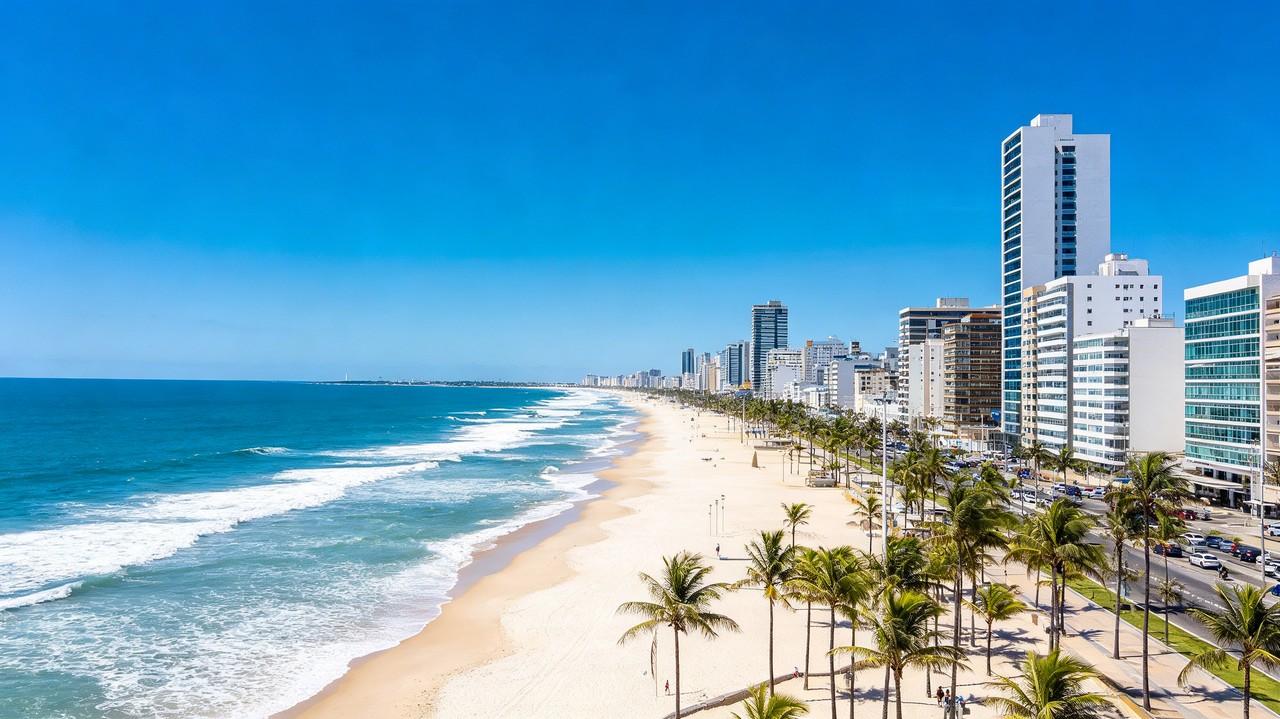
Study and travel programs in Brazil fall into four main categories, suitable for students of different ages and planning goals.
Language schools (4-48 weeks): Open to students aged 16 and above, focusing on intensive Portuguese courses with 15-20 class hours per week. Most schools offer placement tests and Celpe-Bras exam preparation classes. Courses start year-round on a rolling basis, making this the option with the lowest entry barrier and the most flexible scheduling.
Short-term summer programs (2-8 weeks): Usually starting in July (winter in the Southern Hemisphere), these combine Portuguese language courses with Brazilian cultural experiences, including Rio beach visits, samba workshops, coffee farm tours, and more. They suit high school and college students experiencing South American culture for the first time.
Semester/year exchange programs (1-2 semesters): These require an inter-institutional agreement between the student's home university in China and a Brazilian university. Tuition is typically waived reciprocally during the exchange, and language requirements are determined by the host institution. Some programs accept English-taught coursework (mostly in business administration and engineering).
Degree programs (4-5 years for bachelor's, 2 years for master's): Brazilian public universities charge no tuition for any student, treating international students the same as domestic students. Undergraduate programs are taught primarily in Portuguese, while the proportion of English-taught master's programs has been rising year by year.
In terms of application difficulty, language schools and summer programs require no language certificates; exchange programs require a recommendation from the student's home institution; degree programs have strict Portuguese or English proficiency requirements.
School and program recommendations: How to choose by budget, city, and major?
Brazil has no unified national university ranking system, but the following four public universities rank among the top in Latin America in the QS World University Rankings.
| Institution | City | Type | Annual Tuition (Public = Tuition-Free) | Suitable For |
|---|---|---|---|---|
| University of São Paulo (USP) | São Paulo | Public, QS No. 1 in Latin America | Tuition-free, registration fee approx. BRL 200/year | Those seeking academic prestige; master's/exchange applicants |
| State University of Campinas (UNICAMP) | Campinas | Public, strong in STEM | Tuition-free | Undergraduates in engineering and computer science |
| Federal University of Rio de Janeiro (UFRJ) | Rio de Janeiro | Public, notable for marine science/petroleum engineering | Tuition-free | Students in marine and energy-related fields |
| PUC-Rio (Private) | Rio de Janeiro | Private, more English-taught programs | BRL 45,000-60,000/year (USD 8,700-11,600 / CNY 63,000-84,000) | Students without Portuguese proficiency planning to study in English |
According to the University of São Paulo's official website, its 2026 international student application portal opens in August 2026, with undergraduate applications closing in January 2027; master's programs are admitted independently by each department (as of August 2026, source: University of São Paulo).
As for language schools, São Paulo and Rio de Janeiro offer the most concentrated selection. After comparative testing, editors of the USITrip platform recommend prioritizing a monthly course budget of BRL 2,500-4,000 (USD 483-772 / CNY 3,500-5,600), and suggest checking whether the school is an official Celpe-Bras test center, as this directly affects the convenience of further studies later on.
How does the application process work? What materials are needed?
Using Fall 2027 (August) enrollment as an example, the timeline is as follows:
| Time | Item |
|---|---|
| August-October 2026 | Finalize target institutions and programs; prepare language proficiency (Celpe-Bras or IELTS/TOEFL) |
| November-December 2026 | Obtain notarization and notarized translations (Portuguese or English) of transcripts and degree certificates |
| January-March 2027 | Submit institution applications; most public university undergraduate applications close at the end of January |
| April-June 2027 | Receive admission letters, apply for accommodation, and begin preparing visa materials |
| June-July 2027 | Schedule an appointment to submit the visa application at a Brazilian embassy or consulate in China |
| August 2027 | Purchase airfare and depart for Brazil for registration |
Core application materials checklist:
- Valid passport (valid for at least 6 months)
- University admission letter (must be in Portuguese or English)
- Highest degree certificate and transcripts (requiring notarization + consular authentication + Portuguese/English translation)
- Financial proof (bank statements or deposit certificates, covering the first year's living expenses, typically requiring over BRL 30,000)
- Notarized criminal record certificate (after issuance by a notary office, it needs to be authenticated at the Brazilian consulate)
- Language test scores (Celpe-Bras B2, IELTS 6.0, or TOEFL 80, depending on the institution's requirements)
- 2 passport-sized photos with white background and visa application form
Regarding language requirements, degree programs generally require Celpe-Bras intermediate (B2) level. Students who do not meet this requirement can first apply to language schools, obtain a language visa, and then convert to a student visa locally after arrival. This is the common "language + degree program" pathway for studying in Brazil.
Cost Breakdown: How much does one year actually cost?
The biggest advantage of studying in Brazil is that public universities are tuition-free. Even including living expenses, the total annual expenditure for public universities is approximately BRL 36,000-72,000 (USD 7,000-14,000 / CNY 50,000-100,000).
In comparison, traditional English-speaking study destinations such as New York, Toronto, and Sydney typically require USD 35,000-60,000 for one year of tuition plus living expenses. Brazil's budget advantage is very clear, which is also the core reason for the rising attention on studying in Latin America in recent years.
Tuition Details (as of August 2026):
| Item | Tuition |
|---|---|
| Public university undergraduate/master's | Tuition-free, only registration fee BRL 100-500/year |
| Private university undergraduate | BRL 25,000-50,000/year (USD 4,800-9,700 / CNY 35,000-70,000) |
| Language school | BRL 1,500-3,500/month (USD 290-680 / CNY 2,100-4,900) |
| Summer program (4 weeks) | BRL 6,000-10,000 (USD 1,160-1,930 / CNY 8,400-13,900) |
Living Expenses (using São Paulo as an example, monthly):
- Accommodation (shared single room): BRL 1,500-2,500 (USD 290-480 / CNY 2,100-3,500)
- Student apartment single room: BRL 2,200-3,800 (USD 425-735 / CNY 3,100-5,300)
- Homestay (including breakfast and dinner): BRL 2,500-3,500 (USD 480-675 / CNY 3,500-4,900)
- Dining (mainly eating out): BRL 1,200-1,800/month
- Transportation (subway + bus monthly pass): BRL 250-350/month
- Health insurance: BRL 150-400/month
Overall living costs in São Paulo are about 10%-15% lower than in Rio de Janeiro, while the southern cities of Curitiba and Porto Alegre are even lower. Multiple Chinese students studying in Brazil have reported that keeping monthly living expenses within BRL 3,000 (excluding accommodation) is feasible.
How to Apply for a Student Visa and Insurance?
The corresponding Brazilian student visa type is VITEM V (temporary visa category), processed by Brazilian consulates or visa centers within China. The standard review period is 15 working days, and it is recommended to submit your application at least 8 weeks before the semester starts.
In addition to the institution documents listed earlier, applying for a VITEM V also requires:
- Visa application form (printed after filling it out online)
- Round-trip flight reservation
- Proof of accommodation in Brazil or invitation letter
- Health insurance policy covering the entire period of stay
Since 2023, the Brazilian government has been processing some visa applications through the electronic visa system, but student visas still require in-person submission of biometric data (fingerprints). For specific document requirements, please refer to the latest announcement from the Brazilian Ministry of Foreign Affairs (as of August 2026).
Regarding insurance, Brazil does not mandate that international students purchase local insurance, but visa review requires applicants to provide proof of international medical insurance with a recommended coverage of no less than USD 30,000, which must include hospitalization, outpatient care, and emergency repatriation. After arriving in Brazil, students can purchase supplementary commercial insurance covering the Brazilian public healthcare system (SUS) locally, at approximately BRL 300-500 per month.
Within 30 days after entering the country, student visa holders must register as foreigners at the local Federal Police station and obtain a residence card (CRNM). Address and appointment information can be found on the Brazilian Federal Police official website.
How to Live, Get Around, and Stay Safe in Brazil?

Accommodation: Brazilian universities provide very few on-campus dormitories, with priority given to graduate students and exchange students. Undergraduates generally choose off-campus shared rentals. Around the University of São Paulo, a one-bedroom apartment rents for approximately BRL 2,000-3,000 per month (USD 386-580 / CNY 2,800-4,200). Renting typically requires a 1-2 month deposit and a guarantor; international students can negotiate paying a full year's rent in advance in lieu of a guarantor.
Transportation: The São Paulo metro covers major areas of the city, with a single-trip fare of about BRL 5; the Rio metro fare is about BRL 6.50 (as of August 2026). Students can apply for a half-price monthly bus pass with their student ID. For intercity travel, long-distance buses are recommended. São Paulo → Rio takes about 6 hours, with fares of BRL 150-250 (USD 29-48 / CNY 210-350), more than 40% cheaper than domestic flights.
Safety Tips:
- It is relatively safe to be active in tourist areas during the day; avoid walking alone at night. Use Uber or the 99 ride-hailing app; a single in-city trip costs about BRL 25-50
- Carry minimal cash, and do not casually use your phone on the street; wear your backpack diagonally across your body
- In an emergency, call 190 (police), 192 (first aid), or 193 (fire)
- Stay away from non-open areas of favelas; even when accompanied by local friends, caution is required
Work Policy: Under Brazil's Immigration Law (Lei 13.445/2017), student visa holders can apply to the Federal Police for part-time work authorization; whether it is approved depends on academic performance and length of stay. It is worth noting that language school students typically find it harder to obtain part-time work permits, so budget planning should not rely on work income.
Brazil Study Abroad FAQ
Can Chinese students apply to Brazilian public universities?
Yes. Brazilian public universities accept applications from international students, and both undergraduate and master's applicants can submit materials directly to the university's international office. Undergraduate admissions are competitive, with some popular majors having an acceptance rate below 20%. Master's admissions are relatively more flexible, where the advisor's willingness to accept is the key factor.
Can I study in Brazil without knowing Portuguese?
Yes, but options are limited. English-taught programs are mainly offered at private universities (such as PUC-Rio and FGV) and in majors such as business administration and computer science. Most Chinese students first attend a language school for 4-8 months and then apply for degree programs after passing Celpe-Bras B2; this path has a higher success rate.
Can I directly switch to a student visa after finishing language school?
Yes. After entering the country on a language course visa, once you receive a university admission offer, you can apply to the Federal Police to change your visa type to a student visa (VITEM V) without leaving the country.
What scholarships are available for studying in Brazil?
The Brazilian government mainly provides PEC-G undergraduate scholarships to Latin American and African countries; Chinese students are not covered by this program. Chinese students can focus on applying for internal research assistant scholarships at Brazilian universities (common at the master's level, approximately BRL 2,500-4,000 per month) and research project grants from the São Paulo Research Foundation (FAPESP).
What is the most convenient way to fly from China to Brazil?
The main routes transit through Europe (Paris, Frankfurt) or Dubai, with a total travel time of about 22-28 hours. There is no regular direct flight between Shanghai and São Paulo (as of August 2026). Round-trip airfares typically range from CNY 8,000-15,000; booking 3-4 months in advance can secure better discounts.
Can I stay and work in Brazil after completing my studies?
Yes, you can apply for a work visa. Brazil's immigration law allows international students to apply for a residence permit to look for work after graduation, usually valid for 12 months. After finding an employer, you can convert to a work visa. There is strong demand for positions at Chinese-invested enterprises in civil engineering, petroleum, agricultural technology, and information technology.
Practical Resources
I. Reference Materials (Official Source Links)
- Central Bank of Brazil — Official exchange rates and macroeconomic data
- Brazilian Ministry of Foreign Affairs — Visa policy and consular service information
- Federal Police of Brazil — Foreigner registration and student visa matters
- University of São Paulo — Brazil's top-ranked public university
- State University of Campinas — A leading Brazilian public research university
II. About USITrip
USITrip, founded in 2004, has long specialized in South American destinations, providing international airfare, airport transfers, pre-departure accommodation, and itinerary planning consulting for students and families planning to study in Brazil. Official website: https://www.usitrip.com/ China service hotline: 400-998-8038.
Recommended Products
More Popular Experiences
![[Hondis·Five countries in South America & Antarctica·33 days of dreams come true] Chinese-speaking tour guide + including full international segment & intra-South American air tickets & multiple departures + 8 major food tastings in South America + Ushuaia + Antarctic Peninsula + Bui + Iguazu Falls + Manaus + Santiago + Valparaíso / Easter Island + Lima + Cusco + Sacred Valley + Machu Picchu + Nazca Land Painting](https://qiniu.usitour.com/images/picture/2024/07/detail_22_66a8965f9b68e.png?imageView2=2&w=1920&q=70&format=webp)
![[Antarctic Nansen cruise + 33 days in depth in five South American countries] Hurtigruten (Nansen ocean view cabin) + Brazil + Argentina + Uruguay + Chile + Peru Chinese-speaking tour guide Machu Picchu | Includes air tickets for the entire international section and South American internal section + full stay at local 4-star and specialty hotels + free upgrade to five-star hotels in Bui and the Sacred Valley](https://qiniu.usitour.com/images/picture/2024/08/detail_29_66bb230985f99.jpg?imageView2=2&w=1920&q=70&format=webp)