Quick Facts
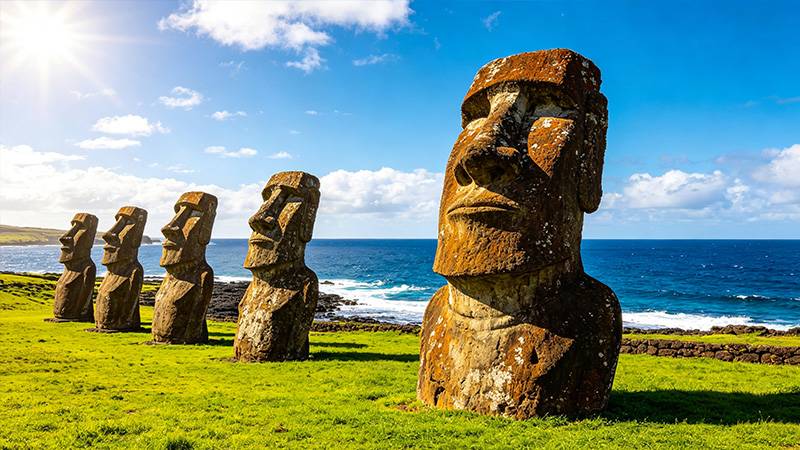
Easter Island is located in the Pacific Ocean about 3,700 kilometers west of mainland Chile, making it one of the most isolated inhabited islands in the world. It is famous for its roughly 900 Moai statues (according to statistics from Wikipedia). The island covers an area of 163.6 square kilometers with a permanent population of about 8,000, yet due to the flight monopoly and its reliance on air and sea freight for supplies, it has become a destination with relatively high barriers for independent travelers. This guide is compiled based on information from the official Easter Island website, LATAM flight information, and first-hand feedback from editors on the Usitrip platform. All prices and policies are current as of September 2026.
Essential Pre-Trip Information: What Formalities Do You Need to Enter Easter Island?
Visiting Easter Island requires three things: a Chilean visa or visa-free eligibility, the FUI island entry declaration form, and pre-booked licensed accommodation. All three are indispensable, and it is recommended to process them in parallel while booking your flights.
Visa Policy: Chinese passport holders need to obtain a Chilean visa; however, those holding a U.S. or Canadian visa (tourist or business type) valid for more than 6 months may enter Chile visa-free for up to 90 days (as of September 2026, source: Embassy of Chile in China). Most travelers transit through the U.S. or Canada, which conveniently satisfies this visa-free condition.
FUI Island Entry Declaration Form: Since 2018, all non-Rapa Nui indigenous persons (including residents of mainland Chile) must complete a unified declaration form (FUI) online before entering the island. The form typically opens for completion a few days before the flight departs and requires passport information, flight number, and island accommodation details, with a maximum stay of 30 days per visit and no extensions (as of September 2026, source: Easter Island Unified Declaration System official website). After approval, save the electronic confirmation, which will be verified at check-in.
Tickets: All the statue sites on the island are located within Rapa Nui National Park. The foreign adult ticket costs USD 80 (approximately 75,000 Chilean pesos / approximately 570 RMB) and is valid for 10 days from first use, but each site may only be visited once; children and Chilean domestic tourists enjoy discounts. Tickets can be purchased on the official website or at ticket offices on the island (as of September 2026, source: Easter Island official website). During peak season, it is advisable to buy tickets online in advance, as there may be long lines at on-site ticket windows.
Best Season: December to March is the Southern Hemisphere summer, with temperatures of 22-28°C and sea conditions most suitable for diving and boating, but prices are highest and accommodation must be booked 2-3 months in advance. In early-to-mid February, the Tapati Cultural Festival runs for about two weeks, featuring grass sledding (haka pei), canoe races, and Polynesian song and dance—a superb experience, though accommodation is tight. September to November is the shoulder season, with fewer crowds and lower prices. June to August is winter, with temperatures of 18-22°C, frequent rain and wind, and a higher probability of flight delays.
Budget Overview (5 days 4 nights, per person, three currencies): Conversions are based on rates as of September 2026: 1 USD ≈ 932 Chilean pesos, 1 USD ≈ 7.1 RMB. All amounts in this article are approximate.
| Item | Chilean Peso (CLP) | US Dollar (USD) | RMB (CNY) |
|---|---|---|---|
| Round-trip flights (from Santiago) | 510,000-750,000 | 550-800 | 3,900-5,700 |
| Accommodation (4 nights) | 190,000-560,000 | 200-600 | 1,400-4,300 |
| Meals | 93,000-140,000 | 100-150 | 710-1,065 |
| Island transportation (2-day car rental + taxis) | 100,000-150,000 | 110-160 | 780-1,135 |
| National Park ticket | 75,000 | 80 | 570 |
| Experiences (diving, shows, etc.) | 51,000-93,000 | 55-100 | 390-710 |
| Total | approx. 1,020,000-1,770,000 | approx. 1,100-1,900 | approx. 7,800-13,400 |
How to Get to Easter Island? A Detailed Guide to Round-Trip Flights and Island Transportation
There are no ferries to Easter Island; flying is the only way in and out. Mataveri Airport (IPC) is about 1.5 kilometers from the center of Hanga Roa town, making it one of the few airports in the world located so close to a town center.
Round-Trip Flights (as of September 2026, source: LATAM official website):
- Route 1: Santiago (SCL) → Mataveri Airport (IPC), approx. 5.5-6 hours, one-way fare approx. 370,000 Chilean pesos (approx. USD 400), 1-2 flights daily in peak season
- Route 2: Papeete (Tahiti) → IPC, approx. 5 hours, fewer flights (usually about one per week), suitable for combining with French Polynesia
- Reference fares: Santiago round-trip approx. USD 550-800 (approx. 510,000-750,000 CLP / approx. RMB 3,900-5,700), rising to as much as USD 900 during the February Tapati Festival and the Christmas/New Year period
LATAM is the only airline operating this route, and prices remain persistently high. Many travelers report that booking 2-4 months in advance and avoiding Friday and Sunday flights usually gets you a lower price; this route is prone to delays or diversions due to strong winds, so don't book a tight onward connection on your day of departure from the island.
Airport → Town: Airport transfer: IPC Airport → Hanga Roa town, ride takes about 5-10 minutes, cost approx. 3,000-10,000 CLP (approx. USD 3-11 / approx. RMB 23-76). Most accommodations offer free airport pickup—just confirm when booking; taxis have no meters, so negotiate the fare before getting in.
Getting Around the Island: There is no public transportation on the island whatsoever (no buses, no ride-hailing services). The answer to "should you rent a vehicle?" is: yes, but renting for 2 days is enough to cover the entire island (a full loop is about 60 km).
| Option | Reference cost | Best for | Notes |
|---|---|---|---|
| Rental car | USD 55-75/day (approx. 51,000-70,000 CLP / approx. RMB 390-530) | 2-4 people | The main ring road is paved; the side roads to Ahu Akivi and Puna Pau are dirt roads |
| ATV quad bike | USD 70-90/day | Off-road enthusiasts | Dirt roads turn muddy after rain; take protective measures |
| Scooter | USD 35-50/day | Solo light travelers | Helmet required; be careful on windy stretches |
| Bicycle | USD 15-20/day | Budget travelers | Suitable for nearby areas like Tahai and Puna Pau; the climbs toward the north coast are strenuous |
| Half-day minibus tour | USD 40-70/person | Non-drivers | Includes pickup/drop-off and Spanish/English commentary |
| Taxi | Short trips from 3,000-5,000 CLP; cross-island one-way 15,000-25,000 CLP | Emergencies | No meters; negotiate the fare |
To rent a vehicle, you must present your passport, original driver's license, and an English translation (or certified translation), subject to the rental company's requirements; fuel costs approx. 1,200-1,500 CLP/liter, and a full tank is enough for two loops around the island. When picking up and returning the vehicle, take a video of the car body as evidence, and confirm the insurance deductible (commonly USD 300-800).
Where Is the Most Convenient Place to Stay in Hanga Roa?
Legal accommodations on the island are concentrated in and around the only town, Hanga Roa, and can be divided into four areas by budget and location. Note: the FUI declaration requires you to fill in your accommodation information, and under local regulations you must stay in licensed accommodations; overnight stays on beaches or in vehicles are not allowed, and violators will be fined.
| Area | Reference rate/night | Features | Best for |
|---|---|---|---|
| Main street Atamu Tekena and harbor area | USD 50-120 (approx. 47,000-110,000 CLP / approx. RMB 355-850) | Restaurants, supermarkets, and shops within walking distance; most convenient for daily life | First-time visitors, travelers without a car |
| West of the harbor toward Tahai | USD 130-300 (approx. 120,000-280,000 CLP / approx. RMB 920-2,130) | Quiet, walkable for sunsets, some with ocean views | Couples, photography enthusiasts |
| Airport road and southern edge of town | USD 40-90 (approx. 37,000-84,000 CLP / approx. RMB 285-640) | Best value for money; 5-10 minute walk into the town center | Long stays, budget travelers |
| Outlying standalone resorts | USD 400-1,500+ (approx. 370,000-1,400,000 CLP / approx. RMB 2,840-10,650) | All-inclusive price covering meals and guided tours; highly private | Honeymooners, high-end travelers |
Two money-saving tips: First, Chile exempts foreign tourists from the 19% IVA (VAT) if they register with their passport, pay in foreign currency, and stay no more than 90 days—proactively confirm with your host whether this applies when booking; Second, December through February is peak season, when mid-to-high-end coastal lodgings are often fully booked 2-3 months in advance, while budget guesthouses remain relatively flexible.
Visiting the Attractions: Tickets, Opening Hours & Recommended Duration
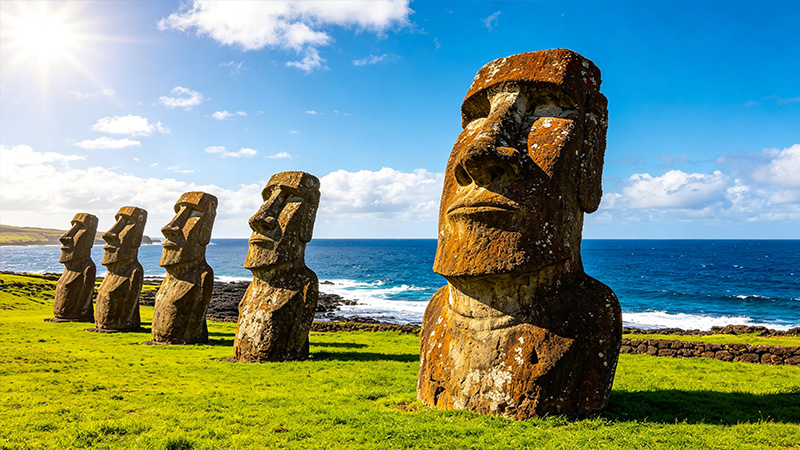
Unless otherwise noted, all attractions below require a national park ticket; regular opening hours across the island are approximately 9:30-17:30, possibly extended during peak season—refer to the same-day announcements on the official website. Remember the core rule: each ticket allows only one entry per attraction, so don't schedule the same site more than once in your itinerary.
- Rano Raraku Quarry: The "birthplace" of the moai, with around 400 statues in various stages of carving still remaining on the hillside, plus an unfinished giant statue about 21 meters long; included in the pass, limited to one entry; recommended duration 1.5–2 hours.
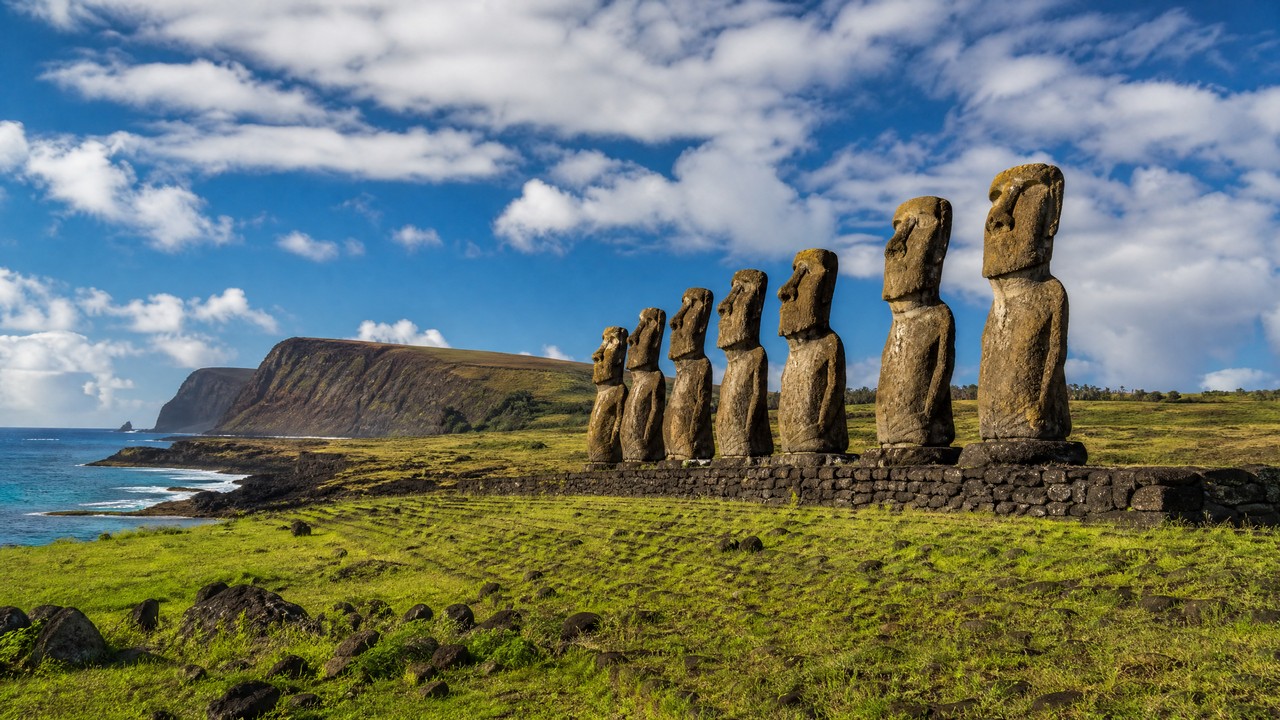
- Ahu Tongariki (southeast coast of the island): 15 moai lined up in a row, the largest ahu (altar) on the island (about 220 meters long); it was toppled by the tsunami triggered by Chile's 9.5-magnitude earthquake in 1960 and restored in the 1990s; about 20 km from town, a 25–30 minute drive; most spectacular at sunrise with the backlight; recommended duration 0.5–1 hour.
- Anakena Beach (Anakena, north coast of the island): a white coral-sand beach with the Ahu Nau Nau moai group wearing red topknots, the best beach on the island for swimming, but with no lifeguards; the beach itself is free, while the altar area requires showing your ticket; recommended duration 2 hours.
- Orongo Ceremonial Village Ruins (Orongo, on the rim of Rano Kau crater): a ceremonial village made up of 53 stone houses, where you can see birdman petroglyphs and cliff views overlooking three islets, bearing witness to the birdman cult that arose after the end of the moai era (approximately 16th–19th centuries); included in the pass; recommended duration 1–1.5 hours.
- Ahu Tahai (Tahai, within walking distance of Hanga Roa): a 20–30 minute walk from the town center; the Ko Te Riku statue is one of the few on the island restored with coral eyes and a topknot, and it is also the number one spot for watching the sunset; recommended duration 1 hour, arrive 1 hour before sunset to secure a spot.
- Ahu Akivi (west-central part of the island): 7 moai facing the sea, said in legend to represent the seven scouts sent ahead by the first king; restored in 1960; about 10 km from town; soft light and fewer visitors; recommended duration 0.5 hours.
- Puna Pau and Ahu Vinapu: the former is the quarry for the red topknots (pukao), while the latter sits right next to the airport, its stonework so finely crafted that it is often compared to Inca walls; 0.5 hours each recommended, and they can be arranged along the way.
- The "Navel of the World" Stone and Te Pito Kura (north coast of the island): where Paro, the largest transported moai on the island (9.8 meters tall, about 82 tons), lies fallen, alongside a round boulder said to possess magnetic properties; about a 35 km round trip from Hanga Roa; recommended duration 0.5 hours.
- Three hidden gems in town: the Easter Island Post Office (on the main street) offers moai commemorative postmarks for sending postcards; Sunday mass at Holy Cross Church features Polynesian hymns; the nearby cemetery is famous for its painted tombstones and ocean-view locations. The island also has volcanic caves such as Ana Kai Tangata (a cave with seabird murals) and Ana Te Pahu, as well as Kari-Kari Cave; when exploring caves, always go with companions and carry lighting equipment.
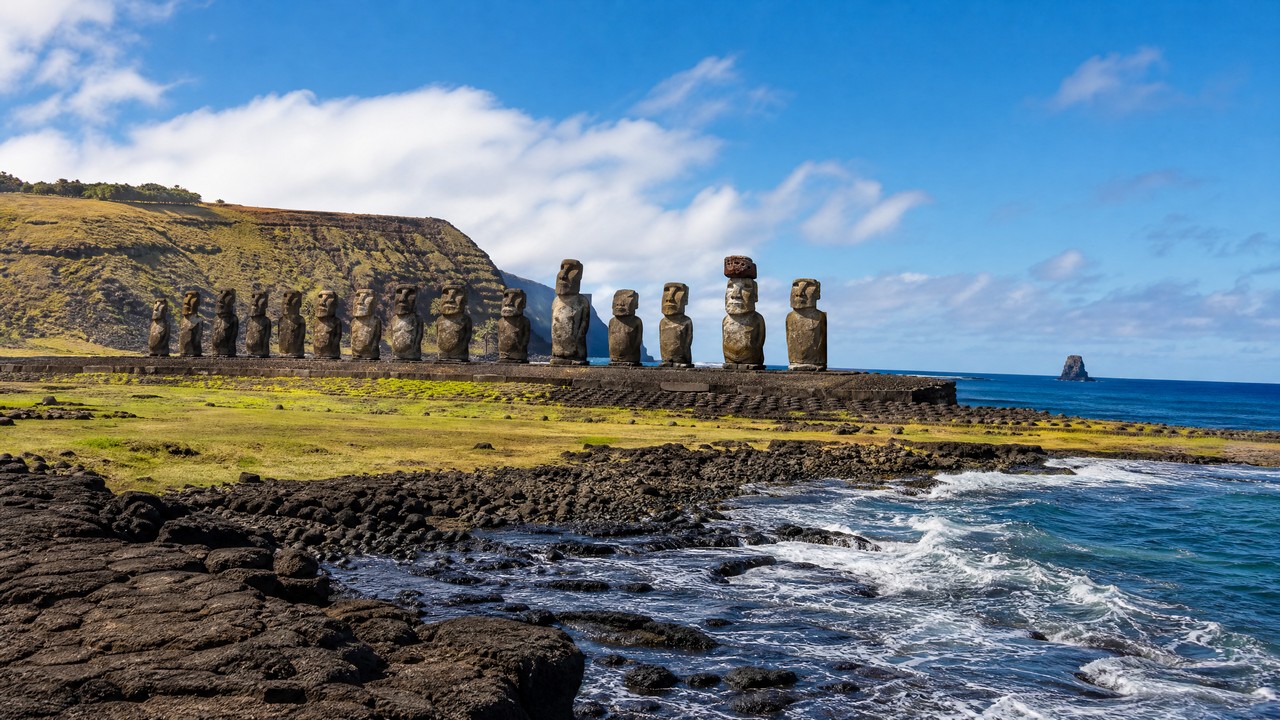
One piece of background data to help you plan and prioritize: roughly 900 moai and some 300 ahu (altars) remain on the island today. The top attractions listed above already cover the vast majority of the highlights, and the statues scattered elsewhere are mostly roadside sights that can be viewed for free from a distance — there is no need to check off every single one.
Only Have 3, 5, or 7 Days? How Should You Plan the Itinerary?
Following the rhythm of "three main attractions per day," here are three itineraries. After field testing, the editors of the Usitrip platform concluded that 4 nights/5 days is the best-value option, 3 days is a bit rushed, and 7 days suits travelers who want an in-depth experience or hope to catch the Tapati Festival.
3-Day Compact Version
- D1: Arrive → check in at a hotel on the main street, visit Holy Cross Church and the handicraft market → walk to Tahai in the evening for sunset
- D2: Rent a car; southeast route + north coast: Rano Raraku → Ahu Tongariki → swimming at Anakena Beach (Te Pito Kura en route)
- D3: Orongo + Rano Kau crater → get the postmark at the post office, do some shopping → depart the island
5-Day Standard Version
- D1: Arrive → sunset at Tahai → dinner on the main street
- D2: Rent a car: Rano Raraku → Ahu Tongariki → Anakena (the "Navel of the World" Stone on the way back)
- D3: Orongo ruins → in the afternoon, Ahu Vinapu + airport viewpoint → town market
- D4: In the morning, Ahu Akivi or a horseback ride up Maunga Terevaka (the island's highest point at 507 meters); in the afternoon, try diving or take a boat trip to see sea turtles
- D5: Shop at the morning market → depart the island
7-Day In-Depth Version: Building on the 5-day plan, add cave exploration (Ana Kai Tangata, Ana Te Pahu), Puna Pau and several coastal hikes, plus beach time on two different routes; if you visit in early-to-mid February, you can fully experience the climax events of the Tapati Festival. The 7-day version doesn't require rushing every day — setting aside half a day simply to wander around the cafés and the harbor is, in fact, the right way to experience Rapa Nui.
Flexible Adjustment Suggestions:
- Must-visit: Rano Raraku, Ahu Tongariki, Tahai sunset, Anakena Beach — even when time is tight, these cannot be cut
- Skippable: Puna Pau, the cemetery, the Vinapu stone figures (for those not interested in stone masonry)
- Bad-weather alternatives: on days of heavy rain and strong wind, cancel boat trips and diving and switch to cave exploring, the Holy Cross Church, the Anthropological Museum (housing artifacts including the original coral eyes unearthed from the moai; opening hours subject to on-site confirmation), and the Kari Kari cultural dance performance
- Key reminder: each ticket allows only one entry per site, so try to schedule your rental car days during weather windows; if it rains the next day, decisively swap the order of the east route and Orongo (Birdman Village)
What to Eat on the Island? Food Map and Ordering Tips to Avoid Pitfalls
Easter Island cuisine centers on tuna. Supplies arrive by air, making prices about 1.5–2 times those of mainland Chile, but the seafood freshness is impeccable.
- Tuna three ways: sashimi (locally called kahi), smoked tuna, and iron-plate tuna; mains run USD 15–30 per person (about 14,000–28,000 CLP / about 105–215 RMB)
- Tuna pie: the most affordable local snack, 3,000–5,000 CLP (about USD 3–5 / about 23–38 RMB) each, sold at markets and bakeries
- Umu Taro earth-oven feast: a traditional stone-pit roast similar to the Polynesian Curanto, featuring fish, chicken, taro, and bananas; 25,000–40,000 CLP per person (about USD 27–43 / about 190–305 RMB), with most requiring reservation one day in advance
- Po'e dessert: a pudding-style dessert made from cassava or banana, served with coconut cream
- Reputation reference: according to review data and feedback from numerous travelers, La Kaleta by the port (seafood), Te Moai Sunset on the main street (sunset-view seating), and Tataku Vave on the oceanfront terrace (lobster and tuna) have long maintained consistently solid ratings
Pitfall-avoidance tips:
- Lobster is priced per piece and prices fluctuate widely (about 45,000–70,000 CLP each); confirm the day's price and weight in person before ordering
- Beware of "today's specials" and set meals recommended by touts at the door; ask clearly whether service charges and tips are included (local custom is about 10%, and some bills already include it)
- When selecting fresh seafood, order by "portion" rather than by weight to avoid disputes over weighing
- Self-help plan: there are several supermarkets in town where you can buy fruit, bread, and mineral water yourself; for drinking water, it is recommended to always drink bottled water
What Pitfalls Do Independent Travelers Easily Encounter? Safety and Practical Tips
Easter Island's public safety ranks among the best in Chile, with a low theft rate and safe nighttime walking along the main street; the real risks are concentrated in two areas: rules and nature.
Common overcharging and violation scenarios:
- FUI not filled out or park ticket not purchased: you may be denied boarding at check-in, while buying on-site means queuing and possible sell-outs in high season — be sure to complete this online before departure
- Standing on or climbing the altars: climbing an Ahu altar is illegal and can result in fines or even being required to leave the island; drones within the national park require written permission from Chile's National Forest Corporation (CONAF) and the park management — never fly without authorization
- The moai "second entry" trap: the ticket allows only one entry per site, and some shared-car tours split visits into two segments, which can void your ticket
- Last-minute price hikes for sunrise charters: seeing the sunrise at Ahu Tongariki requires departing around 4:30 a.m., at prices higher than daytime rates; agree on the total price before departure and confirm the return trip
- Currency exchange and cash: there are no bank branches on the island, and ATMs are concentrated at two or three branches such as Banco Estado, with a risk of cash shortages in high season; bring a small amount of emergency cash. Card payments are mainly Visa/Mastercard, UnionPay is essentially unusable, and some small shops add a card surcharge or set a minimum purchase amount
Safety and Health:
- Ocean risks outweigh safety risks: waves are strong along the rocky reefs of the southwest coast; swimming is only recommended at Anakena and Ovahe beaches, watch out for rip currents, and note there are no lifeguards anywhere on the island
- Limited medical conditions: there is a hospital on the island, but serious cases require transfer to Santiago — be sure to purchase travel insurance that includes medical evacuation
- Sun protection is a must: at a latitude of about 27°S, UV rays are strong; use SPF50+ sunscreen together with physical sun protection
- Connectivity: Entel has the best signal coverage; the main street and most accommodations have Wi-Fi, but overall speeds are limited — download offline maps in advance
- Language: Spanish and Rapa Nui are the official languages; English communication in the tourism industry is passable. Remembering Iorana (hello/goodbye) and Maururu (thank you) will make you more welcome
- Time difference and voltage: UTC-6 (UTC-5 during daylight saving time), 2 hours behind mainland Chile; voltage is 220V with type C/L plugs
Q: Do Chinese citizens need a visa to visit Easter Island?
A: A Chilean visa is required; however, holders of a US or Canadian visa (tourist or business type) valid for more than 6 months may enter Chile visa-free for 90 days (as of September 2026, source: official website of the Chilean Embassy in China). In addition, regardless of visa-free status, all visitors must complete the FUI declaration form online and pass review before traveling to the island; the maximum stay is 30 days.
Q: Can you enjoy Easter Island without knowing how to drive?
A: Yes. The sights in town (Tahai, the church, the post office) are within walking distance; outlying sights can be covered by half-day group minibus tours (USD 40–70 per person) or a combination with taxis, though this costs more than renting a car and offers less schedule flexibility. For solo travelers staying 4 days or longer, group tours plus walking is the mainstream approach.
Q: What does the USD 80 ticket include? Can you re-enter the sites?
A: The ticket covers Rano Raraku, Ahu Tongariki, Orongo (Birdman Village), the Anakena altar area, Ahu Akivi, Puna Pau, and other sites, and is valid for 10 days; however, each site allows only one entry, and a second entry to the same site requires purchasing a new ticket (as of September 2026, source: the official Easter Island website).
Q: Is the Tapati Festival in February worth making a special trip for?
A: Yes, but at a price. During the festival, you can watch the grass sledding haka pei (competitors riding banana-trunk sleds down a hillside at roughly a 45-degree slope), canoe races, and the tribal song and dance finals—the cultural intensity is several times that of ordinary times. The cost is that flights and accommodation prices rise and must be booked 2–3 months in advance, and some attractions are subject to temporary access restrictions due to festival events.
Q: How should a one-day itinerary avoid "invalidated ticket" mistakes?
A: Work backward using the "one ticket, one entry" principle: schedule Rano Raraku and Ahu Tongariki on the same self-driving day (the two sites are about 2 km apart); Anakena Beach itself is free for swimming, with ticket checks only at the altar area, so you can visit twice but only enter the altar area once; Tahai, the sunset-viewing spot, is located at the edge of town—if ticket checks are strict, enter with your ticket, and arriving 1 hour before sunset is sufficient.
Practical Resources
I. Reference Materials (Summary of Official Source Links)
- LATAM Airlines Official Website — Flight bookings and schedule inquiries for round trips between Santiago/Papeete and Easter Island
- Easter Island National Park Official Website — Ticket purchases, attraction opening hours, and visiting rules
- Easter Island Unified Declaration System (FUI) — The declaration form that must be completed before arriving on the island
- Chile's National Forest Corporation (CONAF) — National park management and drone permit approvals
- Embassy of Chile in China — Official information on visa and visa-free policies
II. USITrip
Founded in 2004, USITrip has long provided professional and reliable consultation and booking services for Chinese travelers. For travelers planning a trip to Easter Island, USITrip offers Chinese-language consultation on Santiago transit connections, on-island itineraries, and accommodations, helping to simplify the cross-language, cross-time-zone planning process. For more destination guides and travel information, visit the official website at https://www.usitrip.com/ or call the China hotline at 400-998-8038.
Recommended Products
More Popular Experiences
![[Chile·Easter Island Exploration Tour 3-Day Tour] Explore Easter Island + observe the giant stone statues up close + experience the island’s indigenous culture | Tickets included | Breakfast included in the entire trip (English tour)](https://qiniu.usitour.com/images/picture/2023/12/detail_90_65848fba9445a.jpg?imageView2=2&w=1920&q=70&format=webp)
![[In-depth South American Five Countries on the 22nd] Sao Paulo + Monte Jesus + Iguazu Falls across two countries + Buyi + Glacier National Park + Ushuaia + Santiago + Easter Island / Winery Wine Tasting Cultural Tour + Lima + Machu Picchu + Amazon + Nazca Land Painting + Full South American flight ticket included + Full stay at local 4-star and specialty hotels + Full local Chinese and English tour guide service](https://qiniu.usitour.com/images/picture/2024/07/detail_96_66a89564052ca.jpg?imageView2=2&w=1920&q=70&format=webp)
![[Chile 4-day tour] Easter Island trip | Check in to the mysterious stone statues* and experience the island’s indigenous culture (English group)](https://qiniu.usitour.com/images/picture/2024/12/detail_99_674e9ac0ba62d.jpg?imageView2=2&w=1920&q=70&format=webp)