

Clausen Synagogue and Funeral Hall are located in Josephus City (Jewish Quarter) in Prague and belong to the Prague Jewish Museum System: the Baroque Clausen Synagogue is the largest synagogue in the Jewish Quarter, and the adjacent Funeral Hall displays Jewish funeral customs and relics., adjacent to the Old Jewish Cemetery. This guide is based on sources such as the Jewish Museum, UNESCO, DPP, Prague Castle official website, etc., and covers pass prices, opening hours, transportation routes, a
Quick Facts
What Are the Klausen Synagogue and Ceremonial Hall? Who Are They For?
The Klausen Synagogue and Ceremonial Hall is located in Josefov (the medieval Jewish Quarter) on the north side of Prague's Old Town, right next to the famous Old Jewish Cemetery. It consists of two buildings: the Klausen Synagogue is the largest synagogue in Prague's Jewish Quarter, solemn and magnificent in Baroque style; the adjacent Ceremonial Hall was built between 1906 and 1908 in Neo-Romanesque style and originally belonged to the Jewish Burial Society (Chevra Kadisha), with artifacts related to Jewish burial customs displayed inside. Both are part of the Prague Jewish Museum system, and their exhibitions systematically present Jewish religious rites, festivals, and life traditions, making them a key stop for understanding the centuries of Jewish history in Josefov (according to the Prague Jewish Museum official website, as of September 2026).
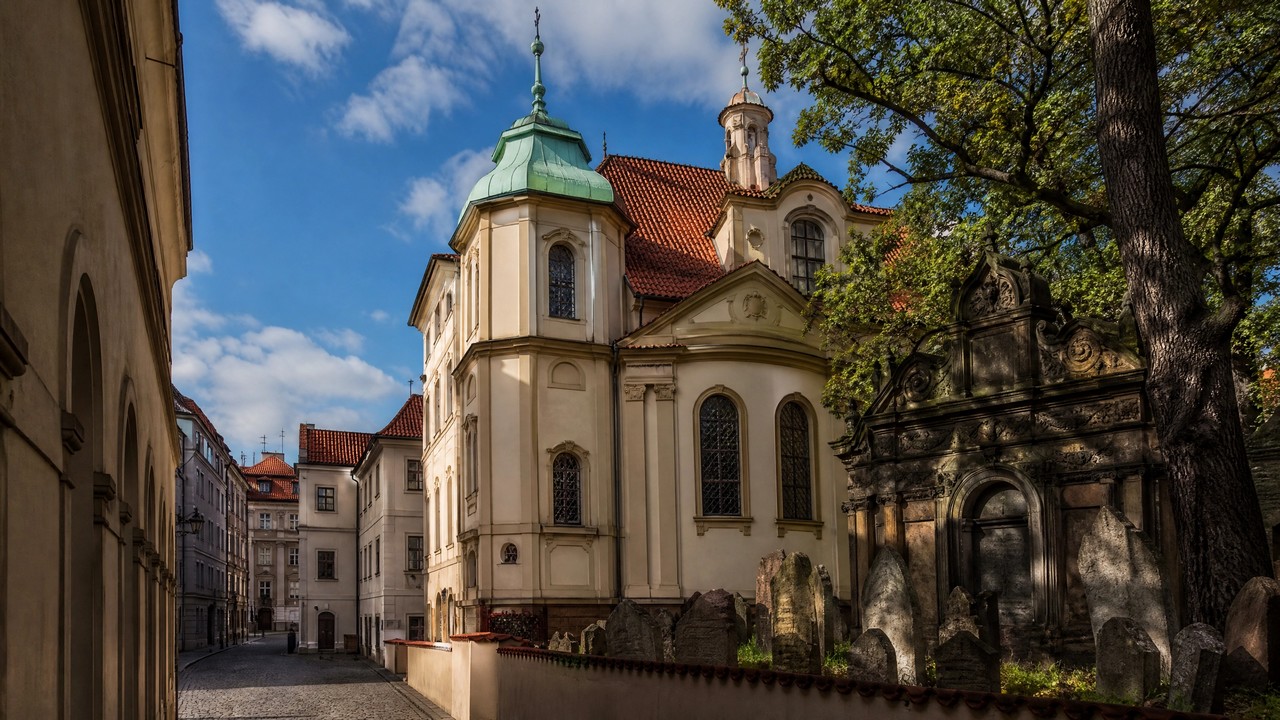 Klausen Synagogue and Ceremonial Hall in Prague, Czech Republic
The name "Klausen" comes from the Latin clausa (meaning "enclosed place"): in the 1580s, Jewish community leader Mordechai Maisel built a complex here consisting of a synagogue, a Talmudic school, and a ritual bath (the "Klausen"); after the great fire of Josefov in 1689, the complex was rebuilt in Baroque style in 1694 with funding from the Viennese Jewish financier Samuel Oppenheimer, and after several renovations thereafter it became the largest synagogue in the Jewish Quarter. The interior of the synagogue features Baroque stucco decoration and arched galleries. The permanent exhibition "Jewish Customs and Traditions" was completed in the mid-1990s and focuses on Torah scrolls, the Jewish calendar and festivals, synagogue rituals, and life-cycle ceremonies, naturally connecting with the visiting route of the adjacent Old Jewish Cemetery.
Who It Is Suitable For
- Tourists interested in history, religious culture, and architecture who want a systematic understanding of Prague's Jewish history
- Kafka-themed tourists — Josefov is precisely Kafka's birthplace and the core area of his activities
- Families with children of school age and above can visit together, but the exhibitions involve Holocaust remembrance, and the atmosphere is solemn, so it is not suitable for very young children
- Tourists seeking light entertainment-oriented projects may find the experience rather heavy, and can pair it with other attractions to adjust the pace
Best Time to Visit
April–June and September–October have pleasant weather and are the overall best travel windows for Prague (according to CzechTourism visitor data, July–August is the peak season for inbound tourism in the Czech Republic). Two hard reminders: first, the venues of the Jewish Museum are closed every Saturday (Shabbat), and opening hours are also adjusted on major Jewish holidays, so please schedule your Josefov itinerary from Sunday to Friday; second, in peak season (July–August), the Old Jewish Cemetery is crowded, and many visitors report that the experience inside is most relaxed during the morning opening period. All prices in this guide are converted according to platform exchange rate data (2026-09-16: 1 USD ≈ 21.06 CZK ≈ 6.73 CNY, rounded).
Historical and Academic Background: Why Are These Two Buildings Worth a Closer Look?
The Prague Jewish Museum was founded in 1906 and reopened to the public in 1994. According to its official website, its collection contains about 40,000 artifacts and 100,000 books, making it one of the largest Jewish-themed collections in Europe. Several synagogues, the ceremonial hall, the Old Jewish Cemetery, and galleries in Josefov are all uniformly managed, exhibited, and researched by the museum. Therefore, the exhibitions in the Klausen Synagogue and the Ceremonial Hall are not isolated "attraction displays," but part of the entire Jewish Museum research system. A few details that are often overlooked:
- Building dating: The Baroque main body of the Klausen Synagogue took shape in 1694; the ceremonial hall is a work of the early 20th century (1906–1908). The two buildings are separated by more than two hundred years, neatly linking together the "medieval—early modern—modern" spatial layers of Josefov.
- Period of use of the Old Jewish Cemetery: The oldest tombstone in the cemetery dates back to 1439 (the grave of Rabbi Avigdor Kara). Because of the ban on burials within the city during the reign of Joseph II, it ceased to be used after 1787; about 12,000 tombstones stand in layer upon layer, with as many as 12 layers of underground tombs, and an estimated 100,000 people are buried there.
- Inscription in the Pinkas Synagogue: The names of 77,297 Jewish victims from Bohemia and Moravia on the walls were, according to museum materials, designed by the painters Václav Boštík and Jiří John and inscribed successively in the 1950s. The names were compiled from wartime transport lists and constitute one of the largest memorial inscriptions of its kind in Europe.
- World Heritage status: The historic center of Prague was inscribed on the UNESCO World Heritage List in 1992, and the synagogue complex of Josefov and the Old Jewish Cemetery are part of it (source: UNESCO World Heritage Centre).
Readers interested in architectural history, Jewish history, and Holocaust memory studies can treat this route as an "open-air archive" to walk through; ordinary tourists following the combined-ticket route can also gain a clear chronological thread.
How to get to Prague? How should city transportation be arranged?
Václav Havel Airport Prague (PRG) is the main gateway. As of September 2026, there are currently no direct flights from China, and common routes involve transfers in Frankfurt, Vienna, Istanbul, Helsinki, and other places, with the whole journey taking about 13–18 hours; from other European cities you can arrive by train, with Vienna→Prague taking about 4 hours and Berlin→Prague about 4.5 hours. Buying tickets in advance on the railway official websites often yields discounts.
Comparison of airport→city center options (as of September 2026, source: Prague Airport official website)
| Method | Route | Time | Reference cost |
|---|---|---|---|
| Bus No. 119 + Metro Line A | Airport→Nádraží Veleslavín→city center | About 40 minutes | CZK 40 (US$1.9 / CNY 13) |
| Airport Express AE bus | Airport→Central Railway Station | About 35 minutes | CZK 100 (US$4.7 / CNY 32) |
| Taxi/ride-hailing | Airport→Old Town | About 25–30 minutes | CZK 500–700 (US$24–33 / CNY 160–224) |
City transportation
Prague's public transport consists of three metro lines (A/B/C) and a dense tram network, with a common ticket valid across all lines (as of September 2026, source: Prague Transport Official Website):
| Ticket Type | Validity | Price |
|---|---|---|
| Short single ticket | 30 minutes | CZK 30 (US$1.4 / CNY 10) |
| Single ticket | 90 minutes | CZK 40 (US$1.9 / CNY 13) |
| 24-hour ticket | 24 hours | CZK 120 (US$5.7 / CNY 38) |
| 72-hour ticket | 72 hours | CZK 330 (US$15.7 / CNY 105) |
The easiest way to get to the Klausen Synagogue: take Metro Line A to Staroměstská station, then walk about 7 minutes; you can also take various tram lines to the tram stop of the same name, Staroměstská. based on official public sources, the venues in Josefov are all within a 5-minute walk of each other, so once you arrive, no further public transport is needed to explore the entire area. Remember to validate your ticket in the validation machine before boarding; if inspected and your ticket is not validated, it will still be treated as fare evasion.
Which area is most convenient to stay in for visiting Josefov?
Josefov itself is mainly comprised of synagogues, a cemetery, and museums, with limited accommodation options. Most tourists stay in the adjacent Old Town, which is within walking distance. A comparison of four areas for reference:
| Area | Reference price/night | Advantages | Drawbacks |
|---|---|---|---|
| Old Town + around Josefov | CZK 3,000–8,000 (US$142–380 / CNY 959–2,551) | 5–10 minute walk to the synagogues, dense dining and nightlife | High prices in peak season, street-facing rooms can be a bit noisy |
| Malá Strana | CZK 2,500–5,500 (US$119–261 / CNY 795–1,757) | Quiet environment, close to the castle area | Crossing the river to the Old Town requires a 15–20 minute walk |
| New Town | CZK 1,800–4,000 (US$85–190 / CNY 575–1,346) | Good value, convenient access to Metro Lines A/C | Need to take 1–2 metro stops to enter the Old Town |
| Castle area guesthouses | CZK 2,200–5,000 (US$104–237 / CNY 703–1,596) | High elevation with good views, fewer crowds in the castle area | Many slopes, inconvenient for dragging luggage |
For those on a limited budget, hostels around the Old Town are an option, with beds at about CZK 600–1,200 per night (US$28–57 / CNY 192–383). Overall, for a first visit focused on Josefov, staying north of Old Town Square and right next to the Jewish Quarter offers the best balance of value and convenience.
How to visit the Klausen Synagogue and the Ceremonial Hall? Tickets, opening hours, and highlights
The two sites do not sell tickets separately; they are included in the unified Prague Jewish Museum pass system. Visiting according to the pass route is more cost-effective and more complete than buying tickets individually:
| Ticket type | Covered sites | Reference price |
|---|---|---|
| "Jewish Town" route | Klausen Synagogue + Ceremonial Hall, Pinkas Synagogue, Old Jewish Cemetery, Maisel Synagogue, Spanish Synagogue, Robert Guttmann Gallery | About CZK 600 (US$28 / CNY 192) |
| "Jewish Town + Old-New Synagogue" route | The above sites + Old-New Synagogue | About CZK 650 (US$31 / CNY 208) |
(As of September 2026, source: Prague Jewish Museum official website; ticket prices may change, so before traveling refer to the official website's same-day announcement.)
Opening hours are implemented by season: peak season (April–October) is usually 9:00–18:00, while off-season (November–March) is about until 16:30–17:00, closed every Saturday and on Jewish holidays. For the two sites themselves, 1–1.5 hours is recommended; walking the entire pass route takes about 3–4 hours. In peak season, it is advisable to buy tickets in advance on the official website to avoid the queue peak at the Old Jewish Cemetery.
Visiting highlights
- Klausen Synagogue: Its Baroque interior is the largest in the Jewish Quarter. The exhibition is themed "Jewish Customs and Traditions," covering Torah scrolls, ritual objects for festivals such as Passover and Sukkot, and explanatory texts and images.
- Ceremonial Hall: A small but exquisite Neo-Romanesque building, funded by the Jewish Burial Society and built in 1906–1908. The display focuses on Jewish funeral rituals, the history of the burial brotherhood, and related artifacts. It is a rare specialized exhibition of its kind in Europe and is often cited in research on Jewish burial customs.
- Recommended route: From the Spanish Synagogue or Maisel Synagogue → Pinkas Synagogue (the walls bear the names of 77,297 Bohemian and Moravian Jewish victims killed by the Nazis, according to museum materials) → Old Jewish Cemetery → finish at the Klausen Synagogue and Ceremonial Hall, with the historical thread unfolding layer by layer.
Dress and etiquette
Religious sites require shoulders and knees to be covered; men may be asked to wear a skullcap (kippah), and most entrances provide loaners; photography is prohibited in some areas or flash is not allowed, subject to on-site signage; please keep quiet inside and speak in low voices.
What other attractions are worth visiting in and around Josefov?
Within Josefov (covered by the pass, connected on foot)
- Old Jewish Cemetery (next to the Klausen Synagogue): Established in the first half of the 15th century (the oldest tombstone dates to 1439), with approximately 12,000 tombstones layered and standing densely, graves stacked up to 12 levels deep, and an estimated 100,000 people buried here, it is one of the most important medieval Jewish cemeteries in Europe. Admission: Included in the combo ticket. Suggested duration: 40 minutes
- Pinkas Synagogue (next to the Old Jewish Cemetery): Home to the Holocaust Memorial Wall, with a solemn atmosphere. Admission: Included in the combo ticket. Suggested duration: 30 minutes
- Spanish Synagogue (southeastern corner of the Jewish Quarter): A Moorish-style building completed in 1868, designed by Vojtěch Ignác Ullmann and Josef Niklas, with an exquisitely ornate decorated dome, offering the best photo opportunities. Admission: Included in the combo ticket. Suggested duration: 30–40 minutes
- Old-New Synagogue (about 200 meters northwest of the Old Jewish Cemetery): Completed around 1270, it is one of the oldest surviving Gothic synagogues in Europe still holding religious services, famous for its attic and the legend of the "Golem." Admission: Requires selecting the combo ticket tier that includes the Old-New Synagogue. Suggested duration: 30 minutes
Old Town and Riverside (15-minute walk)
- Statue of Franz Kafka (square next to the New Town Hall): A dynamic head sculpture about 11 meters tall created by David Černý, with dozens of layers of stainless steel plates rotating and periodically converging and dispersing; on Dusní Street there is also a bronze Kafka statue "riding on a headless figure," near the Spanish Synagogue, which can be linked into a Kafka-themed walk. Admission: Free. Opening hours: All day. Suggested duration: 30 minutes
- Bedřich Smetana Museum (riverside at the Old Town end of Charles Bridge): A Renaissance-style former waterworks building, housing Smetana's manuscripts and relics, where you can listen on site to a selection from "Vltava" from My Homeland. Admission: Subject to on-site pricing. Suggested duration: 1 hour. Note: Closed on Mondays, which is fairly common
- Old Town Square and the Astronomical Clock: The square is open all day; climbing the Old Town Hall Tower requires a separate ticket, with prices subject to on-site pricing
Castle District (accessible by tram or uphill walk)
- Prague Castle (Castle District): One of the largest surviving ancient castle complexes in the world, and the number-one landmark overlooking the red-roofed Old Town. Tickets: package tickets start at about CZK 250 (US$12 / CNY 80, tiered). Opening hours: the castle grounds are about 6:00–22:00, and the sights are about 9:00–17:00 (as of September 2026; source: Prague Castle official website). Suggested duration: half a day
- St. Vitus Cathedral (within the Castle District): A Gothic masterpiece. The stained-glass windows designed by Mucha are most beautiful in the morning with front lighting, and St. Wenceslas Chapel houses the Bohemian coronation crown and jewels. Tickets: included in the castle package. Suggested duration: 1 hour
- Golden Lane (north wall of the castle): Colorful miniature old houses from the 16th century. No. 22, the blue cottage, was once Kafka's residence. Tickets: included in the castle package. Suggested duration: 45 minutes
Family-friendly and rainy-day alternatives
- Prague Grevin Wax Museum (Celetna Street): A century-old wax museum brand originating in Paris, with many lifelike wax figures for close-up photos, including exhibition areas on Prague history. Suggested duration: 1–1.5 hours
- National Gallery Prague (Trade Fair Palace): The largest art museum system in the Czech Republic, focusing on modernists such as Mucha and Kupka as well as Western masters such as Monet and Picasso. It is often closed on Mondays. Suggested duration: 2–3 hours
- Strelecky Island (in the Vltava River, next to Palacky Bridge): A green island in the middle of the river with views of the National Theatre, suitable for an afternoon rest and sunset photos. Suggested duration: 0.5–1 hour
How should you plan a 3-day, 5-day, or 7-day itinerary in Prague?
3-day plan (first-visit version)
- D1 Josefov + Old Town: In the morning, follow the Jewish Museum combined-ticket route (Klausen Synagogue and Ceremonial Hall → Old Jewish Cemetery → Pinkas Synagogue); in the afternoon, the Old-New Synagogue + Kafka statue + Old Town Square astronomical clock; at dusk, watch the sunset at Charles Bridge. All three route segments are on foot
- D2 Castle District + Lesser Town: In the morning, the three-part castle package (St. Vitus Cathedral, Old Royal Palace, Golden Lane), and at noon watch the changing of the guard; in the afternoon, stroll through Lesser Town, and in the evening take the funicular up to Petrin Hill and climb the lookout tower to watch the sunset (the hill itself is free to enter; the funicular and tower admission are charged separately)
- D3 Riverside and art: In the morning, the Smetana Museum; in the afternoon, picnic on Strelecky Island or see modern art at the National Gallery; on rainy days, replace the outdoor segments with the Grevin Wax Museum
5-day plan (add a medieval town)
- D4: Day trip to Kutná Hora, reachable by train in about 1 hour, see St. Barbara's Church and the Sedlec Ossuary, round-trip ticket from about CZK 250 (US$12 / CNY 80, subject to station prices)
- D5: Half-day to full-day trip to the spa town of Karlovy Vary, or nearby Karlštejn Castle
7-Day Plan (Central Europe In Depth)
- D6–D7: Head south to Český Krumlov for an overnight stay, about 3 hours by bus, explore the medieval old town and castle, then return to Prague for some final shopping
Flexible Adjustments
Families with children can replace the D3 art museum with the Grévin Wax Museum + Střelecký Island; visitors with a strong interest in Jewish history can split the pass route into two half-days, interspersing themed stops such as the Kafka Museum.
Extended Itinerary (Northern Europe)
If you have plenty of vacation time, Prague direct flights to Copenhagen, Denmark take about 1.5 hours, and you can string together the colorful canals of Nyhavn, the Little Mermaid statue, and Rosenborg Castle in the city center into a Northern Europe segment; literature and theater fans should make a special trip to Helsingør to see Kronborg Castle—the setting of Hamlet; families with children can also include Legoland Billund in the Denmark itinerary.
What to Eat in Prague? Local Specialties and Pitfall Guide
Local Specialties
- Goulash with bread dumplings (Knedlík): A national staple combination, main course about CZK 250–350 (US$12–17 / CNY 80–112)
- Roasted pork knuckle: Crispy outside and tender inside, about CZK 400–500 (US$19–24 / CNY 128–160), one portion is enough for two people
- Fried cheese (Smažák): Crispy outside and creamy inside, truly outstanding, about CZK 180–250 (US$8.5–12 / CNY 57–80)
- Pilsner Urquell and Budvar draft beer: About CZK 55–75 per 0.5L glass (US$2.6–3.6 / CNY 18–24)
- Chimney cake (Trdelník): Freshly baked on the street, about CZK 100–150 (US$4.7–7.1 / CNY 32–48)
- Kosher meals: There are several certified kosher restaurants around Josefov, main courses about CZK 350–500 (US$17–24 / CNY 112–160), conforming to kosher standards and suitable for visitors with dietary requirements
Pitfall Reminders
- Restaurants with "scenic" spots around Old Town Square charge a clear premium—the same dishes cost 30–50% more. Walk two or three minutes more to side streets such as Dlouhá Street, and the value for money is much better.
- Some restaurants charge a per-person CZK 20–50 table/seat fee for pre-meal bread. Ask clearly before sitting down.
- For chimney cakes, make sure they are roasted fresh on site; those plated in advance in batches are noticeably worse in texture.
- When paying the bill, check the itemized charges one by one and confirm whether the service charge is already included; tipping is not mandatory—rounding up or adding 5–10% is enough.
What are the rules for visiting synagogues? A quick guide to practical tips
Closures are the biggest planning trap. All venues of the Jewish Museum (including the Klausen Synagogue and the Ceremonial Hall) are closed every Saturday (Shabbat), and opening hours are also adjusted on major holidays such as Yom Kippur and Passover. Check the official opening calendar before departure, arrange your Josefov itinerary from Sunday to Friday, and try to book morning slots.
- Safety: Pickpockets are common around Old Town Square, the Astronomical Clock, and popular tram routes. Keep your valuables in front of you and store documents separately; the general European emergency number is 112, and the police number is 158.
- Currency: Exchange-rate traps are common at the train station and small exchange offices displaying "zero commission" signs. Use licensed exchange offices and check the "customer rate," or simply pay by card and withdraw cash from a bank ATM.
- Payment: A small amount of Czech koruna cash + Visa/Mastercard is generally accepted; a few merchants accept foreign currency but at very poor exchange rates, so it is not recommended.
- Language: Czech is the official language, but English is widely spoken in the city center; just remember Dobrý den (hello) and Děkuji (thank you).
- Communications: Prepaid SIM cards from Vodafone/T-Mobile/O2 can be bought at the airport or in the city center, starting at about CZK 300–500 (US$14–24 / CNY 96–160); eSIM is also a convenient option.
- Time difference: Winter time is UTC+1 (7 hours behind China), summer time is UTC+2 (6 hours behind).
- Visa: The Czech Republic is a Schengen country. Holders of Chinese passports need to apply for a Schengen Type C visa through a visa center. It is recommended to apply 1–2 months before travel (as of September 2026, source: Ministry of Foreign Affairs of the Czech Republic official website).
Travelers who want to connect Prague with Central European cities such as Vienna and Budapest into a longer route can also get customized itinerary suggestions and booking assistance through USITrip.
Frequently Asked Questions FAQ
Q: Can tickets to the Klausen Synagogue and the Ceremonial Hall be bought separately?
A: No. The two synagogues are included in the Prague Jewish Museum's combined ticket system. The "Jewish Town" route combined ticket costs approximately CZK 600 (about US$28 / CNY 192, as of September 2026, subject to the Jewish Museum's official website), covering venues such as the Klausen Synagogue, the Ceremonial Hall, the Pinkas Synagogue, the Old Jewish Cemetery, the Maisel Synagogue, and the Spanish Synagogue.
Q: Can I visit on Saturday?
A: No. All Jewish Museum venues are closed every Saturday (Shabbat), and opening hours are also adjusted on major Jewish holidays. Please schedule your Josefov itinerary from Sunday to Friday, and check the official opening calendar in advance.
Q: How long does a visit take?
A: The Klausen Synagogue and the Ceremonial Hall themselves take about 1–1.5 hours; if you complete the entire route covered by the combined ticket, including the Old Jewish Cemetery and the various synagogues, the full circuit takes about 3–4 hours. It is recommended to set aside half a morning.
Q: What are the requirements for dress and photography?
A: At religious sites, shoulders and knees must be covered, and men may be asked to wear a head covering (loaners are often available at the entrance); photography is prohibited or flash is not allowed in some areas, subject to on-site signage. Please keep quiet inside the venues.
Q: Is it suitable to visit with children?
A: Children of school age and above are recommended. The exhibitions involve Holocaust remembrance and funeral customs, and the atmosphere is solemn; families with younger children can use lighter attractions such as the Grévin Wax Museum and Střelecký Island as a change of pace in their itinerary.
Practical Resources
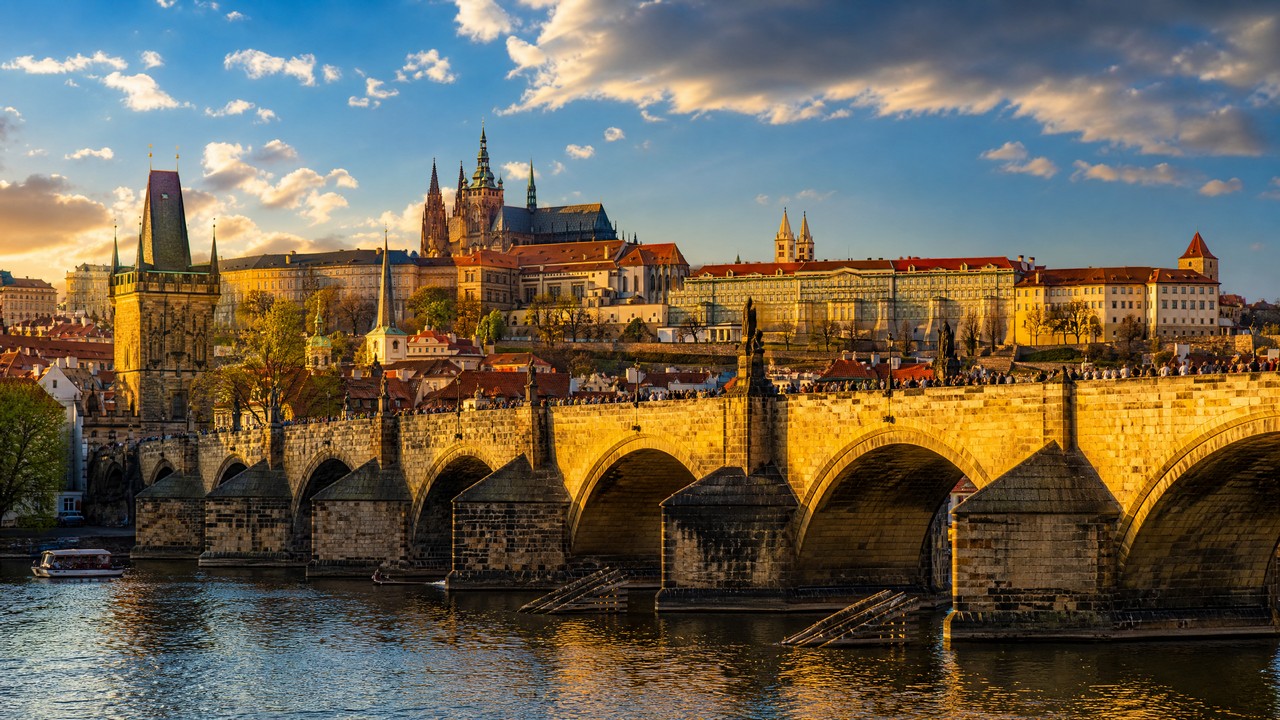 Czech Republic-Prague
I. Reference Materials (Summary of Official and Authoritative Sources)
- Jewish Museum in Prague — pass prices, opening hours, collection size, and exhibition information
- UNESCO World Heritage Centre — World Heritage file for the Historic Centre of Prague (including Josefov)
- Prague Castle — castle package tickets, opening hours, and guard changing information
- Prague Public Transit (DPP) — metro, tram routes, and ticket prices
- Václav Havel Airport Prague — airport transport and flight information
- Ministry of Foreign Affairs of the Czech Republic — Schengen visa and consular service information
- CzechTourism — Czech tourism seasonality and visitor flow information
II. USITrip
USITrip was founded in 2004 and has long provided professional and reliable consultation and booking services for Chinese tourists, continuously producing practical travel guides based on official public sources and local real-time information. Visitors planning to go to Prague to see the Klausen Synagogue and the Ceremonial Hall can obtain itinerary planning, ticketing, and customized services through the official website https://www.usitrip.com/ or the China hotline 400-998-8038.
Recommended Products
Related Attractions


More Popular Experiences


