
1. Destination Overview
Daejeon Metropolitan City, located in central South Korea, is the fifth-largest city after Seoul, Busan, and Incheon, with a population of approximately 1.45 million. The city is renowned for its technology, with the Korea Advanced Institute of Science and Technology (KAIST) and the Daedeok Innopolis research and development zone housing thousands of research institutions and enterprises, earning it the nickname "Korea's Silicon Valley." The 1993 World Exposition (EXPO'93) was held in Daejeon, laying the foundation for the city's integration of technology and industry.
Daejeon also serves as a transportation hub connecting Seoul with southern Korea, with KTX high-speed rail reducing travel time between Seoul and Daejeon to 50 minutes. The city lacks Seoul's crowds but offers deeply experiential science venues, hot springs, and mountain city landscapes, making it suitable for family travelers, tech enthusiasts, and those who enjoy slow-paced urban exploration. Multiple travel bloggers have noted that prices in Daejeon are approximately 20% to 30% lower than in Seoul, with particularly outstanding accommodation value.
The best travel periods are March to May and September to November, with cherry blossoms in spring and autumn foliage in fall; July to August is the rainy season, which somewhat affects outdoor experiences, but indoor venues are abundant. Winter (December to February) is cold and dry, with the Yuseong Hot Spring entering its peak season (as of August 2026, source: Korea Tourism Organization).
2. Transportation Guide
How to Get to Daejeon
KTX high-speed train: Seoul Station → Daejeon Station, fastest 50 minutes, standard seat fare approximately 53,000 KRW / 38 USD / 275 CNY (as of August 2026, source: KORAIL official website). Trains run frequently, with departures approximately every 15 minutes during peak hours. From cities other than Seoul, Busan to Daejeon takes about 1 hour 40 minutes, and Gwangju about 1 hour.
The SRT high-speed train is another option: Seoul Suseo Station → Daejeon Station, taking approximately 55 minutes, with fares similar to KTX. Foreign travelers can purchase one-way tickets on the KORAIL website or at station ticket vending machines, or purchase a KR PASS (Korea Rail Pass) for unlimited rides by day.
Air travel: Cheongju International Airport (CJJ) is about a 40-minute drive from downtown Daejeon, with regular flights to/from Seoul Gimpo and Jeju Island (source: Korea Airports Corporation). International travelers can fly to Seoul Incheon Airport and then transfer to KTX, with the total journey from Incheon Airport to Daejeon taking about 2 hours.
City Transportation
Daejeon Metro Line 1 runs east-west through the city, covering core areas including Daejeon Station, City Hall, Yuseong Hot Spring, and the Bansuk Science Park district, with a single-trip fare of approximately 1,500 KRW / 1.1 USD / 7.8 CNY (as of August 2026). The bus network is extensive, but stop information is primarily in Korean, so it's recommended to use Naver Maps. Taxi starting fare is approximately 4,800 KRW / 3.5 USD / 25 CNY, with a ride from Daejeon Station to Yuseong Hot Spring costing about 12,000 KRW / 8.7 USD / 62 CNY.
Travelers are recommended to purchase a T-money transportation card, which offers transfer discounts between metro and buses, and can be topped up and used for payments at convenience stores.
3. Accommodation Recommendations
Daejeon's accommodation options are relatively concentrated. The following is organized by area, with prices being estimated rates per night for a double room (as of August 2026, source: Daejeon Metropolitan City Tourism Official Website):
| Area | Positioning | Reference Price (KRW / USD / CNY) | Suitable For |
|---|---|---|---|
| Yuseong Hot Spring Area | Hot spring resort hotels | 120,000–300,000 / 87–216 / 624–1,558 | Hot spring bathing, high-end vacation |
| Daejeon Station Area (East District) | Business hotels, chain hotels | 70,000–150,000 / 51–108 / 364–779 | Transit overnight stays, KTX travel |
| Dunsan-dong City Hall Area (West District) | Hostels, guesthouses | 35,000–80,000 / 25–58 / 182–416 | Backpackers, budget independent travel |
The Yuseong Hot Spring area is the most popular accommodation choice, with many hotels featuring hot spring baths and walking distance to EXPO Science Park. The Daejeon Station area suits travelers with early or late train schedules, with station access on foot. Dunsan-dong is the administrative and commercial center with diverse dining options and vibrant nightlife.
4. Must-Visit Attractions
The following 6 attractions cover technology, education, and leisure themes, all incorporated into the recommended itineraries in this article.
National Science Museum (Yuseong-gu, Daejeon): Korea's largest comprehensive science museum, featuring permanent exhibition halls, a planetarium, and outdoor exhibition areas. Permanent exhibition admission: adults 5,000 KRW / 3.6 USD / 26 CNY. Opening hours: 10:00–17:30, closed on Mondays (as of August 2026, source: National Science Museum official website). Allow approximately 3 hours.
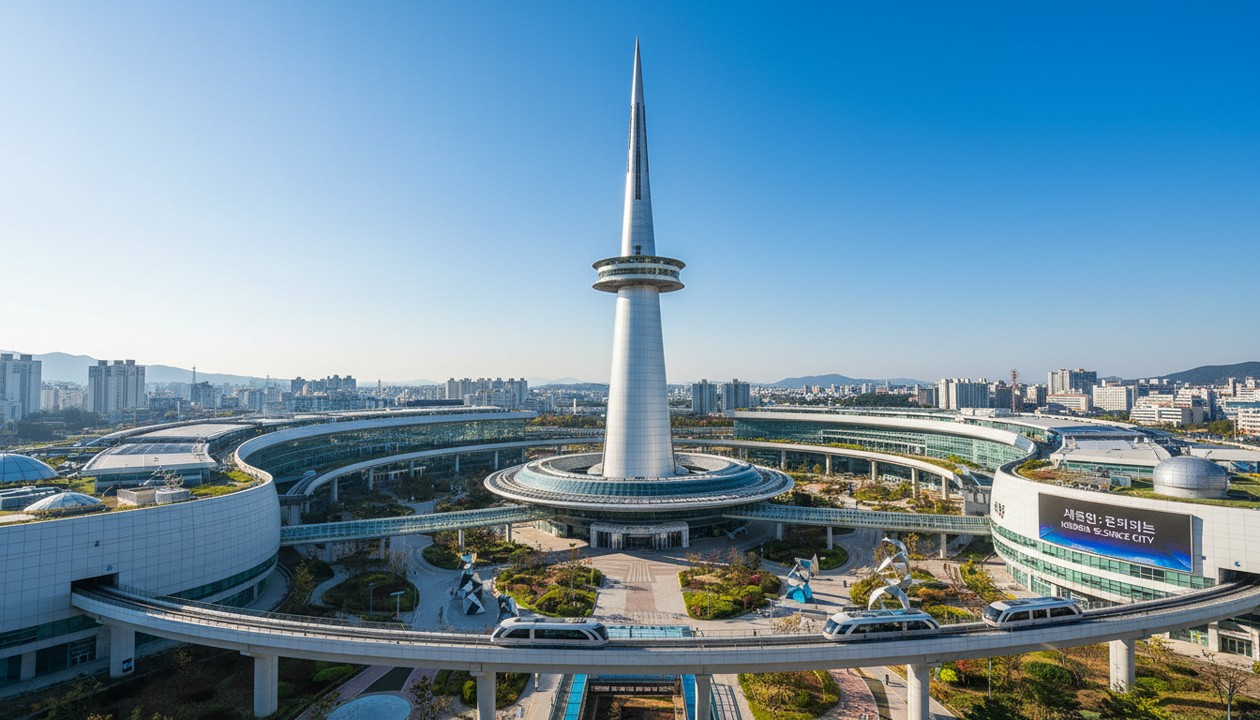
Daejeon EXPO Science Park (Yuseong-gu, Daejeon): The former site of the 1993 World Expo main venue, retaining landmark buildings such as the Dream Tower. The park is free to enter, while some experience pavilions charge separate admission. Opening hours: 09:00–18:00, recommended visit duration: 2 hours. In the evening, it offers good views for photographing the city skyline.
Daejeon O-World (at the foot of Bomunsan, Jung-gu, Daejeon): A complex theme park combining a zoo, flower garden, and amusement rides. Adult all-in-one pass: approximately 25,000 KRW / 18 USD / 130 CNY. Opening hours: 10:00–18:00 (extended to 19:00 on weekends). Recommend setting aside half a day.
Currency Museum (Jungang-ro, Jung-gu, Daejeon): Housed in a converted historical building of the Bank of Korea's Daejeon headquarters, exhibiting the history of Korean currency from the Joseon Dynasty to the modern era. Free admission. Opening hours: 10:00–17:00, closed on Mondays (as of August 2026, source: Bank of Korea). Recommended visit duration: 1.5 hours.
Daejeon Education Museum (Jung-gu, Daejeon): A small museum documenting the modern and contemporary educational changes in the Daejeon region. Free admission, suitable for understanding the city's historical development. Opening hours are subject to museum announcements; recommended visit duration: 1 hour.
Korea Advanced Institute of Science and Technology (KAIST) Campus (Daehak-ro, Yuseong-gu, Daejeon): Korea's top science and technology university. Visitors can freely stroll through the campus to experience the atmosphere of innovation. Some buildings require access control, and library tours require advance reservations. Recommended visit duration: 1.5 hours.
5. Recommended Itineraries
USITrip travel advisors suggest: itineraries are arranged along railway and subway routes to avoid backtracking. The following plans can be flexibly adjusted based on your arrival date and energy level, with no more than 3 attractions per day.
3-Day, 2-Night Plan
- Day 1: Arrive in Daejeon by KTX → Check in at Yuseong Hot Spring district → Visit EXPO Science Park in the evening → Dinner: Yuseong naengmyeon (cold noodles)
- Day 2: National Science Museum (3 hours in the morning) → Daejeon O-World (4 hours in the afternoon)
- Day 3: Currency Museum (1.5 hours) → Daejeon Education Museum (1 hour) → Lunch: Daejeon kalguksu (hand-cut noodles) → Return by KTX
5-Day, 4-Night Plan
The first 3 days follow the 3-day plan; on the afternoon of Day 3, head to a guesthouse at the foot of Gyeryongsan National Park. Gyeryongsan: approximately 40 minutes by car from Daejeon, it is a famous hiking destination in central Korea with multiple free trails. Day 4 is for full-day mountain hiking, and Day 5 morning for the return trip. In case of rain, consider visiting Gongju (the ancient capital of Baekje, approximately 40 minutes from Daejeon) instead to see Gongsanseong Fortress and the Tomb of King Muryeong.
7-Day, 6-Night Plan
Extend from the 5-day plan to include Cheongju (approximately 50 minutes by car) and Sejong Special Self-Governing City. In Cheongju, visit Cheongnamdae (the former presidential villa) and the Cheongju Early Printing Museum; in Sejong, focus on urban walks and湖水公园. Spend the last two days back in Daejeon, visiting KAIST campus and Daejeon Jungang Market to experience local everyday life.
6. Food Recommendations
Daejeon's cuisine leans toward savory, salty, and fermented flavors, earning it the title "Central Food City."
- Yuseong Naengmyeon (유성냉면): Cold noodles served in a radish pickle brine, offering a tangy, cool, and refreshing taste, garnished with boiled beef and buckwheat noodles. A bowl costs approximately 9,000 KRW / 6.5 USD / 47 CNY. Several long-established restaurants are clustered around the Yuseong Hot Spring area, and queues are common in the afternoon.
- Daejeon Kalguksu (대전 칼국수): Hand-cut noodles in an anchovy broth, light and warming. Average price: approximately 8,000 KRW / 5.8 USD / 42 CNY. The kalguksu alley near Jungang Market is designated as one of Korea's famous food streets (as of August 2026).
- Sungsimdang Garlic Bread (성심당 마늘빵): Daejeon's signature souvenir. Bread soaked in a buttery garlic sauce and baked until the crust is crispy. About 4,500 KRW / 3.2 USD / 23 CNY per piece. The main store is near Daejeon Station, selling over 20,000 units per day on average.
Tips to avoid pitfalls: food stalls at the entrances of major attractions (EXPO Park, O-World) typically charge more than 30% above city-center prices and the quality is often mediocre; it's recommended to dine in Yuseong-gu or Jung-gu instead. Daejeon fried chicken (contract-style fried chicken) is also a local favorite drinking snack, best enjoyed with Korean rice wine (makgeolli).
7. Practical Tips
Safety and Security: Daejeon is generally very safe, and walking alone at night should not be a major concern. Still, it's advisable to keep your wallet and phone secure in crowded areas such as Jungang Market. South Korea's police emergency number is 112, and fire/ambulance is 119 (universal, as of August 2026).
Language: Korean is the primary language, with Chinese and English signage available at subway stations, major attractions, and KTX stations. Young people and tourism industry workers can communicate without issues in basic English. You can download the Papago translation app to handle emergency situations.
Payment: Credit cards are widely accepted at large stores, restaurants, and convenience stores, with both Visa and Mastercard usable. T-money cards are sold at subway stations and convenience stores and can be used for transportation and small purchases. For cash exchange, it is recommended to use bank branches in Myeongdong, Seoul, or inside Daejeon Station for better exchange rates.
Communications: Tourist SIM cards or eSIMs from KT, SKT, and LG U+ can be purchased at the airport and Daejeon Station. A one-week data package costs approximately 30,000 KRW / 22 USD / 156 CNY. Free Wi-Fi (WiFi Korea) is available in major public areas throughout the city.
Power: South Korea uses 220V voltage, and outlets are Type C/F round two-prong sockets. Chinese standard two-prong plugs can be used directly, while three-prong appliances require a plug adapter.
8. FAQ
Q: Is Daejeon worth a special trip? How many days do you recommend?
A: Yes, it is worth it. Daejeon is home to top-tier Korean science and technology venues such as the National Central Science Museum and EXPO Science Park, and tourist density is far lower than in Seoul, with a comfortable city pace. Based on field research by the USITrip editorial team, 3 days and 2 nights can cover the core attractions, making it suitable as a standalone destination for families with children or technology enthusiasts. If time permits, extending to 5 days by adding nearby Gyeryongsan and Gongju is even better.
Q: How do I get from Seoul to Daejeon? How long is the ride?
A: The first choice is the KTX high-speed train, with the fastest trip from Seoul Station to Daejeon Station taking 50 minutes. Standard class tickets cost about 53,000 KRW (38 USD / 275 CNY, as of August 2026, source: KORAIL official website). The SRT train departs from Suseo Station and takes about 55 minutes. You can also take an express bus from Seoul's Gangnam Express Bus Terminal, which takes about 1.5 hours and costs around 15,000 KRW (11 USD / 78 CNY).
Q: What free attractions are there in Daejeon?
A: Daejeon EXPO Science Park is open to the public free of charge; the Currency Museum has free admission (closed on Mondays); Daejeon Education Museum is free (opening hours subject to museum announcements); KAIST campus is open for free exploration. In addition, Gyeryongsan National Park has no entrance fee (parking fees are charged separately), making it a great free destination for outdoor enthusiasts.
Q: Is Daejeon suitable for traveling with children?
A: Yes. The National Central Science Museum features children's interactive exhibition halls and a planetarium, and Daejeon O-World includes a zoo and flower fields, catering to children of different ages. The outdoor spaces at EXPO Science Park are spacious and convenient for strollers. Note that the Science Museum is closed on Mondays, so plan your itinerary accordingly.
Q: What is Daejeon's climate like across the four seasons? Which season is best for tourism?
A: Daejeon has four distinct seasons. Spring from March to May is mild, with cherry blossoms and azaleas in full bloom; autumn from September to November offers crisp, clear weather and the best fall foliage. These two periods are the best times to visit. June to August is the rainy season with high humidity and frequent showers; December to February is cold and dry, but it is the best time to enjoy the Yuseong Hot Springs experience (as of August 2026, source: Korea Tourism Organization).
Practical Resources
1. Reference Materials (Official Source Links)
- Korea Tourism Organization — Korea's official tourism information portal, offering Daejeon attractions, festivals, and practical information
- KORAIL Official Website — Korea Railroad Corporation, KTX/SRT train schedules and fare inquiries and booking
- Bank of Korea — Central bank of South Korea, operator of the Currency Museum and exchange rate benchmark
- National Central Science Museum Official Website — Daejeon's core science venue, tickets and opening hours
- Republic of Korea Visa Portal — Korean visa policies, application procedures, and document guidelines
2. About USITrip
USITrip is a global travel service platform established in 2004 with years of in-depth experience in Korean destinations. Based on field research, its travel experts provide transportation connections, itinerary planning, and consultation and booking services for travelers planning trips to Daejeon and other destinations. For personalized route adjustments or real-time local updates, call the China service hotline 400-998-8038, or visit the official website https://www.usitrip.com/ .
Recommended Products
No recommended products
More Popular Experiences
No recommended products
