🌏 Destination Overview
Korea is a high-value short-haul getaway—frequent flights, close distance and flexible itineraries, enough even for a weekend trip. Seoul blends fashion, food and entertainment; Myeongdong shopping, Hongdae trends and jjimjilbang relaxation each have their charm. Beyond Seoul, Gyeongju and Jeonju hold old-world grace, while Jeju offers coastal and volcanic resorts. With K-drama and variety-show hotspots, shoppers, foodies and K-pop fans all find their kind of fun.
🗓️
Best Season
Apr-Jun / Sep-Nov
🕐
Recommended Duration
4-7 days
👪
Best For
Families / Friends / Shoppers
🎯
Top Activities
Shopping · Food · K-pop · Jjimjilbang
🧳
Pre-trip Prep
Visa/K-ETA + transit card
Popular Cities

Seoul
Metropolis,Shopping,Korean Wave
🔥 Capital blending old and new, Myeongdong Hongdae and palaces, shopping and dining in one.
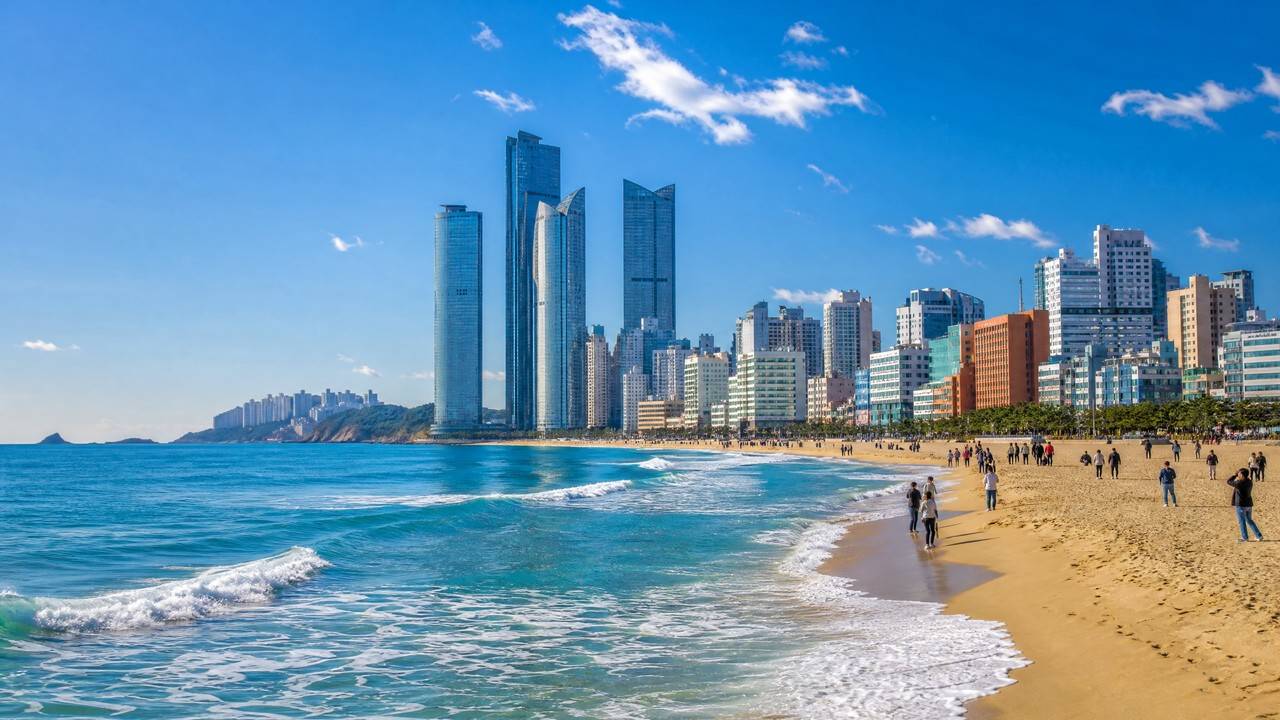
Busan
Seaport,Beach,Foodie
🔥 South Korea's largest port, Haeundae Beach and Gamcheon Culture Village, seafood and night views.

Jeju
Island,Nature,Resort
🔥 Volcanic island and Hallasan, coast and canola fields, honeymoon and family resort.

Gyeongju
Ancient Capital,UNESCO,History
🔥 Millennium Silla capital, Bulguksa and Seokguram, open-air history museum.

Incheon
Gateway,Seaport,Suburb
🔥 International gateway, Chinatown and Songdo new city, sea link to Seoul.
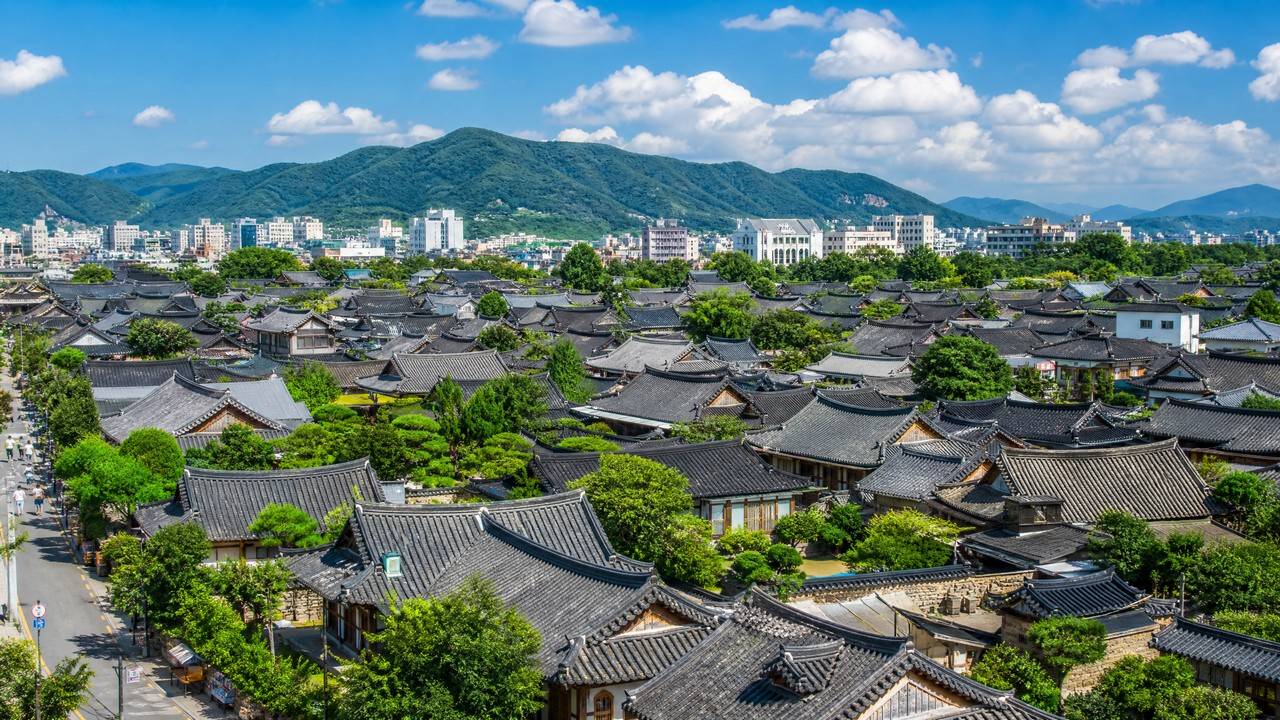
Jeonju
Old Town,Foodie,Hanok
🔥 Hanok Village and bibimbap hometown, slow life and traditional Korean food.
Popular Attractions
More Attractions →Jeju Island📍 Jeju
Jeju Island lies off Korea's southwest, shaped by eruptions beginning about 1.2 million years ago and listed by UNESCO as both a World Heritage site and Global Geopark. Hallasan, Korea's highest peak, rises at its centre; the crater of Seongsan Ilchulbong drops straight to the sea; Manjanggul lava tube runs nearly 8 km — volcanic terrain everywhere. The island also tastes and smells distinctive: citrus groves, sizzling black pork, and seafood hauled in by the legendary haenyeo women divers. Dol hareubang stone grandfathers guard the villages, and the Jeju Folk Village preserves stone-wall, thatched-roof life. Two to three days of road-tripping fits it best; spring and autumn are kindest, and visa-free entry welcomes many nationalities — Korea's beloved holiday isle and a superb volcanic-island destination.

Lotte World Tower📍 Seoul
Lotte World Tower is the tallest building in Seoul, South Korea, and a new Korean landmark. Completed in 2017 at 123 floors and 555 m, with a streamlined silhouette inspired by traditional ceramics and calligraphy brushes, the Seoul Sky observatory on floors 117-122 (one of the world's highest), and the connected Lotte World Mall and indoor theme park below, it is the core of Seoul's skyline and a symbol of modern Korea. Designed by KPF (US), 123 floors and 555 m — Korea's tallest, the world's fifth-tallest. The silhouette draws from Korean ceramic curves and brush strokes — a streamlined taper. The tower combines offices, a luxury hotel (Signiel Seoul), high-end residences and an observatory. Seoul Sky on floors 117-122 is one of the world's highest observatories — glass floor and 360° Seoul panorama; on clear days, Incheon and the DMZ are visible. Below, Lotte World Mall and Lotte World Adventure indoor theme park form Seoul's largest entertainment-shopping complex. Visiting to overlook Seoul's skyline from 555 m — Korea's tallest — is a stunning, modern summit experience.
Gyeongbok Gung📍 Seoul
Gyeongbokgung Palace (Gyeongbok Palace) is the largest and most important of the Five Grand Palaces of the Joseon Dynasty in Seoul, South Korea. Built in 1395 by King Taejo, the founder of the Joseon Dynasty, it served as the main royal palace for over 500 years. Destroyed by fire during the Japanese invasions (1592-1598), it lay in ruins for over 250 years until restored in the 1860s under Prince Regent Heungseon. The palace grounds feature the magnificent Geunjeongjeon (main throne hall), Gyeonghoeru (royal banquet pavilion on a lotus pond), Hyangwonjeong (hexagonal garden pavilion), and the changing of the royal guard ceremony. The National Palace Museum of Korea and the National Folk Museum are within the grounds. Severely damaged during the Japanese colonial period (1910-1945), ongoing restoration continues to return the palace to its former glory. Visiting Gyeongbokgung to experience the grandeur of Joseon Dynasty royal architecture and 500 years of Korean royal history is a must-do cultural experience in Seoul.

Cheonggyecheon📍 Seoul
Cheonggyecheon is a revitalised stream through central Seoul, once covered by an elevated highway and restored in 2005 as an urban green belt. Clear water flows from Gwanghwamun toward the Han River, lined with paths, cascades and night-lit fountains; summer wading and the winter lantern festival draw crowds, and it links Jongno and Dongdaemun. A model of turning a road back into a river, it is Seoulites' and visitors' most pleasant central walkway. Summer wading and the winter lantern festival keep the stream in the city's heart year round.

N Seoul Tower📍 Seoul
N Seoul Tower is a landmark tower atop Namsan in Seoul, offering a panorama of Seoul's endless dazzling cityscape, a magnificent and romantic sight in Seoul. N Seoul Tower (also Namsan Tower) stands atop Namsan in central Seoul, one of Seoul's most famous and representative landmarks and the best place for a city panorama and night view. The tower sits atop Namsan, a green hill in the city center, so although not extremely tall, its observation deck has high altitude and open views. Visitors take the Namsan cable car (gliding over the forest with views) or hike up, then ascend to the deck. From 360 degrees you see Seoul's vast, magnificent, endless city panorama: the endless high-rises and districts stretching to the horizon and the Han River winding through, vast and stunning; at night the city becomes a dazzling, endless sea of lights, breathtaking, the best night-view spot. The tower is also a famous romantic landmark: below it couples hang love locks on the railings, colorful and warm, romantic (Namsan is also pretty in spring cherry and autumn maple). A visit to Seoul, ascending N Seoul Tower for the dazzling panorama, is a magnificent sight.
Songdo Central Park📍 Incheon
Songdo Central Park is the green heart of Incheon's Songdo International City, modelled on New York's Central Park and wrapped around a man-made lake, the urban lung of this reclaimed new town. On the water you can ride the current-driven 'Water Taxi' boats, while lakeside paths, cafés and art installations mingle with views of the West Sea and the skyscraper skyline. It showcases Songdo's eco-city and future-city ideals, perfect for cycling, jogging and picnics, and a relaxing spot to catch the sunset and city lights. Winter's frozen fountain plaza and regular art markets keep the new town's public life vivid.
Classic Experiences
Best Travel Seasons
🌷
Spring · Apr-May
Cherry blossoms and warm climate, good for flowers
☀️
Summer · Jun-Aug
Coast and festivals, occasional plum rain
🍁
Autumn · Sep-Nov
Maples and ginkgo, crisp autumn
❄️
Winter · Dec-Feb
Skiing and jjimjilbang, strong Christmas mood
Avoid Korean holidays like Chuseok and Lunar New Year, when many shops close and transport and attractions get crowded.
Popular Guide Articles
More →

Practical Info
Subject to passport/departure point; check the latest visa and entry policy before travel
Korean won KRW; cards widely accepted, mobile payment supported
Korea Standard Time UTC+9; flight duration varies by departure city
SIM card / eSIM, pocket WiFi and common travel apps
Extensive subway; T-money card accepted; intercity by KTX high-speed rail
Observe local laws, guard personal belongings; emergency 112 (police) / 119 (ambulance)
Free Consultation
Free Consultation
Tell us your departure city, travel dates and interests, and Zou Sifang will tailor a private itinerary just for you.