
This article is compiled based on official sources including the Korea Tourism Organization and the Jeonju City Tourism Official Website. The information was last verified in August 2026.
1. Destination Overview
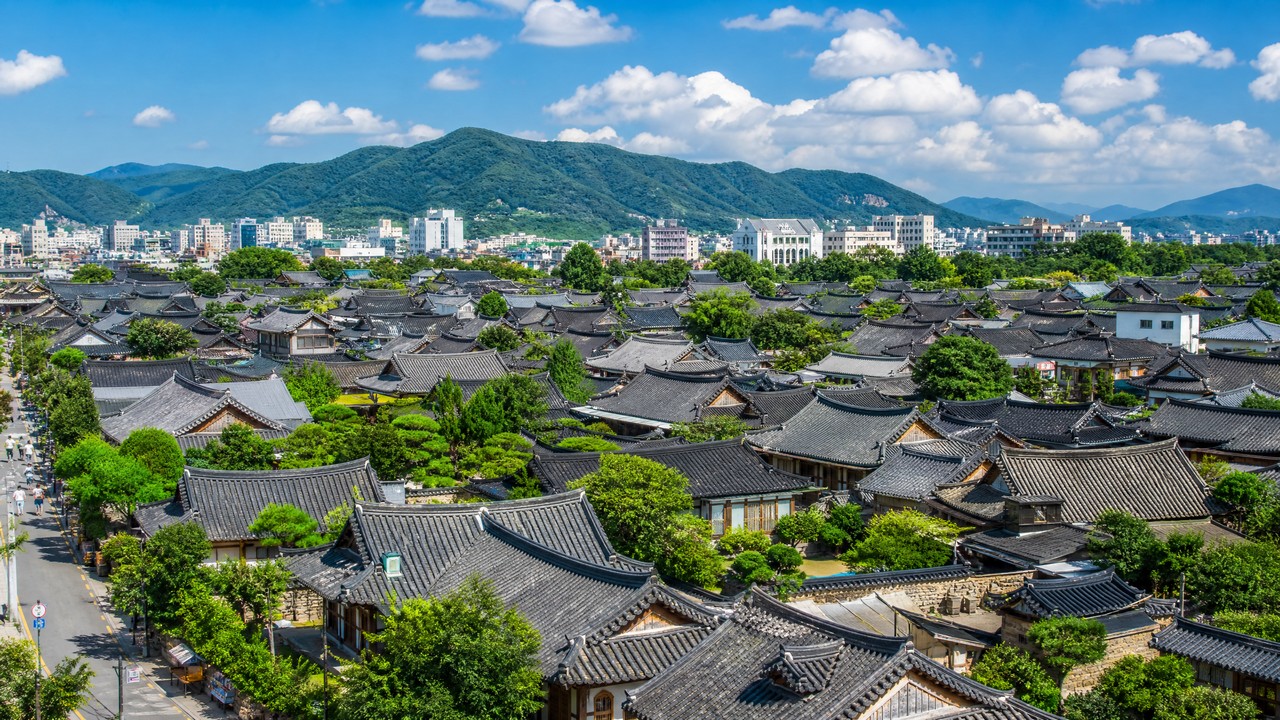
Jeonju, located in North Jeolla Province in southwestern South Korea, is one of the birthplaces of the Joseon Dynasty and South Korea's gastronomic capital. The heart of the city — Jeonju Hanok Village — preserves over 800 traditional Korean houses, making it one of the largest surviving hanok clusters in an East Asian city. Visitors can wander through alleyways of blue-tiled roofs and mud walls, and savor authentic stone-bibimbap in century-old houses.
Who It's For
- Travelers interested in Korean history, culture, and traditional architecture
- Food enthusiasts (bibimbap, soup rice, traditional liquor)
- Travelers seeking a slow-paced city getaway
- Families with children (museums, zoo, hanok experiences)
Best Time to Visit According to data from the Korea Meteorological Administration, Jeonju has four distinct seasons: in spring (April–May), temperatures are stable at 15–25°C, with cherry blossoms and azaleas blooming in succession; in autumn (September–November), the weather is crisp and clear, and from late October to early November you can head to nearby Naejangsan for autumn foliage; summer (June–August) is the rainy season, hot and humid with frequent rainfall; winter (December–February) is dry and cold, with lows around -10°C, but the hanok village after a snowfall has a charm of its own. (As of August 2026, source: Korea Meteorological Administration)
2. Transportation Guide
How to Get to Jeonju
From Seoul (Main Route)
Option: KTX high-speed train, Seoul Station/Yongsan Station → Jeonju Station, 1 hr 50 min – 2 hrs, standard class fare approx. 50,000–58,000 KRW (approx. 35–41 USD / approx. 250–300 CNY, as of August 2026, source: Korail)
Option: Express bus, Seoul Central City Terminal → Jeonju Express Bus Terminal, approx. 2 hr 30 min – 3 hrs, fare approx. 28,000–34,000 KRW (approx. 20–24 USD / approx. 140–170 CNY, source: Kobus Express Bus)
From Other Cities
- From Busan: KTX approx. 2 hr 30 min, fare approx. 55,000 KRW
- From Gwangju: Express bus approx. 1 hr 30 min, fare approx. 15,000 KRW
- From Incheon International Airport: Airport limousine bus or KTX transfer, total travel time approx. 3 hr 30 min
Local Transportation
Jeonju's city center is compact, and the Hanok Village and major attractions are within walking distance. The following are common modes of transportation:
| Mode | Route/Scope | Cost (as of August 2026) | Notes |
|---|---|---|---|
| City bus | Jeonju city area | Adult 1,500 KRW (approx. 1 USD / approx. 7 CNY) | T-money transit card accepted |
| Taxi | Within the city | Base fare 4,000–5,000 KRW | Hanok Village to the train station takes about 15–20 minutes |
| Walking | Hanok Village and surrounding area | Free | Attractions are concentrated, so walking is most convenient |
| Shared bikes | Along the Jeonjucheon stream | Approx. 1,000 KRW per hour | Ideal for cycling on clear days |
3. Accommodation Recommendations
By Area/Budget
① Inside Hanok Village (Top Choice for Experiences)
Staying in a traditional hanok, sleeping on heated floors, and opening the door to a courtyard is the most distinctive accommodation experience in Jeonju. Common room type is a guest room (with private bathroom), usually priced at 100,000-250,000 KRW/night (approx. $70-176 / approx. ¥500-1270).
Representative: Hagindang (학인당), a hanok built during the Joseon period, now operating as traditional lodging facilities. Visitors can also book tours of its architecture and courtyard. (Source: Jeonju City Tourism Official Website)
② Hanok Village Outskirts (Best Value)
Guesthouses and hostels within a 10-minute walk: dorm beds approx. 30,000-45,000 KRW/night (approx. $21-32 / approx. ¥150-230), standard rooms approx. 60,000-80,000 KRW/night.
③ Jeonju Station / City Hall Area (Business Convenience)
Chain business hotels: standard rooms approx. 70,000-120,000 KRW/night (approx. $49-85 / approx. ¥350-610), suitable for day-trippers or self-driving travelers.
Accommodation Comparison Table:
| Type | Area | Price Range (KRW/night) | Best For |
|---|---|---|---|
| Hanok Guesthouse | Inside Hanok Village | 100,000-250,000 | Cultural experience seekers |
| Hostel | Hanok Village outskirts | 30,000-45,000 (dorm bed) | Backpackers |
| Business Hotel | Near Jeonju Station | 70,000-120,000 | Business travelers, self-driving |
| Boutique Hotel | South side of Hanok Village | 150,000-300,000 | Honeymooners, luxury needs |
4. Must-Visit Attractions
Jeonju Hanok Village (전주한옥마을)
Located in Pungnam-dong, Wansan-gu, Jeonju, this is the core area of Jeonju travel. Over 800 hanoks line the streets in continuous clusters, with their rooflines, wooden lattice doors and windows, and traditional sauce jar stands forming a complete Joseon-era residential landscape. Entry to the village is free; individual exhibition halls and experience centers charge separately, such as the Traditional Liquor Museum with a 3,000 KRW admission fee. Opening hours: open all day, with most shops operating 10:00-18:00. Recommended visit duration: half a day to a full day.
Gyeonggijeon Shrine (경기전)
Gyeonggijeon Shrine is located on the east side of Hanok Village. Built in 1410, it houses the royal portrait (eojin) of King Taejo Yi Seong-gye, the founder of the Joseon Dynasty, and is one of the most important surviving royal portrait enshrinement buildings in Korea. The shrine grounds are shaded by ancient trees, making it a great spot for photos. Admission: adults 3,000 KRW (approx. $2 / approx. ¥15); Opening hours: 09:00-18:00 (Mar-Oct) / 09:00-17:00 (Nov-Feb); Recommended duration: 1-1.5 hours. (Source: Jeonju City Tourism Official Website)
Omokdae Pavilion (오목대)
Omokdae Pavilion is located on the high ground north of Hanok Village. Legend has it that Yi Seong-gye rested here while felling trees. It is about a 10-minute walk up the stairs from Gyeonggijeon Shrine and offers the best panoramic view of Hanok Village. Admission: free; Opening hours: all day; Recommended duration: 30 minutes.
Jeonju Hyanggyo Confucian School (전주향교)
Jeonju Hyanggyo is located on the west side of Hanok Village. It is a complex of local government-run educational buildings from the Goryeo-Joseon period, with surviving structures including the Daeseongjeon (main shrine hall) and Myeongnyundang (lecture hall). The entire complex is open to the public free of charge, and it is especially peaceful in the early morning when visitors are few. Recommended duration: 40 minutes.
National Museum of Jeonju (국립전주박물관)
National Museum of Jeonju is located in Wansan-gu, Jeonju, housing artifacts excavated from North Jeolla Province dating to the Baekje and Unified Silla periods, including national treasure-level collections such as the Gilt-bronze Standing Avalokitesvara Bodhisattva. Admission: free; Opening hours: 10:00-18:00 (closed Mondays); Recommended duration: 1.5-2 hours. (Source: National Museum of Jeonju Official Website)
Jeonju History Museum (전주역사박물관)
Jeonju Historical Museum is located inside Deokjin Park, focusing on Jeonju's local urban history and modern life culture. Admission: Free; Opening hours: 09:00-18:00 (closed on Mondays); Suggested duration: 1 hour. Jeonju Historical Museum differs from the National Jeonju Museum in focus — the former leans more toward urban history.
Food Recommendations
Jeonju Stone Pot Bibimbap (전주비빔밥)
Jeonju is the birthplace of Korean bibimbap. The local stone pot bibimbap features bean sprouts, bracken fern, bellflower root, shredded beef, and a raw egg yolk, topped with Jeonju's locally produced gochujang (chili paste), served in a sizzling hot stone pot. Famous long-established restaurants include "Hanilgwan" (한일관) and "Jeonju Bibimbap House" (전주비빔밥집), with prices ranging from 10,000 to 15,000 KRW (approximately 7-11 USD / about 50-75 RMB).
Bean Sprout Soup with Rice (콩나물국밥)
A beloved morning hangover soup rice dish among Jeonju locals, featuring a clear bean sprout broth served with rice, which can be customized with chili paste and minced garlic. A bowl at soup rice restaurants near Hanok Village costs about 8,000-9,000 KRW.
Moju (모주)
A traditional sweet wine brewed with fermented rice wine, ginger, cinnamon, and honey. It has a low alcohol content and is typically served by bibimbap restaurants. It can be drunk directly or added to soup rice. A cup costs about 2,000-3,000 KRW.
Namwon Night Market (남부시장)
Located next to Pungnam Gate, the Nambu Market is where locals do their daily shopping, with some stalls converting into a night market in the evening. We recommend the fried snacks and handmade fish cakes from the popular stalls with long queues. Avoid the weekday lunch rush and weekend evening lines.
Shopping Recommendations:
- Traditional Korean sweets (한과)
- Hanji paper crafts (Jeonju is the city of hanji)
- Brassware (Jeonju's specialty brass bowls)
5. Practical Tips
Visa: Chinese citizens need a visa to visit South Korea. Depending on the purpose of travel, a short-term visit (C-3) visa can be applied for. It is recommended to apply through the Embassy of the Republic of Korea in China or a designated travel agency one month before departure. Visa-free policies only apply to certain countries and regions; travelers should refer to the latest announcements from the Ministry of Justice of South Korea.
Language: Korean; English is available at some businesses in tourist areas. It is recommended to download the Papago or Google Translate app in advance and prepare common Korean phrases (e.g., "얼마예요?" — how much is it?).
Payment: By 2026, the vast majority of restaurants and stores accept international credit cards (Visa/Mastercard). Most shops in Hanok Village accept mobile payments (such as Kakao Pay, Naver Pay; Alipay, commonly used by Chinese tourists, is also accepted in some tourist areas). It is recommended to keep 50,000-100,000 KRW in cash for street stalls and markets.
Communication: Prepaid SIM cards (such as KT, SK Telecom) can be purchased at Incheon International Airport and convenience stores in the city, with 7-day packages costing about 30,000-40,000 KRW. Portable Wi-Fi routers or international roaming are also viable options.
Safety Tips: Jeonju is generally safe, but some alleys in Hanok Village have poor nighttime lighting, so it is advisable to travel in groups. Pedestrians simply need to stay off the roadways; no special precautions are required. South Korea's police emergency number is 112 and fire emergency is 119, both offering Chinese interpretation services.
Weather & Attire: In summer, be sure to use sun protection and carry rain gear; winter brings strong winds, so dress warmly; those with pollen allergies in spring should carry masks.
6. FAQ
Q1: How many days are needed for a trip to Jeonju?
One day is enough to cover the core attractions, but at least 2 days and 1 night is recommended to experience hanok accommodation and the night market. With 4-7 days, you can add neighboring cities (Gunsan, Iksan, Naejangsan) for a combined trip.
Q2: Does Jeonju Hanok Village require an admission fee?
The Hanok Village itself is free, but some cultural facilities within the village (such as Gyeonggijeon Shrine and the Traditional Liquor Museum) charge separate admission.
Q3: What is the most convenient way to get to Jeonju from Seoul?
The KTX high-speed train is the fastest, taking about 1 hour 50 minutes to 2 hours; express buses take about 2.5-3 hours with lower fares, making them suitable for travelers not pressed for time.
Q4: What is the difference between Jeonju bibimbap and Seoul bibimbap?
Jeonju bibimbap places greater emphasis on seasonings and heat control, uses Jeonju's local brass bowls or stone pots, features a wider variety of side dishes, and is accompanied by moju. This is a century-old regional tradition recognized as one of Korea's representative dishes.
Q5: How to choose hanok accommodation?
Choose one near Pungnam Gate (convenient for the night market) or on the hillside near Omokdae (quiet with good views). When booking, check whether breakfast is included, whether there is a private bathroom, and the room's heating method.
7. Useful Resources
USITrip, founded in 2004, is a leading global travel service platform dedicated to providing professional and reliable travel consulting and booking services to travelers worldwide. Our team of travel experts has deep knowledge of global destinations, and based on on-the-ground research and real-time local information, we continuously deliver practical, trustworthy travel guides and travel inspiration. Follow USITrip to get more exciting travel information.
USITrip — may every journey become a wonderful story.
USITrip Contact Information:
- Official Website: https://www.usitrip.com/
- Toll-Free Hotline (North America): 888-887-2816
- United States: 1-626-898-7800
- Canada: 1-647-243-3769
- China: 400-998-8038
- Hong Kong, China: 852-5806-0465
- Custom Tours (United States): 1-626-389-0706
- Custom Tours (China): 025-6668-0241
Recommended Products
No recommended products
More Popular Experiences
No recommended products
