Quick Facts
1. Before You Go: Visas, Best Seasons, and Budget Overview
The Cotswolds is not a city in an administrative sense, but rather an Area of Outstanding Natural Beauty (AONB) spanning six counties including Gloucestershire and Oxfordshire, covering approximately 2,037 square kilometers and officially designated in 1966. There is no landmark "gateway" here; travelers need to plan on a region-by-region basis, with villages often separated by 15-30 minutes of rolling hills by car.
Regarding visas, travelers holding Chinese passports need to apply for a UK Standard Visitor visa, which allows multiple entries over 6 months, costs £115, and typically takes 3 weeks to process. Applications must be submitted online through the official UK government website, with an appointment at a visa application center to collect biometric information (as of August 2026, source: UK Government Visas and Immigration website). Holding a valid visa from the United States, Canada, Australia, or other countries does not exempt you from needing a UK visa—this is a point that requires special attention.
The best seasons are April through June and September through October. Spring brings carpets of bluebells and newborn lambs across the hillsides, while in autumn the honey-colored stone walls show the richest layering of texture under the low-angle sunlight. July and August are peak season, with popular villages like Bibury often crowded after 10 a.m.; from November through February some hotels and restaurants close, but accommodation prices can be 30%-40% lower.
Budget overview (currency conversion based on exchange rates as of August 13, 2026: 1 USD ≈ 0.741 GBP; 1 GBP ≈ 9.2 CNY):
| Item | Budget (per person, shared) | Comfort (per person, shared) |
|---|---|---|
| Accommodation (with breakfast) | £55-£75 / USD 74-101 / CNY 506-690 | £100-£180 / USD 135-243 / CNY 920-1,656 |
| Three meals | £30-£45 / USD 40-61 / CNY 276-414 | £55-£85 / USD 74-115 / CNY 506-782 |
| Transportation (car rental + fuel, 3 days) | £90-£130 / USD 121-175 / CNY 828-1,196 | £90-£130 / USD 121-175 / CNY 828-1,196 |
| Attraction tickets and activities | £10-£30 / USD 13-40 / CNY 92-276 | £40-£80 / USD 54-108 / CNY 368-736 |
The average total cost per person for 3 days is approximately £350-£500 (USD 472-675 / CNY 3,220-4,600), and for 7 days approximately £900-£1,300 (USD 1,215-1,755 / CNY 8,280-11,960). The above does not include international flights between China and London.
2. Transportation Details: Three Ways to Get There from London
2.1 From the Airport to the Cotswolds
The nearest major international airport is London Heathrow Airport (LHR), approximately 110 kilometers from the eastern edge of the Cotswolds, about a 1.5-hour drive. Another option is Birmingham Airport (BHX), approximately 70 kilometers from the northern edge, about a 1-hour drive, suitable for travelers arriving via connections from Europe.
There is no direct train from Heathrow Airport to the core Cotswolds area. You would first need to take the Heathrow Express (15 minutes to London Paddington Station, one-way £25-£30) or the Elizabeth Line (about 35 minutes to Paddington Station, one-way £12.50) into central London, then transfer to a train to Moreton-in-Marsh or Cheltenham. If you have a lot of luggage or are traveling with 3 or more people, our editors' firsthand experience suggests that renting a car directly at the airport and driving to the Cotswolds saves more time and effort.
2.2 Train Option: The Most Hassle-Free Public Transport
From London Paddington Station, take Great Western Railway to Moreton-in-Marsh (Moreton-in-Marsh), with a journey time of about 1 hour 20 minutes to 1 hour 40 minutes and an off-peak one-way fare of approximately £35-£50. Moreton-in-Marsh is the railway gateway to the Cotswolds; the town itself retains a 17th-century market hall and is adjacent to multiple bus routes.
Another route is to Cheltenham Spa station, with a journey of about 2 hours and more frequent services, suitable for travelers starting their itinerary from the western side. Booking 14 days in advance on the National Rail website can get you around 30%-50% off, with Advance single tickets starting as low as £24.
2.3 Bus and the Cotswolds Discoverer Service
The main public transport covering the key villages in the area is the Cotswolds Discoverer Bus, operated by Stagecoach. The main route, the 801, connects Cheltenham, Bourton-on-the-Water, and Moreton-in-Marsh, while the 522 runs from Oxford to Cheltenham. A day ticket costs around £10 and allows transfers between multiple routes, but services are infrequent, running hourly on weekdays, with some routes not operating on Sundays (as of August 2026, source: Stagecoach website).
A reality to face upfront: relying on buses to explore the Cotswolds means you can visit at most 3 villages per day, and you'll need to strictly time your waits. Multiple visitor reviews indicate that after 18:00 in summer, most buses have stopped running, making getting back to your accommodation after dinner a real challenge.
2.4 Car Rental and Self-Drive: The Most Recommended Option
Roads within the Cotswolds AONB are mostly single-track, flanked by 1-meter-high stone walls and hedgerows. Passing oncoming traffic requires pulling into designated Passing Places on the roadside. For rentals, it's advisable to choose a small car (e.g., Ford Fiesta class), and automatic transmission vehicles need to be booked in advance. UK driving is right-hand drive and keep-left; first-timers should spend about 15 minutes getting accustomed on quiet roads before heading out. Major rental companies like Hertz and Enterprise have branches near Moreton-in-Marsh railway station, while Heathrow Airport offers the widest selection of pick-up points. Rental costs are around £35-£55 per day (including basic insurance, as of August 2026), with fuel at about £1.45 per litre. Regarding parking, most village car parks are Pay & Display (manual pay-and-display), costing £1.5-£4 per session, accepting coins and, in some cases, card payments.
3. Accommodation Recommendations: Choose by Area and Stay in the Scenery
Accommodation in the Cotswolds is predominantly small B&Bs (bed and breakfast), boutique hotels, and country inns, with very few chain hotels. Weekends in summer are frequently fully booked, so it's advisable to reserve at least 2 months in advance.
| Area | Features | Accommodation Type & Price (incl. breakfast, per room per night) |
|---|---|---|
| Bourton-on-the-Water | Most popular, best facilities, known as the "Venice of the Cotswolds" | B&B £85-£130 / USD 115-175 / CNY 782-1,196 |
| Moreton-in-Marsh | Accessible by train, transport hub, suitable for car-free travelers | Inn £70-£100 / USD 94-135 / CNY 644-920 |
| Chipping Campden | Quiet, strong local atmosphere, medieval high street | B&B £75-£110 / USD 101-148 / CNY 690-1,012 |
| Stow-on-the-Wold | Antique shops galore, further north but more duty-free shops | Boutique hotel £120-£200 / USD 162-270 / CNY 1,104-1,840 |
| Bibury & surroundings | Close to popular attractions, enjoy the village alone in the early morning | Farm stay £110-£180 / USD 148-243 / CNY 1,012-1,656 |
Accommodation strategy suggestion: If you're planning a 5-7 day in-depth trip, don't stay in a single village. We recommend a "two-base" approach—spend the first 2-3 nights in Moreton-in-Marsh or Chipping Campden (eastern side), then move to the outskirts of Cheltenham or Winchcombe for the last 2-3 nights (western side). This keeps your daily driving radius within 30 minutes and saves you from rushing back late at night.
For booking platforms, Booking.com and Airbnb have the broadest coverage, but the "Quality in Tourism" certified B&Bs recommended by VisitBritain focus more on local experiences, and their ratings are a valuable reference (as of August 2026, source: VisitBritain website).
4. Must-See Attractions: A Selection of Villages, Estates, and Walking Trails
The following attractions have all been personally visited by the platform's editors and are graded by sightseeing value and accessibility:
4.1 Classic Village Route
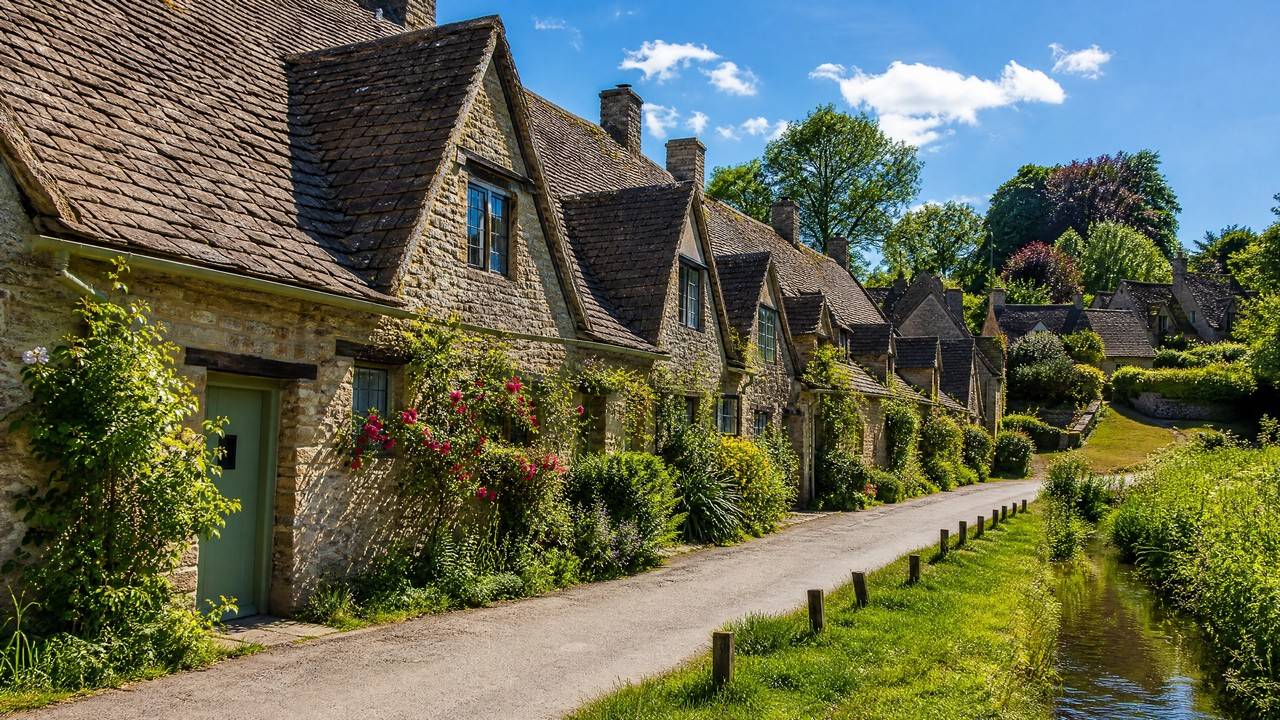
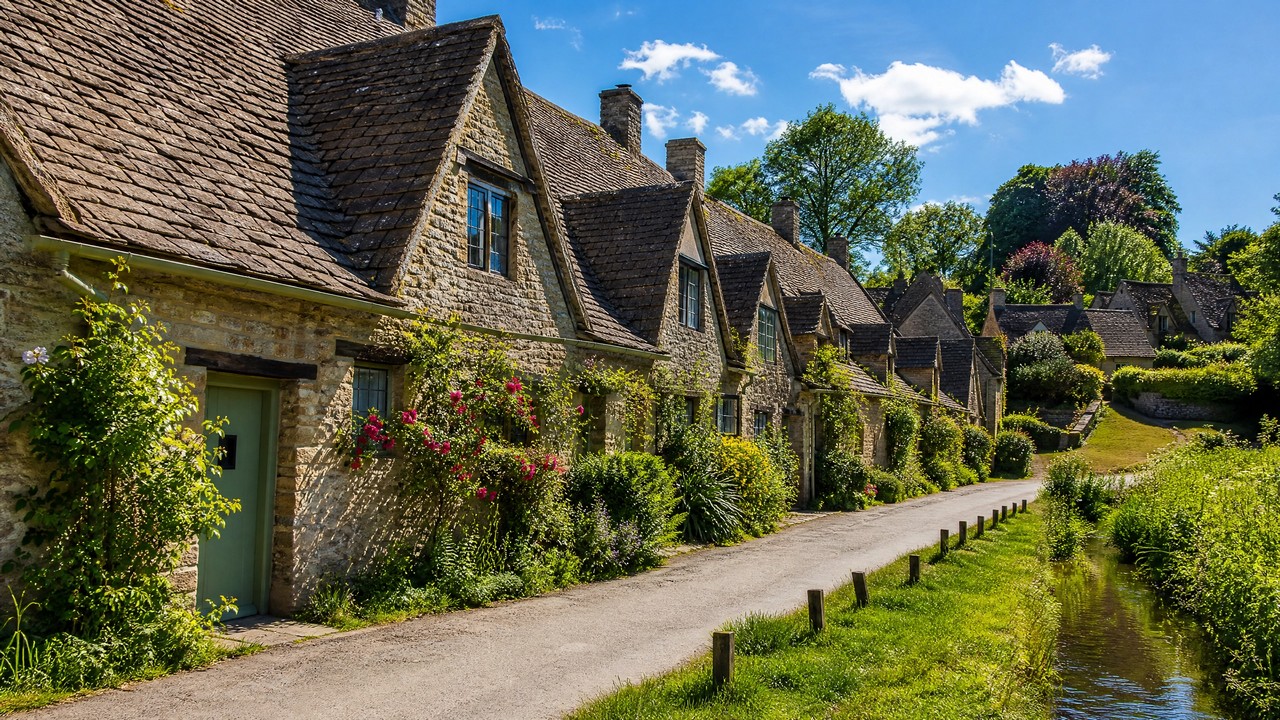
Bibury (eastern Gloucestershire): Called "the most beautiful village in England" by William Morris, pioneer of the Arts and Crafts Movement. The core attraction is Arlington Row, a row of honey-colored stone cottages converted from 14th-century wool workshops. Entry is free and the exterior can be photographed at any time; it's recommended to arrive before 9am to avoid tour groups. The nearby Bibury Trout Farm costs £5.50 and offers fish feeding experiences. Suggested stay: 1.5 hours.
Bourton-on-the-Water: The River Windrush flows through the village, with three low stone bridges linking the banks. The riverside lawns are perfect for picnics. The Cotswold Motoring Museum (£7 entry) showcases a century of automotive history, while The Model Village recreates the entire village at a 1:9 scale (£4.50 entry). Suggested stay: 2-3 hours. One note: weekend crowds here are massive, with dense tour groups.
Copse Hill Road (1.5 km south of Bourton-on-the-Water): A rural lane lined with hedgerows and flowers on both sides, a frequent stop for road-trippers to take photos. It is a roadside attraction, free and open all day. Cars can be parked at the public parking bay at the junction, then walk about 500 meters. It is recommended to visit when the light is soft in the early morning or late evening. Suggested停留 time: 20–30 minutes.
Bampton Village (Bampton, west Oxfordshire): Famous as a filming location for the TV series Downton Abbey. The village church (St Mary's Church) and the town center appear multiple times in the show. Admission is free; the church is usually open 10:00–16:00, with Sunday opening limited to worship times only. Visitors can compare scenes from the show to find the same camera angles. Suggested停留 time: 1 hour.
Broadway Tower (southeast Worcestershire): A Gothic castle tower built in 1798, standing on Fish Hill at an elevation of 312 meters, making it the second-highest point in the Cotswolds. From the top, you can enjoy a 360-degree panoramic view across 14 counties. Tower admission is £7.20; the park at the base is free. Parking costs £3. Suggested停留 time: 1–1.5 hours. Note that last entry is 45 minutes before closing (opening hours vary by season: summer 10:00–17:00, winter 10:00–16:00; as of August 2026, source: Broadway Tower official website).
4.2 Manor Houses and Gardens
Highgrove Gardens (near Tetbury): King Charles's private garden, open to the public from May to September each year. Tickets cost £40–£60 and must be booked in advance on the official website several weeks ahead; children are not permitted. The garden design blends organic cultivation with architectural aesthetics, making it a premium option for royal horticulture enthusiasts. Suggested停留 time: 2 hours.
Sudeley Castle (Winchcombe): The only privately owned castle in England where a queen is buried. The tomb of Catherine Parr, the last wife of Henry VIII, lies within the castle church. A combined ticket for the castle and gardens costs £15.50. Opening hours are 10:00–17:00 (weekends only from November to March). Suggested停留 time: 2.5 hours.
4.3 Hiking and National Trails
Cotswold Way: A 163-kilometer national trail stretching from Chipping Campden to Bath. For independent travelers, the most recommended highlight section is the Stanton to Stanway stretch, about 6 kilometers, taking 2–3 hours to hike with an elevation gain of approximately 150 meters. Along the way, you can overlook the Vale of Evesham. The difficulty is low, suitable for travelers of all fitness levels.
5. Itinerary Recommendations: 3-Day Classic, 5-Day In-depth, 7-Day Full Region
5.1 Three-Day Highlights (for travelers with limited vacation time)
Day 1: Take an early train to Moreton-in-Marsh, rent a car or take the bus to Chipping Campden. In the afternoon, hike the highlight section of the Cotswold Way from Stanton to Stanway, and stay overnight in Chipping Campden in the evening. Day 2: In the morning, visit Bibury clockwise (arrive before 9:30) → Arlington Row → depart at 10:45 for Bourton-on-the-Water. After lunch, stroll along the river and visit the Model Village → arrive at Broadway Tower at 4:00 PM to watch the sunset. Day 3: In the morning, visit Bampton Village and compare the Downton Abbey filming locations → at noon, browse antique shops in Tetbury → return to Moreton-in-Marsh in the afternoon to return the car / catch the train.
Flexibility suggestions: If the weather is bad, swap the outdoor hike for Sudeley Castle or Highgrove Gardens; travelers with little interest in film locations can replace Bampton with Castle Combe.
5.2 Five-Day In-depth (adds the western area)
Building on the 3-day itinerary, split accommodation into 2 nights in Chipping Campden + 2 nights on the outskirts of Cheltenham. Day 4: In the morning, explore Cheltenham's Regency-style streets and the Portland Street cafés; in the afternoon, visit the town of Winchcombe along with Sudeley Castle. Day 5: Head to the southern villages of Coombe and Snowshill. Snowshill Manor (managed by the National Trust) has an admission fee of £13.50 and houses hundreds of curiosities from the heyday of the Arts and Crafts Movement. Opening hours: 11:00–17:00 (as of August 2026, source: National Trust official website).
5.3 Seven-Day Full Region (including surrounding links)
For 7 days, it is recommended to combine the Cotswolds with Bath. On Day 6, take a train from Cheltenham to Bath (about 40 minutes) to visit the Roman Baths (admission £22, open 8:30–18:00) and the Royal Crescent. On Day 7, you can join a day tour to Stonehenge (admission £32, including round-trip transport). This route extends the journey from pastoral scenery to ancient Roman civilization and Neolithic monuments, at a comfortable pace.
Overall core judgment: Each village in the Cotswolds is best visited for 1–2 hours; the density of attractions is low, so there is no need for a "check-in" style rush. If a traveler has only 3 days and one of them is rainy, the itinerary can be compressed to 2 villages + 1 manor house to avoid losing the relaxed feel of countryside travel by rushing between spots.
5.4 Special Experiences
- Hot Air Ballooning: Cotswold Balloon Rides in Bourton-on-the-Water offers flights every morning/evening, lasting 30-60 minutes, priced at £150-£190 per person. Book 2-3 weeks in advance; flights are postponed in bad weather.
- Wool Craft Workshop: St James Wool School in Stow offers free weaving demonstrations, as well as paid hand-felting courses starting from €30.
6. Food Guide: Countryside Dining & Afternoon Tea Pitfall Avoidance
Cotswolds dining is primarily English country fare, and menus are generally not long. Must-tries include: locally dry-aged steaks (Lumière restaurant in Cheltenham), the game pie at The Wild Duck Inn (north of Bourton-on-the-Water), and the homemade scones served at every B&B with clotted cream (Cornish Clotted Cream) and strawberry jam — the classic three-piece afternoon tea set.
Afternoon Tea Venues by Tier:
| Restaurant | Location | Afternoon Tea for Two | Highlights |
|---|---|---|---|
| The Lygon Arms | Broadway | £55 / USD 74 / CNY 506 | 16th-century coaching inn, elegant atmosphere, generous portions |
| Huffkins | Burford | £40 / USD 54 / CNY 368 | Century-old local chain, great value, freshly baked scones |
| The Painswick | Painswick | No afternoon tea set; individual items from £8 | Michelin Guide recommended; great for lemon tart with tea |
Pitfall Avoidance Tips: Restaurants in the very center of scenic areas (especially at Bourton-on-the-Water bridgehead) charge 20%-30% more than non-scenic establishments of the same level, and during peak hours they enforce a mandatory 1-hour dining limit. It's recommended to dine off-peak before 12:00 or after 14:00, or walk 5-10 minutes to smaller eateries on village side roads. Most village pubs serve "Bar Snacks" for £12-£16 during lunch hours — better value than formal restaurants without skimping on portions.
Country pubs are an important part of local life. When ordering drinks, note that the UK serves by the pint (about 568 ml). Craft beer costs £5-£6 per pint, and cider (a local specialty) runs £4.5-£6. Many pubs have fireplaces in winter and courtyard gardens in summer, making them worthy itinerary stops in themselves.
7. Practical Tips: Safety, Payment, Communications & Etiquette
Safety: The Cotswolds is generally very safe, and villages are nearly silent at night. The main risks come from the roads themselves — don't rush when passing on single-lane roads, slow down after dark, and yield to oncoming straight-through traffic at intersections. Country roads often have slow tractors (30-40 km/h); be patient and don't force overtaking. When hiking, watch for sheep and cattle in pastures. If cattle are on the path, gently wave your arms to guide them out of the way; never walk between a cow and her calf.
Payment: The UK has fully adopted chip cards and mobile payments (Apple Pay/Google Pay). Cash is still accepted at most restaurants and parking payment machines. Prepare £100-£200 in cash (including £1 and £2 coins for parking). UnionPay coverage at UK merchants is limited, so it's advisable to bring a Visa or Mastercard multi-currency card. Tipping etiquette: if a 10% service charge is already included in the restaurant bill, no extra tip is needed; no tip is expected at pub counters; if service is exceptional, leave £2-£5 in cash.
Communications: Major UK carriers are EE, Vodafone, and O2. Travelers from China can enable international roaming before departure, or purchase a local UK SIM card in advance from European e-commerce platforms (e.g., EE's 12GB data plan is around £20/month). Some Cotswolds valleys have weak signals (O2 and Vodafone have relatively better coverage). Downloading offline maps for navigation (Google Maps offline packages or OS Maps) is essential preparation.
Etiquette: On countryside trails, follow the Countryside Code — close gates behind you (to prevent livestock from escaping), take your rubbish with you, and stick to designated paths. Ask before photographing locals — especially at weekend markets, where vendors are usually happy to introduce their products but dislike being photographed without permission.
8. Frequently Asked Questions FAQ
Q1: Is the Cotswolds suitable for traveling by public transport? Suitable but with limitations. Trains reach the two gateway towns of Moreton-in-Marsh and Cheltenham, but village-to-village connections rely mainly on buses like the 801, running roughly hourly, with significantly reduced service on Sundays.
Recommended Products
More Popular Experiences
![[12 days in depth in England] Scotland + England + Southern romantic seaside + Cambridge and Oxford + Cotswold countryside + British castles | London full-day tour + Windsor Castle + Stonehenge](https://qiniu.usitour.com/images/picture/2016-03/detail_27_1458776379.jpg?imageView2=2&w=1920&q=70&format=webp)
![[Britain 5-day tour] Seven Sisters National Park + Bath Stonehenge + Land’s End + Bournemouth Pier + Jurassic Coast Cotswolds|London round trip|British romantic pastoral scenery](https://qiniu.usitour.com/images/picture/2016-03/detail_30_1458776378.jpg?imageView2=2&w=1920&q=70&format=webp)
![[British Southwest Coastline 4-Day Tour] Bath Stonehenge + St. Ives + Land’s End + Durdle Door + Bournemouth Pier + Burton on the Water | Lavender tour only in July | Jurassic Coast | Departing from London](https://qiniu.usitour.com/images/picture/2017-01/detail_23_1483747574.jpg?imageView2=2&w=1920&q=70&format=webp)
![[English-Soviet Classic 14-Day Tour] England + Scotland + Southern Coastline + White Cliffs + Cornwall + Cotswolds Region | Full Breakfast | Chinese Tour Guide | Including First and Last London Heathrow Airport Hotel](https://qiniu.usitour.com/images/picture/2015-04/detail_90_1429664043.jpg?imageView2=2&w=1920&q=70&format=webp)