🌏 Destination Overview
France takes art, cuisine and romance to the extreme. Paris has the Eiffel Tower, the Louvre and cafés along the Seine, every street exuding elegance; Provence's lavender fields turn dreamily purple in summer, and the Côte d'Azur resorts are sunny; the Loire Valley hides fairytale castles. As Europe's classic gateway, France is an irreplaceable destination for art lovers, food and wine enthusiasts, and honeymoon couples.
🗓️
Best Season
May-Jun / Sep-Oct
🕐
Recommended Days
7-12 days
👪
Best For
Honeymoon couples / Families / Culture lovers
🎯
Top Activities
Tower · Art · Cuisine · Castles
🧳
Pre-trip Prep
Schengen visa + anti-theft
Popular Cities
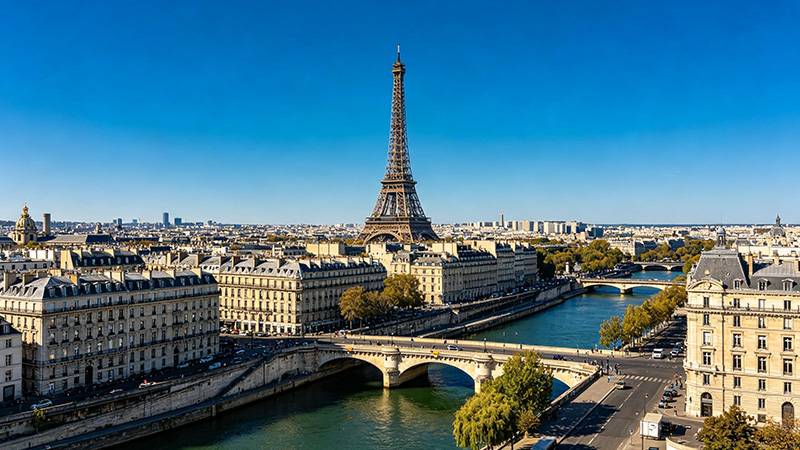
Paris
Metropolis,Arts,Romantic
🔥 City of Romance, Eiffel Tower and Louvre along the Seine, arts and gastronomy capital.

Nice
Beach,Resort,Riviera
🔥 Riviera resort, Promenade des Anglais and old town Mediterranean charm.

Lyon
Foodie,Old Town,UNESCO
🔥 French gastronomy capital, old town and Festival of Lights, UNESCO on the Rhone.

Marseille
Harbor,Mediterranean,Culture
🔥 France's oldest port, Old Harbor and calanques, multicultural Mediterranean vibe.
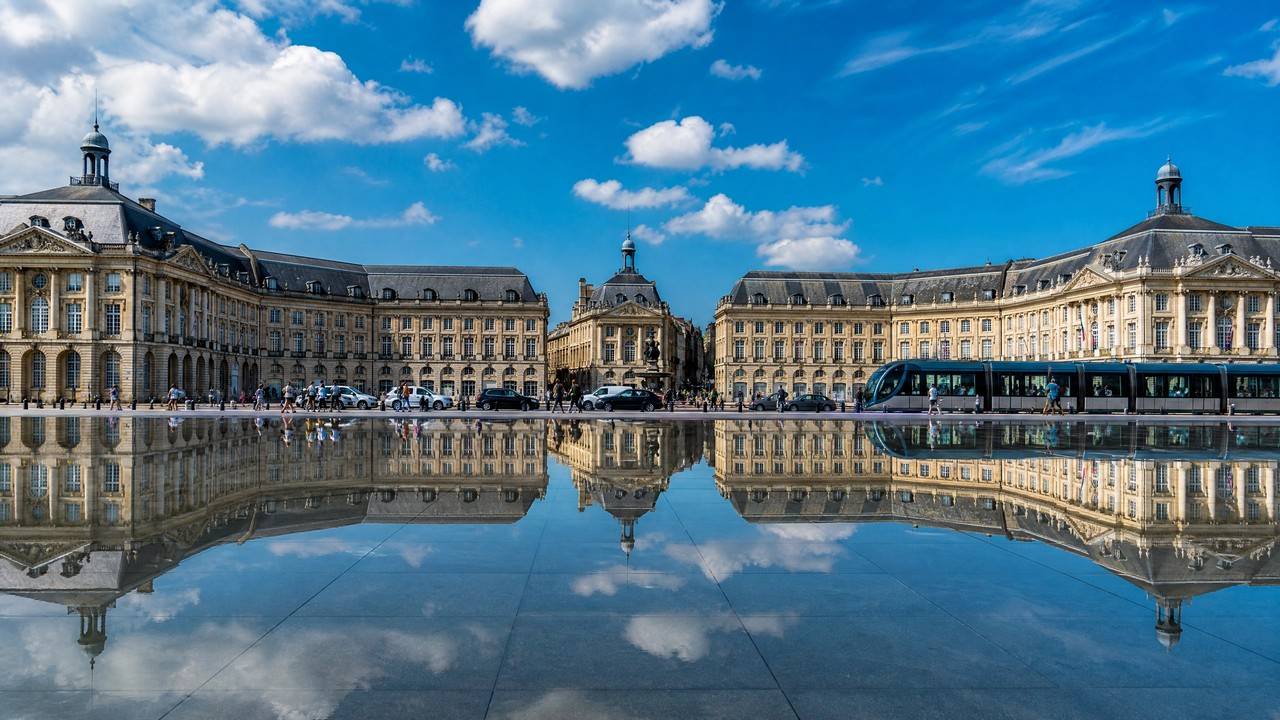
Bordeaux
Wine,Old Town,UNESCO
🔥 World wine capital, elegant old town and renowned surrounding chateaux.
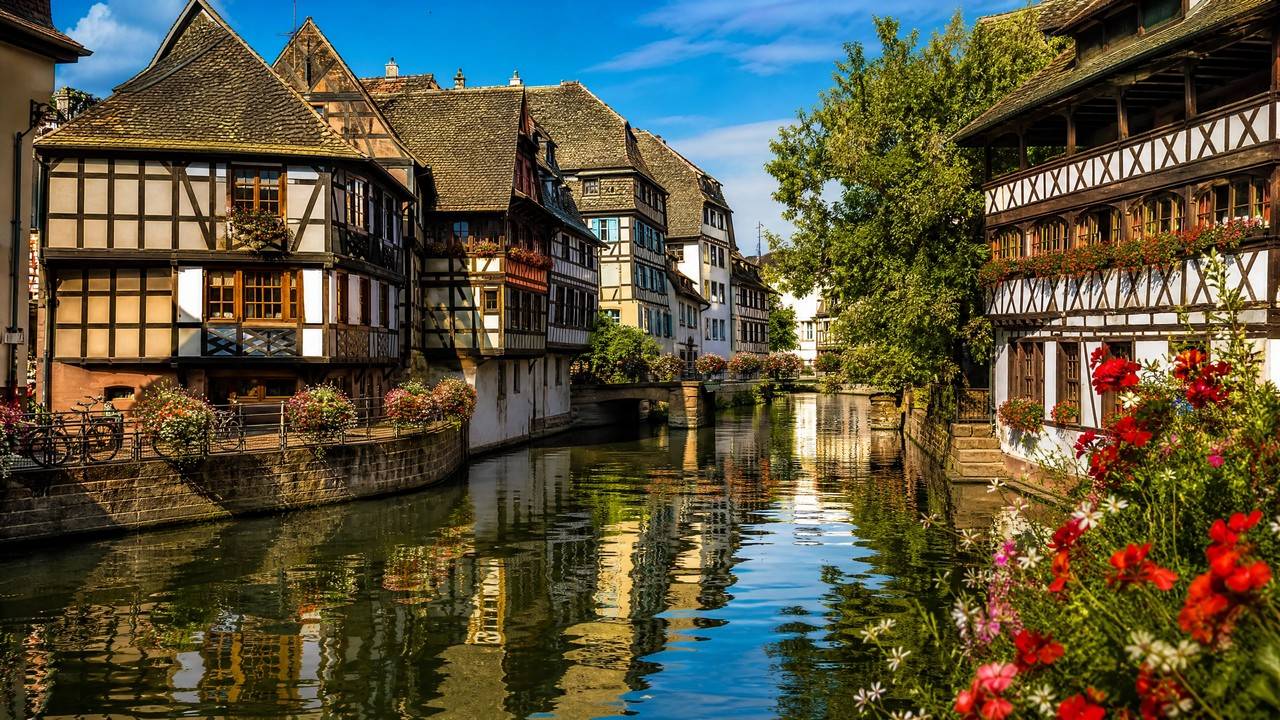
Strasbourg
Old Town,UNESCO,Christmas
🔥 Canal old town on the Franco-German border, cathedral and Christmas market capital.
Popular Attractions
More Attractions →
Galerie David d'Angers📍 Angers
The Galerie David d'Angers stands in central Angers, in France's Pays de la Loire region, and has occupied the restored church of the Abbaye Toussaint, the abbey of All Saints, since 1984. This thirteenth-century Gothic hall was converted to give sculpture a bright setting, and a glass roof covers the gallery, with daylight diffusing over pale plaster and marble, which is the most moving thing about the place.
The gallery is devoted to the Angers-born sculptor Pierre-Jean David d'Angers (1788-1856), a pivotal figure between French neoclassicism and romanticism, both an author of large public monuments and one of the busiest bust sculptors of his day.
Three strands in the collection:
First, the full-scale plaster models for his facade commission at the Pantheon in Paris, the largest single object in the gallery. One common error worth correcting: the Pantheon's dome is not David d'Angers' work and was not designed by him; what he did there was the facade commission, and what is displayed here is that facade in full-scale plaster.
Second, a group of busts and medallions of contemporaries including Victor Hugo, Balzac, Goethe and Lafayette. Taken together the busts read like an album of early nineteenth-century European notables.
Third, models and maquettes for large monuments, sketches and working manuscripts. The models show how he handled scale and composition in public commemorative sculpture, while the sketches and manuscripts lay out the whole working path from concept through clay to finished work.
Admission and hours: 4 euros for adults, free for under-26s, group rates for ten or more; closed Mondays, Tuesday to Sunday 10:00-18:00 and extended to 20:00 on Fridays, with 1 May and 1 November among the holiday closures. The claim of a free first Sunday of the month appears only on third-party travel sites and is not confirmed officially, so do not plan around it; for a saving, look at the Angers City Pass. There is also no special summer extension to 19:00, an error in older guides.
Best time: Friday evenings are quietest, and a sunny afternoon gives the best light through the glass roof for looking at plaster and marble detail.
Sequencing: two more must-sees within walking distance of the old town, the Musee des Beaux-Arts with its fourteenth to eighteenth century paintings, and the Chateau d'Angers with the Apocalypse tapestry. All three plus a walk through the old town makes a full day.

Citadel of Dinant📍 Dinan
The Citadel of Dinant crowns a sheer 100-metre cliff above the Meuse, one of Belgium's four 'Meuse Citadels'. Fortified since 1051, the current stronghold was largely built by the Dutch between 1818 and 1821, after Napoleon's defeat. Its turbulent past includes the 1466 sacking of Dinant and the German reprisals of 1914. Reach the top by cable car or climb the 408 steps, then follow the ramparts for sweeping views of the river, the onion-domed collegiate church and the colourful old town below.

Château de Versailles📍 Versailles
The Palace of Versailles is the most lavish pinnacle among Europe's royal palaces. Built on the outskirts of Paris by the French kings, this grand palace and vast gardens, with its ultimate luxury and grandeur, is an eternal witness to the glory of the French monarchy at its zenith. The Palace of Versailles was built by King Louis XIV in the 17th century with the resources of the whole nation, expanding a former hunting lodge into a unique grand palace and moving the court and the seat of the kingdom there. The palace is majestic and extremely opulent—gilded halls, exquisite decoration, and most famous the Hall of Mirrors (a long gallery, with seventeen great mirrors on one side and floor-to-ceiling windows overlooking the gardens on the other, dazzling crystal chandeliers and shimmering gilding, luxuriant and dazzling, where many historic events once played out)—all displaying the zenith of the French monarchy and the glory of Louis XIV the Sun King. Beyond the palace lies the equally famous Gardens of Versailles—a vast French formal garden, known for its rigorous symmetry, finely trimmed flower beds and hedges, radiating avenues, and numerous fountains, sculptures and water features (with musical fountain shows in summer), grand and elegant, the pinnacle of French classical garden art. Strolling the lavish palace and magnificent gardens is like traveling back to the brilliant, luxurious years of the French monarchy. Explore the outskirts of Paris, tour the world-famous Palace of Versailles and gardens, and appreciate the zenith glory of the French monarchy—an unmissable sight near Paris.

Musée du Louvre📍 Paris
The Louvre is one of the largest and most prestigious art temples in the world. This grand museum, converted from a former royal palace, holds hundreds of thousands of art treasures spanning millennia, a bright pearl of Paris as the world's art capital and a shrine for every visitor to pay homage to art. The Louvre was once the palace of French kings; after centuries of building and expansion it is majestic and splendid; after the French Revolution it became a public museum, now one of the most visited and richest museums in the world. The collection holds hundreds of thousands of art treasures across ancient and modern times and from around the world—from Egyptian, Greek and Roman antiquities to European paintings, sculptures and crafts of every period, vast and magnificent. Among them, the three most famous treasures—the Mona Lisa with her mysterious smile by Leonardo da Vinci, the elegant, incomplete Venus de Milo, and the Winged Victory of Samothrace—attract the world's attention. And the glass pyramid entrance on the palace square blends classical and modern, another iconic sight of the Louvre. Strolling this temple of art, moving through grand halls, face to face with thousands of years of human art treasures, is an awe-inspiring visual and spiritual journey. Explore Paris, enter the world-famous Louvre, and pay homage to the bright gems of human art—the number-one unmissable sight in Paris.

Musée d'Orsay📍 Paris
The Musée d'Orsay is one of the world's richest temples of Impressionist art. Housed in a former train station, it holds masterpieces by Van Gogh, Monet, Renoir and other masters—a place of pilgrimage for every Impressionist art lover. The Musée d'Orsay's building itself is charming—a train station built in the early 20th century, later cleverly converted into a museum; its grand arched vault and the preserved great station clock blend the beauty of industrial-era architecture with an art temple, with a unique flavor. Its collection centers on art from the mid-19th to early 20th centuries, especially famed for its unrivaled Impressionist and Post-Impressionist masterpieces—here gather Monet's Water Lilies series and works in the spirit of Impression, Sunrise, Renoir's joyous figures, Degas' ballerinas, Van Gogh's self-portraits and works in the spirit of Starry Night, plus Cézanne, Gauguin, Seurat and other masters' immortal paintings, as well as Rodin's sculptures, almost encompassing the most brilliant achievements of Impressionism. Strolling this station-turned art temple, through those lively, colorful brushstrokes, you feel the extraordinary charm of the Impressionist masters capturing light and depicting life—an intoxicating artistic journey. Explore Paris, enter the Musée d'Orsay, and pay homage to the immortal masterpieces of the Impressionists—a sight in Paris full of artistic charm.

Cathédrale Notre-Dame de Paris📍 Paris
Notre-Dame de Paris is the pinnacle of French Gothic architecture. This majestic cathedral on the Île de la Cité by the Seine, with a history of about eight hundred years, is not only the spiritual landmark of Paris and a witness to French history, but also famous through literature, one of the most moving symbols of Paris in people's hearts. Notre-Dame de Paris was begun in the 12th century and took nearly two centuries to complete; it is the apex of French Gothic architectural art—its majestic facade, towering twin towers, exquisite rose windows, flying buttresses and stone carvings all display the extraordinary wisdom and piety of medieval craftsmen. The cathedral has weathered centuries of French history: it witnessed royal coronations, the storms of revolution and even Napoleon's coronation, a key stage of French history; and the novel by Victor Hugo made the cathedral and the bell-ringer story known to every household worldwide. In 2019, Notre-Dame suffered a serious fire that destroyed its iconic spire and part of the roof, grieving the world; France then launched a grand restoration, letting this precious historical treasure shine anew and reopen to the world. Paying homage to this cathedral weathered by time yet ever more precious, admiring its majestic Gothic architecture and recalling its long history and immortal legend, fills one with reverence and emotion. Explore Paris, pay homage to this time-worn Notre-Dame by the Seine, and feel the history and faith of France—a sight in Paris rich in heritage.
Classic Experiences
Best Travel Seasons
🌷
Spring · Apr-Jun
Pleasant weather, flowers in bloom
☀️
Summer · Jul-Aug
Peak season for lavender and the coast
🍁
Autumn · Sep-Oct
Autumn colors and wine harvest season
❄️
Winter · Dec-Feb
Christmas markets and romantic Paris
May-Jun and Sep-Oct have pleasant weather and moderate crowds; lavender blooms roughly late Jun-Jul.
Popular Guide Articles
More →Practical Info
Depends on passport/departure point; check the latest visa and entry policy before travel
Euro (EUR), cards and mobile payments widely used
France time UTC+1 (DST +2)
230V, Type C/E sockets
TGV high-speed rail between cities; Paris metro well-developed
Obey local laws, mind personal belongings; emergency number 112 (general)
Free Consultation
Free Consultation
Tell us your departure city, travel dates and interests, and ZouSifang will craft a tailor-made itinerary for you.