Acropolis

Quick Facts
- Location
- Greece, Athens
- Category
- Historic Ruins & Heritage
- Duration
- 2–3 hours; half a day with the Acropolis Museum.
- Opening Hours
- Daily 08:00-17:00 · The times above are winter hours (1 November–31 March); summer (1 April–31 August) daily 08:00–20:00, 1–15 September 08:00–19:30, 16–30 September 08:00–19:00, 1–15 October 08:00–18:30, 16–31 October 08:00–18:00; last admission 20 minutes before closing; closed on 1 January, 25 March, 1 May, Easter Sunday, 25 and 26 December
- Ticket Price
- Free Admission: free (EU citizens aged 25 and under, non-EU children aged 5 and under; and on designated free days) · Adult: 30 EUR · Reduced ticket 15 EUR applies to non-EU visitors aged 25 and under, EU visitors over 65, etc.; free days: 6 March, 18 April, 18 May, the last weekend of September, 28 October, and the first and third Sunday of each month from 1 November to 31 March; timed-entry slot required
- Address
- Acropolis of Athens, Dionysiou Areopagitou, Athens 105 58, Greece
- Coordinates
- 37.9715, 23.7267
Introduction
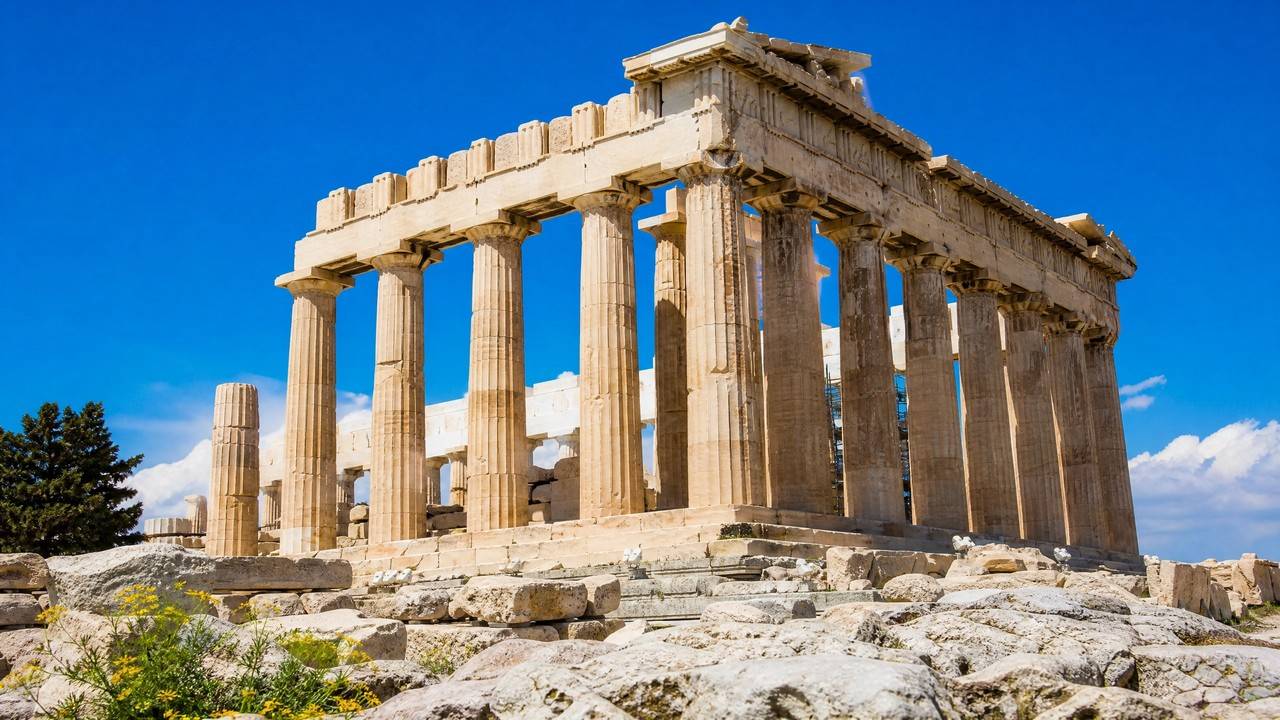
The Acropolis of Athens (Greek for "high city") crowns a 156-metre limestone rock above central Athens, the supreme achievement of ancient Greek architecture and a symbol of Western civilisation, listed as a UNESCO World Heritage Site since 1987. Under Pericles in the 5th century BC, funded by the Delian League, the Parthenon, Propylaea, Erechtheion and Temple of Athena Nike rose over about 41 years, from 447 to 406 BC. The Parthenon, designed by Ictinus and Callicrates under Phidias' supervision and dedicated to Athena, is the summit of the Doric order and its optical refinements; the Erechtheion's south porch carries six caryatids, one of which still stands in the British Museum. Across two millennia the rock passed through Persian wars, Roman, Byzantine and Ottoman rule; a 1687 Venetian bombardment ignited a powder magazine that gutted the Parthenon, and Lord Elgin removed marble sculptures in the early 1800s. Since 1975 Greece has run an ongoing anastylosis restoration of the marble. From the summit you look over modern Athens and Mount Lykavittos, with Aegean light on clear days; the Acropolis Museum at the foot of the slope holds the originals and is the perfect sequel.
✨ Highlights
🛈 Practical Info
Opening Hours
| Monday | 08:00-17:00 |
|---|---|
| Tuesday | 08:00-17:00 |
| Wednesday | 08:00-17:00 |
| Thursday | 08:00-17:00 |
| Friday | 08:00-17:00 |
| Saturday | 08:00-17:00 |
| Sunday | 08:00-17:00 |
The times above are winter hours (1 November–31 March); summer (1 April–31 August) daily 08:00–20:00, 1–15 September 08:00–19:30, 16–30 September 08:00–19:00, 1–15 October 08:00–18:30, 16–31 October 08:00–18:00; last admission 20 minutes before closing; closed on 1 January, 25 March, 1 May, Easter Sunday, 25 and 26 December
Ticket Information
| Free Admission | free (EU citizens aged 25 and under, non-EU children aged 5 and under; and on designated free days) |
|---|---|
| Adult | 30 EUR |
Reduced ticket 15 EUR applies to non-EU visitors aged 25 and under, EU visitors over 65, etc.; free days: 6 March, 18 April, 18 May, the last weekend of September, 28 October, and the first and third Sunday of each month from 1 November to 31 March; timed-entry slot required
💡 Tips
FAQ
What are the opening hours of Acropolis?
Friday: 08:00-17:00; Monday: 08:00-17:00; Sunday: 08:00-17:00; Tuesday: 08:00-17:00; Saturday: 08:00-17:00; Thursday: 08:00-17:00; Wednesday: 08:00-17:00; The times above are winter hours (1 November–31 March); summer (1 April–31 August) daily 08:00–20:00, 1–15 September 08:00–19:30, 16–30 September 08:00–19:00, 1–15 October 08:00–18:30, 16–31 October 08:00–18:00; last admission 20 minutes before closing; closed on 1 January, 25 March, 1 May, Easter Sunday, 25 and 26 December
How much is the admission for Acropolis?
Free Admission: free (EU citizens aged 25 and under, non-EU children aged 5 and under; and on designated free days); Adult: 30 EUR; Reduced ticket 15 EUR applies to non-EU visitors aged 25 and under, EU visitors over 65, etc.; free days: 6 March, 18 April, 18 May, the last weekend of September, 28 October, and the first and third Sunday of each month from 1 November to 31 March; timed-entry slot required
Any practical tips for visiting Acropolis?
Book the 8 a.m. first slot or a late-afternoon entry to dodge the midday heat and crowds; the rock has no shade at all. The polished marble is polished by millions of feet — avoid smooth-soled shoes, and carry water since nothing is sold up there.
How long should I spend at Acropolis?
A typical visit takes 2–3 hours; half a day with the Acropolis Museum..